10 Most Popular AI Tools for Sales Reps in 2026
most popular ai tools for sales reps sales tools for sales reps best ai tools for sales reps
Sales reps are under pressure to do more with less time.
Manual research, slow follow-ups, and scattered tools make selling harder than it should be.
That’s why ai tools for sales reps have become essential in 2026.
This guide breaks down the tools sales teams actually use today.You’ll learn what each tool does.
Where it fits in the sales workflow.And which types of sales roles benefit the most.
How We Chose the Most Popular AI Tools for Sales Reps
Not every AI tool earns real adoption in sales teams.
For this list, the focus was on tools that sales reps actually use in day-to-day work.
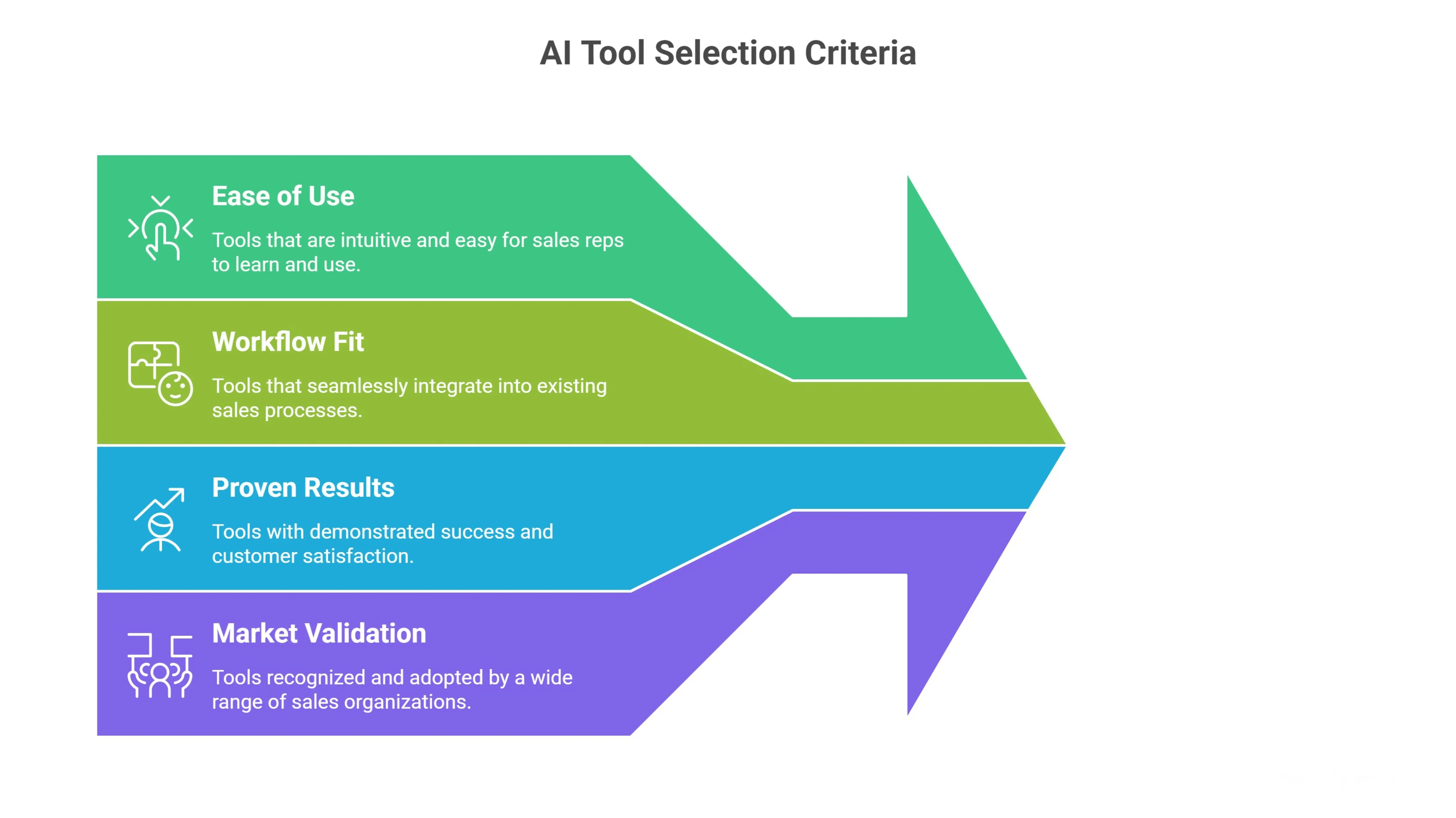
We evaluated tools based on real-world usage, impact on core sales activities, ease of adoption, and proven market results.
The goal was to highlight tools that deliver consistent value in 2026 not tools driven by hype, isolated features, or experimental use cases.
Adoption by Sales Teams and Reps
Popularity in sales is defined by daily usage, not brand visibility.
Tools included in this list are actively used by SDRs, AEs, and sales managers across different team sizes and industries.
They appear consistently in live sales workflows, not just pilot programs or limited trials.
Preference was given to platforms that sales reps rely on for core tasks such as prospecting, outreach, follow-ups, and deal tracking.
If a tool required heavy enforcement from leadership or was used only by operations teams, it ranked lower.
Adoption signals matter because sales reps abandon tools quickly if they slow them down.Only platforms that reps choose to keep using earned a place in this list.
Clear Impact on Core Sales Activities
Each tool in this list improves a specific, measurable sales activity.
That includes prospect research, outbound outreach, follow-up management, meeting insights, pipeline visibility, or forecasting accuracy.
Tools that solved clear sales problems consistently ranked higher than those offering broad but shallow automation.
Priority was given to platforms that reduce manual effort and help reps act faster with better context.
If a tool saved time but did not improve outcomes, it was deprioritized.
The strongest tools showed direct impact on response rates, deal progression, or sales productivity.
Surface-level AI features without practical sales value were excluded.
Ease of Use and Workflow Fit
Sales reps adopt tools that feel natural, not tools that require constant adjustment.
Platforms were evaluated based on learning curve, interface clarity, and how quickly reps can become productive.
Tools that required complex setup, heavy configuration, or long onboarding cycles ranked lower.
Strong workflow fit means the tool supports how reps already work.
That includes fitting into existing sales processes, email habits, and CRM environments.
The best tools minimize friction instead of adding steps.
If a platform required reps to change behavior significantly just to function, it did not qualify as a top choice.
Proven Results and Market Validation
Market validation was a final deciding factor.
Only tools with consistent usage signals, strong reviews, and visible customer adoption were included.
This list avoids tools driven mainly by announcements, funding rounds, or short-term trends.
Preference was given to platforms that show long-term retention across different sales environments.
That includes startups, mid-market teams, and enterprise sales organizations.
Proven results matter because sales teams cannot afford experimentation that disrupts revenue.
Tools that demonstrate reliability, stability, and repeatable outcomes earned higher placement than newer or unproven options.
10 Most Popular AI Tools for Sales Reps
Sales reps rely on different AI tools at different stages of the sales process.
This section highlights the most popular ai tools for sales reps in 2026 based on real usage, not hype.
Each tool is mapped to a specific sales use case such as prospecting, outreach, meetings, or forecasting.
The goal is to help you quickly understand where each tool fits.
And which tools actually support day-to-day selling.
1. Oppora (AI-Driven Prospecting & Sales Workflows)
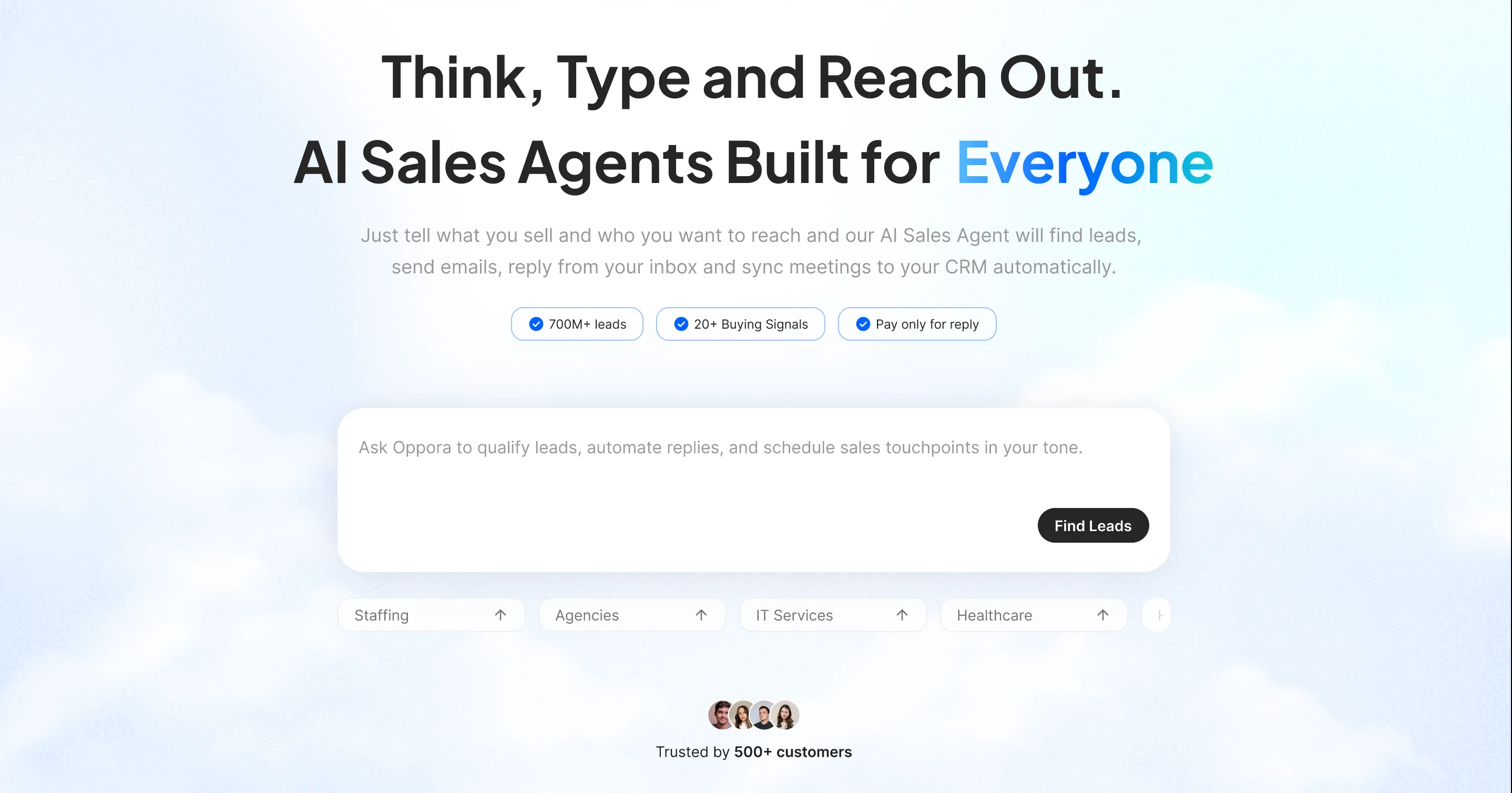
Oppora is an agentic sales platform that lets teams create end-to-end outbound workflows by chatting with AI.
Instead of stitching together tools for lead sourcing, enrichment, sequencing, sending, and reply handling, Oppora works like n8n for sales workflows without visual builders or complex logic.
The AI plans, builds, and runs the entire outreach flow automatically.
Behind the scenes, multiple AI agents discover companies, verify leads, personalize messages, send emails, manage inbox behavior, and respond to replies in real time.
The result is a self-running outbound system that minimizes setup while staying flexible as conditions change.
Key AI features
- 700M+ company and contact database to support continuous outbound prospecting at scale
- Agentic workflow builder that connects lead discovery, enrichment, sequencing, sending, and reply handling into one automated flow
- AI-driven email personalization that adapts each message before sending, reducing copy fatigue without manual rewrites
- Automatic send-pattern variation to avoid spam signals and repetitive outreach behavior
- Built-in email warm-up and inbox health controls to protect deliverability as volume increases
- Support for 50+ mailboxes with domain rotation to safely scale parallel outreach
- Email provider matching (Gmail-to-Gmail, Outlook-to-Outlook) to improve inbox placement
- Flexible scheduling controls, including per-day limits, intervals, and send-day selection
- LinkedIn browser extension to pull companies, jobs, and leads directly from LinkedIn and Sales Navigator
Reply Ora (AI reply agent) that can:
- Read and classify replies contextually
- Send intelligent follow-ups
- Share meeting links automatically
- Attach and send files
- Push qualified conversations toward booked meetings
Best For
- Sales teams and reps running continuous outbound without managing complex tool stacks
- Agencies and SDR teams operating multiple campaigns and inboxes in parallel
- Founders and lean sales teams who want automation without feature fragmentation
- Users who prefer predictable pricing over credit-based or usage-locked plans
- Outbound workflows that require scale, safety, and adaptability, not just email sending
2. Apollo AI (Prospecting & Outreach Intelligence)
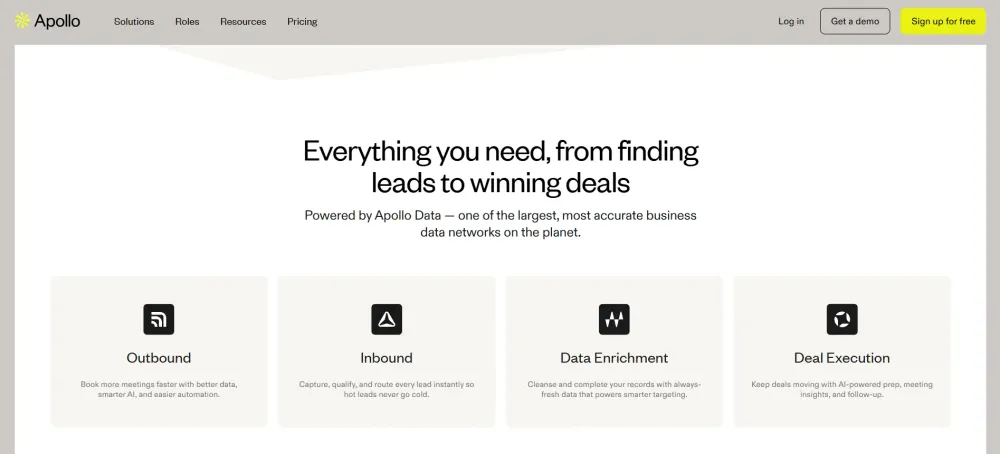
Apollo AI combines lead data, engagement tracking, and outreach automation in one platform.
Sales reps use Apollo to identify prospects, build contact lists, and run outbound sequences without switching tools.
It brings prospect data and outreach execution into a single interface.
Apollo is commonly used by outbound teams that want speed and visibility.
Reps can see who to contact, how prospects engage, and where follow-ups are needed all from one place.
Key AI Features
- Large B2B contact and company database for prospect discovery
- AI-assisted lead filtering using firmographic and role-based signals
- Engagement tracking for emails, including opens, clicks, and replies
- Automated outreach sequences to support consistent follow-ups
- Performance analytics to monitor outreach effectiveness and rep activity
Best For
- SDR teams focused on outbound prospecting
- Sales reps who want lead data and outreach in one tool
- Small to mid-sized teams needing fast setup and quick execution
- Teams prioritizing visibility into prospect engagement without complex workflows
3. HubSpot AI (CRM-Driven Sales Assistance)
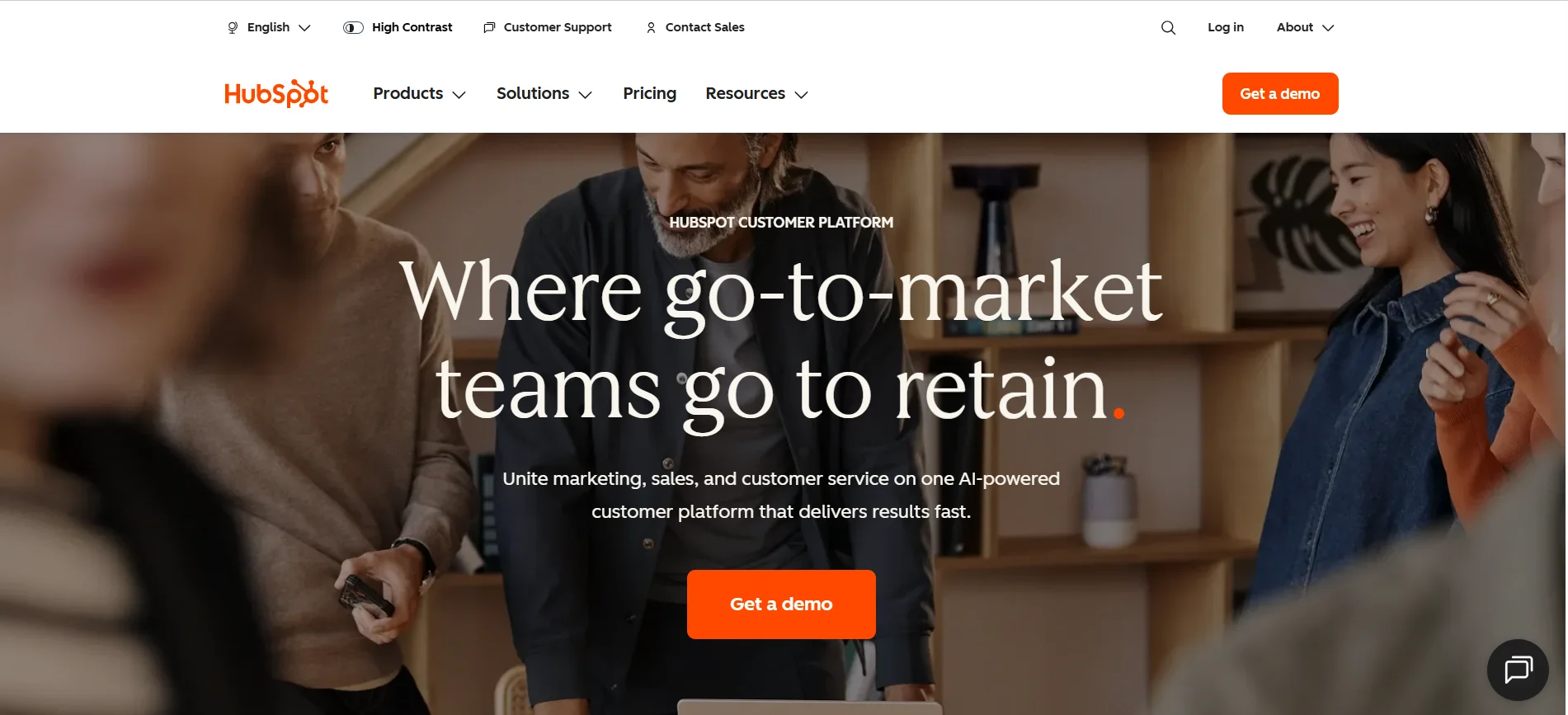
HubSpot AI works directly inside the CRM to support day-to-day sales activities.
It helps sales reps write emails, prioritize deals, and track engagement without leaving the HubSpot environment.
The AI focuses on reducing manual work tied to pipeline management and follow-ups.
HubSpot AI is most effective for teams already using HubSpot as their core system.
It improves efficiency by adding intelligence to existing workflows rather than replacing tools.
Key AI Features
- AI-generated email suggestions to speed up outreach and follow-ups
- Deal prioritization insights based on engagement and pipeline signals
- Automated activity tracking for emails, calls, and meetings
- AI-powered summaries of deal activity and contact interactions
- Predictive insights to help reps focus on high-intent opportunities
Best For
- Sales teams already using HubSpot CRM
- Account executives managing active pipelines and follow-ups
- Teams that want AI assistance without changing their sales stack
- Organizations seeking better visibility into deal activity inside the CRM
4. Gong (Conversation Intelligence & Coaching)
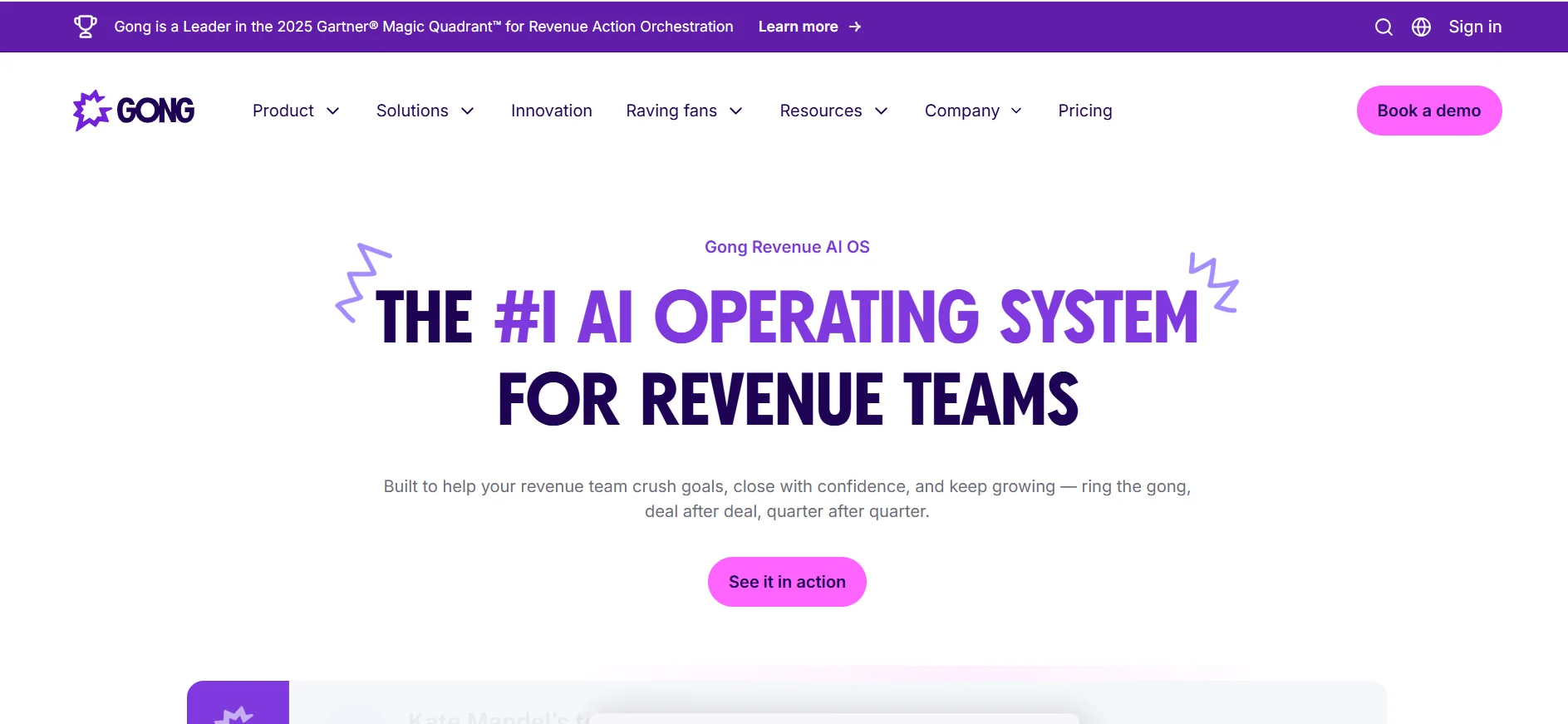
Gong focuses on analyzing sales conversations across calls, meetings, and demos.
It records and studies interactions to identify buyer intent, objections, and successful behaviors.
Sales reps use Gong to understand what works and what needs improvement in real conversations.
For managers, Gong provides clear insights into team performance and deal risk.
The platform turns unstructured conversation data into actionable coaching and pipeline intelligence.
Key AI Features
- Automatic recording and transcription of sales calls and meetings
- AI-driven analysis of buyer intent, objections, and engagement signals
- Conversation insights highlighting winning talk tracks and behaviors
- Deal risk alerts based on conversation patterns and language cues
- Coaching insights to support rep improvement and manager feedback
Best For
- Sales teams running call- or demo-heavy sales motions
- Account executives focused on improving close rates
- Sales managers responsible for coaching and performance analysis
- Organizations that rely on conversation data to guide sales strategy
5. Clari (Revenue & Deal Forecasting)
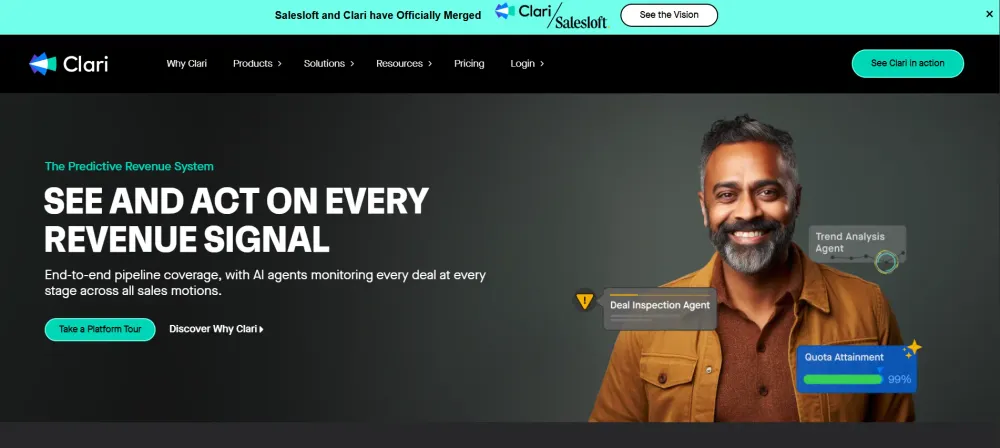
Clari is designed to bring clarity to sales pipelines and revenue forecasts.
It uses AI to analyze deal signals, activity data, and historical trends to assess deal health.
Sales reps gain visibility into which opportunities are progressing and which are at risk.
For leaders, Clari helps separate realistic forecasts from optimistic projections.
The platform creates alignment across reps, managers, and leadership around revenue expectations.
Key AI Features
- AI-based deal health scoring using activity and engagement signals
- Revenue forecasting models based on historical and real-time data
- Risk alerts that highlight stalled or declining opportunities
- Pipeline visibility dashboards for reps and sales leadership
- Forecast comparison tools to track accuracy over time
Best For
- Sales leaders responsible for revenue forecasting
- Account executives managing complex, multi-stage deals
- Teams that need better pipeline visibility and forecast accuracy
- Organizations looking to reduce surprises in revenue reporting
6. Lavender (AI Email Coaching for Sales Reps)
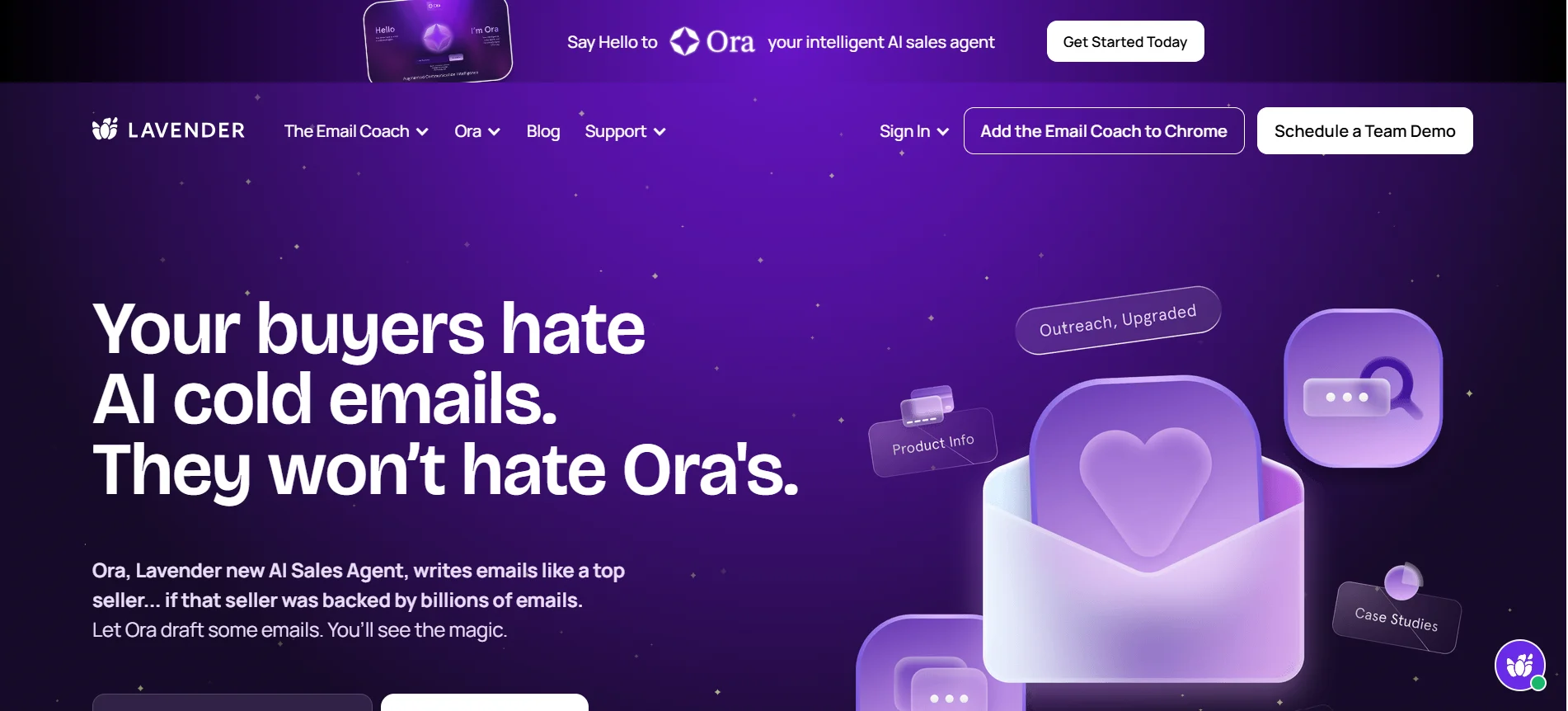
Lavender focuses on improving outbound emails while reps are writing them.
It analyzes tone, clarity, and length in real time to help messages sound more human and relevant.
Sales reps use Lavender to refine cold emails, follow-ups, and replies before hitting send.
The tool acts like an email coach inside the inbox.
It helps reps avoid overlong, generic messages and increase the chances of getting replies.
Key AI Features
- Real-time email coaching based on tone, clarity, and readability
- Suggestions to shorten or simplify emails for better engagement
- Personalization prompts to make messages more relevant
- Inbox-level guidance while writing outbound emails
- Insights to improve reply rates without rewriting templates manually
Best For
- SDRs and sales reps focused on cold emailing
- Reps who want guidance while writing outbound messages
- Teams aiming to improve email reply rates
- Individuals looking to sound more natural and concise in outreach
7. Salesloft AI (Sales Engagement & Sequencing)
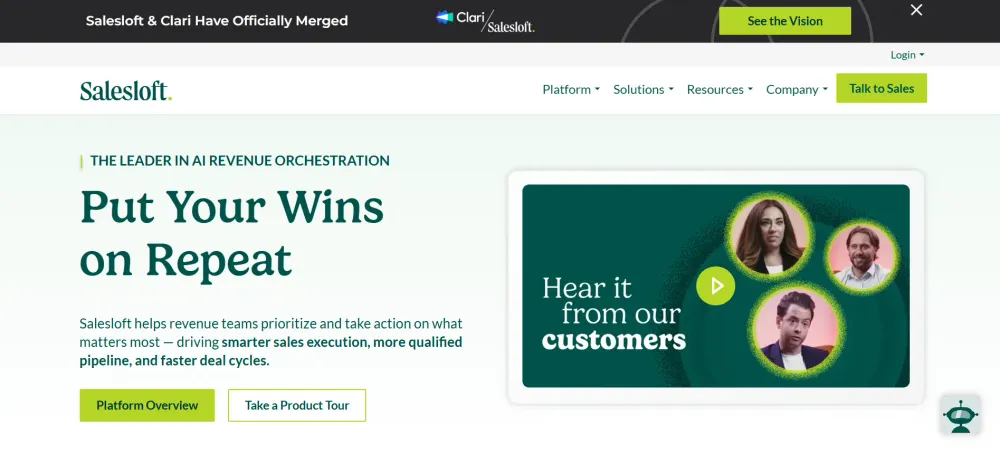
Salesloft AI helps sales reps manage outreach and follow-ups across multiple channels.
It combines engagement tracking with AI-driven recommendations to guide daily sales activities.
Reps use Salesloft to stay on top of tasks, follow up at the right time, and maintain consistent outreach.
The platform keeps sales workflows organized and visible
It is especially useful for teams running structured outbound motions at scale.
Key AI Features
- AI-powered task prioritization based on engagement signals
- Multichannel sequencing across email, calls, and social touchpoints
- Engagement tracking to monitor prospect interactions
- Recommendations on when and how to follow up
- Activity analytics to measure rep productivity and outreach performance
Best For
- SDR and outbound sales teams managing high outreach volume
- Sales reps who need structured follow-up workflows
- Teams running multichannel engagement strategies
- Organizations focused on consistency and execution discipline
8. ZoomInfo Copilot (Intent & Account Intelligence)
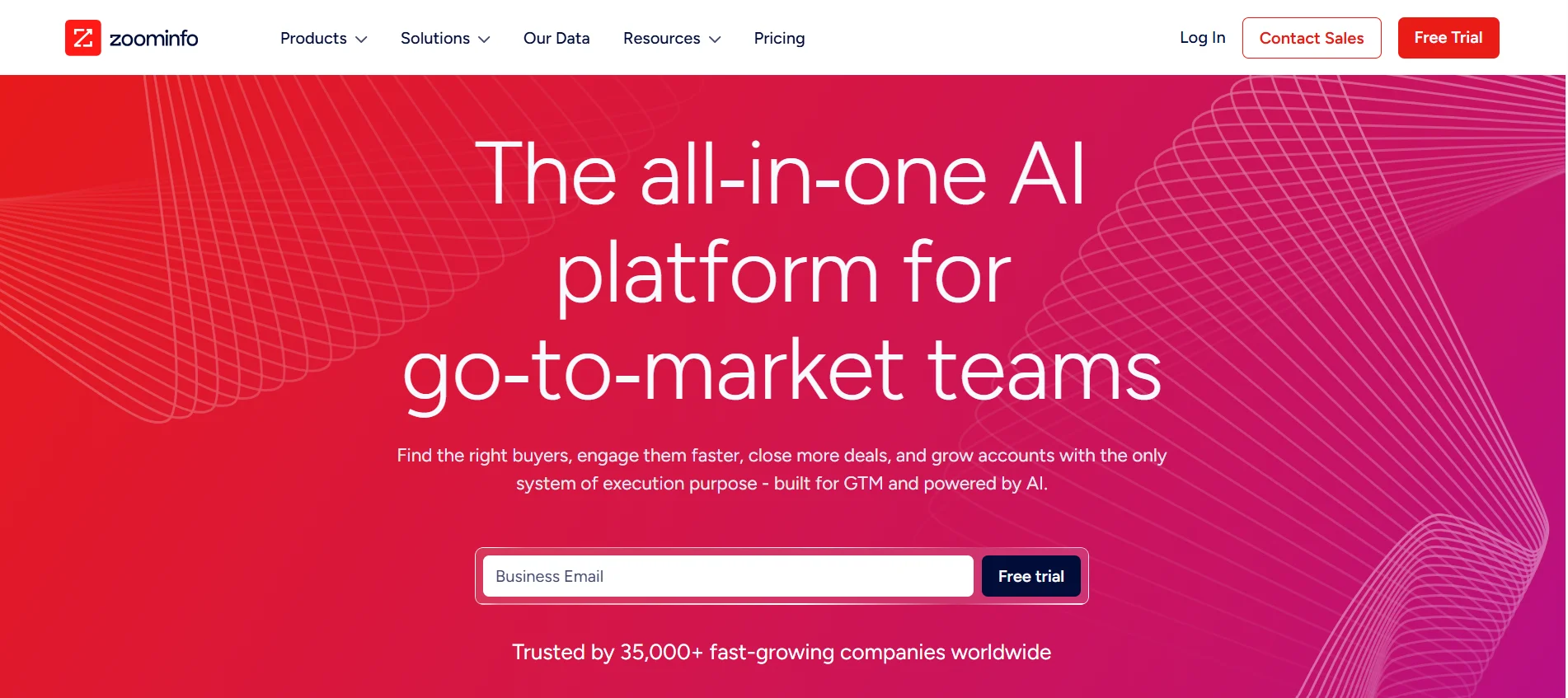
ZoomInfo Copilot helps sales reps prioritize accounts that show real buying intent.
It adds intent data and account-level insights to prospecting workflows.
Reps use these signals to focus on companies actively researching solutions instead of cold outreach.
The tool reduces wasted effort by highlighting where interest already exists.
It is designed to support smarter targeting and better timing in outbound and account-based sales motions.
Key AI Features
- Intent data that identifies companies showing buying behavior
- Account-level insights based on research activity and signals
- AI-driven prioritization of high-intent accounts
- Integration with sales and CRM tools to enrich prospect data
- Alerts that help reps act when intent signals change
Best For
- Account-based sales and marketing teams
- Sales reps focused on prioritization over volume
- Teams targeting mid-market and enterprise accounts
- Organizations that rely on intent signals to guide outreach timing
9. Fireflies.ai (Meeting Notes & Follow-Ups)
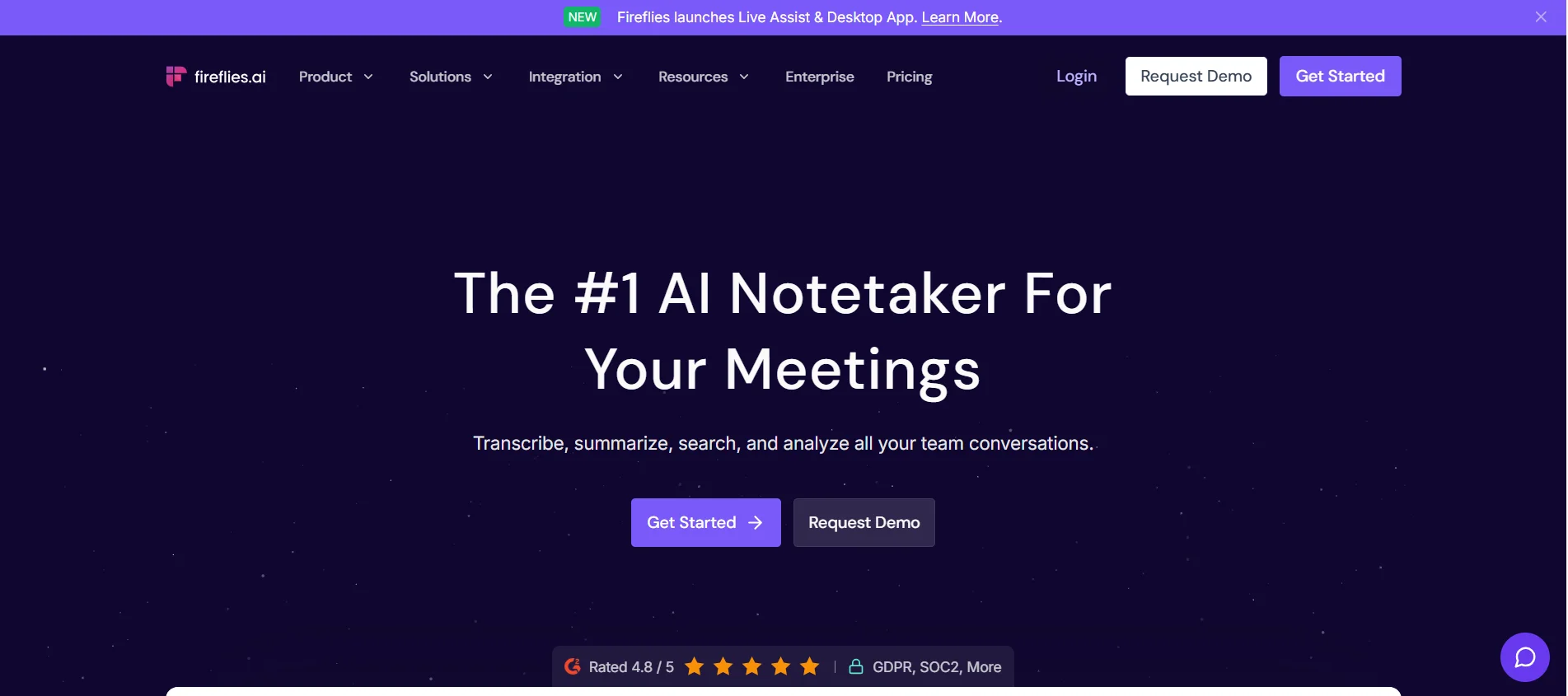
Fireflies.ai helps sales reps capture and organize meeting information automatically.
It records sales calls and meetings, then generates summaries and action items.
Reps use Fireflies to avoid manual note-taking and stay focused during conversations.
The tool reduces post-meeting admin work and improves follow-through.
It also makes it easier to share meeting context with teammates and managers.
Key AI Features
- Automatic recording and transcription of sales meetings
- AI-generated summaries with key discussion points
- Action item detection to support follow-ups
- Searchable meeting transcripts for quick reference
- Integration with calendars and collaboration tools
Best For
- Sales reps running frequent calls and meetings
- Teams that want to reduce manual note-taking
- Reps who need clear follow-up action items
- Organizations focused on better meeting documentation
10. Outreach (AI for Multichannel Prospecting and Follow-Ups)
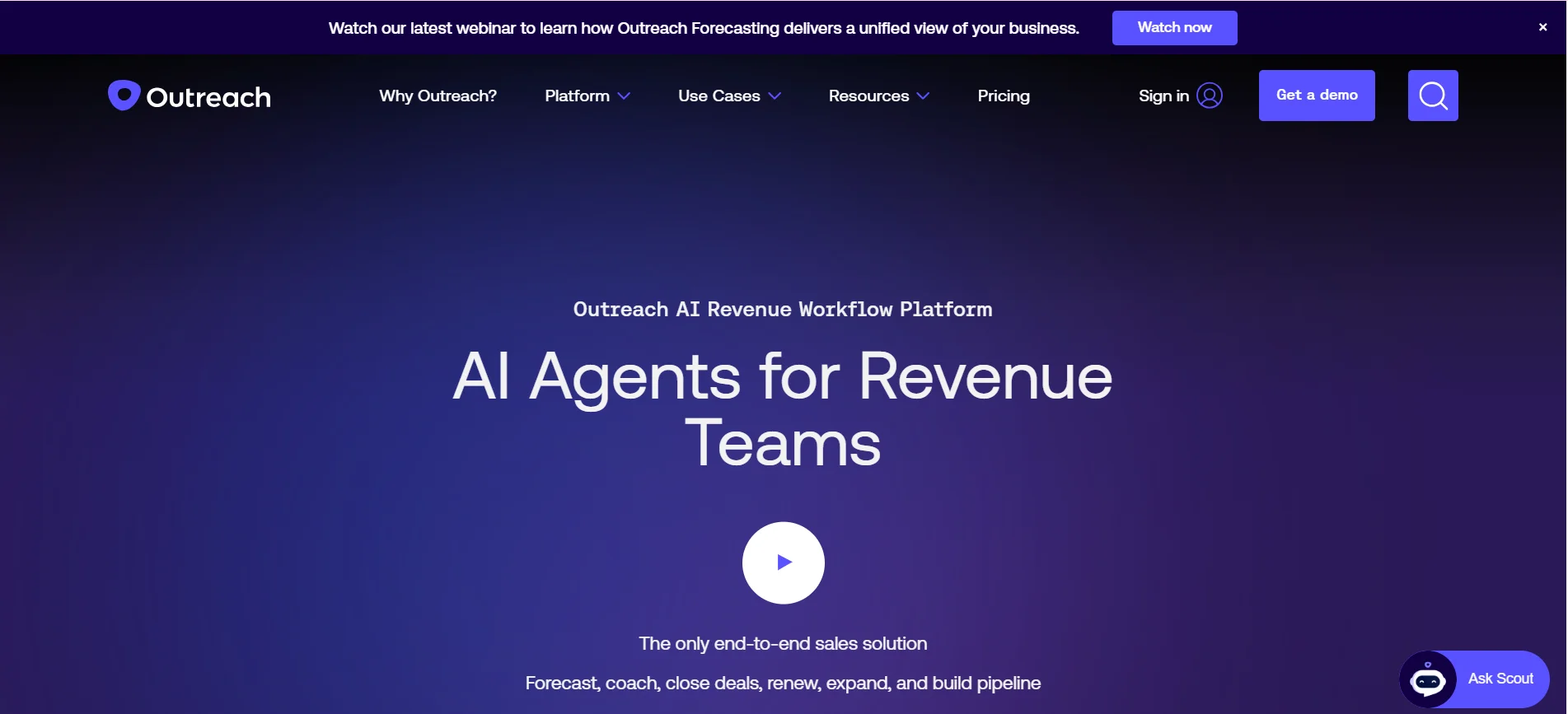
Outreach helps sales reps manage high-volume outbound across multiple channels.
It uses AI to recommend who to contact, when to follow up, and which actions deserve attention.
Reps rely on Outreach to stay organized while running email, call, and social touchpoints in parallel.
The platform reduces guesswork in daily execution.
It is built for teams that need focus, consistency, and control in outbound sales environments.
Key AI Features
- AI-driven recommendations for follow-up timing and next actions
- Multichannel sequencing across email, calls, and social outreach
- Engagement tracking to monitor prospect interactions
- Task prioritization to help reps focus on high-impact activities
- Analytics to measure outreach performance and response trends
Best For
- Outbound and sales development teams at scale
- Sales reps managing high prospect volumes
- Teams running structured multichannel outreach programs
- Organizations that need consistency and execution visibility
How Sales Reps Can Choose the Right AI Tool for Their Role
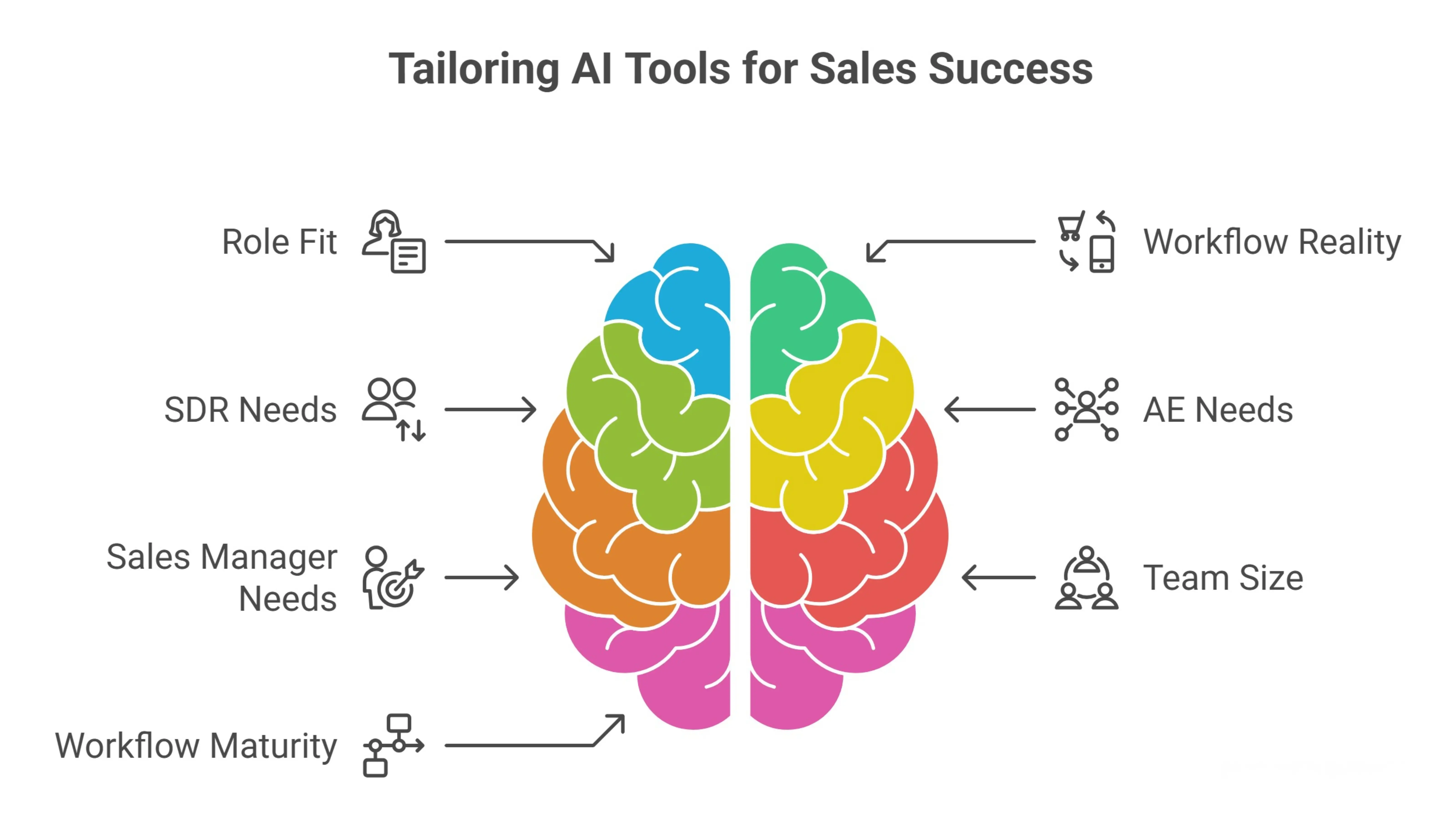
Not every AI tool works the same way for every sales role.
Choosing the best ai tools for sales reps depends on how closely a tool aligns with daily responsibilities, deal ownership, and real-world sales workflows.
Some reps need speed and volume, while others need visibility and precision.
This section helps sales reps evaluate tools based on how they actually sell.
The focus is on role fit and workflow reality—not feature lists or vendor claims.
AI Tool Needs Differ by Sales Role
Sales roles differ significantly in how time is spent and where pressure exists.
Some reps focus heavily on prospecting and outreach volume.Others spend most of their time managing active deals, running meetings, and following up.
Sales managers, on the other hand, care less about individual tasks and more about visibility and predictability.
Because of this, the value of an AI tool depends on the role using it.
A tool that accelerates outbound research may be critical for an SDR but unnecessary for an AE.
Similarly, forecasting and coaching tools matter more to managers than to individual contributors.
Choosing the right AI tool starts with role clarity.Sales reps need to understand which activities directly impact their performance and outcomes.
When tools align with those activities, adoption becomes natural and consistent.
Without role alignment, even powerful AI tools go unused.
Clear role definition ensures AI supports selling instead of becoming another layer of complexity.
AI Tools for SDRs vs AEs vs Sales Managers
SDRs benefit most from AI tools that automate research, lead discovery, and outreach execution.
Their success depends on volume, speed, and consistency.
Tools that reduce manual prospecting and guide follow-ups help SDRs stay productive without burnout.
Account executives have different needs. They manage fewer accounts but deeper relationships.
AI tools that support deal prioritization, meeting insights, and follow-up context are more valuable at this stage.
Sales managers focus on oversight and accuracy.They rely on AI for pipeline visibility, forecasting confidence, and coaching insights.
Conversation analysis and deal health signals help managers identify risks early.
When AI tools match these role-specific needs, they reinforce focus.
When they don’t, they distract.Understanding these differences prevents teams from buying tools that solve the wrong problems.
Matching AI Tools to Workflow Complexity and Team Size
Team size plays a major role in tool selection. Solo reps and small teams need flexibility.
They benefit from tools that reduce setup time and eliminate manual work without heavy configuration.
Larger teams operate differently.They need standardized workflows, reporting consistency, and shared visibility.
AI tools that support coordination and process discipline are more effective at scale.
Workflow maturity also matters.Early-stage teams may struggle with overly complex systemsEstablished teams can take advantage of deeper automation and analytics.
Choosing AI tools without considering team size often leads to underuse or frustration.
Evaluating how complex a workflow needs to be helps teams avoid overbuying. The best tools fit the current stage of growth while allowing room to evolve.
Where Oppora Fits Into a Modern AI Sales Stack
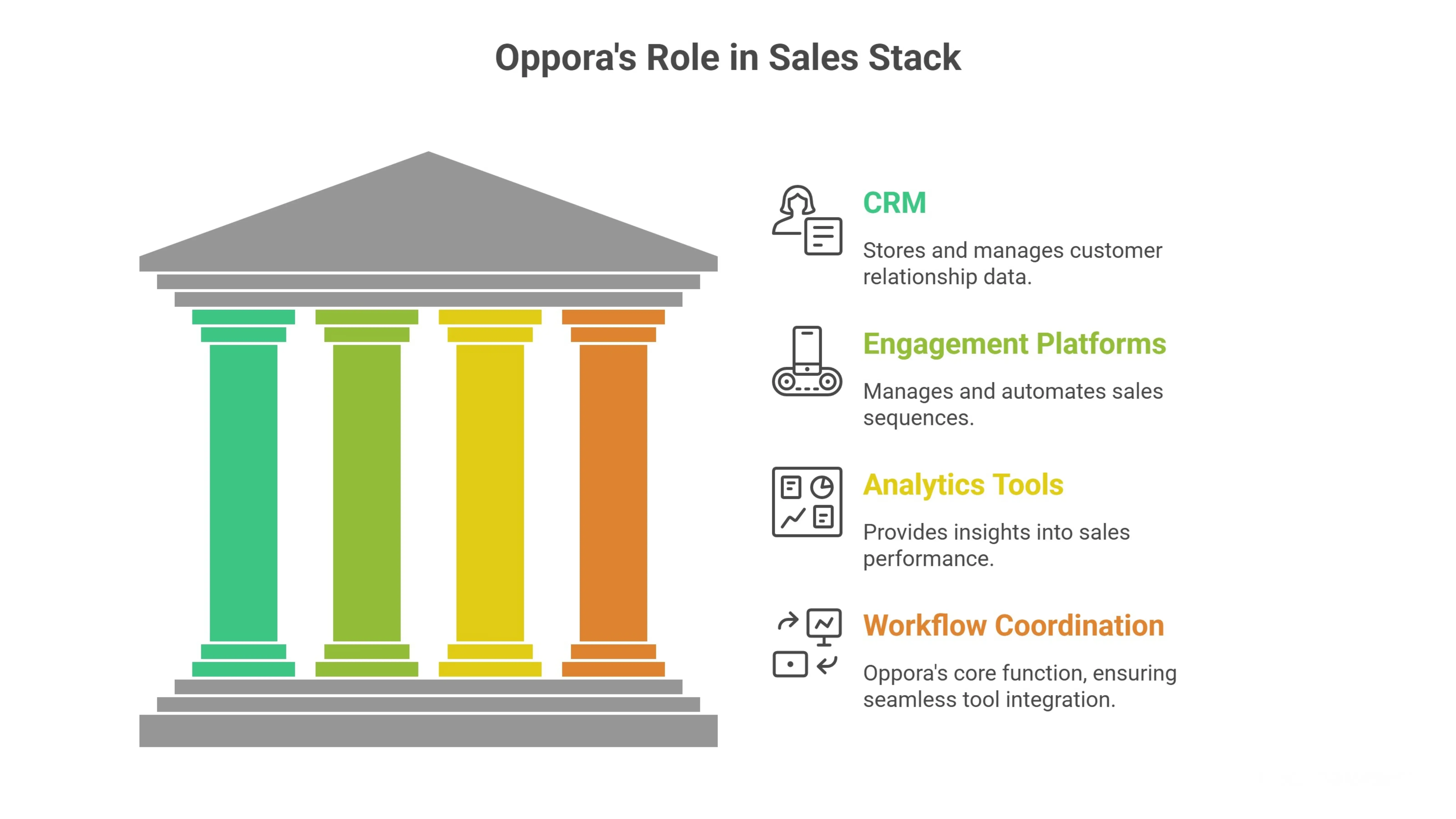
Modern sales teams rely on multiple systems, each designed for a specific responsibility.
CRMs store relationship data.Engagement platforms manage sequences. Analytics tools surface performance insights.
Among ai tools for sales reps, Oppora fits as the workflow coordination layer that sits between data and execution.
Instead of replacing existing tools, Oppora supports them by structuring how outbound work moves across the stack.
This helps sales reps operate with fewer handoffs, clearer ownership, and less friction between systems they already use.
Teams typically add this layer when outbound efforts start to feel fragmented.
That happens when tools work individually, but the workflow between them breaks down.
In those cases, Oppora brings consistency and flow without forcing teams to rebuild or abandon their current sales stack.
Conclusion
AI has become a core part of modern sales work.
The best ai tools for sales reps reduce manual effort, improve focus, and help teams spend more time on meaningful conversations.
When tools align with real sales roles and workflows, adoption becomes easier and results more consistent.
Sales reps who choose thoughtfully gain clarity, efficiency, and control.
In 2026, winning more deals isn’t about more tools. It’s about using the right ones, in the right way.
Frequently Asked Questions (FAQs)
How often should sales teams review or update their AI sales tools stack?
Sales teams should review their AI tools every 6–12 months. As sales processes evolve and teams grow, tools that once fit may become limiting. Regular reviews ensure the stack still supports current goals and workflows.
Can AI sales tools work effectively without a CRM?
Some AI tools can operate independently for prospecting or outreach, but long-term effectiveness improves with a CRM. CRMs provide context, history, and visibility that help AI tools deliver more accurate insights and better coordination.
Do AI sales tools require technical skills to manage?
Most modern AI sales tools are built for non-technical users. While setup may take some time, day-to-day use typically requires minimal technical knowledge, especially for tools designed for sales reps rather than operations teams.
How long does it usually take to see results from AI sales tools?
Many teams see efficiency gains within a few weeks. Measurable improvements in response rates, pipeline quality, or forecasting accuracy usually appear within one to three months, depending on adoption and workflow alignment.
Are AI sales tools suitable for regulated industries or sensitive data?
Yes, but teams should evaluate data handling and compliance features carefully. Many AI sales tools offer permissions, data controls, and integrations designed to support industries with stricter security and compliance requirements.