How to Do B2B Cold Email Marketing That Books Meetings
b2b cold email marketing. cold email marketing
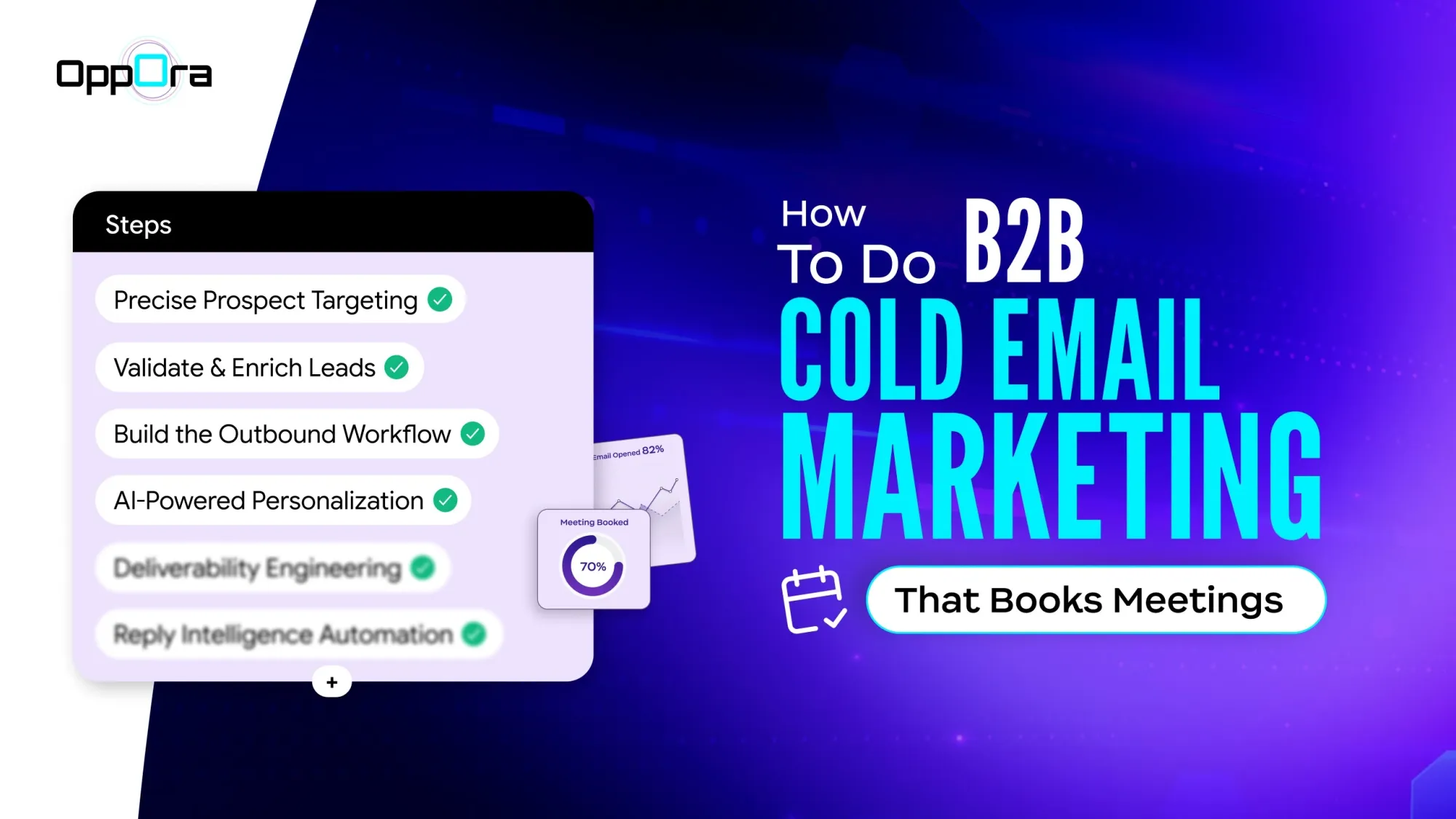
If you think b2b cold email marketing is about blasting thousands of emails and hoping for replies, you’re already behind. Real results come from precision, timing, and structure not volume.
When targeting, data quality, messaging, follow-ups, and deliverability work together, meetings become predictable.
Most teams fail because they skip these fundamentals and send generic emails that never truly connect.
In this guide, you’ll learn how to build a structured B2B cold email marketing system that consistently books meetings. No hacks, no shortcuts just a repeatable engine designed to drive steady pipeline growth.
Getting Started With B2B Cold Email Marketing
Most people start with writing emails. That is the wrong starting point.
B2B cold email marketing begins with clarity, then data, then messaging, and finally optimization. If you skip the foundation, nothing performs consistently.
Here is the structured process you should follow.
Step 1: Define Your Ideal Customer Profile Clearly
You cannot personalize what you do not understand. Clear targeting is the backbone of effective cold email outreach.
Without a defined Ideal Customer Profile, your messaging becomes vague and your reply rates drop.
Identify the Industry and Company Size
Start narrow and specific. Choose industries where your solution creates measurable impact.
Then define company size by employee count or revenue. A 20-person startup thinks very differently from a 500-person organization.
Clear filters sharpen your message and increase relevance.
Define the Core Pain Point You Solve
Do not begin with features. Begin with the expensive problem your prospect already feels.
Ask yourself what frustration you remove and why it matters financially or operationally.
Examples include:
- Slow pipeline growth
- High acquisition costs
- Weak outbound systems
- Low meeting conversion
Cold emails anchored around one clear pain point perform better than broad positioning.
Identify the Real Decision Maker
Targeting the wrong person kills campaigns quickly. Even strong messaging fails if the recipient cannot act.
Identify who owns the problem internally. This could be a Founder, VP of Sales, Head of Marketing, or Revenue Operations lead.
In B2B cold email marketing, precision targeting drives higher positive reply rates than creative copy alone.
Step 2: Build a High-Quality, Verified Lead List
Your lead list sets the ceiling for your campaign results. Poor data guarantees poor performance.
Strong cold email outreach depends on clean, relevant, verified contacts.
Source Leads From Relevant Channels
Use structured platforms to gather targeted prospects. LinkedIn, industry directories, company databases, and hiring boards provide filtering capabilities.
Look for buying signals such as recent hiring, funding announcements, expansion, or product launches. When targeting meets timing, reply rates improve.
Enrich and Clean Your Data
Raw lists are rarely ready for outreach. Company data Enrich, contacts, job titles, and contextual signals.
Then clean the data carefully.
- Remove duplicates
- Fix formatting errors
- Standardize fields
Organized data supports personalization and protects deliverability.
Verify Emails Before Sending
Never skip email address verification. Sending to invalid addresses damages sender reputation and increases bounce rates.
High bounce rates reduce inbox placement and long-term domain health. Sustainable B2B cold email marketing always starts with verified emails.
Step 3: Write Cold Emails That Feel Personal and Human
Messaging comes after targeting and data preparation. Structure and clarity outperform clever language.
Your objective is to start conversations, not close deals in one email.
Use a Simple, High-Converting Email Structure
Keep your email structure predictable and clean:
- Short personalized opener
- Clear problem statement
- Brief value positioning
- Low-friction call to action
Keep emails under 150 words. Shorter emails respect attention and increase reply probability.
Personalize Beyond First Name and Company
Surface-level personalization no longer works. Mentioning a name and company is not enough.
Reference meaningful signals such as hiring activity, growth trends, or industry pressure. When your message reflects their real situation, it feels relevant.
Craft Clear and Low-Friction CTAs
Avoid heavy asks in the first email. Large commitments reduce response rates.
Use simple prompts instead, such as “Worth exploring?” or “Open to a quick discussion?” Lower friction increases replies.
Step 4: Build a Structured Follow-Up System
Most meetings come from follow-ups rather than first emails. Stopping after one message leaves pipeline behind.
Cold email outreach performs best when follow-ups are planned and spaced strategically.
Plan 3–5 Strategic Touchpoints
Design a sequence of three to five emails over two to three weeks. Give prospects space without disappearing.
Consistency increases visibility while maintaining professionalism.
Use Different Angles in Each Follow-Up
Avoid repeating the same pitch. Shift the angle each time to maintain interest.
You can introduce a different benefit, reference insight, ask a softer question, or highlight proof. Variation improves engagement probability.
Know When to Stop and Recycle Leads
Persistence matters, but over-persistence harms brand perception. If there is no response after several attempts, pause the sequence.
Revisit those leads later when circumstances may have changed.
Step 5: Protect Deliverability From Day One
Deliverability determines whether your emails reach inboxes. Ignoring it undermines every other effort.
Healthy domains and controlled sending behavior are essential for long-term performance.
Warm Up New Domains Properly
Never launch cold outreach from a brand-new domain immediately. Gradually increase volume to build trust signals.
Warm-up improves inbox placement and protects domain reputation.
Rotate Mailboxes for Safe Scaling
Avoid scaling from a single inbox. Distribute volume across multiple mailboxes.
Balanced sending patterns reduce spam risk and support sustainable growth.
Avoid Spam Triggers and Patterned Templates
Avoid aggressive sales language and repetitive templates. Heavy formatting and excessive links reduce deliverability.
Write naturally and keep formatting minimal to improve inbox placement.
Step 6: Track Metrics That Actually Lead to Meetings
Metrics guide improvement. But not all metrics matter equally.
Focus on indicators tied directly to conversations and booked meetings.
Measure Reply and Positive Reply Rates
Open rates are unreliable due to privacy changes. Reply rate and positive reply rate provide clearer signals.
These metrics show whether your targeting and messaging resonate.
Optimize for Meetings Booked, Not Opens
Meetings booked is the real KPI. Everything else supports that outcome.
If changes do not increase qualified conversations, they are not meaningful improvements.
A/B Test Subject Lines and Messaging Angles
Test one variable at a time to identify performance drivers. Subject lines, openers, and CTAs are strong testing points.
Small improvements compound over time into a predictable meeting engine.
Using Oppora.ai to Build a Fully Automated Cold Email System
You now understand the structure behind strong B2B cold email marketing. The next step is execution at scale without managing everything manually.
This is where Oppora.ai turns your strategy into a system that runs continuously. Instead of juggling tools, workflows, and spreadsheets, you build once and let AI agents execute the entire outbound process.
Here is how that system works.
Step 1: Find Leads Using AI or Manual Filters
Lead generation is the starting point of your outbound engine. Oppora allows you to either let AI discover companies automatically or apply precise filters manually.
Let AI Identify Companies Based on What You Sell
You simply describe what you sell and who you want to reach. Oppora’s AI scans the market and identifies relevant companies that match your offer.
Instead of guessing segments, you let AI align targeting with your value proposition.
Use Manual Filters for Industry, Revenue, Hiring Signals, or Geography
If you prefer more control, you can apply manual filters. Narrow results by industry, revenue range, employee count, location, or growth indicators.
This ensures your campaigns stay tightly aligned with your Ideal Customer Profile.
Target Companies With Recent Job Openings or Growth Signals
Hiring activity often signals expansion and budget allocation. Oppora detects companies actively hiring for roles related to your solution.
Reaching prospects during growth moments increases reply probability.
Automatically Identify Decision Makers Inside Each Account
Once companies are identified, Oppora finds relevant decision makers automatically.
You do not need to manually search for founders, sales leaders, or marketing heads inside each company.
Step 2: Enrich, Clean, and Verify Lead Data Automatically
Finding companies is only the first layer. Clean and verified data determines deliverability and response rates.
Oppora automates enrichment and validation before campaigns go live.
Access 700M+ Verified Contacts With Waterfall Sourcing
Oppora uses waterfall sourcing across 700M+ verified contacts. If one source fails, it pulls from another automatically.
This increases data accuracy and reduces reliance on single providers.
Run Real-Time Email Verification Before Campaign Launch
Before sending begins, emails are verified in real time. This prevents high bounce rates and protects your domain reputation.
Verified contacts ensure sustainable B2B cold email marketing performance.
Deduplicate and Score Imported Lead Lists
If you already have leads, you can import them directly. Oppora cleans, deduplicates, and scores those contacts automatically.
You start campaigns with structured, prioritized data instead of messy spreadsheets.
Step 3: Create AI-Personalized Multi-Channel Campaigns
Once leads are ready, Oppora builds and executes campaigns across channels. The focus remains personalization at scale without spintext shortcuts.
Generate Unique Emails Without Spintext
Each email is uniquely generated by AI. Lines are written dynamically instead of being rotated from templates.
This reduces spam patterns and prevents copy fatigue across large campaigns.
Personalize Messaging Based on Company Signals
Oppora references hiring trends, company growth, or industry context when generating emails.
Personalization becomes data-driven instead of manually inserted variables.
Combine Email and LinkedIn in One Sequence
Outbound does not need to live inside email alone. You can combine email with LinkedIn connection requests and follow-ups in one workflow.
This multi-channel approach increases visibility without increasing manual work.
Step 4: Automate Replies and Book Meetings Instantly
Execution does not stop after sending. Oppora continues working when replies arrive.
Use AI to Handle Objections and Questions
The AI Reply Agent answers common objections and clarifies questions automatically.
You reduce response time while maintaining consistent messaging.
Qualify Interest Automatically
Oppora evaluates reply intent and categorizes prospects.
Warm leads are prioritized while irrelevant conversations are filtered out.
Drop Scheduling Links and Sync Confirmed Meetings
When interest is confirmed, AI shares your scheduling link instantly.
Booked meetings sync directly into your CRM without manual updates.
Step 5: Protect Deliverability While Scaling Outreach
Scaling without deliverability control is risky. Oppora builds safeguards directly into the system.
Auto-Warm Domains Before Scaling
New domains are warmed automatically before campaign expansion.
Gradual volume increase builds trust with email providers.
Rotate Up to 50 Mailboxes Safely
Oppora can rotate outreach across up to 50 inboxes.
This distributes volume evenly and protects sender reputation.
Match Sender Identity to Lead Mail Provider
The system matches Gmail-to-Gmail or Outlook-to-Outlook automatically.
This improves open rates and builds subtle trust signals
Step 6: Sync Everything to CRM Without Manual Work
Outbound data should never live in isolation. Oppora syncs activity automatically with your CRM.
Push Contacts and Replies to HubSpot, Salesforce, or Pipedrive
Contacts, replies, and activity logs are pushed directly into major CRMs.
You eliminate manual data entry and reduce reporting gaps.
Sync Deals, Tasks, and Meetings Automatically
Meetings and deal stages update in real time.
Your pipeline reflects activity without manual intervention.
Maintain a Unified Shared Inbox for Team Collaboration
All replies appear in a shared inbox view.
Teams can tag members, resolve conversations, and avoid missed leads.
Step 7: Build n8n-Style AI Workflows That Run on Autopilot
Oppora does not just send campaigns. It allows you to design full outbound workflows that execute continuously.
Create Drag-and-Drop Workflow Sequences
You build sequences visually by connecting AI agents in a structured flow.
Once saved, the workflow runs automatically.
Connect AI Agents Into a Continuous Execution Loop
Lead discovery, enrichment, email generation, and reply handling work together.
Each agent passes data to the next without manual input.
Schedule Trigger-Based Campaigns
You can set workflows to check for new job openings every week.
When triggers activate, campaigns launch automatically.
Run Outbound on Recurring Schedules Without Daily Logins
Outbound no longer depends on daily supervision.
You build once, and Oppora keeps executing consistently in the background.
Common B2B Cold Email Mistakes That Kill Meetings
Even with a solid system, small mistakes can quietly reduce performance. Most failed b2b cold email marketing campaigns do not collapse dramatically they simply underperform because of avoidable errors.
If your outreach is not booking meetings consistently, one of these issues is likely the reason.
Targeting Too Broadly
Trying to reach everyone usually results in reaching no one effectively. Broad targeting leads to vague messaging that fails to resonate with any specific segment.
When your ICP is unclear, personalization becomes surface-level and reply rates drop quickly.
Writing Long, Sales-Heavy Emails
Cold email is not a brochure. Long paragraphs filled with features overwhelm busy decision makers.
Prospects do not want a full pitch immediately. They want clarity, relevance, and a reason to respond.
Pitching Too Early
Many senders jump straight to booking a demo. Asking for a 30-minute call in the first email creates unnecessary friction.
The goal of cold email outreach is to start a conversation, not close a deal instantly.
Ignoring Deliverability
You can have perfect copy and still fail if emails land in spam. High bounce rates, unverified lists, and poor domain health quietly destroy campaigns.
Deliverability is the invisible foundation of sustainable B2B cold email marketing.
Stopping After One Email
Most replies come from follow-ups, not the first message. Quitting early leaves real opportunities untouched.
A structured sequence dramatically increases visibility and response probability.
Managing Everything Manually
Using spreadsheets and disconnected tools slows execution. Manual processes lead to inconsistent follow-ups and missed replies.
Without automation or structure, scaling cold email outreach becomes exhausting and inefficient.
What a High-Performing Cold Email Engine Looks Like
A high-performing cold email engine is not random. It is structured, automated, and built around consistency rather than bursts of activity.
In strong b2b cold email marketing, meetings are not occasional wins. They are the natural output of a system that runs every day without friction.
Here is what that engine looks like in practice.
Automated Lead Discovery
Lead generation runs continuously instead of being a one-time task. New companies are identified based on clear ICP filters and buying signals.
This ensures your pipeline never dries up. The system keeps feeding fresh, relevant prospects into your outreach flow.
Continuous Personalization at Scale
Personalization does not rely on manual research for every contact. Messaging adapts dynamically using company signals, role context, and industry insights.
This balance allows you to scale without sacrificing relevance. Emails still feel human, even as volume increases.
Follow-Ups That Run Automatically
Follow-ups are pre-structured and triggered automatically. Prospects receive consistent touchpoints without you tracking each step manually.
This increases response rates while keeping execution predictable. No opportunities slip through because someone forgot to follow up.
AI-Handled Replies That Turn Into Meetings
Replies are categorized and handled intelligently. Warm responses are prioritized, objections are addressed, and scheduling links are shared instantly.
This shortens response time and moves conversations forward faster. Meetings become the natural outcome of structured engagement.
CRM-Synced Revenue Pipeline
Every contact, reply, and meeting syncs directly into your CRM. Your pipeline reflects real-time activity without manual updates.
When data flows automatically, reporting becomes accurate and decision-making improves. A true cold email engine connects outreach directly to revenue.
Conclusion
Cold email success is not about sending more emails. It is about building a system where targeting, personalization, follow-ups, and deliverability work together consistently.
In strong b2b cold email marketing, meetings are not random wins. They are the predictable result of structured execution and continuous optimization.
When you stop relying on manual effort and start building repeatable workflows, outreach becomes scalable and measurable. Instead of chasing replies, you create a steady flow of qualified conversations.
Cold email works when it is treated like an engine, not a campaign. Systems create pipeline. Volume alone never will.
If you are ready to move from manual outreach to a structured outbound system, platforms like Oppora.ai can help you automate the process while keeping personalization and deliverability intact.
Frequently Asked Questions (FAQ)
What is B2B cold email marketing?
B2B cold email marketing is the process of reaching out to decision makers who have not previously interacted with your business, with the goal of starting qualified conversations that turn into meetings and revenue. Unlike mass email blasting, it focuses on precise targeting, personalization, structured follow-ups, and strong deliverability practices to create predictable pipeline growth.
Is B2B cold email marketing still effective?
Yes, B2B cold email marketing is still highly effective when executed strategically. Generic, high-volume campaigns often fail, but personalized outreach built around a clear Ideal Customer Profile and relevant messaging continues to generate consistent replies and booked meetings.
How many follow-ups should you send in a cold email campaign?
Most successful cold email outreach campaigns include three to five follow-ups spaced over two to three weeks. Many replies come after the second or third touchpoint, so stopping after one email significantly reduces your chances of booking meetings.
What is a good reply rate for B2B cold email marketing?
A healthy reply rate typically ranges between 5% and 15%, depending on industry and targeting precision. However, the most important metric is positive reply rate and meetings booked, since those directly reflect pipeline impact rather than surface-level engagement.
How can you avoid landing in spam when sending cold emails?
To avoid spam, you should warm up domains, verify email lists, rotate inboxes for safe scaling, and avoid aggressive or repetitive language patterns. Deliverability must be treated as a long-term asset, because strong domain health directly determines whether your cold email outreach reaches inboxes or gets filtered out.