10 B2B Outbound Lead Generation Strategies That Actually Work
outbound b2b lead generation, b2b outbound lead generation strategies, outbound lead generation strategies, lead generation strategies
Many B2B companies struggle to maintain a steady flow of new sales opportunities. Some months the pipeline looks healthy, while other months feel unexpectedly quiet.
Inbound marketing can bring leads over time. But it often takes months before content and SEO produce consistent results.
Because of this delay, many teams look for faster ways to generate conversations with potential buyers. They need a system that gives them more control over pipeline growth.
This is where b2b outbound lead generation becomes valuable. Instead of waiting for prospects to find you, outbound helps you reach decision-makers directly.
When done right, outbound becomes a predictable pipeline engine. Success usually depends on precise targeting, relevant messaging, consistent follow-ups, and automation tools that keep outreach running smoothly.
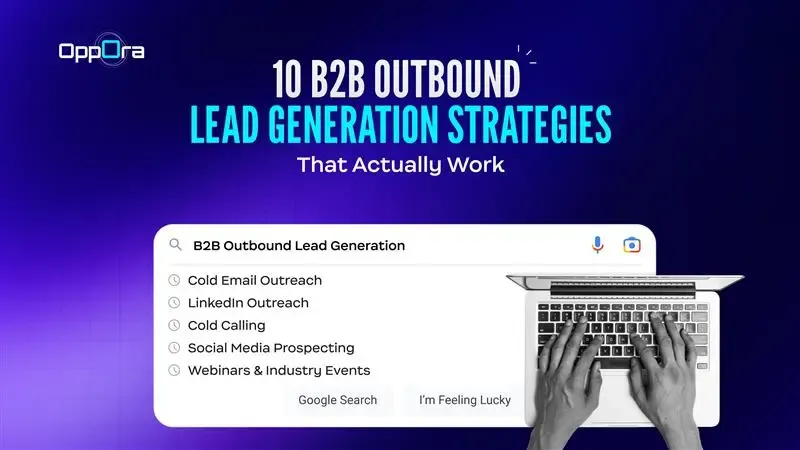
10 B2B Outbound Lead Generation Strategies That Actually Work
Successful outbound lead generation rarely depends on a single tactic. Companies that generate consistent pipelines usually combine several outreach methods to reach decision-makers through different channels.
Using multiple approaches increases visibility and improves the chances of starting meaningful conversations with potential buyers. The following b2b outbound lead generation strategies are commonly used by companies that want predictable pipeline growth.
1. Cold Email Outreach
Cold email outreach remains one of the most effective strategies in b2b outbound lead generation. It allows you to contact decision-makers directly with messages tailored to their business challenges.
A successful cold email focuses on clarity and relevance. Decision-makers receive dozens of emails daily, so your message must quickly communicate value.
Effective cold email campaigns usually include:
- Clear cold email subject lines that immediately capture attention
- Short and direct email messages that respect the reader’s time
- Personalization based on company, industry, or role
- A clear explanation of the problem you solve
- A simple call-to-action that encourages a reply
Follow-up on cold email is essential for improving response rates. Many prospects respond only after the second or third email.
Consistent follow-up sequences keep your outreach visible. When combined with strong targeting and personalization, cold email becomes a powerful outbound lead generation channel.
2. LinkedIn Outreach
LinkedIn outreach has become an important part of modern b2b outbound lead generation strategies. The platform allows you to connect directly with professionals responsible for buying decisions.
Sales teams often use LinkedIn to identify companies and decision-makers within their target market. This makes outreach more focused and relevant.
A typical LinkedIn outreach process includes:
- Finding decision-makers based on job role and company
- Sending personalized connection requests with short introductions
- Engaging with the prospect’s posts or content
- Sending thoughtful follow-up messages after connection
- Gradually introducing a business conversation
Engagement before outreach helps build familiarity. When prospects recognize your name, they are more likely to respond.
LinkedIn also allows professionals to research each other before replying. A well-optimized profile can strengthen credibility and increase trust.
3. Cold Calling
Cold calling continues to play an important role in many outbound b2b lead generation strategies. Speaking with prospects directly can create faster and more meaningful conversations.
Phone conversations allow sales teams to present their value proposition clearly. They also create opportunities to answer questions immediately.
Cold calling offers several advantages:
- Real-time conversations with decision-makers
- Faster lead qualification through direct discussion
- Immediate feedback from prospects
- Opportunities to handle objections quickly
- Ability to schedule meetings during the call
Cold calls often become more effective when combined with other outreach methods. Prospects who have seen your email or LinkedIn message may recognize your name.
When integrated into a broader outreach strategy, cold calling helps accelerate the sales process and increase engagement.
4. Multi-Channel Outreach
Multi-channel outreach is one of the most effective b2b outbound lead generation strategies today. Instead of relying on a single communication channel, companies reach prospects through several platforms.
Different decision-makers prefer different communication methods. Some respond to emails, while others prefer LinkedIn messages or phone calls.
A typical multi-channel outreach strategy may include:
- Personalized cold email sequences
- LinkedIn connection requests and follow-ups
- Phone calls for direct conversations
- Social engagement through comments or interactions
- Retargeting ads to reinforce brand visibility
Multiple touchpoints help increase recognition. Even if prospects ignore the first message, repeated exposure improves familiarity.
Consistency across channels is important for success. Each interaction should reinforce the same core message.
When coordinated properly, multi-channel outreach significantly increases response and engagement rates.
5. Social Media Prospecting
Social media prospecting focuses on identifying potential leads through professional platforms. These spaces provide valuable insights into what prospects care about.
LinkedIn is the most common platform for B2B prospecting. However, many industries also have active discussions across other professional networks.
Social media prospecting typically involves:
- Monitoring posts related to industry challenges
- Identifying professionals actively discussing those topics
- Interacting with posts through comments or reactions
- Sharing helpful insights during conversations
- Building familiarity before sending outreach messages
Observing discussions helps you understand a prospect’s priorities. This makes outreach messages more relevant and personalized.
Engagement also builds early credibility. Prospects who recognize your name are more likely to respond to outreach.
Over time, consistent social media activity strengthens relationships with potential buyers.
6. Targeted Paid Campaigns
Targeted paid campaigns can support outbound b2b lead generation by increasing visibility among specific professional audiences. Advertising platforms offer powerful targeting capabilities.
Companies can run campaigns aimed at particular industries, company sizes, or job roles. This ensures that marketing messages reach the right audience.
Effective paid campaigns often include:
- Ads targeting specific industries or professional roles
- Landing pages designed to capture lead information
- Downloadable resources such as reports or case studies
- Retargeting ads that follow website visitors
- Performance tracking to measure campaign success
Retargeting is especially useful in outbound strategies. Prospects who visit your website may see your brand again through ads.
Repeated exposure increases familiarity. When outreach begins, prospects may already recognize your company.
Paid campaigns, therefore, support outbound efforts by strengthening brand awareness among targeted audiences.
7. Partner & Referral Programs
Partner and referral programs are another powerful strategy for generating outbound leads. Businesses often collaborate with companies that serve similar audiences.
These partnerships allow companies to introduce each other to potential clients. Recommendations from trusted partners often carry more credibility.
Common partnership strategies include:
- Referral agreements between complementary businesses
- Co-marketing campaigns targeting shared audiences
- Joint webinars or educational events
- Content collaborations such as reports or guides
- Cross-promotion through newsletters or platforms
Partner introductions often result in warmer leads. Prospects are more likely to engage when a trusted company makes the recommendation.
These programs also strengthen relationships within an industry network. Businesses that collaborate effectively often benefit from long-term growth.
For many organizations, referrals become one of the most reliable lead sources.
8. Webinars & Industry Events
Webinars and industry events create opportunities to connect with potential buyers who are actively seeking knowledge. These environments attract professionals interested in solving business challenges.
Hosting webinars allows companies to share expertise and provide valuable insights. Educational content helps build credibility with participants.
Events can generate leads through several activities:
- Hosting educational webinars or online sessions
- Participating in industry conferences and networking events
- Offering workshops or training sessions
- Collecting attendee information through registrations
- Following up with participants after the event
Webinars often attract professionals researching solutions. This makes attendees strong potential leads.
Industry conferences also create opportunities for meaningful conversations. Face-to-face discussions often lead to deeper relationships.
Combining events with outbound follow-up helps turn initial interactions into sales opportunities.
9. Content Distribution
Content distribution supports outbound lead generation by helping companies share valuable insights. High-quality content builds credibility and attracts attention from potential buyers.
Instead of starting conversations with a direct sales pitch, companies can begin with useful information. This makes outreach feel more helpful.
Content distribution strategies often include:
- Publishing industry reports or research studies
- Sharing case studies that demonstrate real results
- Creating educational guides or playbooks
- Collaborating with industry publications
- Promoting content through social media platforms
Sales teams can also use content during outreach conversations. Sharing a helpful resource provides immediate value to the reader.
Content creates context for discussions. Instead of asking for a meeting immediately, you offer insights that help prospects solve problems.
Over time, consistent content distribution strengthens your reputation as an industry expert.
10. Community Engagement
Community engagement focuses on participating in professional groups where potential buyers regularly interact. These communities exist on platforms like LinkedIn, Slack, or specialized industry forums.
Members often share knowledge, discuss challenges, and ask questions. This creates opportunities for companies to contribute helpful insights.
Effective community engagement includes:
- Joining relevant professional groups or communities
- Participating in discussions about industry topics
- Answering questions related to common challenges
- Sharing educational resources or insights
- Building relationships with active members
Community participation focuses on long-term relationship building. Instead of promoting products immediately, the goal is to contribute value.
Consistent engagement builds trust within the community. Members begin to recognize individuals who regularly share useful insights.
Once trust develops, outreach becomes much easier. Conversations that start within communities often grow into meaningful business relationships.
Scaling B2B Outbound Lead Generation with Oppora.ai
As outbound campaigns grow, managing prospecting, messaging, and follow-ups manually becomes difficult. Sales teams often spend more time handling tools than actually speaking with prospects.
This is where workflow-based outbound systems help scale b2b outbound lead generation. Platforms like Oppora.ai automate the entire outreach process while keeping campaigns personalized and organized.
Instead of managing separate tools for prospecting, emailing, and reply handling, one platform can manage the full outbound workflow.
Finding Targeted Leads Faster
Finding the right prospects is one of the most time-consuming tasks in outbound sales. Many sales teams spend hours researching companies, identifying contacts, and verifying emails.
Oppora.ai simplifies this process by providing access to a massive B2B contact database.
Key lead discovery capabilities include:
- Access to 700M+ verified B2B contacts with waterfall data sourcing
- Multiple enrichment providers for higher contact accuracy
- Advanced filters based on industry, company size, job role, and location
- Real-time email verification before outreach begins
- Option to connect additional external data providers through integrations
Instead of spending hours building lead lists manually, teams can generate targeted prospect lists within minutes.
This allows sales teams to focus on outreach and conversations rather than research.
Creating Automated Outreach Workflows
Outbound lead generation usually involves several repetitive steps. Sales teams must find prospects, write emails, schedule follow-ups, and track engagement.
Oppora simplifies this process through workflow-based outbound automation.
Using a drag-and-drop workflow builder, users can design automated outreach sequences that continue running in the background.
A typical outbound workflow may include:
- Automatically discovering relevant companies
- Identifying decision-makers inside those companies
- Enriching and verifying contact data
- Sending personalized email sequences
- Triggering follow-up messages automatically
- Adding LinkedIn outreach within the same sequence
Oppora’s system uses 8 connected AI sales agents that work together to execute each step of the outreach process.
Once the workflow is created, the system continues running without requiring constant supervision.
Personalizing Emails With AI
Personalization is critical for successful outbound campaigns. Generic messages often get ignored because they look automated or irrelevant.
Oppora uses AI-powered email generation to create unique and contextual messages.
Instead of sending the same template repeatedly, AI generates personalized content for each prospect.
Personalization features include:
- AI variables that dynamically insert company or role information
- Contextual references based on industry insights
- Unique email copy generated for every message
- No spintext or repeated templates
- Automatic personalization at scale for large campaigns
Because every email feels tailored, outreach campaigns remain effective even when sending thousands of messages.
This level of personalization helps increase reply rates and improve overall engagement.
Managing Replies and Booking Meetings
Handling replies can quickly become overwhelming as outreach campaigns scale. Sales teams must track responses across inboxes and respond quickly to interested prospects.
Oppora.ai simplifies reply management using an AI-powered Reply Agent.
The platform automatically detects responses and organizes them within a shared workspace.
Reply management capabilities include:
- Automatic detection of incoming replies across connected inboxes
- AI assistance for answering common questions
- Automatic sending of attachments or additional information
- Qualification of interested prospects through AI conversations
- Instant meeting booking using scheduling links
The system can also route conversations to the right team member when necessary.
This reduces manual coordination and shortens the time between first response and scheduled meeting.
Scaling Outreach Across Multiple Mailboxes
Scaling outbound campaigns requires careful management of email deliverability. Sending too many emails from a single inbox can damage the sender reputation.
Oppora supports large-scale outreach by allowing teams to connect and manage multiple mailboxes.
Key scaling capabilities include:
- Connection of up to 50 email inboxes for large campaigns
- Automatic inbox rotation to distribute sending volume
- Built-in domain warm-up for new email accounts
- Gmail-to-Gmail and Outlook-to-Outlook sender matching for higher trust
- Deliverability monitoring and engagement tracking
These controls help maintain a strong email reputation while scaling outreach volume.
With proper inbox management, companies can safely run large outbound campaigns without risking spam issues.
Conclusion
B2B companies cannot rely only on inbound channels if they want predictable growth. B2B outbound lead generation remains one of the most reliable ways to create a consistent pipeline and reach decision-makers directly.
Successful outbound strategies usually depend on a few critical elements. Teams need precise targeting, relevant messaging, and consistent follow-ups to start meaningful conversations with potential buyers.
The challenge is scaling these activities without overwhelming sales teams. Manual prospecting, messaging, and follow-ups can quickly become difficult as outreach volume grows.
This is where automation changes the game. Workflow-driven outbound platforms allow companies to combine prospecting, messaging, and follow-ups into a single automated system.
Tools like Oppora.ai help businesses build these systems by automating lead discovery, outreach workflows, and reply management. With the right workflow in place, outbound can become a predictable engine for generating leads and booking meetings consistently.
Frequently Asked Questions (FAQs)
What is B2B outbound lead generation?
B2B outbound lead generation is the process of directly contacting potential business customers through channels like email, LinkedIn, or phone calls to start sales conversations.
How is outbound lead generation different from inbound?
Inbound attracts prospects through content or marketing, while outbound involves reaching out directly to targeted decision-makers.
What are the most effective B2B outbound lead generation strategies?
Common strategies include cold email outreach, LinkedIn prospecting, cold calling, multi-channel outreach, and industry events.
Why is personalization important in outbound outreach?
Personalized messages feel more relevant to the recipient and significantly increase the chances of getting a reply.
How does AI improve B2B outbound lead generation?
AI automates lead discovery, email personalization, follow-ups, and engagement tracking, making outreach faster and more scalable.