B2B Sales Outreach Explained: Strategies, Channels & Best Practices
personalized b2b sales outreach b2b sales outreach best practices b2b sales outreach strategies
B2B sales outreach has become harder than ever.
Inbox competition is higher, reply rates are lower, and most teams rely on fragmented tools with no clear process.
As a result, outreach often feels inconsistent and difficult to scale.
This guide explains what b2b sales outreach really is, why it still works, which channels matter most today, and how to execute outreach step by step.
Later sections also show how structured, AI-powered workflows like those used in Oppora can simplify and speed up the entire process.
What Is B2B Sales Outreach
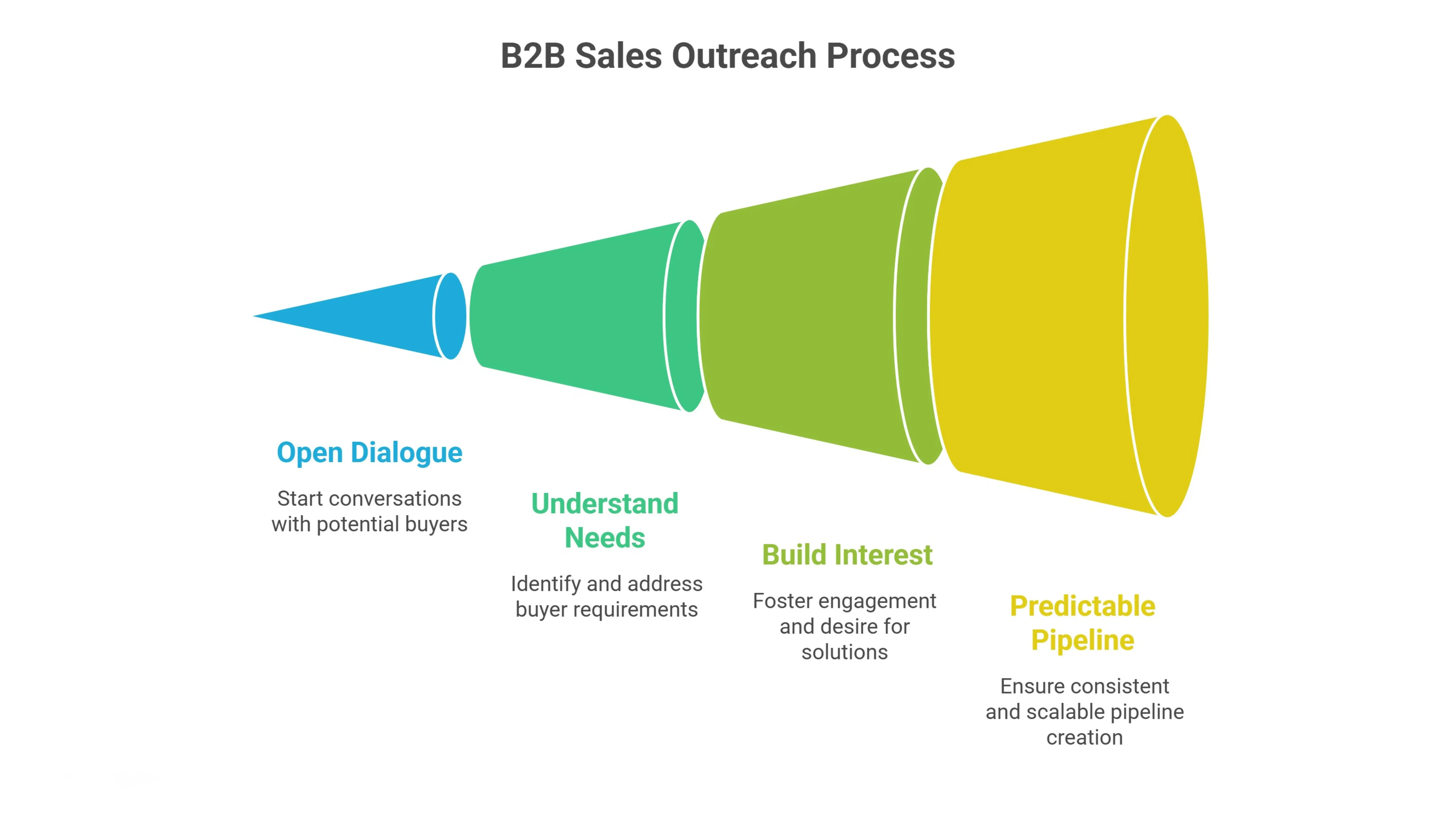
B2B sales outreach means proactively reaching out to potential business buyers to start conversations.
It is not about pushing demos or closing deals on the first touch. Instead, outreach focuses on opening dialogue, understanding needs, and building interest over time.
For beginners, it provides a clear starting point. For experienced teams, it supports consistent and scalable pipeline creation.
How B2B Sales Outreach Is Different from Inbound and Demand Generation
B2B sales outreach is proactive by design.
It starts conversations before a buyer actively looks for a solution. Sales teams decide who to contact, when to reach out, and what message to send.
Inbound and demand generation work differently.
They rely on existing interest, where buyers discover content, ads, or landing pages and raise their hand when ready.
While effective, this process takes time and depends heavily on traffic and brand awareness.
Outreach becomes essential when teams need predictable pipeline creation.
It gives sales teams more control over timing, targeting, and growth instead of waiting for demand to appear.
Benefits of B2B Sales Outreach
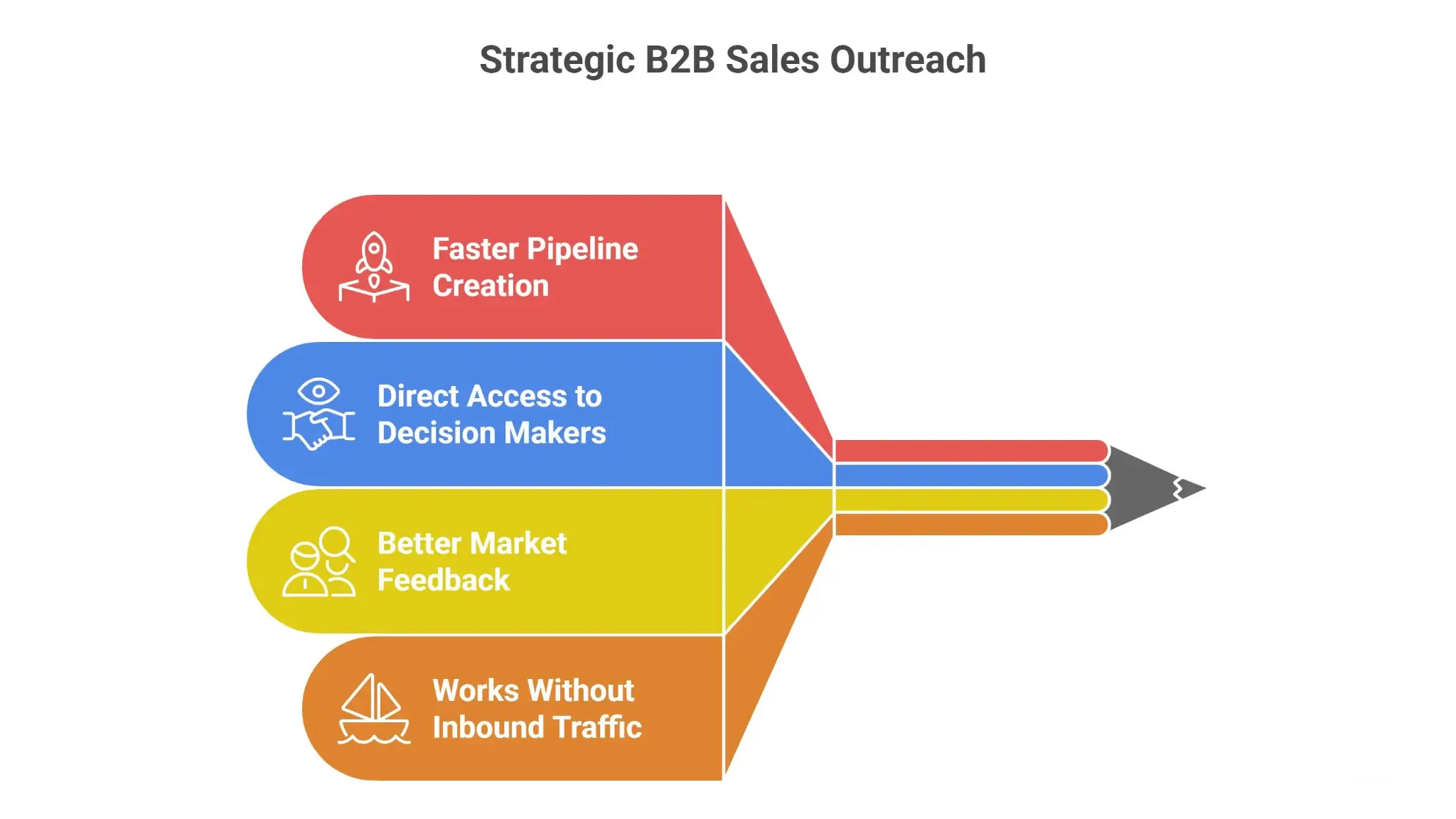
B2B sales outreach gives teams direct control over pipeline creation.
Instead of waiting for inbound demand, sales teams can proactively reach decision makers and generate opportunities faster.
Outreach also provides clearer insight into buyer needs and delivers more consistent results even when inbound traffic or brand awareness is limited.
Faster Pipeline Creation
Sales outreach allows teams to create pipeline on demand instead of waiting for inbound leads.
By engaging relevant buyers directly, sales teams control when conversations begin and move opportunities forward faster.
- Start conversations without relying on inbound traffic
- Shorten sales cycles through proactive engagement
- Reduce dependency on ads or content for pipeline
This makes outreach a reliable way to generate qualified opportunities consistently.
Direct Access to Decision Makers
Outbound outreach enables sales teams to reach decision makers directly instead of waiting for them to come inbound.
This removes friction caused by gated forms and long nurture cycles.
- Engage people who influence buying decisions
- Control messaging and timing more effectively
- Avoid competing for attention in crowded inbound channels
As a result, conversations start earlier and with the right stakeholders.
Better Market Feedback
Every outreach reply positive or negative provides direct insight into the market.
These responses reflect real buyer intent, objections, and timing.
- Identify recurring pain points and objections
- Understand readiness to engage
- Refine targeting and messaging using real conversations
Over time, outreach becomes a continuous feedback loop instead of guesswork.
Works Even Without Inbound Traffic
Outreach allows companies to grow even when inbound traffic is limited or inconsistent
This is especially useful for early-stage teams and niche B2B offerings.
- Generate pipeline without heavy content or ad spend
- Reach specific roles or industries directly
- Reduce reliance on brand awareness
This makes outbound a dependable growth lever regardless of inbound maturity.
Common Channels Used in B2B Sales Outreach
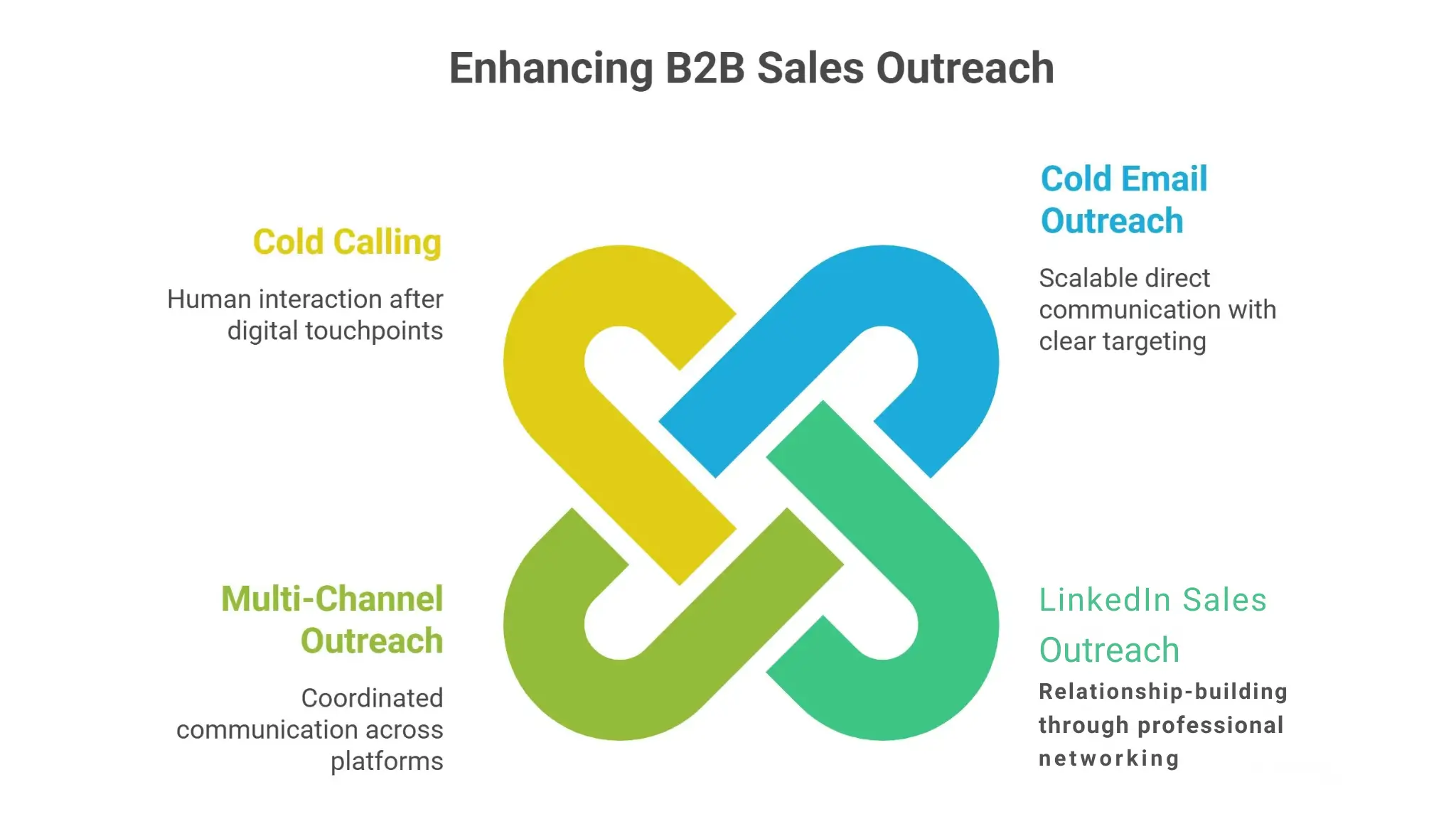
B2B sales outreach works best when multiple channels support each other.
Different channels play different roles across the buyer journey, from first contact to follow-up.
This section explains the most common outreach channels, how each fits into the process, and when to use them individually or together for better results.
Cold Email Outreach
Cold email remains the most scalable outreach channel in B2B.
It allows teams to reach buyers directly with relevant messages at low cost.
- Works best with clear targeting and intent
- Relevance matters more than volume
- Poor timing and generic messaging reduce replies
Successful cold email focuses on quality, not mass sending.
LinkedIn Sales Outreach
LinkedIn outreach supports relationship-based selling.
It helps create familiarity before deeper sales conversations begin.
- Build visibility through connections and comments
- Warm up prospects before emails or calls
- Improve engagement across other channels
Used correctly, LinkedIn strengthens overall outreach effectiveness.
Multi-Channel Outreach
Multi-channel outreach coordinates email, LinkedIn, and calls into one flow.
This prevents over-reliance on a single touchpoint.
- Meet buyers where they already engage
- Reinforce messages across platforms
- Increase responses without overwhelming prospects
Coordination is what makes multi-channel work—not volume.
Cold Calling
Cold calling still works when used selectively and with context.
Calls are more effective after prior digital touchpoints.
- Add a human layer to outreach sequences
- Increase relevance through prior awareness
- Improve conversation quality
When timed correctly, calls feel helpful instead of interruptive.
How to Start with B2B Sales Outreach Using Oppora AI
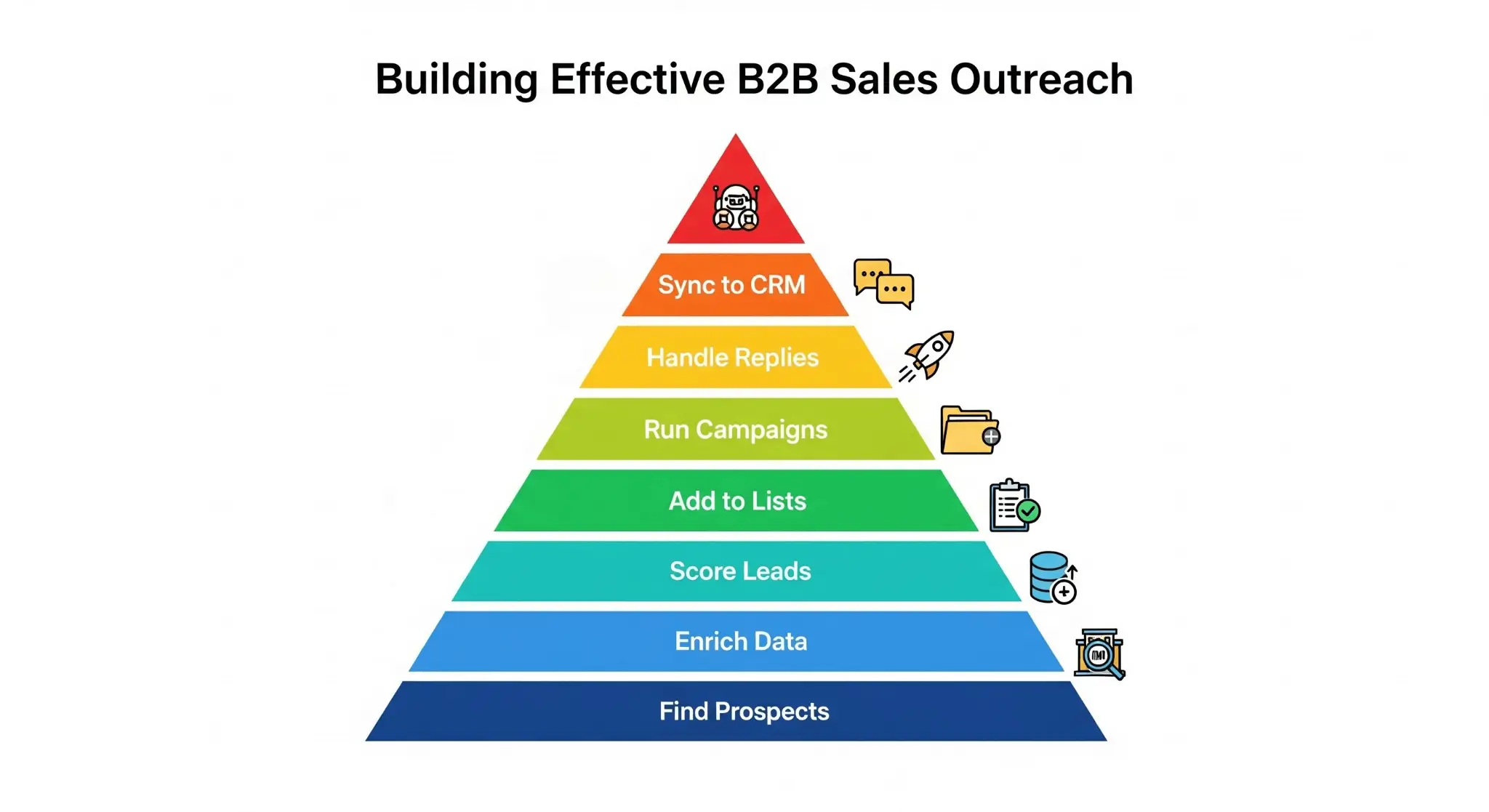
Modern b2b sales outreach often fails because teams manage too many tools and manual steps.
Oppora works as an AI sales agent that helps build and run complete outreach workflows from one place.
Instead of stitching tools together, users can create structured flows through simple chat-based instructions.
Similar to how n8n automates technical workflows, Oppora is purpose-built for sales teams.
It connects targeting, scoring, campaigns, replies, and CRM updates into one continuous system reducing manual work while keeping outreach consistent and easier to scale.
Step 1: Find Companies or People Using Buying Signals
Identify high-fit prospects based on who’s most likely to buy right now.
- Filter by title, seniority, location, department, and company size
- Discover new accounts using AI Company Finder
- Pull jobs, companies, and leads from LinkedIn
Step 2: Import Your Own Accounts and Enrich Them
Turn raw lists into campaign-ready accounts automatically.
- Upload your own lists or LinkedIn-sourced accounts
- Auto-enrich company data like industry, employee size, and website
- Find missing contact emails automatically
- Verify emails using built-in lead verification to protect deliverability
Step 3: Score Leads Using Rules or AI
Focus your outreach on the leads that matter most.
- Rank leads automatically using AI-powered Lead Scoring
- Prioritize based on fit and targeting signals
- Apply AI Insights to refine and optimize lead quality before outreach
Step 4: Add Leads to Lists
Stay organized as your outreach scales.
- Group leads into clean, reusable lists
- Segment by ICP, role, region, offer, or intent
- Use lists as direct inputs for campaigns and workflows
Step 5: Run Multi-Channel Campaigns
Launch and manage outreach from one place.
- Connect Gmail or Outlook inboxes
- Create multi-step email sequences with AI-generated copy
- Add LinkedIn actions and track engagement automatically
Step 6: Handle Replies Automatically
Let Reply Ora manage conversations at scale.
- Read and classify replies by intent (interested, not interested, neutral)
- Auto-send follow-ups or qualification responses based on context
- Route interested leads to meetings via Calendly automatically
Step 7: Sync Everything to Your CRM
Keep outreach activity visible and organized.
- Sync contacts, replies, engagement, and meetings
- View conversations and statuses inside Oppora’s unified inbox
- Maintain a single source of truth across outreach and sales
- Prevent lost context as campaigns start converting
Bonus: Do It All Using AI Workflows
If you don’t want to handle outreach manually or repeat the same tasks every day or week, AI workflows can automate the entire process end to end.
Oppora allows you to generate a complete outreach workflow using AI or build one yourself with a drag-and-drop workflow builder.
Once configured, the workflow runs continuously on your schedule.
- Find companies automatically
- Score and segment leads
- Send outreach emails
- Handle replies
- Sync results to your CRM
You only need to set it up once.
An example workflow can be:
Every Monday, Oppora checks companies hiring in the last seven days, finds HR leads and their email addresses, launches a staffing outreach campaign, and syncs interested replies directly to your CRM automatically.
Key Strategies & Best Practices for B2B Sales Outreach
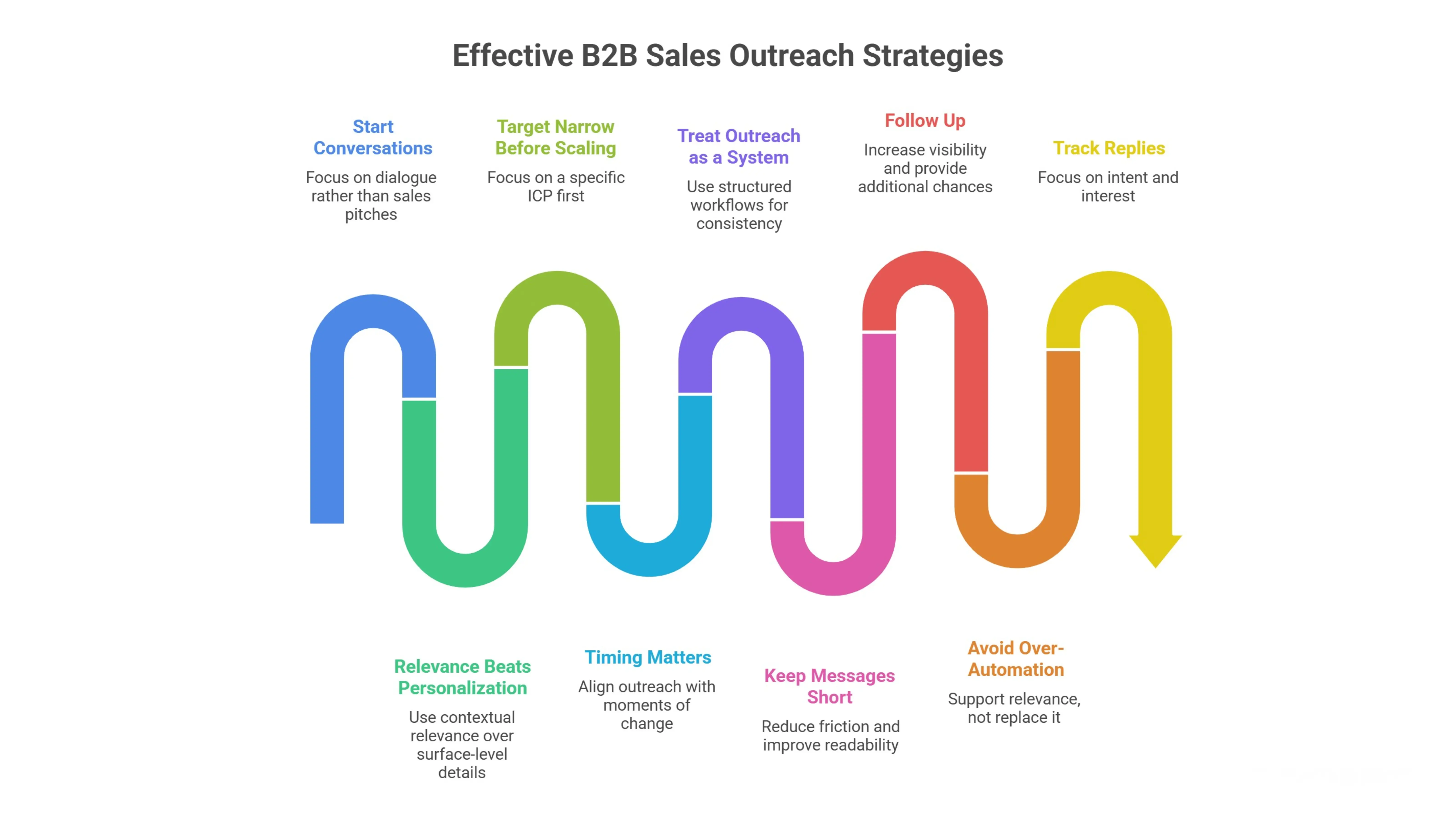
Effective outreach depends on relevance, timing, and structure.
This section highlights proven b2b sales outreach strategies and b2b sales outreach best practices.
It focuses on improving replies, reducing friction, and scaling outreach—without sacrificing message quality or buyer experience.
Start Conversations, Not Sales Pitches
Buyers respond to conversations, not immediate sales pressure.
Effective outreach focuses on opening dialogue rather than pushing demos or meetings too early.
By approaching prospects with curiosity and relevance, sales teams create space for trust to develop.
This conversational approach lowers resistance, increases engagement, and leads to more meaningful responses over time.
Relevance Beats Personalization Tokens
Effective personalized b2b sales outreach is driven by relevance, not surface-level details.
Using a prospect’s name or company alone rarely creates impact.
Messages perform better when they reference real context, such as hiring activity, growth signals, or role-specific challenges.
Contextual relevance shows intent and understanding, which builds credibility and improves reply quality.
Target Narrow Before You Scale
Scaling outreach too early often leads to poor results.
Narrow targeting allows teams to learn faster, refine messaging, and understand which audiences respond best.
By focusing on a specific ICP first, teams build stronger positioning and clearer value propositions.
Once consistency is achieved, scaling becomes more effective and sustainable.
Timing Matters More Than Volume
Sending more messages does not guarantee better results.
Outreach performs best when it aligns with moments of change, such as hiring, funding, or internal growth.
Reaching prospects at the right time increases relevance and engagement.
Well-timed outreach often outperforms high-volume campaigns that ignore buyer context.
Treat Outreach as a System, Not Tasks
Outreach works best when treated as a connected system.
Disconnected tasks lead to missed follow-ups, inconsistent messaging, and lost context.
Structured workflows help teams manage targeting, messaging, follow-ups, and replies more effectively.
Systems create consistency, reduce manual errors, and make outreach easier to scale.
Keep Messages Short and Focused
Short messages reduce friction and improve readability.
Buyers scan messages quickly, especially on mobile devices.
Clear, focused outreach makes it easier for prospects to understand intent and respond.
Removing unnecessary detail increases clarity, improves engagement, and reduces the chance of messages being ignored.
Always Follow Up (More Than Once)
Most replies do not come from the first message.
Follow-ups increase visibility and give prospects additional chances to respond.
When spaced politely, follow-ups feel helpful rather than intrusive.
Consistent follow-up shows intent and professionalism, often making the difference between silence and engagement.
Avoid Over-Automation
Automation should support relevance, not replace it.
Over-automated outreach often feels generic and disconnected from buyer context.
Teams should automate structure and timing while keeping messaging thoughtful.
Balanced automation saves time while preserving personalization and authenticity.
Track Replies, Not Vanity Metrics
Open rates and click rates don’t reflect real success.
Replies indicate intent, interest, or objections signals that matter in sales.
Tracking reply quality and conversation outcomes provides clearer insight into outreach effectiveness.
Focusing on meaningful engagement helps teams optimize strategy, not just activity.
Wrap-up and takeaway
Effective B2B sales outreach isn’t about sending more messages.It’s about relevance, timing, and consistency working together.
When outreach is treated as a structured system not isolated actions it creates real conversations, not noise.That’s what improves reply quality and makes scaling sustainable.
Conclusion
B2B sales outreach works when it’s relevant, structured, and consistent.
By combining the right strategies, channels, and execution, teams can create predictable pipeline without relying only on inbound demand.
When outreach becomes a system instead of manual tasks, it’s easier to scale and tools like Oppora can help simplify that process.
You can give Oppora a try for FREE. No credit card required.
Frequently Asked Questions (FAQs)
Is B2B sales outreach suitable for small teams or solo founders?
Yes. B2B sales outreach works well for small teams and solo founders because it doesn’t require large budgets or inbound traffic. With clear targeting and simple workflows, even lean teams can create consistent pipeline through focused outreach.
How long does it take to see results from B2B sales outreach?
Results depend on targeting, messaging, and timing. Some teams see replies within days, while meaningful pipeline often takes a few weeks. Outreach improves over time as messaging and audience selection are refined based on responses.
How many outreach messages should be sent per day?
There’s no universal number. Effective outreach prioritizes relevance over volume. Sending fewer, well-timed messages to the right audience often outperforms high-volume campaigns that lack personalization or clear intent.
Can B2B sales outreach work without using LinkedIn?
Yes. While LinkedIn is helpful, outreach can succeed using email, calls, or other direct channels. The key is reaching decision makers where they already engage, not relying on a single platform.
What’s the biggest mistake teams make with B2B sales outreach?
The biggest mistake is treating outreach as one-off tasks instead of a system. Without structure, teams miss follow-ups, lose context, and struggle to scale, even if their messaging is strong.