16 Best Cold Email Software to Boost Your Outreach in 2026
Looking for the right cold email software in 2026? This guide compares leading tools and explains how to choose a platform that fits your outreach workflow.

Every minute, more than 23 million emails are sent for B2B outreach, but less than 2% of those ever get a reply. That’s because most cold email campaigns fail before they begin — not because cold email doesn’t work, but because teams use the wrong tools, unverified lists, and disconnected workflows.
Whether you’re a lead generation specialist, agency owner, SDR team lead, or founder doing outbound yourself, the right cold email software can dramatically change results. The difference between a 0.5% and a 12% reply rate often comes down to selecting the right platform and following modern best practices.
In this guide, we cover the 16 best cold email tools in 2026, what they actually do, and how they differ — so you can choose the right one and start booking meetings faster.
What Modern Cold Email Software Needs to Do in 2026
Cold email in 2026 isn’t about blasting more messages — it’s about reliability, relevance, and control. With stricter inbox rules, smarter spam filters, and crowded inboxes, modern cold email software needs to work quietly in the background without constant manual intervention.
At a minimum, today’s platforms should:
- Prioritize inbox safety with real warm-up, throttling, and sender reputation monitoring
- Adapt messaging to context instead of relying on static templates
- Support multi-inbox and multi-domain setups without operational overhead
- Make it easy to respond quickly to interested leads while filtering out noise
- Stay predictable as volume grows, without forcing teams into complex stacks or surprise costs
In short, modern cold email platforms should reduce risk and effort — not add more tools, tabs, or processes to manage.
Very few tools do all of this well.
16 Best Cold Email Software Options in 2026
Not all cold emailing software is built the same. In 2026, the best email outreach software focuses on deliverability, automation, and real replies and not just volume.
Here are the top cold email platform options to evaluate.
1. Oppora.ai
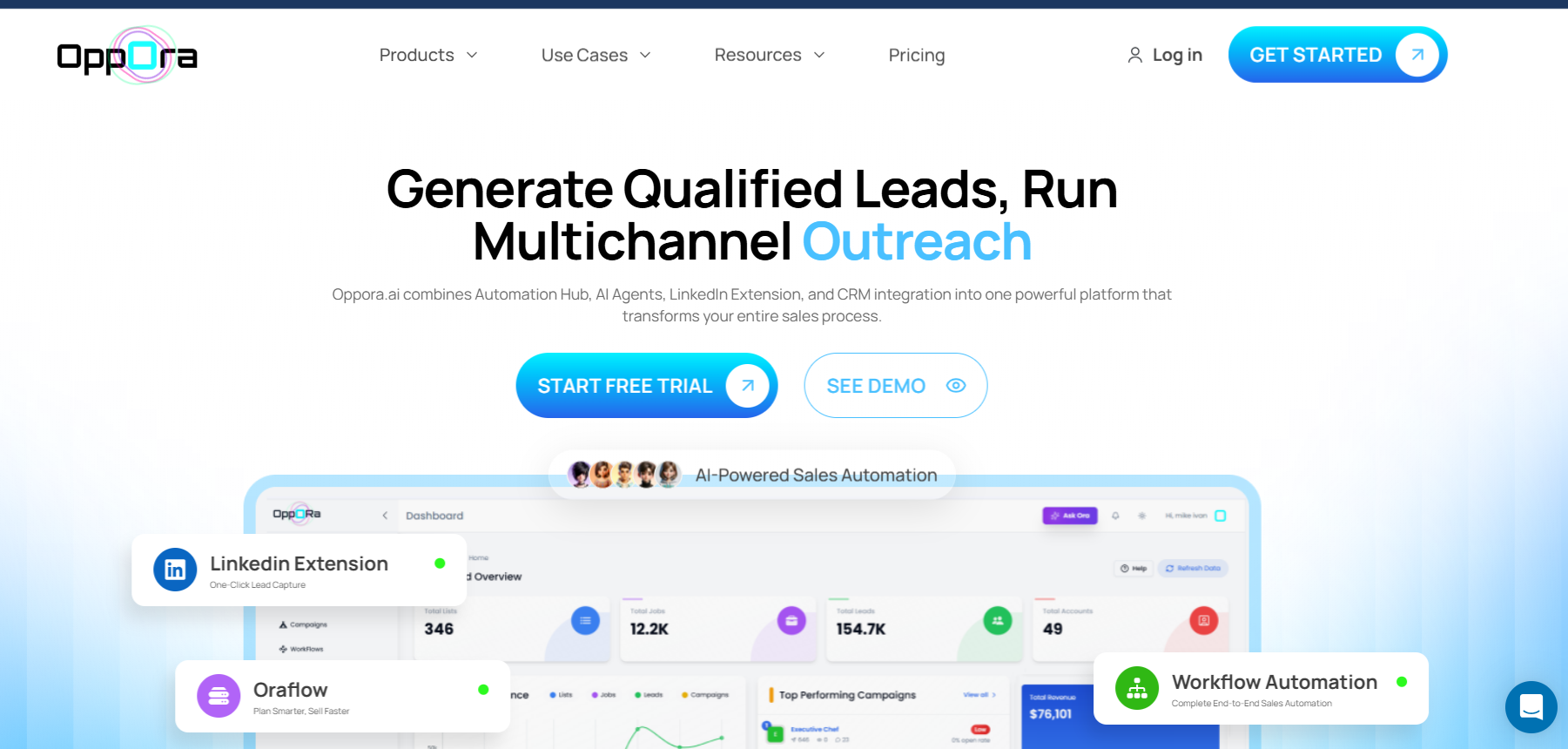
Oppora is an agentic sales platform built to automate cold emailing just by chatting with AI. Simply tell it who you want to reach, and it will find leads, verify emails, build campaigns, auto-reply to leads, and book meetings — all while syncing with a built-in CRM or your preferred CRM.
Key Features:
- 700M+ lead database for company and contact discovery
- Auto warm-up domains and connect up to 50 mailboxes (scale to 5,000 emails/day)
- Match sender identity for higher deliverability (Gmail→Gmail, Outlook→Outlook)
- AI auto-replies that qualify leads and book meetings instantly
- Real AI personalization for each email saving weekly copy rewrites
- Shared inbox for team-wide clarity
- Actionable reporting and A/B performance insights
Pros
✔ Fully autonomous outbound workflow
✔ AI auto-replies that qualify leads and schedule meetings
✔ Multi-mailbox rotation with domain warm-up for high deliverability
✔ Real AI personalization, not spintext
✔ Teamwide shared inbox and reporting
Cons
✖ Can be complex for teams used to single-purpose email tools
✖ Less suited for highly customized enterprise workflows initially
Best for: Lead generation agencies, SDR teams, and founders who want one AI-driven outbound tool instead of multiple platforms.
2. Instantly
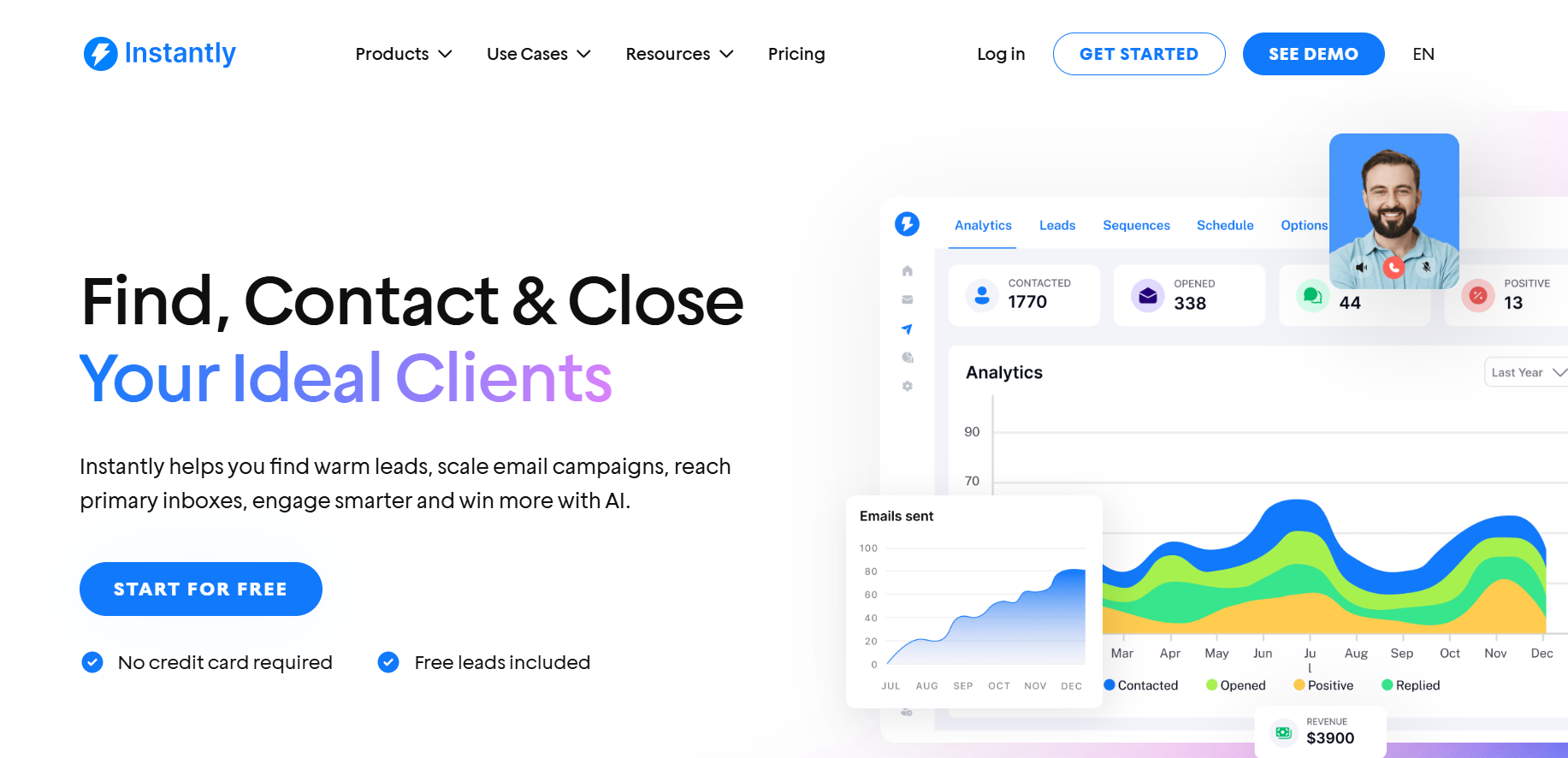
Instantly is a cold email sending tool built for teams that already have verified leads and want to send at scale without damaging inbox reputation. It focuses on inbox warm-up, rotation, and sending controls, making it reliable for high-volume outbound, but it does not include lead discovery, verification, or intelligent reply automation.
Pros
✔ Strong inbox warm-up and rotation
✔ Scales cleanly for high-volume sending
✔ Team sending controls
Cons
✖ No built-in lead search or email verification
✖ No smart reply automation
Best for: Teams with verified lists that want safe, high-volume cold email sending
3. Apollo.io
Apollo.io is a data-first sales platform that combines a large B2B contact database with basic cold email sequencing. It’s strongest at prospecting through advanced filters and list building, but its outreach features are relatively lightweight and costs can increase quickly as teams scale usage and seats.
Pros
✔ Best-in-class B2B contact database
✔ Advanced filtering and list-building tools
✔ Built-in basic email sequencing
Cons
✖ Outreach features feel secondary to data
✖ Pricing can climb with credits and users
Best for: Sales teams that want prospecting and basic outreach in one platform.
4. Snov.io
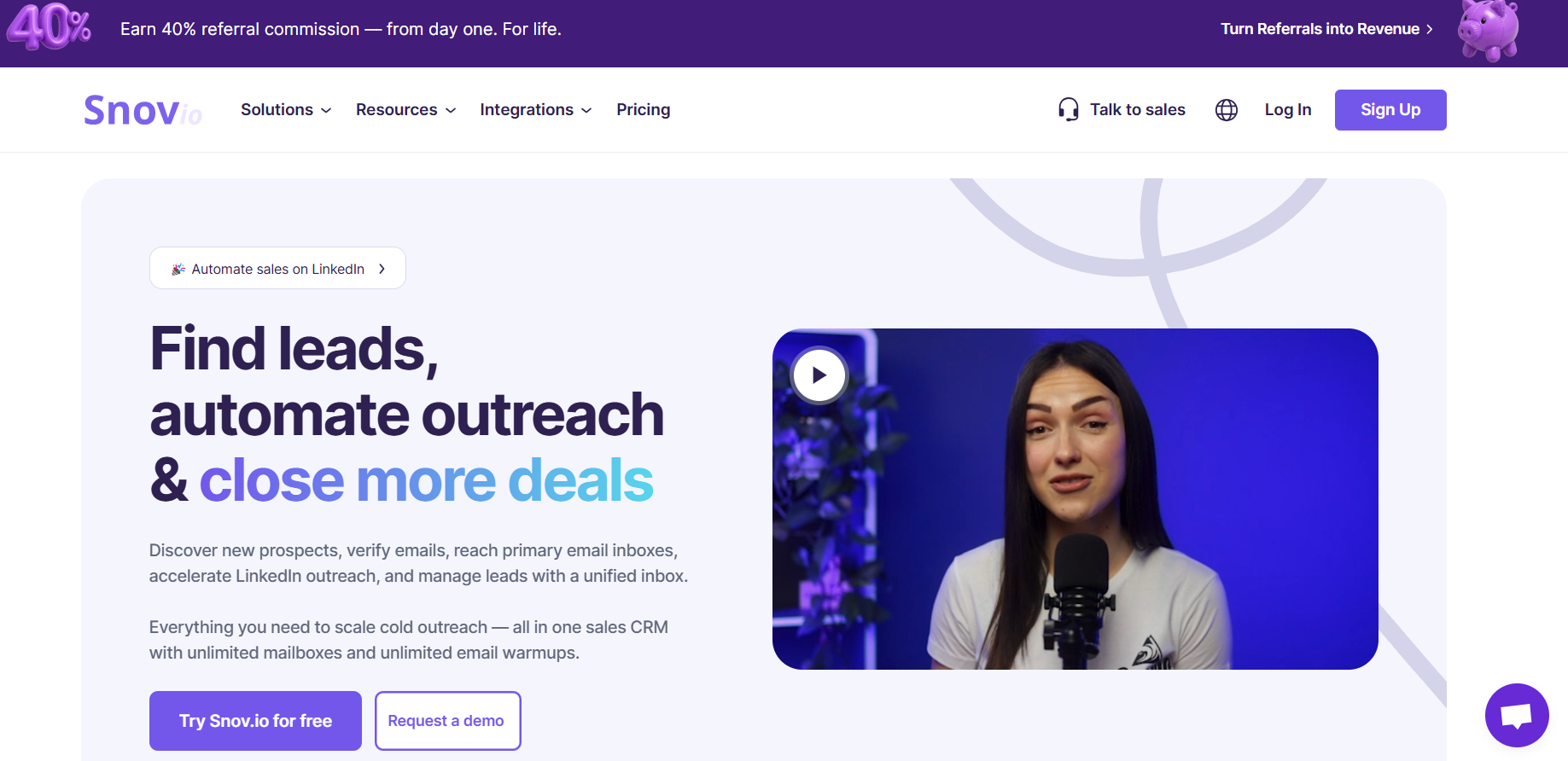
Snov.io is a budget-friendly cold email tool that combines email finding, verification, and simple drip campaigns in one platform. It’s easy to get started and affordable, but its deliverability controls, automation depth, and reply handling are limited, making it harder to scale larger campaigns.
Pros
✔ Easy to use
✔ Affordable pricing
✔ Chrome extension for prospecting
Cons
✖ Weak deliverability and reply handling
✖ Hard to scale high-volume campaigns
Best for: Freelancers and early-stage teams testing cold email.
5. Lemlist
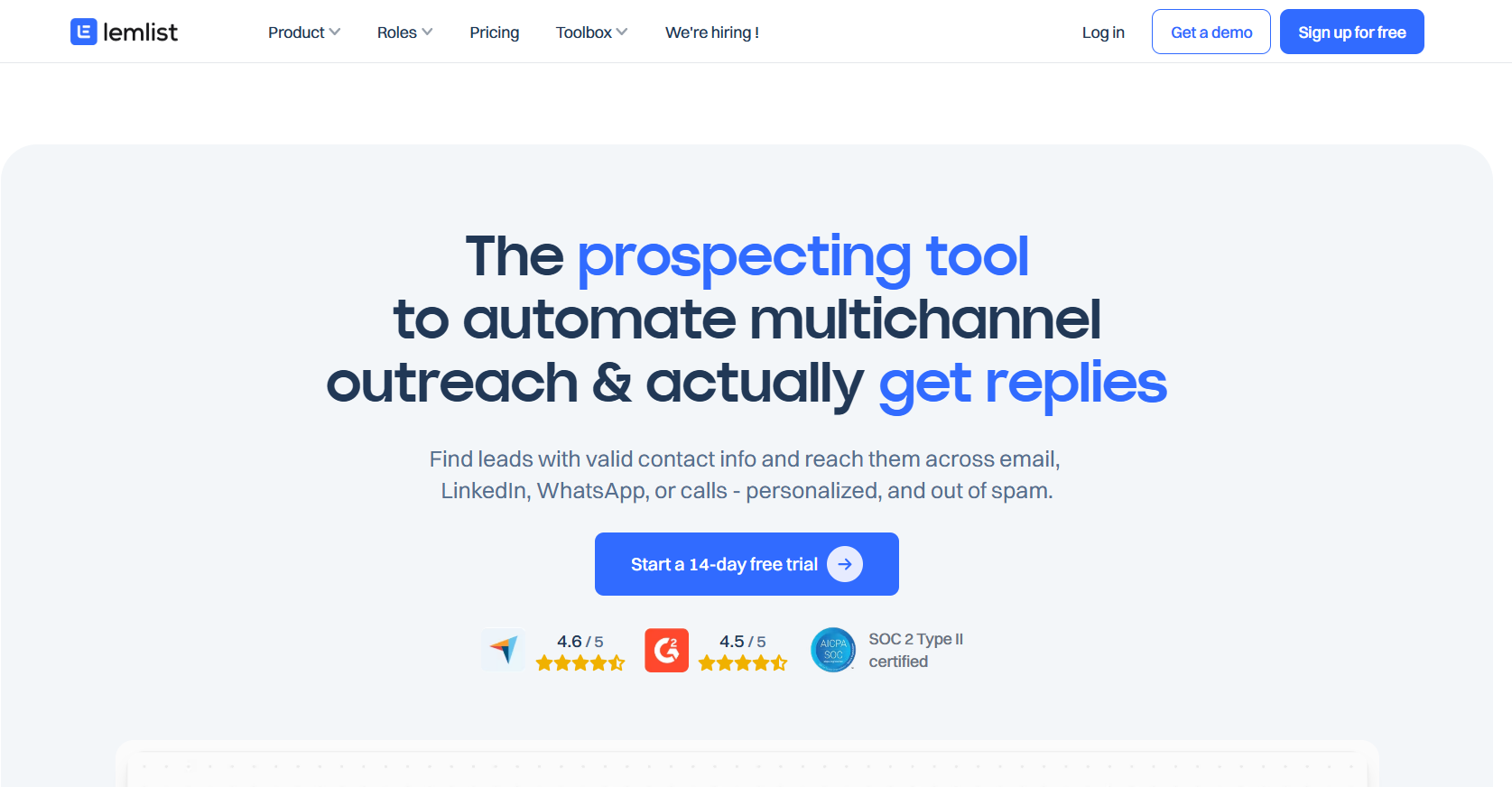
Lemlist is known for creative personalization features like dynamic images, custom variables, and flexible templates. It works well for highly personalized outreach, but much of the workflow remains manual and it lacks native lead sourcing and deeper automation.
Pros
✔ Strong personalization options
✔ Customizable templates
✔ Active community and resources
Cons
✖ Can feel manual at scale
✖ Limited automation and lead sourcing
Best for: Boutique agencies and high-touch, personalized campaigns.
6. Smartlead
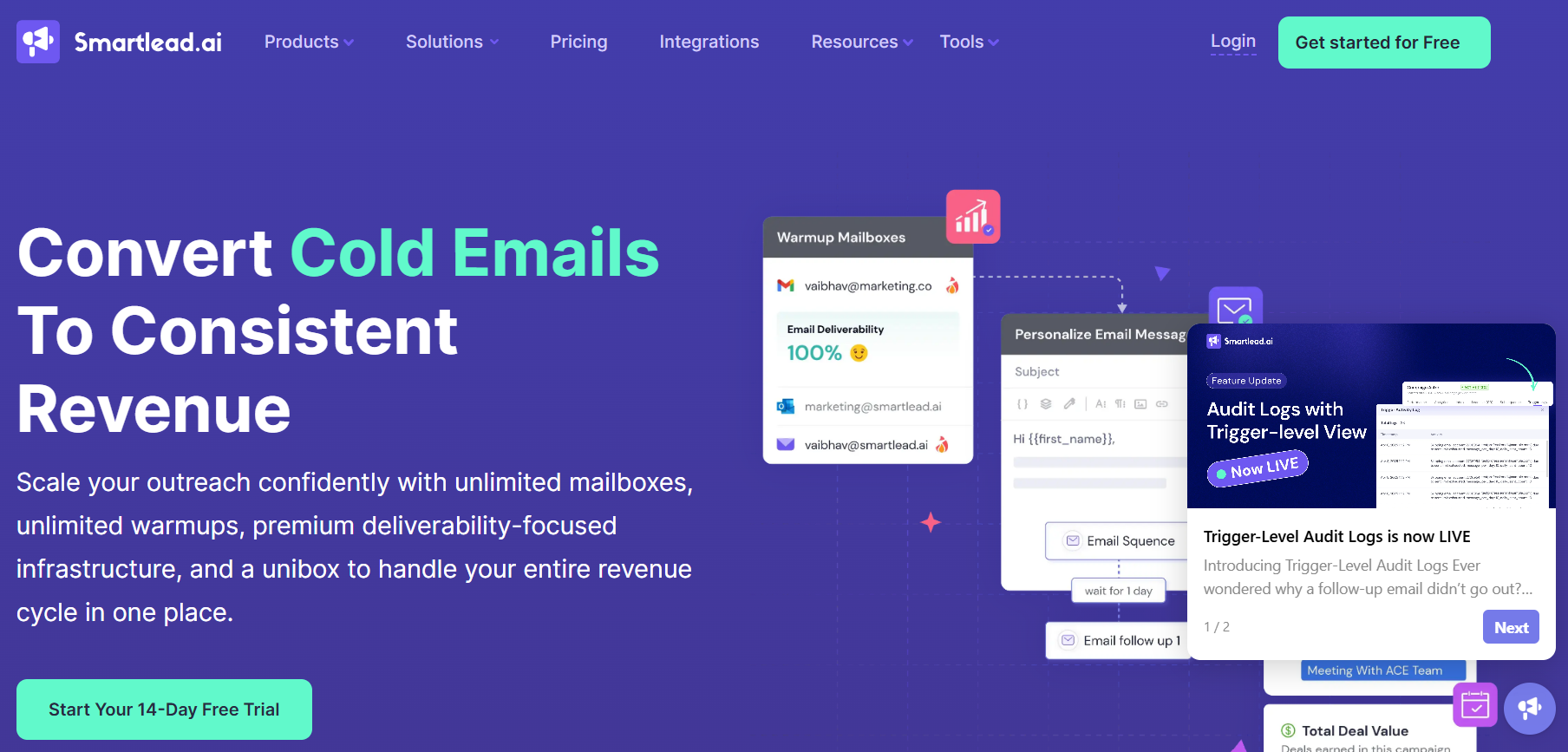
Smartlead is a cold email sending platform focused heavily on deliverability, offering advanced inbox rotation, throttling, and reputation management. While it excels at protecting inbox health, it does not include lead discovery or automated reply handling, requiring additional tools for full outbound workflows.
Pros
✔ Deep deliverability focus
✔ Strong reputation and throttle controls
✔ Designed for high-volume sending
Cons
✖ No lead discovery or enrichment
✖ No automated reply management
Best for: Advanced senders and deliverability-conscious teams.
7. Woodpecker
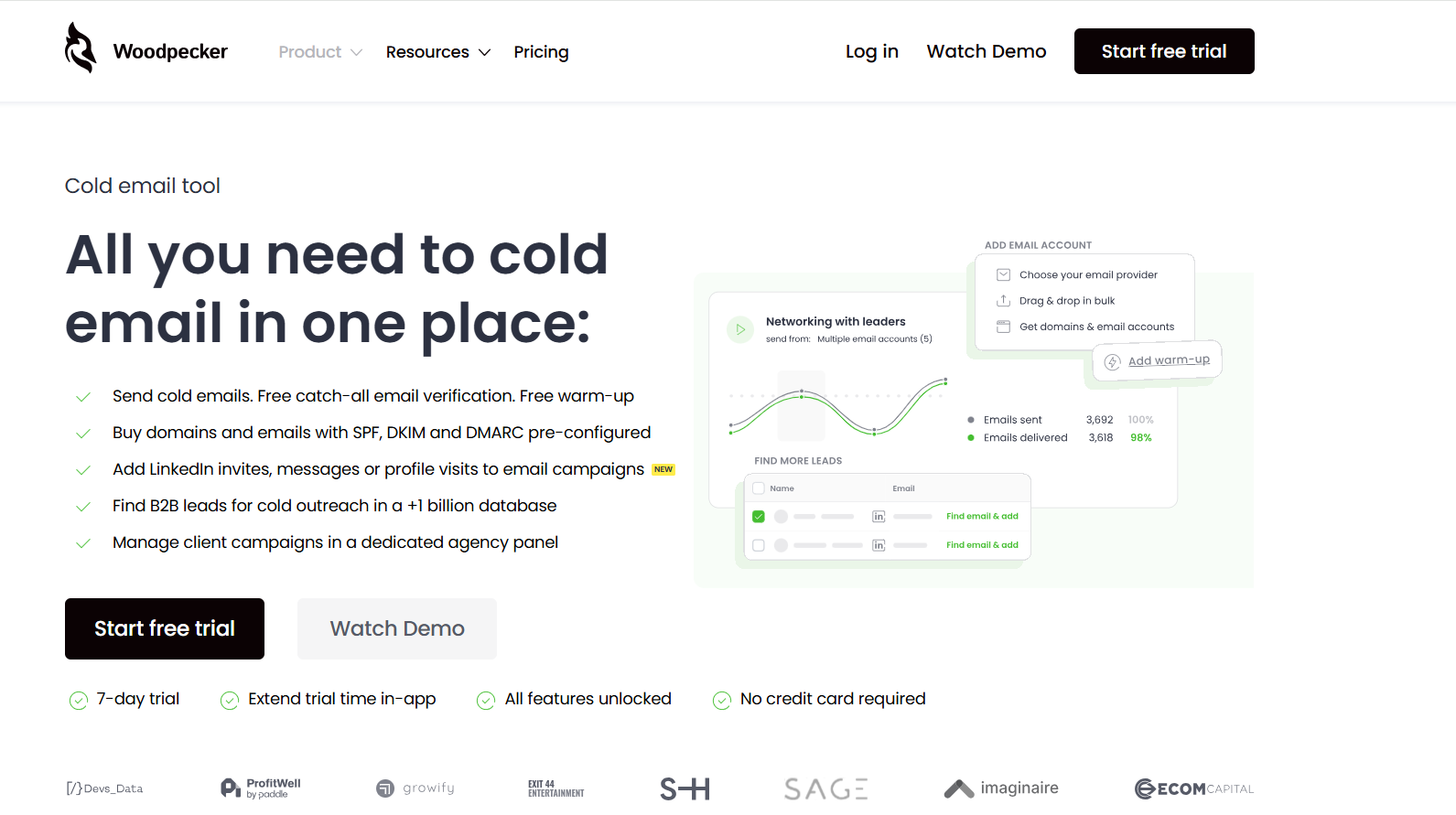
Woodpecker is a simple, no-frills cold email tool built around reliable sequencing and follow-ups. It’s easy to use and dependable, but lacks native lead discovery, advanced automation, and deeper personalization, which limits scalability.
Pros
✔ Reliable and easy to operate
✔ Clean interface
✔ Solid reporting basics
Cons
✖ No lead discovery
✖ Limited automation and personalization
Best for: Small teams that want reliable sending without complexity.
8. Mailshake
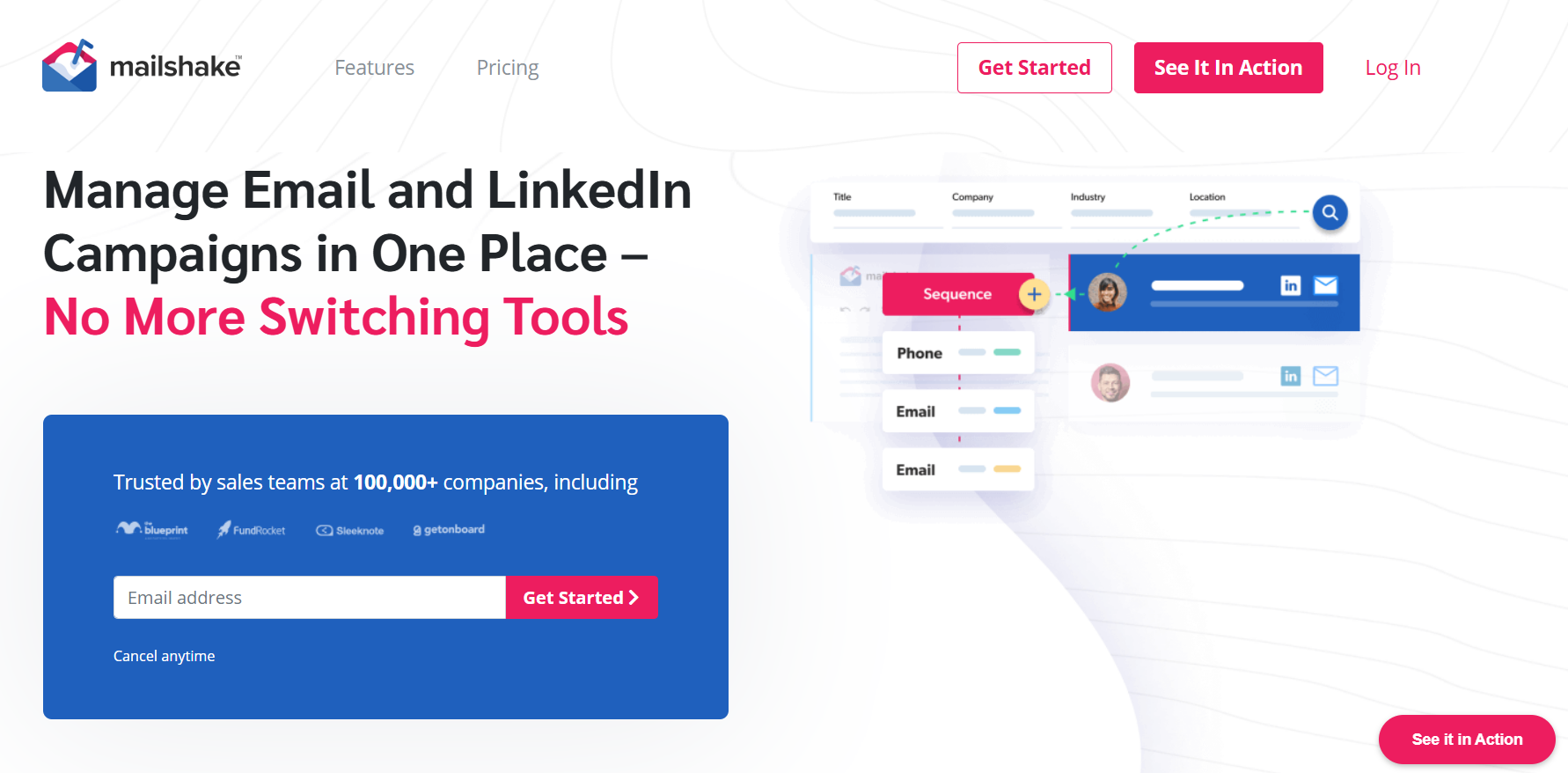
Mailshake is a sales engagement platform that combines cold email with social and phone-based touches into structured cadences. It’s useful for multi-channel outreach, but much of the execution is manual and it relies on external tools for lead sourcing and deeper automation.
Pros
✔ Multi-touch sequencing
✔ Easy tracking and reporting
Cons
✖ Limited real automation
✖ No native lead discovery
Best for: Teams running hybrid email and social outreach.
9. QuickMail
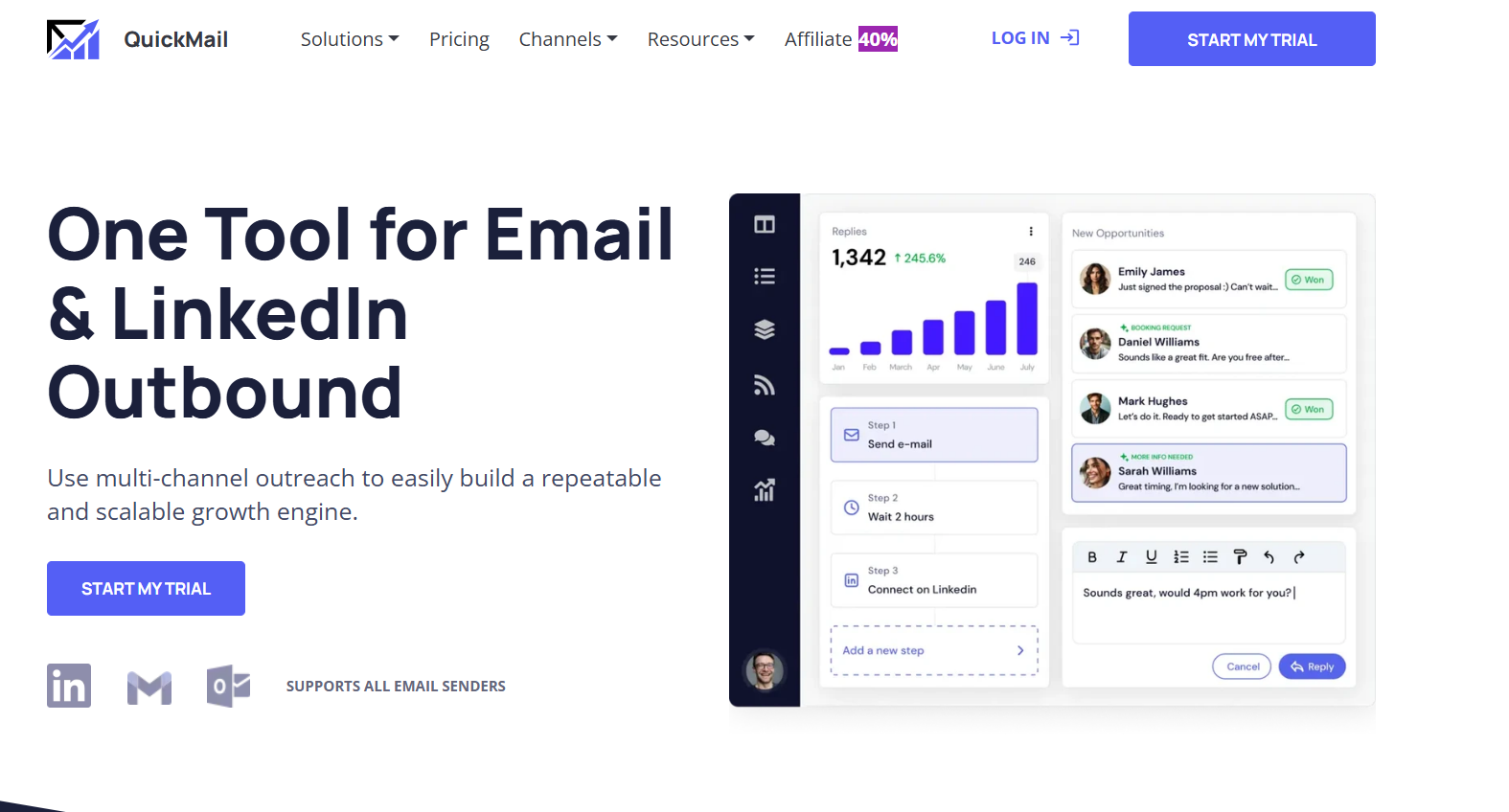
QuickMail is a lightweight cold email tool that focuses on simple sequencing and basic personalization. It’s easy to set up and reliable for straightforward campaigns, but it lacks deeper integrations, automation, and native lead sourcing needed for more advanced outbound workflows.
Pros
✔ Clean, simple interface
✔ Reliable email delivery
Cons
✖ Limited integrations
✖ No lead sourcing or enrichment
Best for: Solo operators and small teams running simple cold email campaigns.
10. Outreach.io
Outreach.io is an enterprise-grade sales engagement platform designed for complex sales workflows and structured multi-step cadences. It offers deep CRM integrations, analytics, and workflow controls, but comes with high costs and complexity that can be excessive for smaller teams or cold-email–only use cases.
Pros
✔ Full sales engagement workflow coverage
✔ Strong CRM integrations and analytics
Cons
✖ Expensive
✖ Overkill for smaller or outbound-only teams
Best for: Large sales organizations with structured SDR teams.
11. Salesloft
Salesloft is a sales engagement platform similar to Outreach, with strong CRM syncing and cadence management across email, calls, and tasks. While powerful for enterprise teams, it can feel heavy and costly for teams focused primarily on cold email.
Pros
✔ Excellent CRM data syncing
✔ Strong cadence and activity controls
Cons
✖ High cost
✖ Less intuitive for cold-email–focused teams
Best for: Enterprise sales teams running full engagement workflows.
12. Klenty
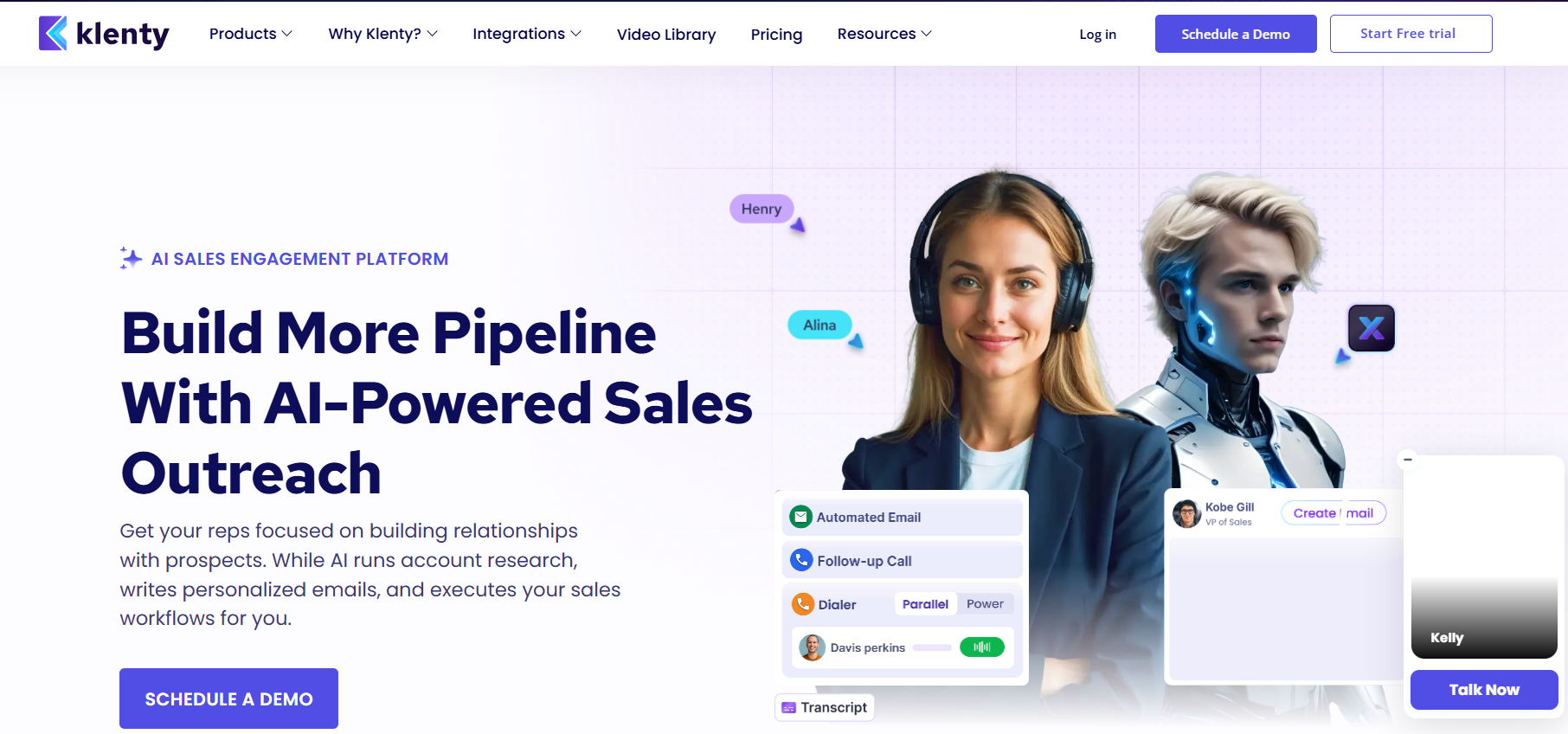
Klenty combines cold email sequencing with sales activity tracking and CRM-driven workflows. It supports SDR task management and structured cadences, but lacks built-in lead search, verification, and deeper automation capabilities.
Pros
✔ Useful sales workflow and activity tracking
✔ Solid sequencing features
Cons
✖ No native lead search or email verification
✖ Limited automation outside CRM workflows
Best for: SDR teams closely tied to CRM-based sales processes.
13. Hunter.io
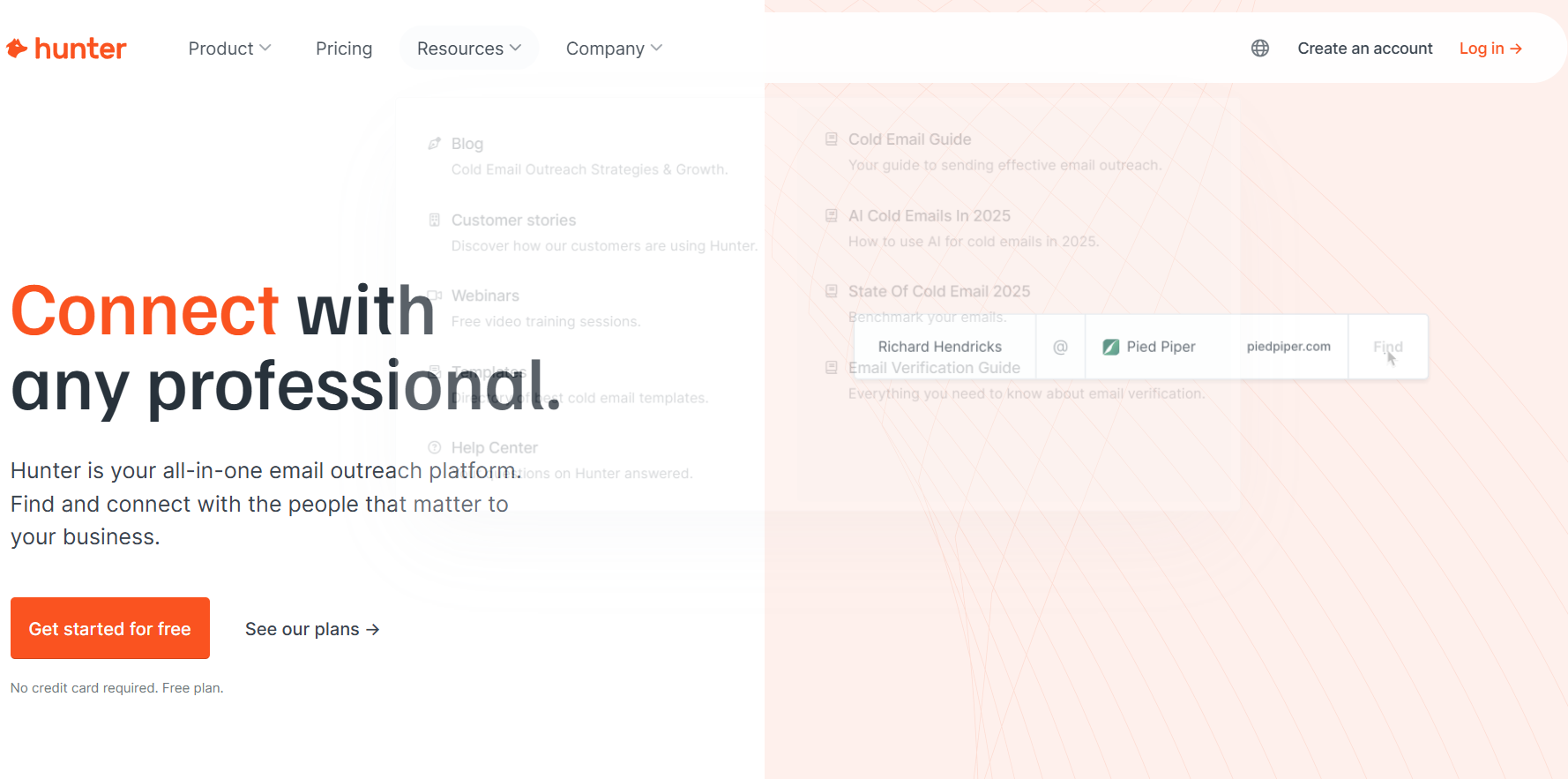
Hunter.io is a specialized tool focused on finding and verifying email addresses from domains. It’s highly accurate and easy to use, but it does not support sending or campaign management, requiring integrations with other cold email tools.
Pros
✔ Simple and accurate email finding
✔ Strong domain search capabilities
Cons
✖ No outreach or sequencing features
✖ Requires other tools to run campaigns
Best for: Teams building their own outbound stack around data accuracy.
14. NeverBounce
NeverBounce is an email verification tool designed to keep contact lists clean and reduce bounce rates. It excels at validation accuracy but only performs verification, offering no outreach, sequencing, or automation features.
Pros
✔ Best-in-class email verification
✔ Improves deliverability and list hygiene
Cons
✖ Only performs verification
✖ Must be paired with other tools
Best for: Teams cleaning lists before cold email sending.
15. Clay
Clay is a data enrichment and workflow automation platform that uses AI to enhance prospect profiles and automate outbound-related tasks. It’s powerful for building custom workflows, but it does not include native email sending or campaign execution.
Pros
✔ Strong enrichment and data automation
✔ Flexible workflow customization
Cons
✖ No built-in email sending
✖ Requires integrations to run outreach
Best for: Teams building custom outbound workflows with enriched data.
16. Reply.io
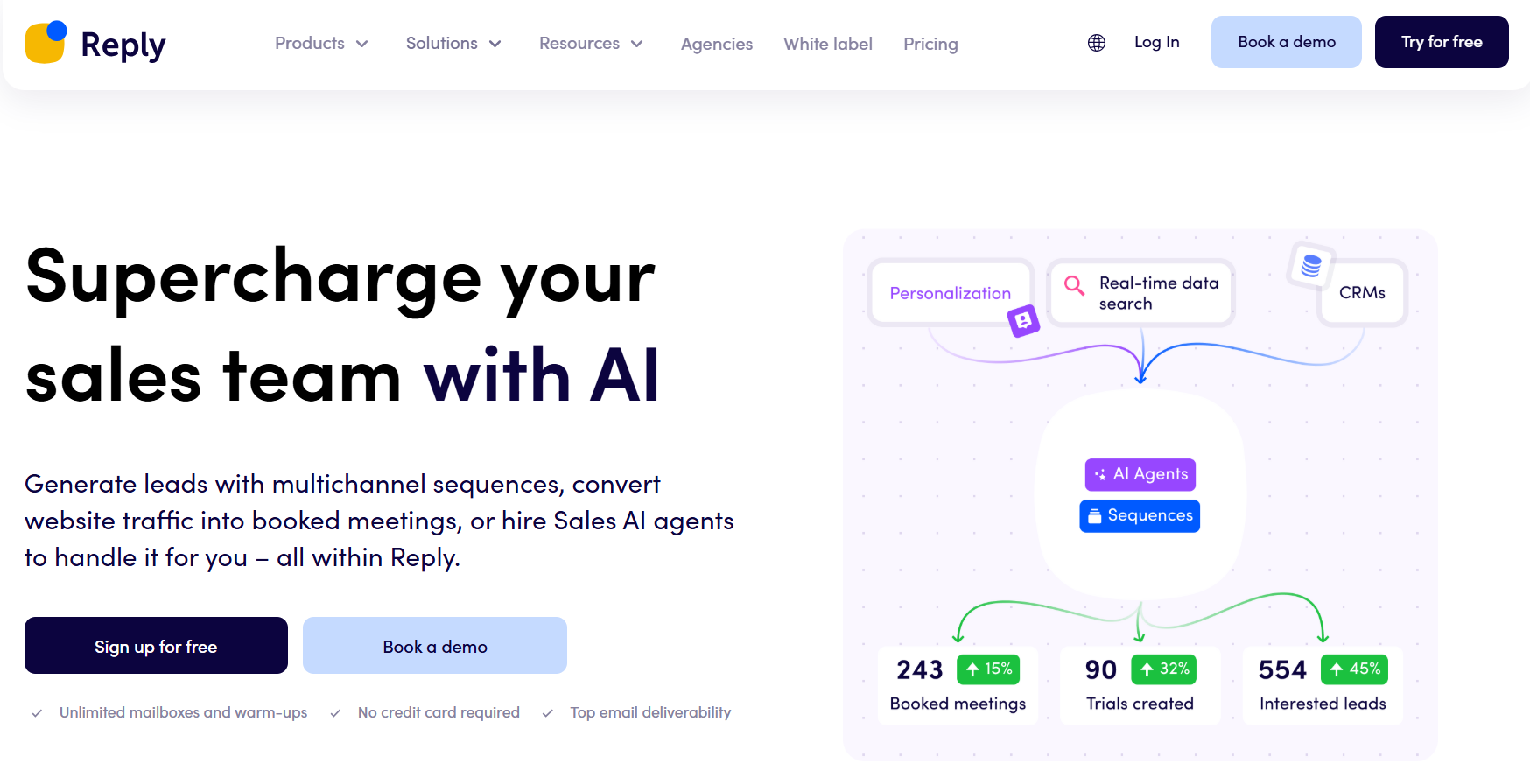
Reply.io is a sales engagement tool that supports email, calls, and LinkedIn steps within unified cadences. It enables multi-channel outreach, but costs can increase as features and usage scale.
Pros
✔ Multi-channel outreach support
✔ Structured cadence management
Cons
✖ Pricing can add up quickly
✖ Less focused on automation depth
Best for: Teams that want mixed-channel outreach in one platform.
Now, let’s compare each tool
Comparison Table
How to Choose the Best Cold Email Software for Your Services
The best cold email software is the one that matches how you actually run outreach & not how a tool expects you to work. Different services have different needs: agencies manage multiple clients, SaaS teams care about repeatability, and solo operators value speed and simplicity. A good platform adapts to these realities instead of forcing rigid workflows.
When making a final decision, focus on whether the software helps you operate consistently over time. That means fewer manual steps, fewer moving parts, and fewer risks as volume increases. If a tool requires constant monitoring, add-ons, or workarounds just to stay deliverable, it will eventually slow you down.
The right platform should feel less like a sending tool and more like a dependable system — one that supports your service model, grows with your outreach, and stays out of the way while work gets done.
That’s where modern, all-in-one platforms like Oppora.ai fit naturally, especially for teams that want outbound to run smoothly without juggling multiple tools.
Ready to simplify your cold outreach?
👉 Log in to Oppora.ai and start running campaigns with confidence.
FAQ’s
What is the difference between cold email software and email marketing tools?
Cold email tools are designed for one-to-one outreach and sales conversations, while email marketing tools focus on newsletters and bulk campaigns sent to opt-in lists. Cold emailing software prioritizes deliverability, personalization, and reply tracking rather than open rates and designs.
How many follow-ups should I send in a cold email campaign?
Most campaigns perform best with 3 to 5 follow-ups. Many replies come after the first or second follow-up, but sending too many messages can hurt engagement and sender reputation.
Is cold emailing legal?
Cold emailing is legal in many regions when done correctly. This typically means including accurate sender information, offering a clear opt-out option, and following local regulations such as CAN-SPAM or GDPR where applicable.