Best Time to Send Cold Emails by Day, Hour, and Time Zone
best time to send a cold email, what is the best time to send emails, best times to send cold emails
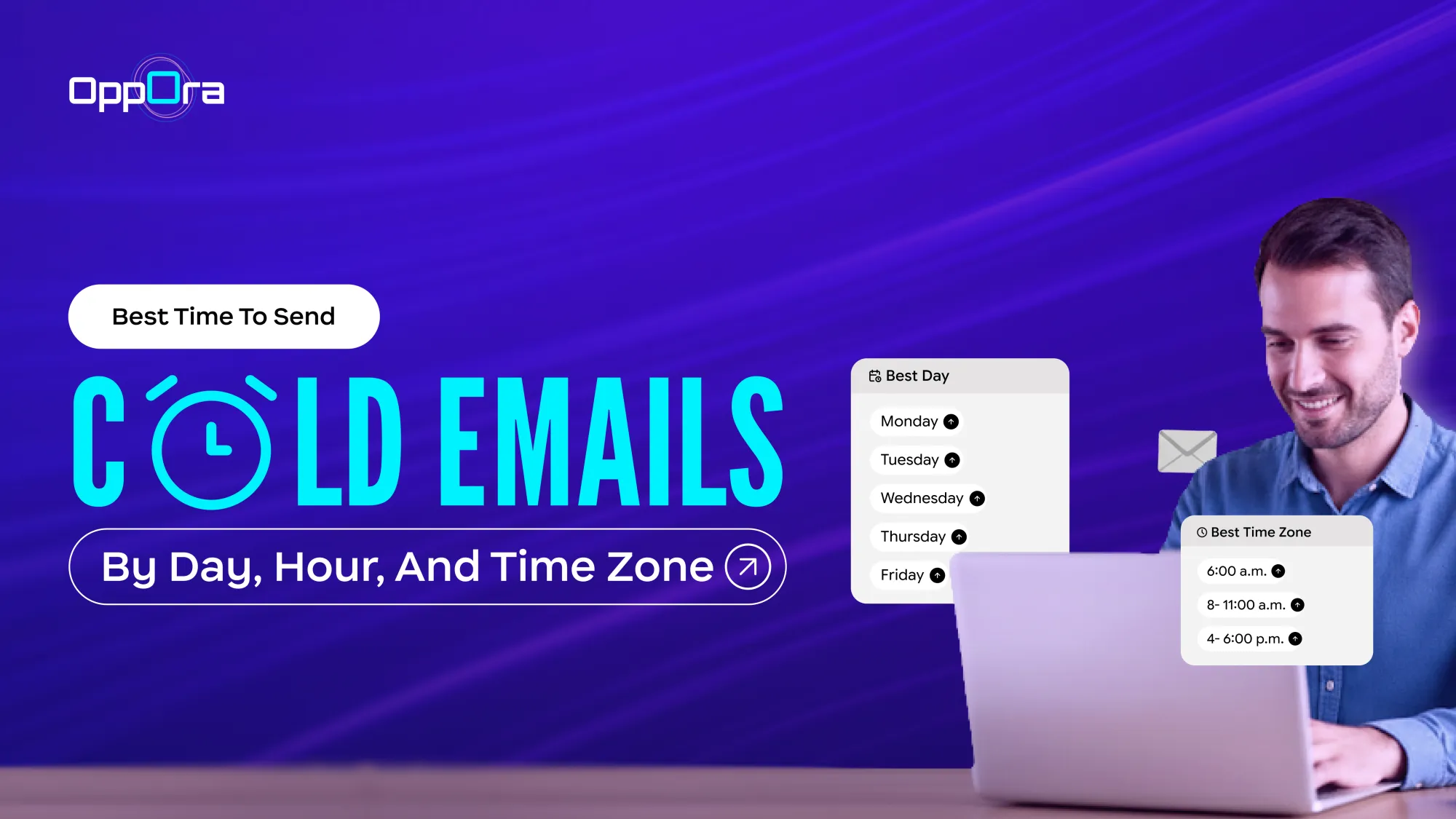
Cold emails fail or succeed long before the copy is read.
Not because your message is bad, but because it shows up at the wrong time.
Think about your own inbox for a moment. Some emails catch your eye instantly. Others arrive when you’re busy, stressed, or already behind, and they quietly sink to the bottom. You don’t delete them. You don’t reply. You just move on.
That’s the invisible role timing plays.
In this guide, we’re not talking about gimmicks or hacks. We’re talking about real inbox behavior, how people actually check email during their day, not how we wish they did. When you understand that rhythm, your cold emails stop feeling intrusive and start feeling well-timed.
Before we talk about specific hours or days, it’s important to understand why timing matters as much as it does.
Why Timing Matters in Cold Email Outreach
By the time your cold email reaches someone, you’re already competing.
Not just with other cold emails but with meetings, Slack notifications, calendar reminders, internal threads, and the general mental noise of the workday. Your email doesn’t arrive in isolation. It arrives in context.
If your message shows up when someone is mentally overloaded, even strong copy won’t save it. It gets skimmed, postponed, or mentally marked as “later.”
Inbox behavior follows a few predictable patterns:
- People check email in bursts, not continuously
- Decision-making energy drops as the day goes on
- Emails opened late in the day rarely get thoughtful replies
Picture this.
An email arrives at 8:45 AM. The inbox is relatively clean. The mind is fresh. There’s room to think. Now picture that same email at 3:30 PM. The inbox is full. The brain is tired. It gets archived with good intentions.
Same email. Completely different outcome.
Good timing doesn’t guarantee replies. But bad timing almost guarantees silence.
So what does good timing actually look like when you observe real inbox habits?
Best Time to Send Cold Emails Based on Real Inbox Behavior
When you watch how professionals actually use email, a few clear windows stand out.
Most people check their inbox:
- Shortly after starting work
- Briefly between meetings
- Once more, before wrapping up
That means the highest-attention window usually happens earlier in the day—before the workload piles up.
Based on real inbox behavior, these patterns show up consistently:
- 8:00–10:00 AM: Higher open rates and more thoughtful reading
- 12:00–1:00 PM: Faster scans, lighter attention
- After 4:00 PM: Lower engagement and fewer replies
Early emails feel like part of the day’s plan. Late emails feel like homework.
Another detail that’s easy to miss: replies usually happen shortly after opens. If your email is opened during a low-energy moment, it may still get read—but it’s unlikely to get answered.
That’s why understanding when an email is opened matters just as much as if it’s opened.
This leads naturally to the comparison most people overlook.
Early Morning vs Midday vs Afternoon Sends
Each time slot sends a subtle psychological signal, even if you don’t intend it.
Early Morning (8–10 AM)
This is the strongest window for most B2B outreach.
Your email lands when:
- The inbox is still manageable
- Focus levels are higher
- The day hasn’t gone off track yet
Emails received here feel intentional rather than disruptive. This is where meaningful replies are most likely to happen, especially for decision-makers.
Midday (12–2 PM)
Results here are mixed.
People are:
- Switching between tasks
- Skimming quickly
- More open to reading than responding
Midday works well for visibility, but less well for thoughtful decisions. If your message requires consideration, this window is hit-or-miss.
Afternoon (3–5 PM)
This is the danger zone.
Inbox fatigue sets in. Energy drops. Replies get postponed. “I’ll get back to this later” quietly turns into never.
If your goal is open, timing helps. If your goal is replies, timing decides everything.
What this means for you
- First touch → early morning
- Value-driven follow-up → midday
- Final nudge → late afternoon
Timing isn’t about a single “best hour.” It’s about matching your message to the moment.
Best Days of the Week to Send Cold Emails
Timing isn’t just about the hour.
The day you choose changes the mindset of the person opening your email.
Think about how your own week feels.
Monday starts with catch-up. Friday is mentally checked out.
Somewhere in between, people are actually open to new conversations.
Here’s how most inboxes behave across the week:
Monday
Your email lands in a crowded inbox. People are prioritizing internal work, not new vendors. Even good emails get deferred.
Tuesday & Wednesday
This is the sweet spot.
Work rhythm is set. Meetings are flowing. Decision-making energy is high. Cold emails here feel timely, not disruptive.
Thursday
Still workable, but replies slow down. People start thinking in terms of “this week vs next week.”
Friday
Opens may happen. Replies rarely do. Your email becomes something they’ll “look at on Monday”, which usually means it disappears.
If you had to pick only two days to send cold emails consistently, Tuesday and Wednesday would cover most industries and roles.
Once you lock the right day, the next layer is even more important: who you’re emailing.
Best Time to Send Emails Based on Audience Type
Not all inboxes follow the same rhythm.
A founder’s inbox behaves very differently from a manager’s.
And both are nothing like a recruiter’s.
Founders & Executives
Founders don’t live in email all day. They check it in short, focused windows.
Best timing:
- Early morning (7:30–9:30 AM)
- Late evening checks (rare but intentional)
They respond when something feels immediately relevant. If your email arrives mid-day, it often gets buried under operational noise.
Early emails work because they land before decision fatigue kicks in.
Sales, Marketing, and Growth Roles
These roles are inbox-heavy. Email is part of their job.
Best timing:
- Mid-morning (9:30–11:00 AM)
- Early afternoon (1:00–2:30 PM)
They’re more likely to open emails throughout the day, but replies still skew earlier. Catch them when they’re planning, not reacting.
Technical Roles (Engineers, Product, IT)
These inboxes are quiet but guarded.
Emails are checked:
- Before deep work starts
- After long focus blocks end
Best timing:
- Early morning
- Late afternoon, before wrap-up
Avoid interrupting core work hours. Your email should feel like something they can think about calmly, not context-switch into.
HR, Recruiters, Operations
Inbox-driven roles with structured schedules.
Best timing:
- Morning blocks
- Just after lunch
They reply quickly when the email feels actionable and arrives during admin time.
Once you understand audience behavior, the next challenge shows up automatically in time zones.
Best Time to Send Cold Emails in Different Time Zones
Time zones are where good outreach quietly breaks.
If you’re sending at the “right time” for you but the wrong time for them, all the strategy falls apart.
Always Optimize for the Recipient’s Local Time
This sounds obvious, but many campaigns don’t.
An email sent at 9 AM IST hits:
- 11:30 PM in New York
- 8:30 PM in London
- 5:30 PM in Dubai
That email won’t get attention. It gets archived overnight.
The rule is simple:
Schedule emails based on the recipient’s working hours, not yours.
Best Universal Windows Across Time Zones
When you’re targeting multiple regions, aim for local morning windows.
Most reliable ranges:
- 8:00–10:00 AM local time
- 9:00–11:00 AM for B2B audiences
These windows align with fresh inboxes and focused minds, regardless of geography.
Region-Specific Observations
- North America: Early mornings work best. Fridays are weak.
- Europe: Mid-morning performs better than very early sends.
- Asia-Pacific: Early starts are common, but lunch-time opens are higher.
If you’re running global outreach, segment by region. One schedule rarely fits all.
When You Can’t Segment Perfectly
Sometimes, tools or data limit you.
In those cases:
- Avoid late afternoons
- Avoid Fridays
- Default to mid-week, morning sends
It’s better to be roughly right than precisely wrong.
Best Time to Get Replies
Open rates get attention.
Replies get results.
And the two don’t always peak at the same time.
Someone might open your email while walking into a meeting or scrolling during lunch, but replying requires a different mental state. They need a few quiet minutes, enough focus, and a sense that responding won’t derail their day.
From real inbox behavior, replies usually happen when:
- The day is still under control
- The inbox isn’t overwhelming
- Decision fatigue hasn’t kicked in
That’s why the best reply windows often look like this:
- 8:30–10:30 AM: Fresh mind, intentional responses
- 1:00–2:00 PM: Light follow-ups, quick decisions
- Early evening (5:30–6:30 PM): Selective but thoughtful replies
Notice what’s missing late afternoons. Emails opened at 3–4 PM are read, nodded at, and forgotten.
If you want replies, not just visibility, aim for moments when replying feels easy, not like another task.
That naturally leads to the next question: how do you find the best time for your specific audience?
Testing and Finding Your Own Best Times to Send Cold Emails
General best practices give you a starting point. Your data gives you the answer.
Every audience has small behavioral quirks. Industry, role, geography, and even company size can shift inbox patterns.
The goal isn’t perfection. It’s directional clarity.
Start With Controlled Tests
Don’t change everything at once.
Pick one variable:
- Same email copy
- Same subject line
- Same audience segment
Then test different send times.
For example:
- Week 1: Tuesday at 9 AM
- Week 2: Tuesday at 1 PM
- Week 3: Wednesday at 9 AM
This keeps your results clean and comparable.
Track the Right Metrics
Open rates tell you if timing helped visibility. Reply rates tell you if timing helped conversations.
Pay attention to:
- Reply rate by send hour
- Time gap between open and reply
- Follow-up reply behavior
Often, you’ll see a pattern where fewer opens still generate more replies. That’s a signal worth trusting.
Look for Consistency, Not Spikes
One good day doesn’t mean much.
Look for:
- 2–3 sends showing similar results
- A specific hour repeatedly outperforms others
- Stable reply quality, not just volume
When you find a window that consistently performs better, lock it in as your default.
Once you’ve tested enough, avoid the temptation to over-optimize. The biggest drops in performance usually don’t come from subtle timing errors but from obvious ones.
Common Timing Mistakes That Hurt Cold Email Performance
Most cold email campaigns don’t fail because of bad copy.
They fail because of avoidable timing mistakes.
Sending Emails Too Late in the Day
Late afternoon sends feel harmless. They’re not.
Your email becomes:
- Another unread item
- Something to “get back to later.”
- A low-priority task
Late opens rarely turn into replies.
Relying Only on Open Rates
High opens can be misleading.
An email opened during a busy moment may never get answered. If you optimize for opens alone, you may unknowingly choose the worst reply window.
Replies are the real signal.
Ignoring Audience Context
A startup founder and a corporate manager do not share inbox habits.
Using the same schedule for:
- All roles
- All industries
- All regions
…flattens your results.
Even light segmentation improves timing effectiveness.
Not Accounting for Time Zones
This one quietly destroys campaigns.
An email sent at the “perfect time” in your zone might arrive:
- During dinner
- Late at night
- After work hours
Once it’s buried, it’s gone.
Treating Timing as a One-Time Decision
Inbox behavior changes.
Remote work, seasonal workload, and role shifts all affect when people check email.
Re-test occasionally. Even small adjustments can recover lost replies.
Good cold email timing isn’t about being clever. It’s about being considerate.
When your email shows up at a moment that respects someone’s attention, replying feels natural, not forced.
And that’s when cold outreach stops feeling cold.
How Oppora.ai Approaches Cold Email Timing
Cold email timing does not work alone. It depends on who you contact, how the contact is prepared, and how outreach is scheduled. Because of this, timing should be intentional, not assumed.
Oppora.ai treats timing as part of a connected workflow.
- Control over send days: Campaigns can be scheduled on specific days instead of running continuously. This avoids low-intent periods like weekends or off-hours.
- Defined time frames: Emails can be sent within exact time windows, so outreach lands during active working hours instead of random moments.
- Time zone awareness: Emails are scheduled based on the recipient’s time zone, not the sender’s. This keeps messages aligned with local inbox behavior.
Follow-ups are also structured, not rushed.
- Follow-ups are spaced intentionally
- Timing stays consistent across the campaign
- Outreach avoids stacking emails too close together
This is where Ora Reply fits into the timing flow.
- Ora Reply responds when a lead replies
- Automate Email Responses are sent immediately, without delay
- Meetings can be scheduled and information shared at the moment of engagement
There is no waiting for manual replies.
The response happens while attention is still present.
This makes timing a live process.
Not a random send. Not a single preset.
A follow-up may go out on a different day or at a different time than the first email, based on how the campaign is configured. Timing supports consistency without forcing volume.
In this workflow, timing supports relevance. Messages arrive at planned moments, follow-ups stay controlled, and replies are handled on time, keeping outreach aligned with real inbox behavior
Conclusion
There is no single best time that works for every cold email, because inbox behavior is shaped by role, context, intent, and daily workload rather than fixed rules. The strongest results come from understanding how timing fits naturally into real behavior, and adjusting as that behavior changes instead of relying on presets.
Frequently Asked Questions (FAQs)
How do I know the best time to send cold emails?
There is no single best time that works for everyone. The right timing depends on audience behavior, role, and time zone. Sending emails during active working hours usually leads to better engagement.
Does the day of the week affect cold email results?
Yes. Inbox behavior changes throughout the week. Midweek days often perform better, while Mondays and Fridays tend to see lower response rates due to workload and end-of-week fatigue.
Why is the time zone important in cold email outreach?
Time zone–aware sending ensures emails arrive during the recipient’s local working hours. This prevents messages from landing late at night or outside office hours, where they’re more likely to be ignored.
How should follow-up timing be handled in cold email campaigns?
Follow-ups should be spaced intentionally. Sending them too close together feels intrusive, while long gaps reduce relevance. Timing should remain consistent and reflect how recipients engaged with earlier emails.
How does Oppora.ai help manage cold email timing?
Oppora.ai lets you schedule campaigns by day, time window, and recipient time zone. It also handles replies on time using Ora Reply, helping outreach stay aligned with real inbox behavior.