11 Cold Email Copywriting Frameworks & Examples for Higher Response Rate
cold email copywriting copywriting cold email cold email copywriting examples
Most cold emails fail because they sound generic, predictable, and easy to ignore.
Your prospects skim quickly, and if your message doesn’t feel relevant within seconds, it gets skipped without a second thought.
Cold email copywriting is not about clever wording or long pitches.
It’s about clarity, relevance, and making it easy for someone to respond.
In this guide, you’ll learn simple frameworks you can actually use, along with practical examples that help you write emails people don’t just open, but reply to.
What Is Cold Email Copywriting
Cold email copywriting is about writing clear, relevant messages to people who don’t know you yet.
Instead of trying to sell immediately, your goal is to start a conversation that feels natural and worth responding to.
Good cold emails are simple, personalized, and easy to understand.
When done right, copywriting cold email outreach becomes more consistent, effective, and easier to scale.
Why Cold Email Copywriting Matters
Cold email copywriting directly impacts how people respond to your outreach.
You don’t need more emails to get better results.
You need better messages that people actually want to engage with.
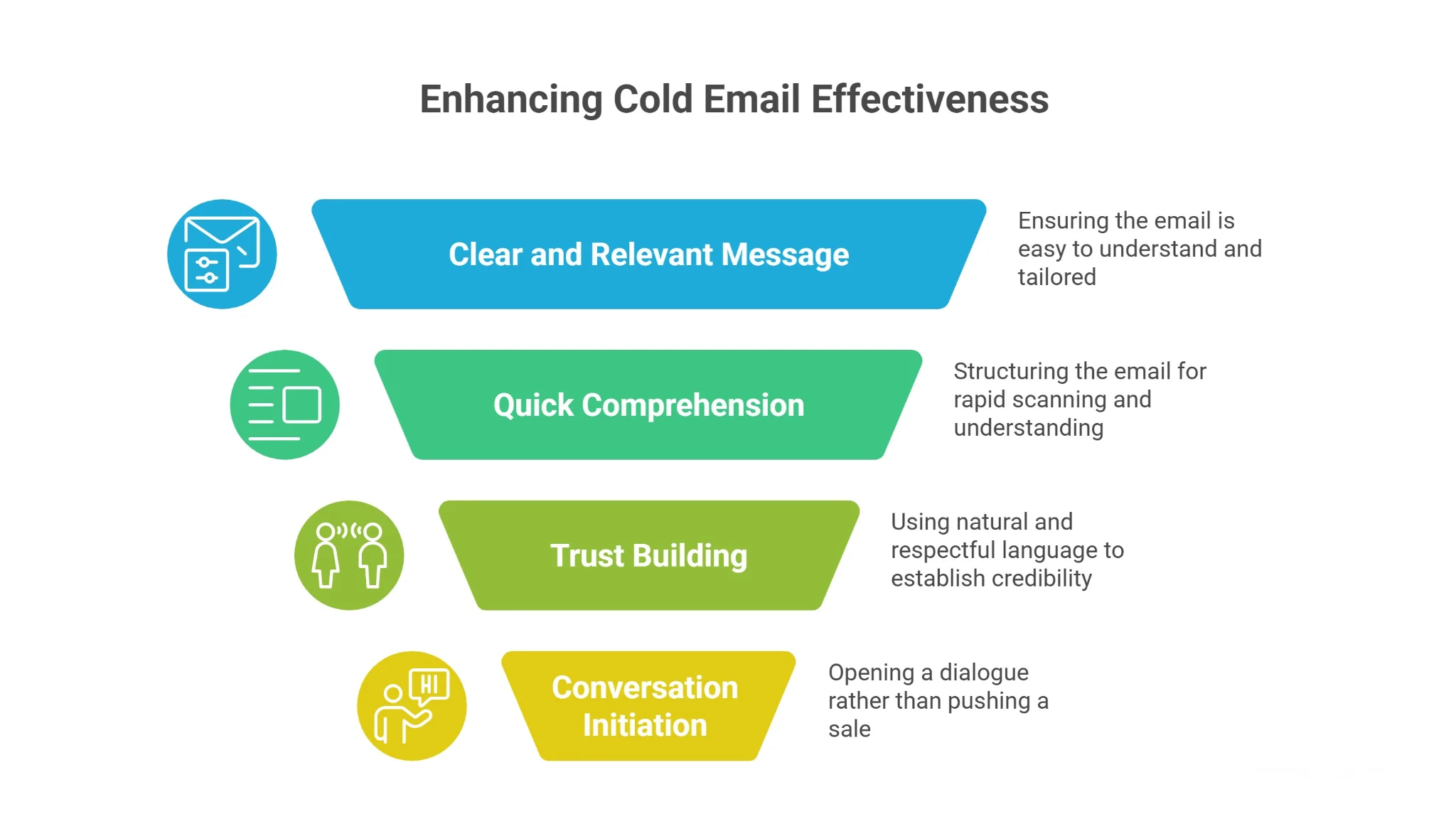
Get More Replies Without Sending More Emails
When your message is clear and relevant, more people reply without increasing volume.
This means you spend less time sending emails and more time having real conversations that move deals forward.
Make Your Message Easy to Understand Quickly
Most people scan emails in seconds, not minutes.
If your message is simple and structured well, they instantly understand what you’re saying and why it matters, making it easier for them to respond instead of ignoring it.
Build Trust With Cold Prospects
Cold outreach starts with zero trust, which makes your wording important.
A natural, respectful message feels human and thoughtful, helping you build credibility even when the reader has never heard of you before.
Turn Outreach Into Conversations
The goal isn’t to push a pitch right away.
Good cold emails open a conversation, reduce resistance, and make it easier for prospects to reply, share context, and engage in a meaningful way.
11 Cold Email Copywriting Frameworks (With Examples)
Once you understand why messaging matters, the next step is knowing how to structure it.
Instead of writing from scratch every time, frameworks give you a simple starting point you can adapt based on context.
These cold email copywriting examples are practical, easy to use, and built for real outreach situations.
They help you write faster while keeping your emails clear, relevant, and easy to respond to.
Straight-to-Value Framework
Sometimes the fastest way to get a reply is to skip introductions and get straight to what matters.
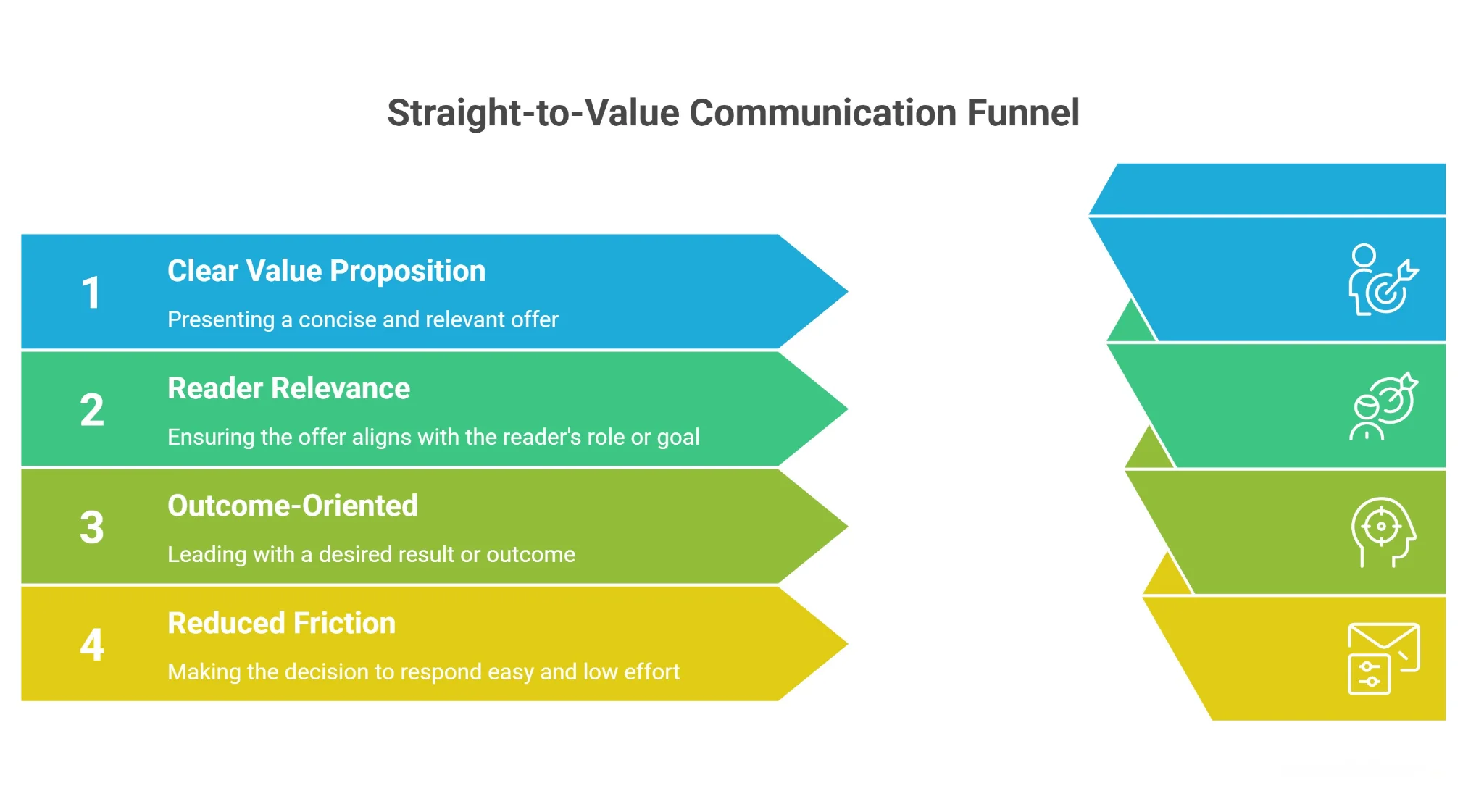
The straight-to-value framework focuses on showing clear, relevant value in the very first line.
This works best when your offer is simple, specific, and directly connected to the reader’s role or goal.
Instead of building context slowly, you lead with a result or outcome they care about.
Example:
Hey John,
We helped SaaS teams increase demo bookings by 28% without increasing email volume.
Thought this might be relevant to your outreach.
Open to a quick chat?
Why It Works:
It respects the reader’s time and immediately answers the question, “Why should I care?”
By leading with a clear outcome, it reduces friction and makes the decision to respond feel easy and low effort.
Problem–Solution Framework
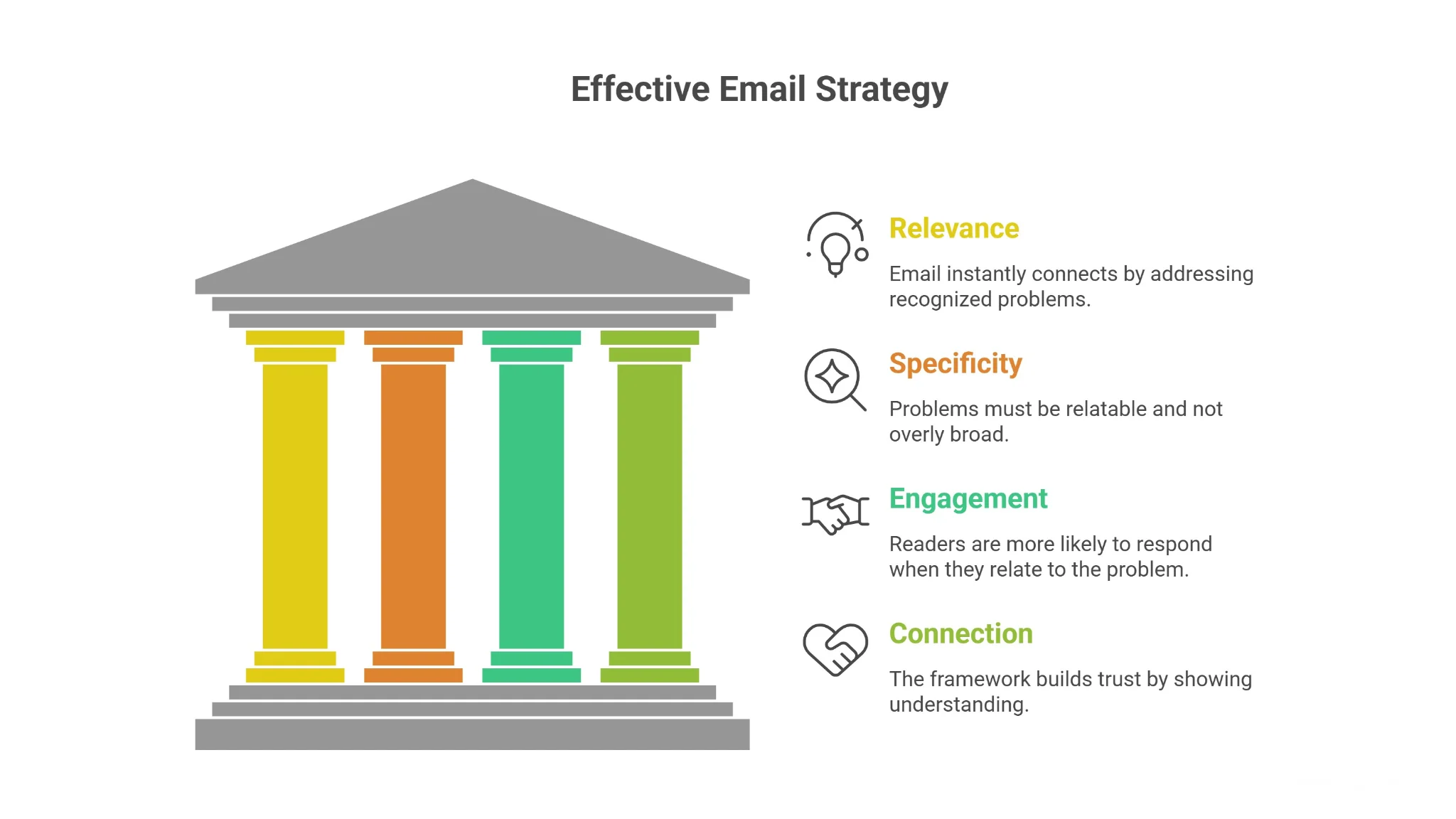
If your email reflects a problem the reader already recognizes, it instantly feels more relevant.
The problem–solution framework works by highlighting a common challenge first, then introducing a simple way forward.
The key is to keep the problem specific and relatable, not broad or generic.
When the reader thinks, “Yes, that’s exactly what I’m facing,” they’re more likely to engage.
Example:
Hi Sarah,
Noticed many teams struggle with low reply rates despite sending high volumes.
We’ve been helping teams improve replies without increasing sends.
Worth exploring?
Why It Works:
It creates immediate connection by addressing a real pain point.
Instead of pushing an offer, it positions you as someone who understands the problem and has a practical way to solve it.
One-Line Personalization Framework
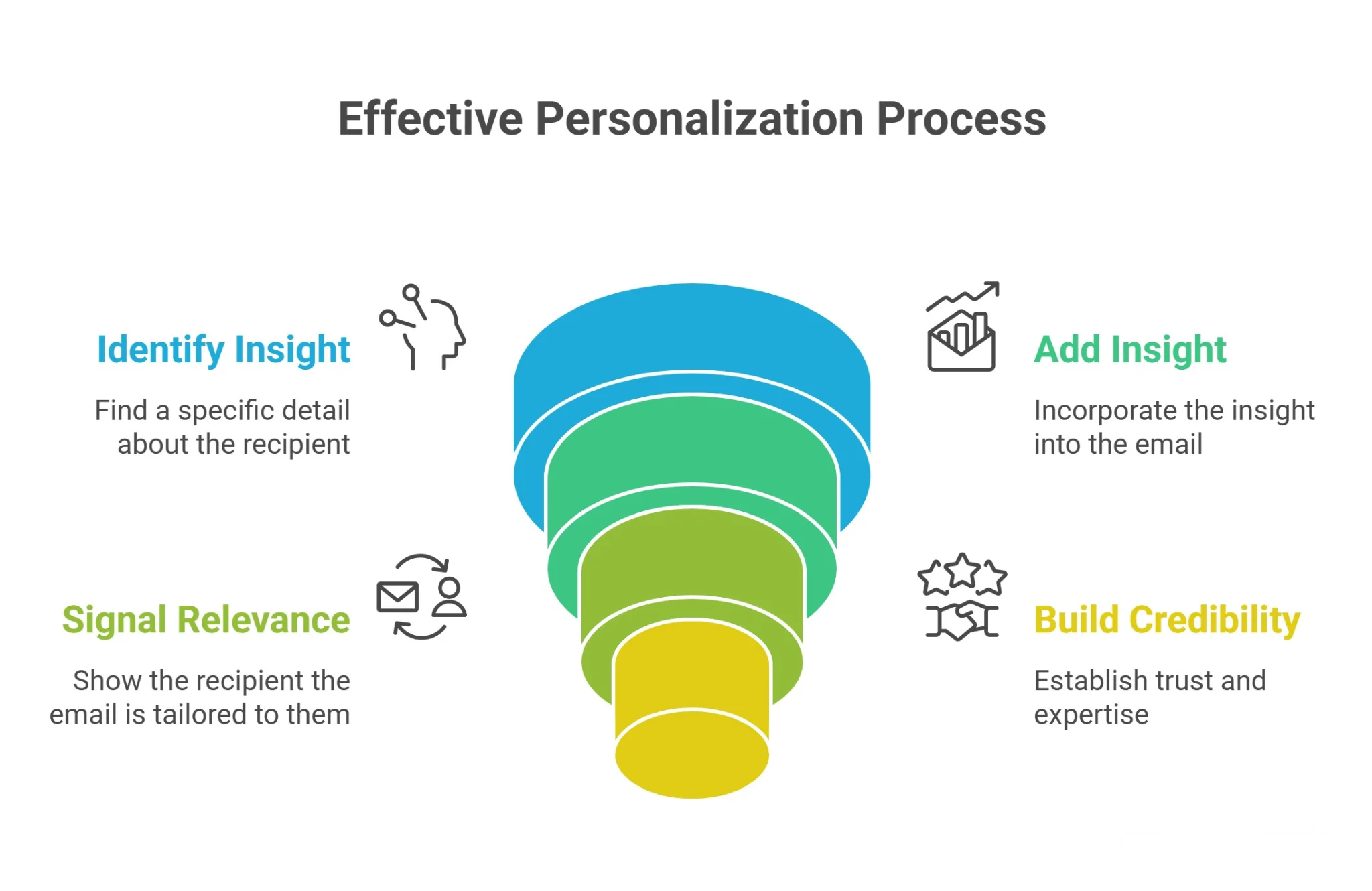
Personalization doesn’t need to be long to be effective.
The one-line personalization framework focuses on adding a single, meaningful insight that shows you’ve done your homework.
This could be a recent update, a company move, or something specific to their role.
The goal is to make your email feel intentional without overloading it with details.
Example:
Hey Alex,
Saw your team recently expanded into the EU market.
We’ve helped similar teams improve outbound targeting during expansion.
Open to sharing how?
Why It Works:
It signals relevance immediately and builds credibility in a subtle way.
Instead of generic personalization, it shows real context, making your message feel thoughtful and worth reading.
Curiosity Hook Framework
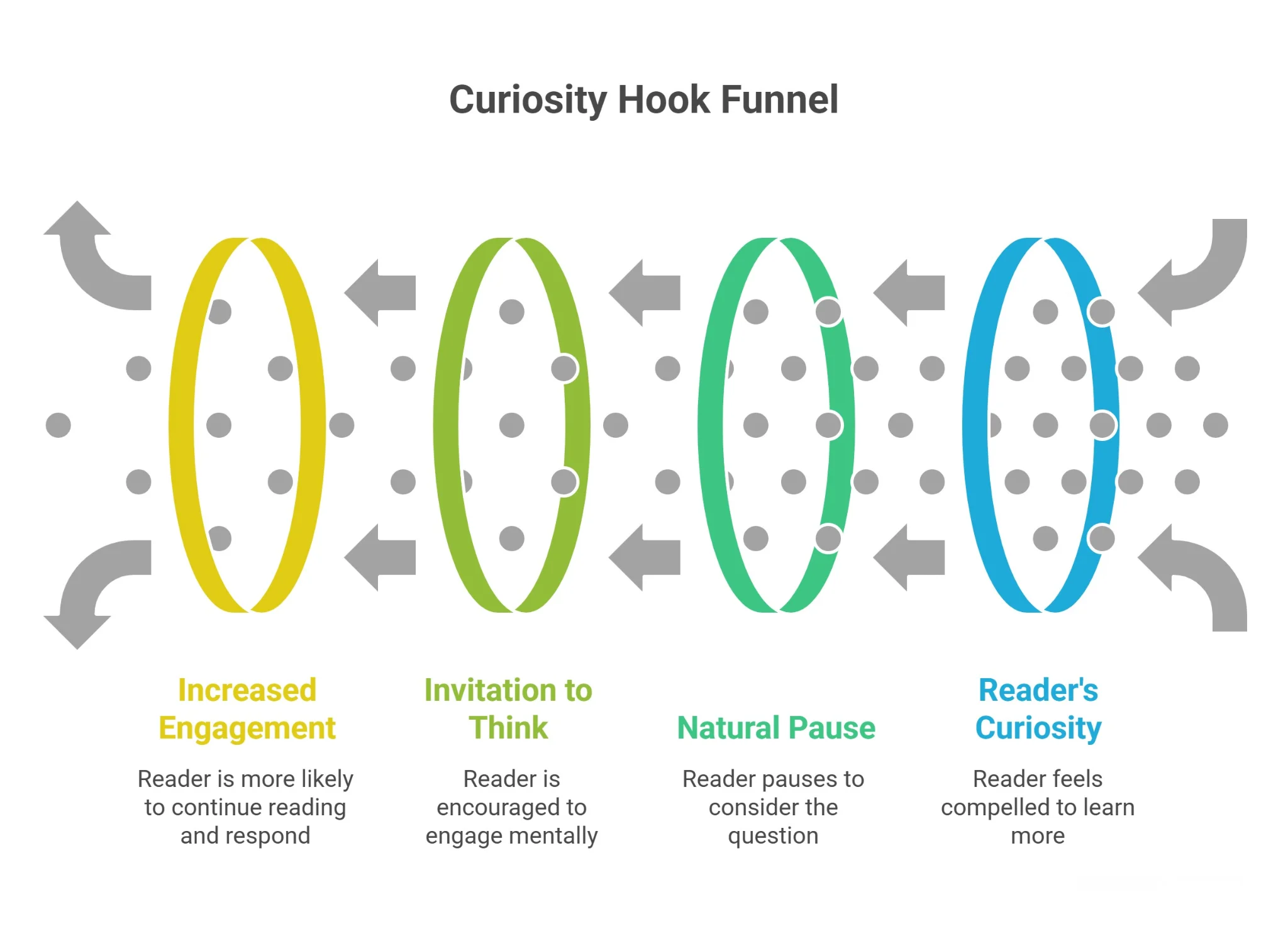
Sometimes the best way to get attention is to spark a simple question in the reader’s mind.
The curiosity hook framework works by opening with something that feels relevant but incomplete, making them want to read further.
The key is to stay natural and avoid sounding like clickbait.
Example:
Hi Mark,
Quick question — are you testing different email angles or sticking to one approach?
We’ve seen small tweaks make a big difference.
Curious if this is something you’re exploring.
Why It Works:
It creates a natural pause that pulls the reader in.
Instead of pushing a message, it invites them to think, which makes them more likely to continue reading and respond.
Quick Value Framework
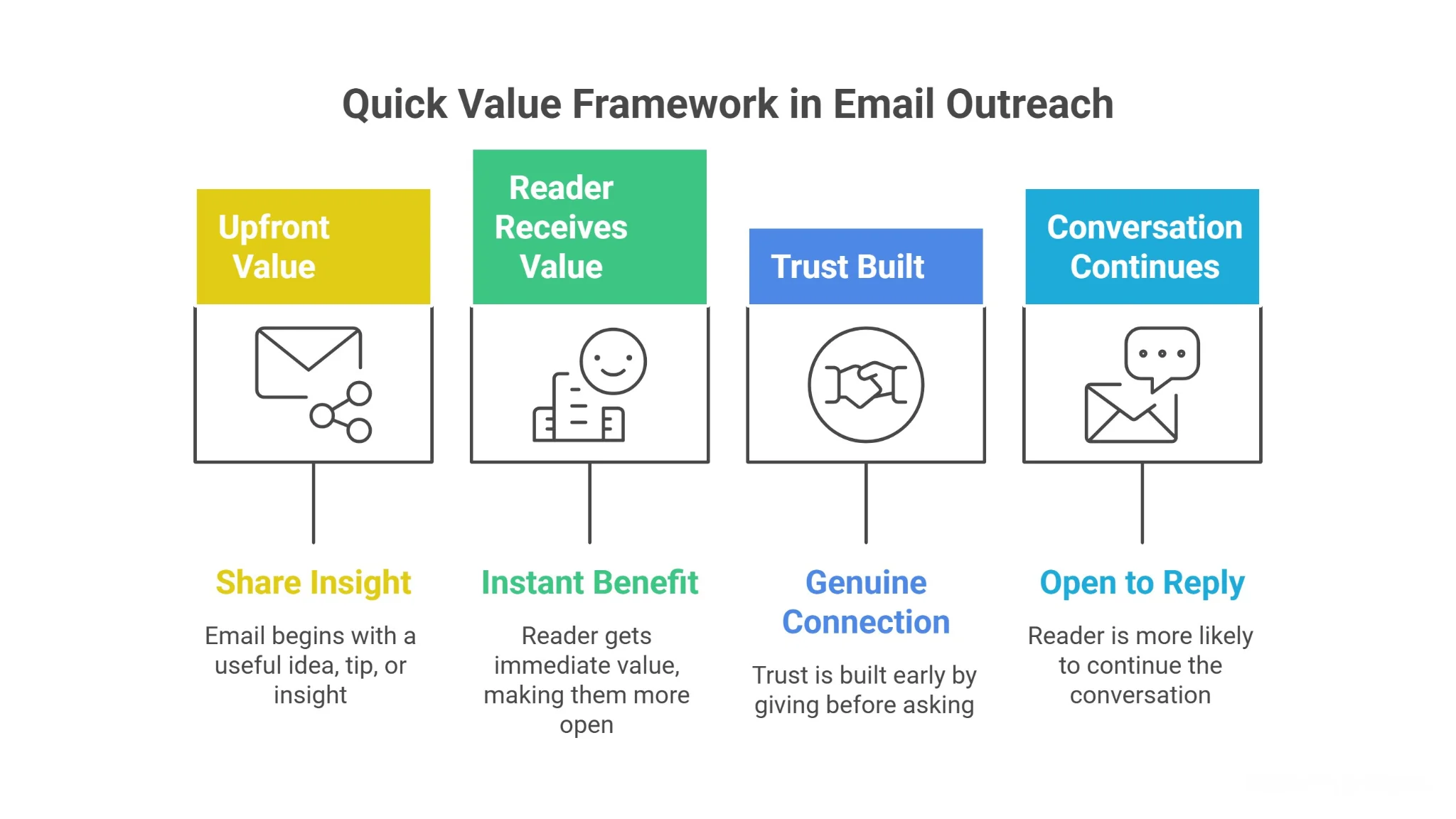
If your email gives something useful upfront, it immediately feels different from most outreach.
The quick value framework focuses on sharing a simple idea, tip, or insight before asking for anything.
This shifts your email from being promotional to being helpful.
When the reader gets value instantly, they’re more open to continuing the conversation.
Example:
Hey Lisa,
One quick idea — shorter emails (under 4 lines) often get higher replies.
We’ve seen this work across multiple campaigns.
Worth testing on your side?
Why It Works:
It builds trust early by giving before asking.
Instead of trying to take attention, it earns it, making your message feel more genuine and easier to respond to.
Social Proof Framework
When you’re reaching out to someone new, credibility matters immediately.
The social proof framework works by including a quick result, metric, or outcome that shows your work has already helped others.
This reduces skepticism and makes your message feel more trustworthy without needing a long explanation.
Keep it short, specific, and easy to understand.
Example:
Hi Daniel,
We recently helped a B2B team improve reply rates by 35% in 3 weeks.
Thought this might be relevant to your outreach efforts.
Open to a quick chat?
Why It Works:
It builds trust quickly by showing real results.
Instead of asking the reader to believe you, it gives proof, making it easier for them to take your message seriously and consider responding.
Ultra-Short Email Framework
Sometimes the best email is the one that takes the least time to read.
The ultra-short email framework focuses on keeping your message within 3–4 lines, making it quick to scan and easy to respond to.
This works especially well for busy prospects who don’t want to read long messages.
Clarity matters more than detail here.
Example:
Hey Tom,
Are you currently optimizing your cold email strategy?
We’ve been helping teams improve replies.
Worth a quick chat?
Why It Works:
It reduces friction by requiring almost no effort to read.
Because it’s short and direct, the reader can quickly decide and respond, which increases the chances of getting a reply.
Question-Led Framework
Starting with a question makes your email feel more like a conversation than a pitch.
The question-led framework works by opening with something relevant that invites the reader to think and respond.
It should be simple, specific, and easy to answer.
This lowers resistance and makes engagement feel natural.
Example:
Hi Emma,
Are you happy with your current cold email response rates?
We’ve been helping teams improve that without increasing volume.
Open to sharing insights?
Why It Works:
It creates an immediate reason to reply.
Instead of pushing information, it invites input, making the interaction feel balanced and conversational rather than one-sided.
Before–After Outcome Framework
When you clearly show transformation, your message becomes easier to understand and more compelling.
The before–after outcome framework works by contrasting the current situation with a better result.
This helps the reader quickly visualize what could change for them.
Keep it simple and focused on one clear improvement.
Example:
Hey Ryan,
Many teams struggle with low reply rates → we’ve helped improve responses by 2–3x without more emails.
Thought this might be relevant.
Open to a quick chat?
Why It Works:
It makes the value instantly clear by showing a direct shift.
Instead of explaining in detail, it highlights the outcome, making it easier for the reader to see what’s possible.
Direct Ask Framework
Sometimes the simplest approach works best.
The direct ask framework focuses on clearly stating what you do and what you’re asking, without adding unnecessary context.
This works well when your offer is easy to understand and doesn’t need much explanation.
Clarity becomes your biggest advantage here.
Example:
Hi Kevin,
We help B2B teams improve cold email reply rates.
Would you be open to a quick 10-minute chat this week?
Why It Works:
It removes confusion and gets straight to the point.
The reader immediately understands your intent and what’s expected, making it easier for them to decide and respond without overthinking.
Follow-Up Nudge Framework
Most cold emails don’t get replies on the first attempt, and that’s completely normal.
The follow-up nudge framework focuses on sending a gentle reminder while adding a small piece of value.
The goal is to stay relevant without sounding pushy or repetitive.
Keep it short, respectful, and easy to engage with.
Example:
Hey John,
Just wanted to follow up in case this got missed.
Happy to share a quick idea that’s been working recently.
Worth a quick look?
Why It Works:
It keeps the conversation open without creating pressure.
By adding a bit of value instead of just reminding, it gives the reader a fresh reason to respond.
How to Choose the Right Cold Email Framework
Now that you’ve seen different frameworks, the next step is knowing when to use each one.
The right choice depends on who you’re reaching out to, what you’re offering, and what you want from the conversation.
Match Framework to Prospect Awareness
Not every prospect starts at the same level of awareness.
If they don’t know you or the problem, keep your message simple and direct.
For warmer prospects, you can add a bit more context since they already understand the space.
Adjust Based on Offer Simplicity
Simple offers work best with clear, short frameworks like direct ask or ultra-short emails.
If your offer needs explanation, use frameworks like problem–solution to add just enough context without making the email heavy.
Choose Based on Your Goal
If your goal is to get a quick reply, keep the message short and conversational.
If you need to explain something or build interest, add slightly more context while still keeping it easy to read and respond to.
Writing Cold Emails Faster Without Losing Quality
Once you start sending emails consistently, speed becomes important.
But writing faster should not mean sending generic or low-quality messages.
The goal is to build a system that helps you stay efficient without losing relevance.
Use Frameworks as Repeatable Templates
Frameworks give you a reliable starting point every time you write.
Instead of thinking from scratch, you follow a structure and adjust it based on the prospect.
This reduces decision fatigue and helps you stay consistent across campaigns.
Over time, you’ll naturally get faster because you already know how to shape your message.
Use AI to Assist, Not Replace Writing
AI can help you generate drafts, refine sentences, and personalize emails quickly.
But it works best when you guide it with clear context and intent.
Use AI to speed up execution, not to replace your thinking.
When you combine frameworks with AI support, you can write faster while keeping your emails natural, relevant, and easy to respond to.
How Oppora Helps You Apply Cold Email Copywriting at Scale
Knowing frameworks is one thing, but applying them consistently across hundreds of emails is where most teams struggle.
This is where having the right system makes a real difference.
Instead of manually repeating the same steps, you can turn your approach into a structured workflow.
Turn Frameworks Into Automated Workflows
With Oppora, you can convert simple frameworks into repeatable workflows that run automatically.
You define your approach once, and the system handles execution without constant input.
This helps you maintain consistency in messaging while scaling your outreach without extra effort.
Use AI to Personalize at Scale
Personalization becomes difficult when volume increases.
Oppora uses AI to adapt each message based on lead data, making every email feel relevant and context-aware.
Instead of using generic templates, each message is uniquely generated, helping you avoid repetition and improve engagement.
Manage Outreach in One Flow
Outbound usually involves multiple tools and disconnected steps.
Oppora brings everything into one flow, from finding leads to sending emails and handling replies.
This reduces manual work, avoids gaps in execution, and helps you focus on conversations instead of managing tools.
Conclusion
Cold email copywriting works when your message is simple, relevant, and easy to respond to.
Instead of overthinking every email, using the right frameworks helps you stay consistent and improve results over time.
Focus on clarity, test what resonates, and refine your approach as you learn what works.
And if you want to apply these frameworks without managing everything manually, tools like Oppora can help you turn your process into a structured workflow, making it easier to scale outreach while keeping your emails personalized and effective.
Frequently Asked Questions (FAQs)
How long should a cold email ideally be?
Cold emails should typically be between 50–120 words. The goal is to keep it short enough to read quickly while still providing enough context to make it relevant. If your email feels heavy, it’s likely too long for cold outreach.
What is the best time to send cold emails?
Weekdays, especially Tuesday to Thursday mornings, tend to perform better. However, timing can vary by audience. It’s best to test different time slots and track when your prospects are most likely to open and reply.
How many follow-ups should you send in a cold email sequence?
Sending 2–3 follow-ups is usually effective. Most replies come after the second or third touchpoint. Keep each follow-up short, add slight value, and avoid repeating the same message to maintain relevance.
Should you always personalize every cold email?
Yes, but keep it simple. One meaningful personalization line is often enough. Over-personalizing can feel forced and slow you down, while no personalization makes your email look generic and easy to ignore.
How do you measure if your cold email copy is working?
Focus on reply rates over open rates. A good cold email should generate conversations, not just opens. Track positive replies, meeting bookings, and overall engagement to understand how well your messaging is performing.