15 Cold Email Templates for SaaS That Book Demos
best cold emails for saas cold email template for saas
This guide offers 15 proven cold email templates for SaaS teams looking to increase demo bookings.
Each template is designed for a specific scenario, offering context, strategies, and guidance on when to use it.
You’ll learn:
- Targeted Templates: 15 templates tailored for different SaaS outreach situations.
- Context & Strategy: Clear guidance on when and why each template works.
- Practical Application: Tips on how to adapt each template to avoid sounding scripted or salesy.
- Boost Demo Bookings: How these templates can help drive more meaningful conversations and increase demo bookings.
Whether you’re new to cold email outreach or looking to refine your approach, these templates will help you create more personalized, effective cold emails that drive higher engagement.
Why Most SaaS Cold Emails Don’t Book Demos
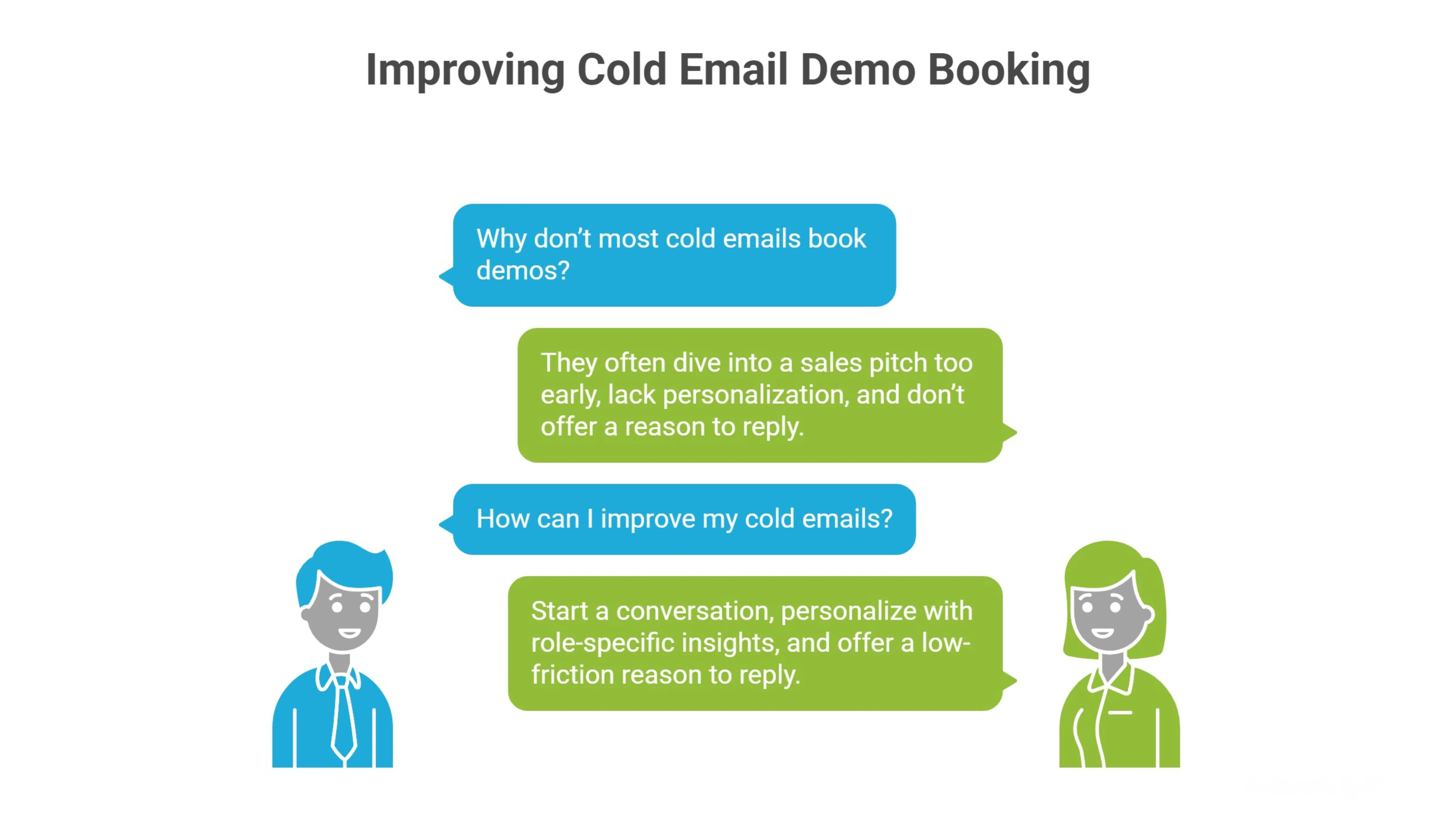
Cold emails are a vital outreach tool for SaaS companies. However, many teams struggle to convert these emails into actual demos.
Even the best cold emails for SaaS can fall short if not executed with the right strategy.
Here’s why most cold emails don’t book demos and how you can improve your approach.
The Importance of Starting a Conversation, Not Selling
Cold emails often fail when they dive into a sales pitch too early.
Instead, aim to start a conversation.
By offering context or a relevant observation, you create an opportunity to engage your prospect without pressuring them into a demo right away.
Starting a conversation builds rapport, making it easier to move toward booking a demo later on.
Personalization That Adds Real Value
Personalization is essential, but generic messages won’t cut it.
Using a prospect’s name or company name is only the beginning.
To make an impact, tie your message to the prospect’s role or current business challenges. This shows you’ve done your research and truly understand their needs.
Meaningful personalization increases engagement and improves your chances of securing a demo.
Offering a Reason to Reply
Most cold emails fail because the prospect doesn’t see the value in replying.
Provide a simple, low-friction reason for them to engage with your email.
Instead of pushing for a demo right away, offer valuable insights, ask a relevant question, or share an interesting industry trend.
This encourages the prospect to respond, creating a smoother path toward scheduling a demo.
The 15 Cold Email Templates for SaaS That Book Demos
This section presents the best cold emails for SaaS, with 15 templates tailored for specific scenarios. For each template, you'll find:
- Context: The ideal situation for using the template.
- Why It Works: The psychological or strategic reasoning behind its success.
- When to Use It: Guidance on the best timing for deployment.
These carefully crafted cold emails are designed to help you engage more effectively and schedule more demos.
Template 1 – The Problem-First Opener
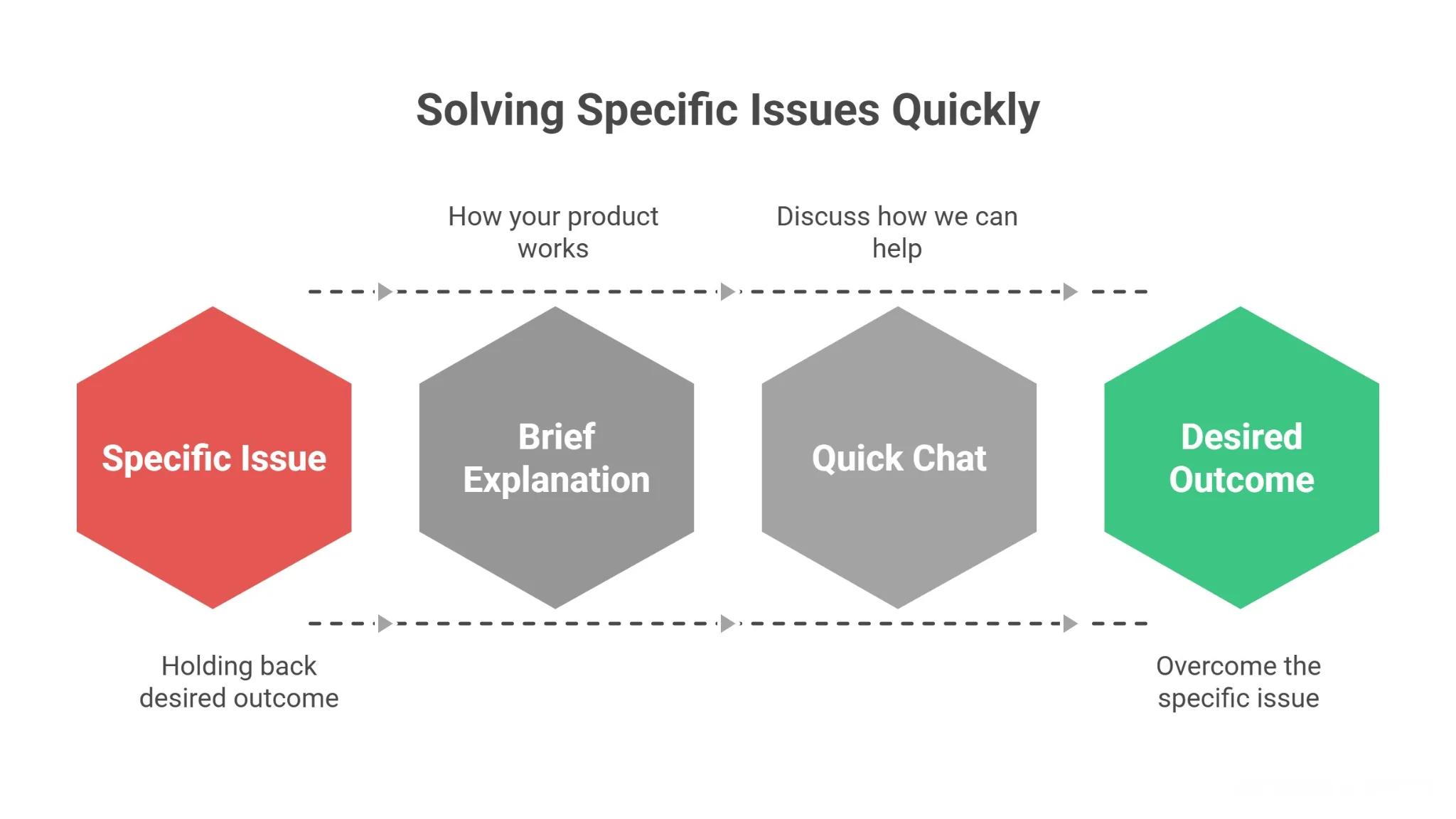
- Context: Target prospects are aware of the problem but not seeking solutions, ideal for cold outreach in industries with common pain points.
- When to Use It: Use for early-stage outreach when the prospect hasn’t explored solutions and isn’t aware of an easy fix.
Template:
Subject: Struggling with [specific issue]? Here’s how to solve it quickly.
Hi [First Name],
Are you currently dealing with [specific problem]? It’s a common challenge for [role/industry] professionals, and many find that it’s holding them back from achieving [desired outcome].
The good news is, [Your Product] can help you overcome this easily by [brief explanation of how your product works]. In fact, many companies in your industry have already solved this issue using our solution.
Would you be open to a quick chat about how we can help you achieve [desired outcome]?
Best ,
[Your Name]
[Your Company]
Why It Works:
- Engages immediately: Opens with a relatable issue, drawing the prospect in.
- Empathy-driven: Builds trust by showing you understand their struggle.
Template 2 – The Trigger Event Email
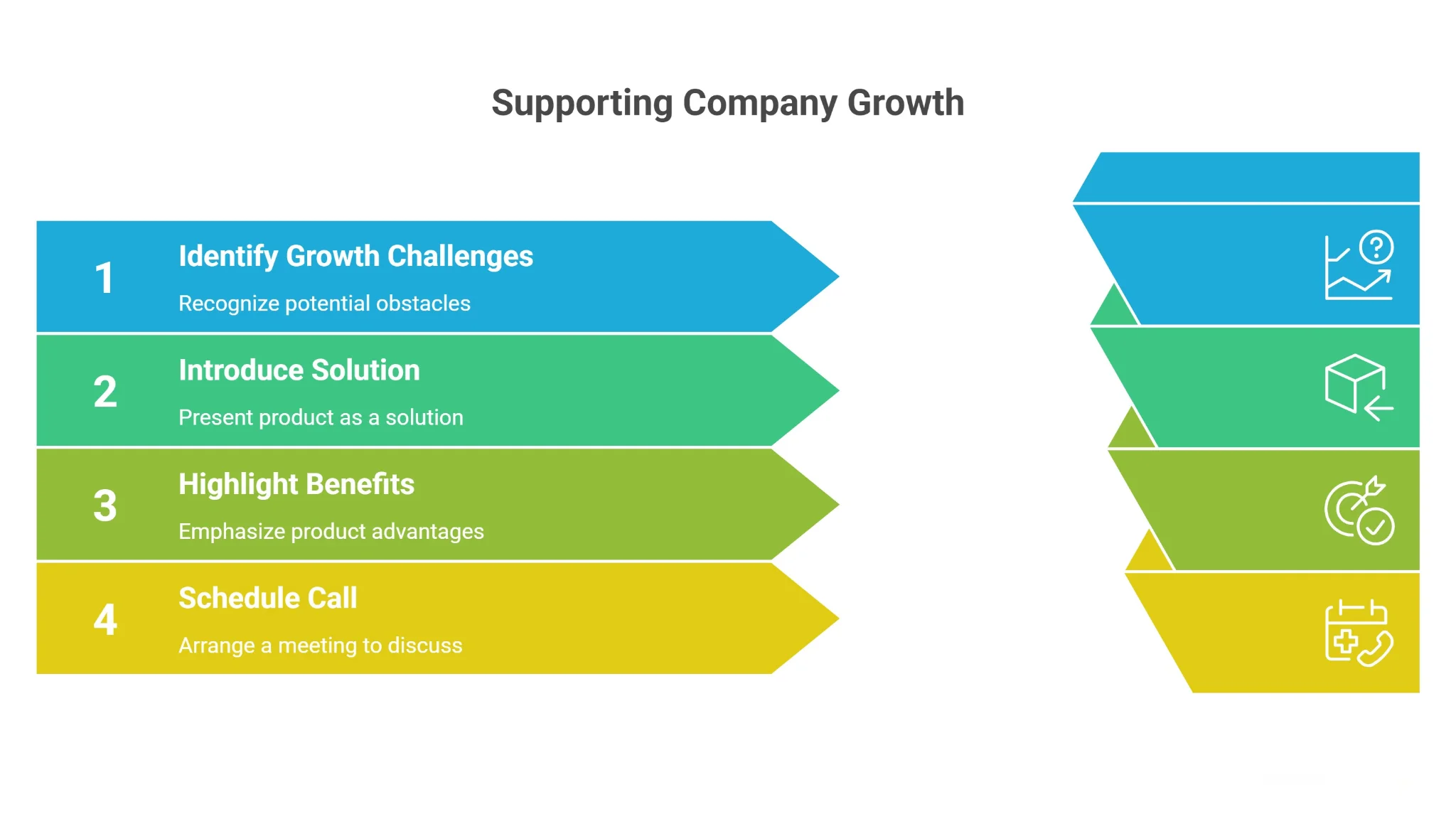
- Context: Target companies after key growth events like new hires, funding rounds, or expansions.
- When to Use It: Introduce your product to help solve new challenges that arise during growth.
Template:
Subject: Congratulations on [recent event]! Here’s how we can support your next steps.
Hi [First Name],
I noticed that [Company] recently [specific event, e.g., secured funding, expanded its team, launched a new product]. Congratulations on this exciting milestone!
At this stage, many companies like yours encounter [specific challenge related to growth], which can slow down your progress. That’s where [Your Product] comes in. We’ve helped businesses in your position overcome [specific problem] and continue their momentum with [specific benefit or feature].
Would you be available for a brief call to discuss how we can help you streamline [specific task/operation] and support your next steps?
Best regards,
[Your Name]
[Your Company]
Why It Works
- Timely & relevant: Leverages recent news to create a connection.
- Natural segue: Makes the conversation feel organic.
Template 3 – The Social Proof Teaser
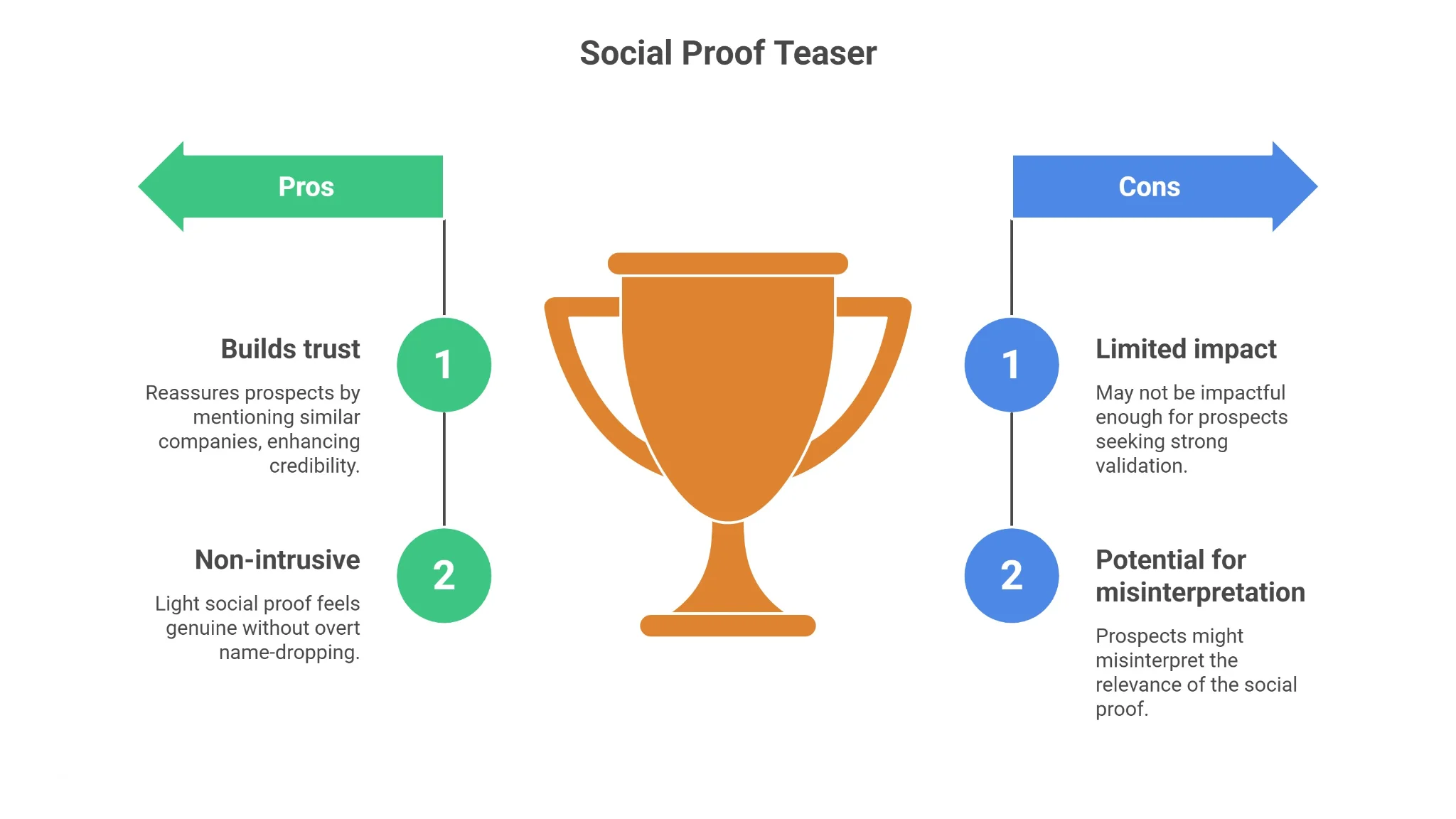
- Context: Use when prospects seek validation from similar companies or industries, especially in early outreach to build credibility.
- When to Use It: Ideal for cold outreach or follow-ups, where peer validation and credibility are crucial.
Template:
Subject: [Your Product] helped [Similar Company] achieve [result].
Hi [First Name],
I wanted to share a quick success story: We recently helped [similar company] achieve [specific result], and I believe [Prospect Company] could benefit from the same outcome. Our solution helped them [describe specific benefit, e.g., streamline operations, boost sales efficiency, improve lead generation] and I’d love to see how we can do the same for you.
If you're interested in learning how we’ve worked with companies like yours to [address a common challenge], I’d be happy to share more details.
Looking forward to hearing from you!
Warm regards,
[Your Name]
[Your Company]
Why It Works
- Builds trust: Reassures prospects by mentioning similar teams or companies.
- Non-intrusive: Light social proof feels more genuine without overt name-dropping.
Template 4 – The Short Value Snapshot
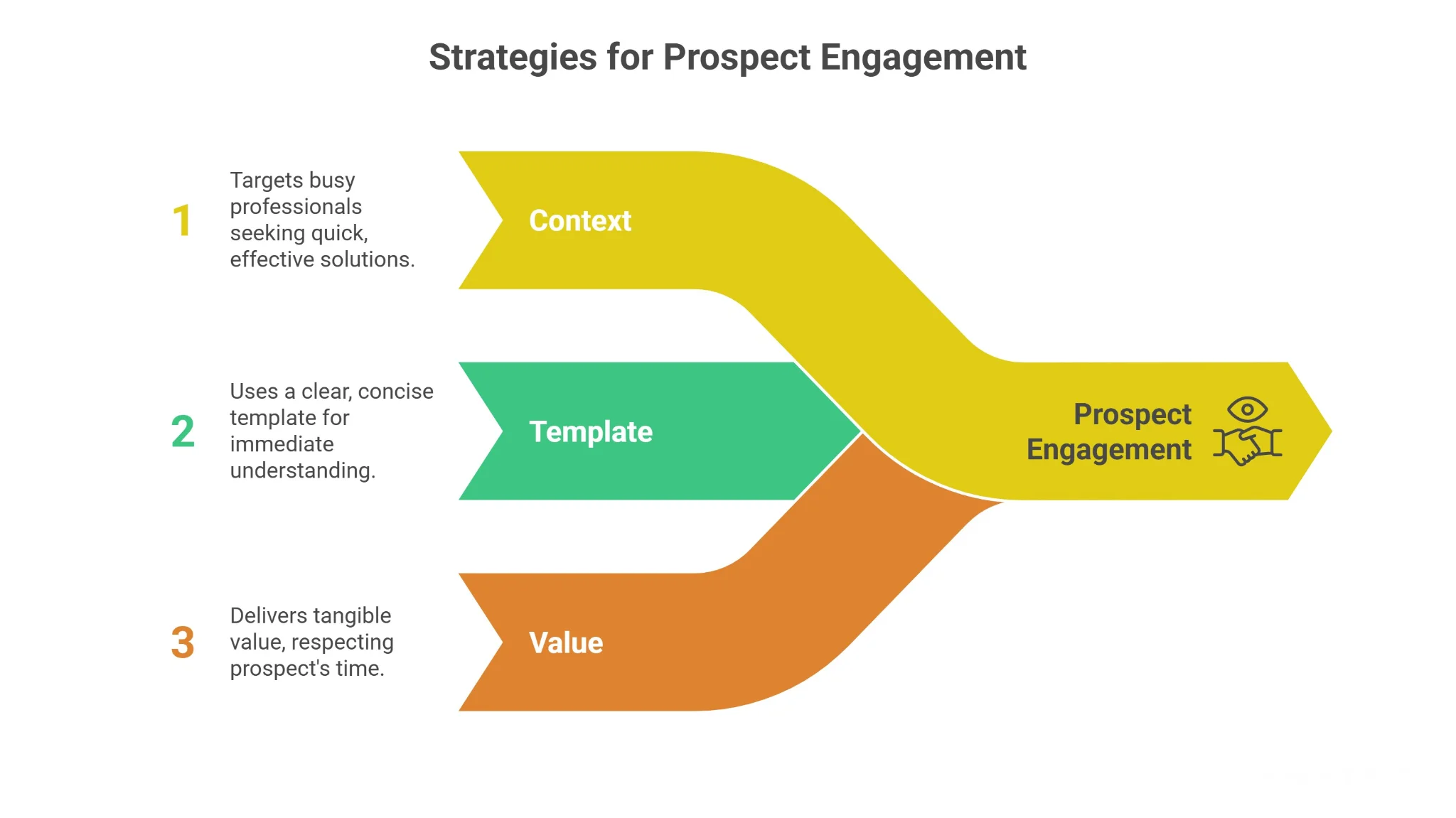
- Context: Target busy professionals who prioritize quick, impactful insights and immediate results.
- When to Use It: When you know the prospect has limited time and needs a concise, clear solution.
Template:
Subject: Achieve [desired result] in [timeframe] with [Your Product] — Here’s how.
Hi [First Name],
In just [timeframe], we helped [similar company] achieve [specific result, e.g., 30% increase in efficiency, 40% more qualified leads, etc.] by streamlining their [specific task or process]. I’m confident that [Prospect Company] can see similar improvements with [Your Product] in no time.
Would you be open to a brief discussion on how we can help you achieve [desired outcome] in [timeframe]?
Looking forward to connecting,
[Your Name]
[Your Company]
Why It Works:
- Delivers value in a brief, easy-to-digest format, respecting the reader's time.
- Focuses on a clear outcome, making it easy for the prospect to understand the benefit.
Template 5 – The Curiosity Gap Email
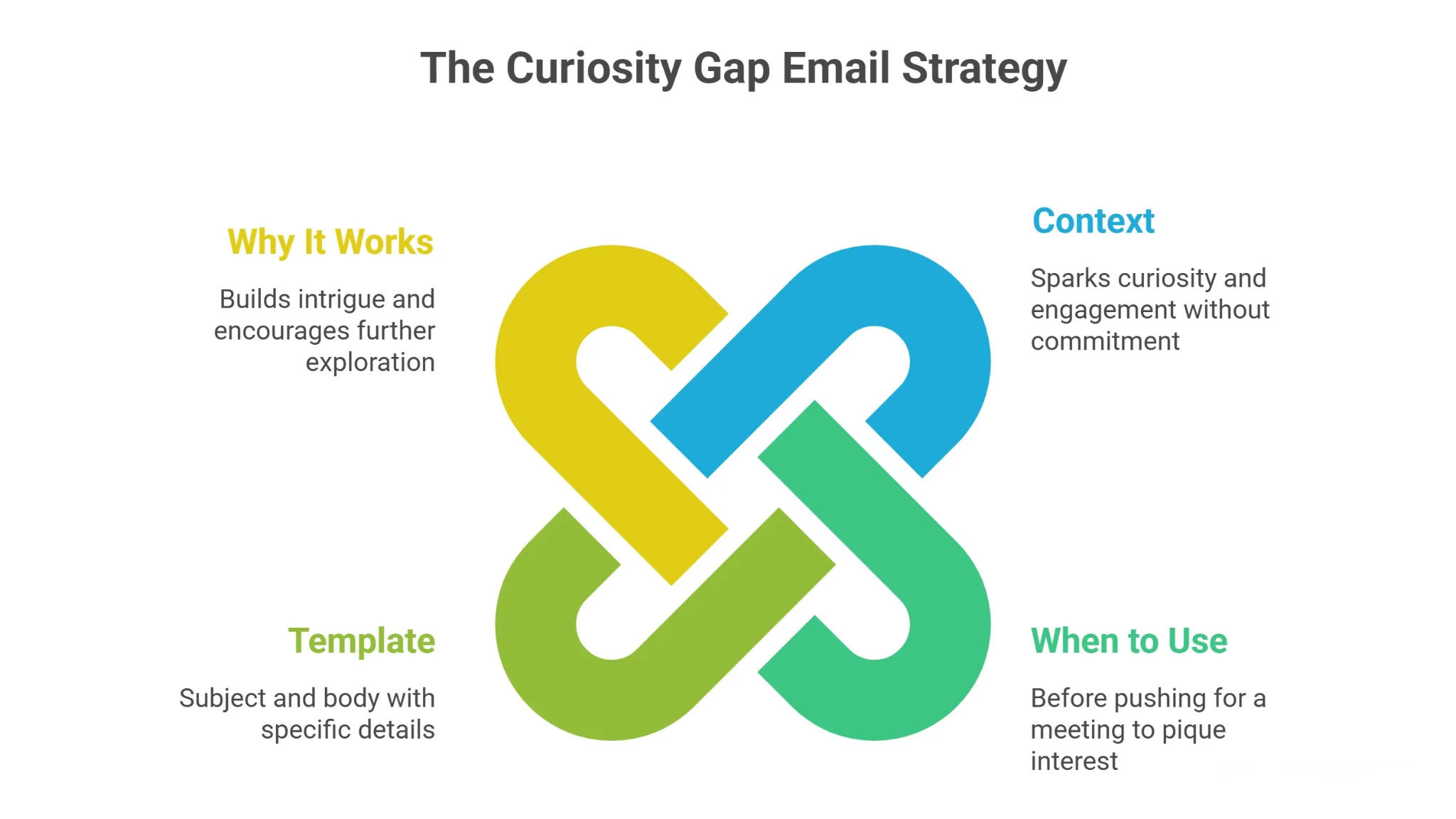
- Context: Ideal for sparking curiosity and intrigue, encouraging engagement without committing to a meeting.
- When to Use It: When you want to spark a conversation and pique interest before pushing for a meeting.
Template:
Subject:[Prospect Company] is facing [relevant issue] here’s how we can help.
Hi [First Name],
I’ve noticed that many companies in your industry struggle with [specific issue]. We've helped organizations like yours overcome this by [specific solution or benefit], and I believe it could make a real difference for you, too.
Would you be open to a brief chat to explore how we can help [Prospect Company] achieve [desired result]?
Looking forward to your thoughts,
[Your Name]
[Your Company]
Why It Works:
- Builds intrigue by revealing just enough to make the prospect want to know more.
- Encourages engagement by leaving an open question or gap in the information.
Template 6 – The Soft Ask Intro
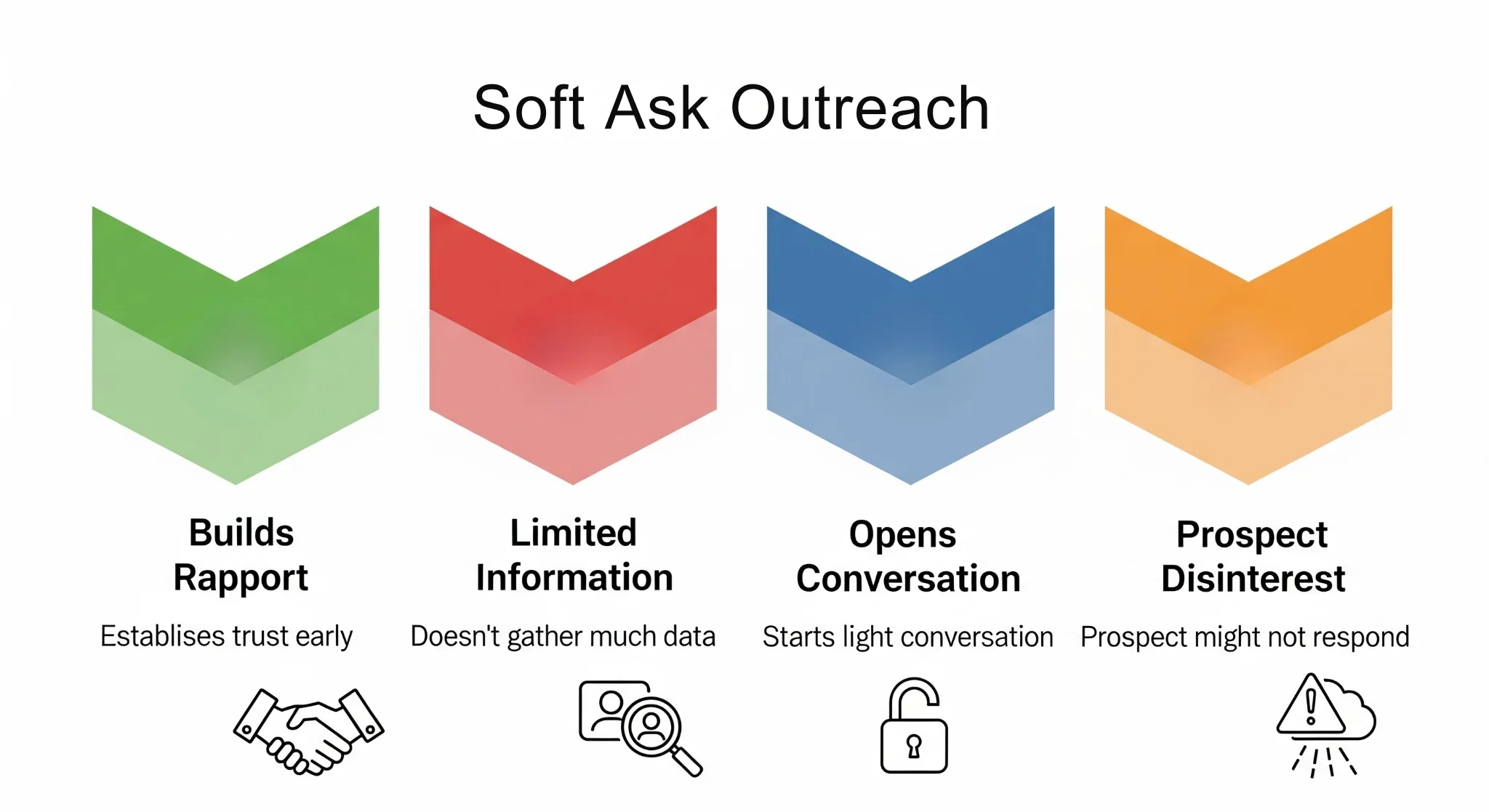
- Context: Great for early outreach to build rapport and start a light conversation without overwhelming the prospect.
- When to Use It: When you’re opening the conversation and want to establish trust before pushing for a demo.
Template:
Subject: Quick question about [specific challenge] at [Prospect Company]…
Hi [First Name],
I came across your company and noticed that many in your industry are facing [specific challenge]. I was curious how are you currently handling [specific aspect]?
Looking forward to hearing your thoughts,
[Your Name]
[Your Company]
Why It Works:
- A low-pressure question encourages engagement without being intrusive.
- Focuses on building rapport and trust first, making it easier for the prospect to respond.
H3: Template 7 – The Comparison Angle
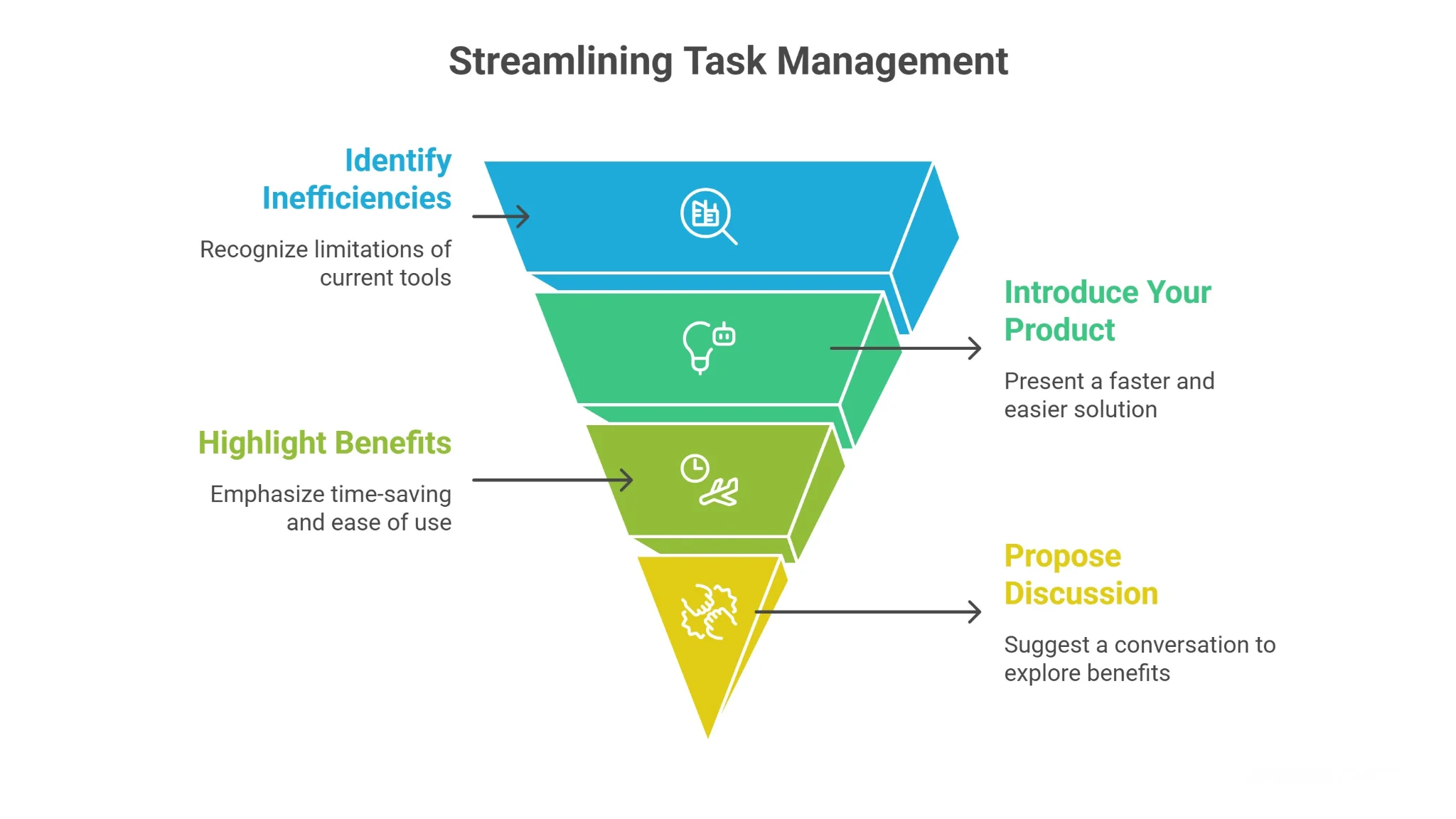
- Context: Best for prospects already using tools or processes but open to a more efficient alternative.
- When to Use It: For prospects relying on current tools or processes who may benefit from a more efficient solution.
Template:
Subject: Still using [current tool]? Here’s how [Your Product] can save you time.
Hi [First Name],
Many teams still use [current tool or process] to manage [specific task], but we've found a way to accomplish the same thing faster and easier with [Your Product].
Would you be open to a quick discussion on how we can streamline your current process?
Looking forward to your response,
[Your Name]
[Your Company]
Why It Works:
- Highlight how your product can improve or replace their current solution with more efficiency.
- Makes the transition feel seamless by focusing on a direct benefit the prospect can relate to.
Template 8 – The Pain Amplifier
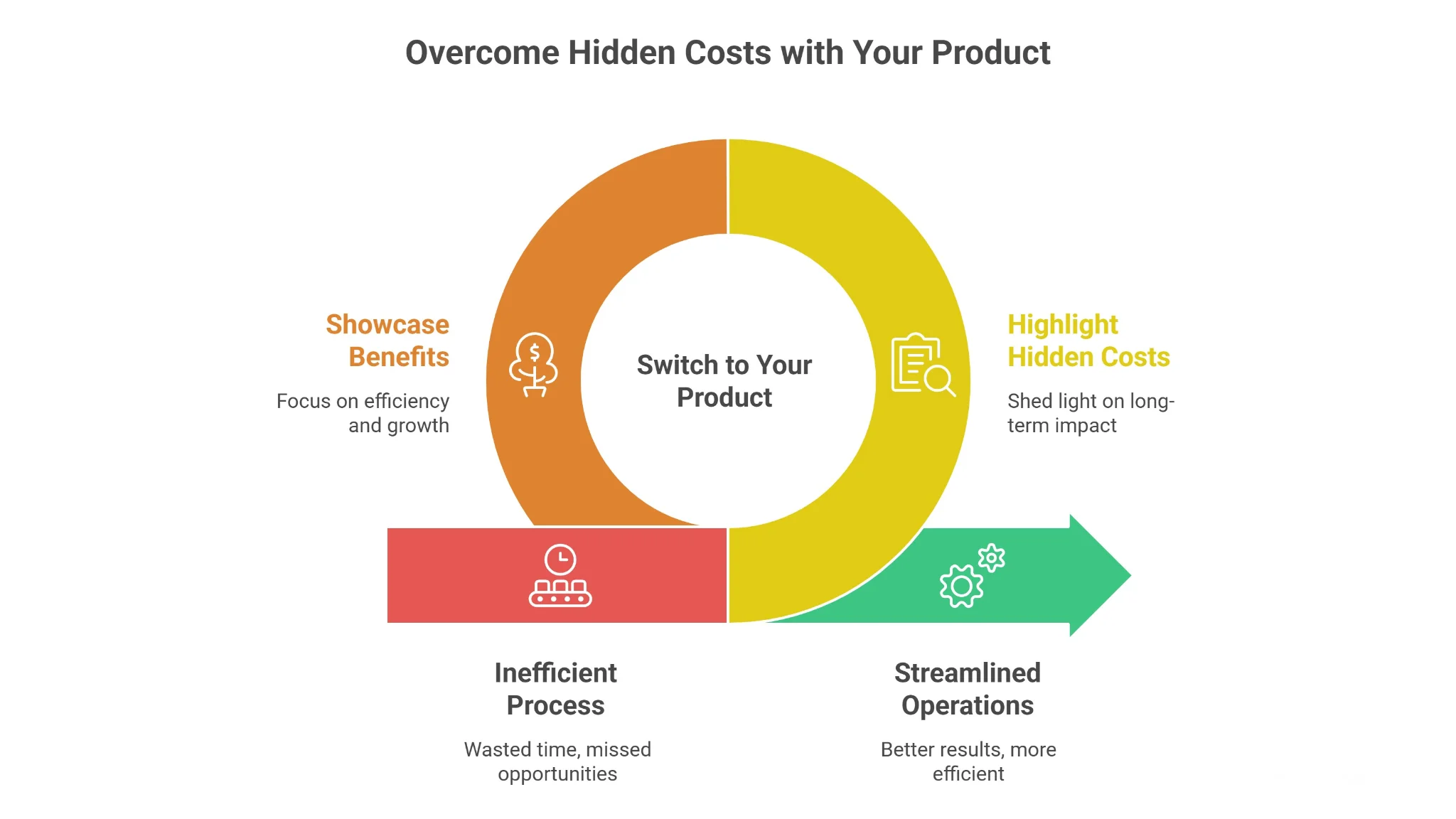
- Context: For prospects tolerating inefficiencies and are unaware of the hidden costs of their
- When to Use It: For prospects who are unaware of the long-term impact of their process and are open to more efficient alternatives.
Template:
Subject: The hidden costs of staying with [current process/tool]...
Hi [First Name],
Many businesses continue using [current process/tool] without realizing the long-term costs: wasted time, missed opportunities, and diminishing efficiency. These issues accumulate and eventually hinder growth and profitability, often without immediate recognition.
By switching to [Your Product], companies like yours have reduced [specific pain point] and unlocked [specific benefit], enabling better results and more streamlined operations.
Could we set up a brief conversation to discuss how [Your Product] can help you overcome these hidden costs?
Looking forward to hearing from you,
[Your Name]
[Your Company]
Why It Works:
- Sheds light on the long-term costs of maintaining the status quo, encouraging the prospect to take action.
- Highlights the potential benefits of switching to your solution, focusing on efficiency and long-term growth.
H3: Template 9 – The Use-Case Specific Email
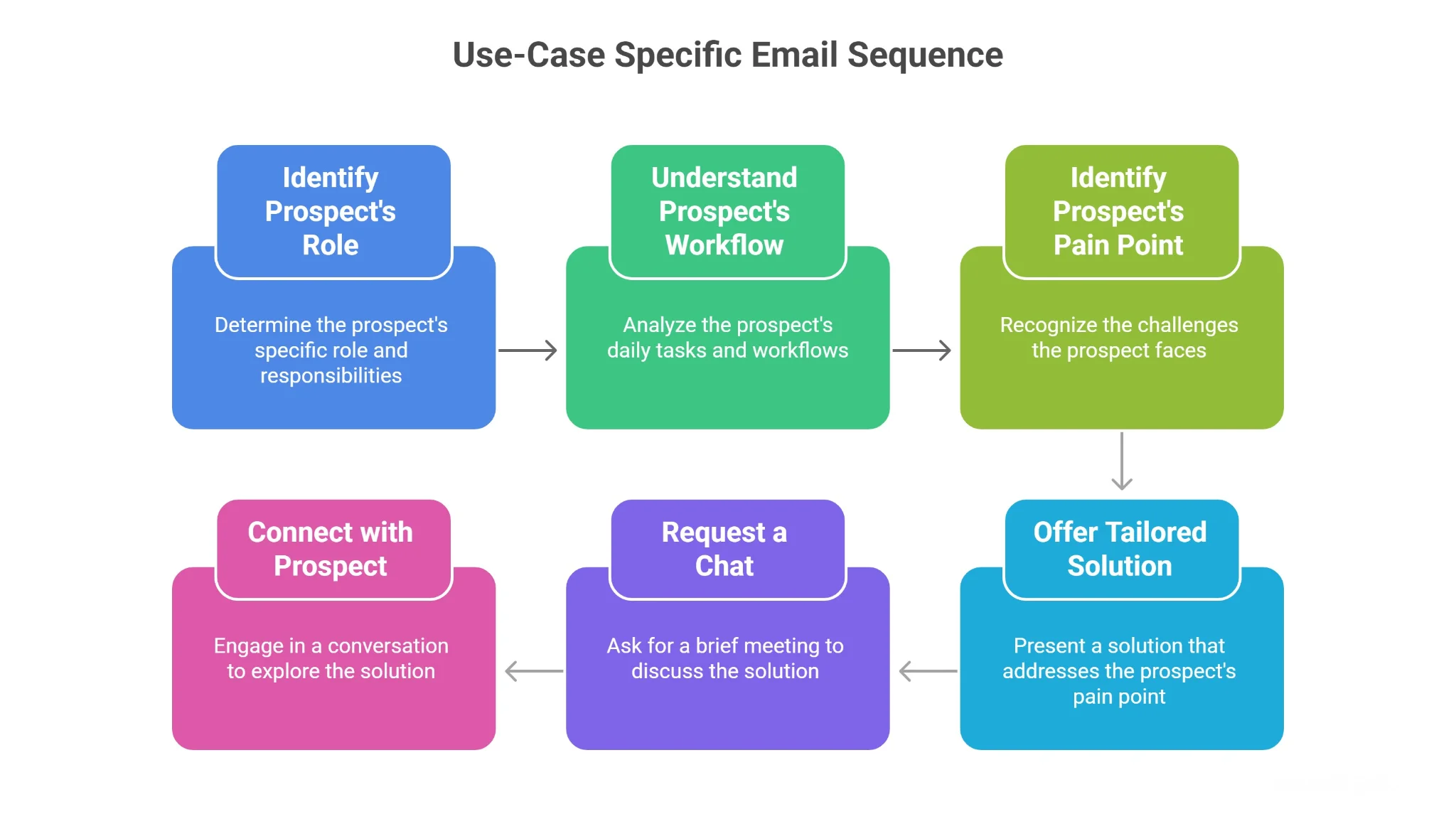
- Context: Perfect when you have a clear understanding of the prospect’s role and responsibilities, allowing you to offer a highly relevant solution.
- When to Use It: Best suited for prospects whose roles and workflows are clear, allowing you to tailor your message to their unique needs.
Template:
Subject: A solution tailored for [role] at [Company]
Hi [First Name],
I see that as a [specific role], you’re likely managing [specific task or workflow]. Many teams like yours face challenges with [related pain point], and we’ve helped them overcome it with [Your Product].
Would you be interested in a quick chat to explore how we can streamline your [task/workflow]?Let’s make your [task/workflow] more efficient.
Looking forward to connecting,
[Your Name]
[Your Company]
Why It Works:
- Focuses on the prospect’s specific challenge, making the email feel directly relevant to their daily work.
- Demonstrates your understanding of their unique needs, increasing the chance of engagement.
Template 10 – The Follow-Up Nudge
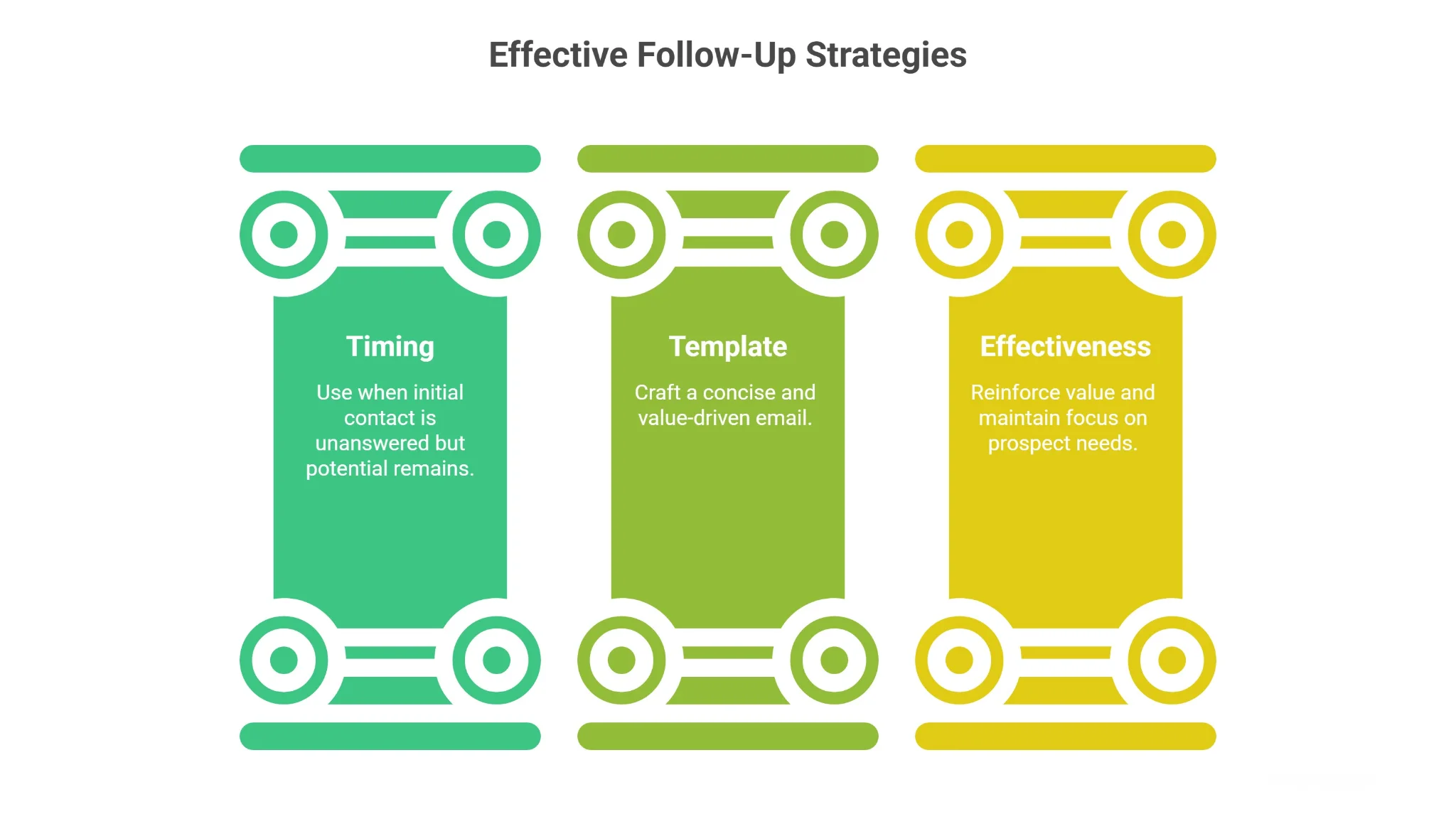
- Context: Effective for re-engaging prospects who haven’t responded to your initial outreach.
- When to Use It: If the initial contact went unanswered, but there's still a clear chance to demonstrate how your solution can solve their problems.
Template:
Subject: Just following up on my last message regarding [specific pain point]...
Hi [First Name],
I’m following up on my last email about [specific pain point or value]. I know things can get busy, but I wanted to ensure you didn’t miss how [Your Product] can help [specific benefit], especially as you tackle [specific task/workflow].
Would you have time for a brief chat to discuss how we can streamline [task/workflow] and drive [desired outcome]?
Best,
[Your Name]
[Your Company]
Why It Works:
- A subtle reminder of the previous conversation keeps the focus on the prospect's needs without being pushy.
- Reinforces the value of your product in relation to their specific challenges, making it easier for the prospect to see the relevance.
Template 11 – The Insight-Led Email
- Context: Ideal for offering valuable, role-specific insights that can spark the prospect's interest and offer immediate relevance.
- When to Use It: Best suited for situations where you can share relevant industry knowledge that directly supports the reader’s role or current priorities.
Template:
Subject: Thought you’d find this helpful for [specific task]…
Hi [First Name],
I recently came across a study that highlighted how teams like yours are improving [specific task] with [specific solution]. I thought you might find it interesting, given your role as [prospect’s role].
If you’re open to a quick discussion, I’d love to share more insights that could help you with [related challenge].
Looking forward to connecting,
[Your Name]
[Your Company]
Why It Works:
- Provides actionable insights tied directly to the prospect's responsibilities, making the outreach feel relevant.
- Positions the conversation as a knowledge-sharing opportunity, not a sales pitch, fostering a more natural connection.
Template 12 – The “Noticed This” Email
- Context: Effective when you’ve noticed a recent change or challenge at the prospect’s company and can offer a tailored solution.
- When to Use It: Ideal for situations where you've noticed a specific challenge or shift in the prospect’s business and can offer a targeted solution based on that insight.
Template:
Subject: Noticed [specific observation] at [Company]...
Hi [First Name],
I came across [specific detail] at [Company] and thought it could be a pivotal moment to connect. It’s common for businesses facing [specific challenge] to struggle with [related pain point], but we’ve helped companies like yours [specific benefit].
Would you be available for a quick chat to discuss how we can help [Company] tackle [related challenge] and [desired outcome]?
Best regards,
[Your Name]
[Your Company]
Why It Works:
- Personalizes the outreach by referencing a specific observation that shows you’ve done your research.
- Highlights how the prospect’s situation aligns with a proven solution, making the email feel relevant and timely.
Template 13 – The Objection Pre-Handler
- Context: Ideal for addressing common objections early on, helping reduce friction and making it easier for the prospect to engage.
- When to Use It: Effective when you anticipate resistance related to switching tools, timing, or implementation, and need to reassure the prospect
Template:
Subject: Let’s address potential concerns before we talk.
Hi [First Name],
I understand that switching tools or adjusting your current system may feel like a significant effort, especially when timing isn’t always perfect. However, many of our clients discovered that transitioning earlier actually led to [specific benefit], saving both time and money in the long term.
Would you have a few minutes for a quick discussion about how we can ensure a smooth transition and get you the results you're looking for?
Best regards,
[Your Name]
[Your Company]
Why It Works:
- Tackles potential objections up front, easing any concerns about switching tools or timing.
- Acknowledges the prospect’s potential hesitation and provides clarity about the benefits of making a change sooner.
Template 14 – The Referral-Style Email
- Context: Best used for reaching out to non-decision-makers or contacts who can refer you to the right person.
- When to Use It: Ideal when seeking referrals or trying to engage someone within the organization who can direct you to the appropriate decision-maker.
Template:
Subject: [Referral Name] suggested you’d be the right person to speak with about [specific challenge]
Hi [First Name],
I was speaking with [Referral Name] at [Company], and they recommended I get in touch with you regarding [specific challenge or opportunity]. Based on what we discussed, they believe you would be the best person to explore how [Your Product/Service] can help [specific benefit].
I’d love to connect briefly and hear your thoughts.
Best,
[Your Name]
[Your Company]
Why It Works:
- Positions you as someone with internal connections, enhancing credibility and trust.
- Uses social proof to create an organic introduction, making it easier for the prospect to respond or refer you to the right person.
Template 15 – The Demo-Ready Close
- Context: Perfect for prospects who are already engaged and have shown interest in solving a specific challenge or exploring a solution.
- When to Use It: Use when the prospect has shown clear intent or interest and is ready to see how your product can provide a solution.
Template:
Subject: Curious to see how [Your Product] can solve [specific challenge]?
Hi [First Name],
I noticed you’re looking to tackle [specific challenge], and based on what we’ve discussed so far, [Your Product] could be a great fit to help you achieve [specific benefit]. Many companies in your industry have seen [specific results] after using it, and I think it could do the same for you.
Would you be open to a brief demo to explore how we can streamline [specific task] and help you reach your goals faster?
Looking forward to showing you how it works,
[Your Name]
[Your Company]
Why It Works:
- Directly ties the demo to the prospect's specific needs and challenges, emphasizing the value of the solution.
- The casual tone and focus on the prospect's goals make the invitation feel non-invasive and relevant.
How Oppora Helps Scale SaaS Outreach with AI-Driven Workflows
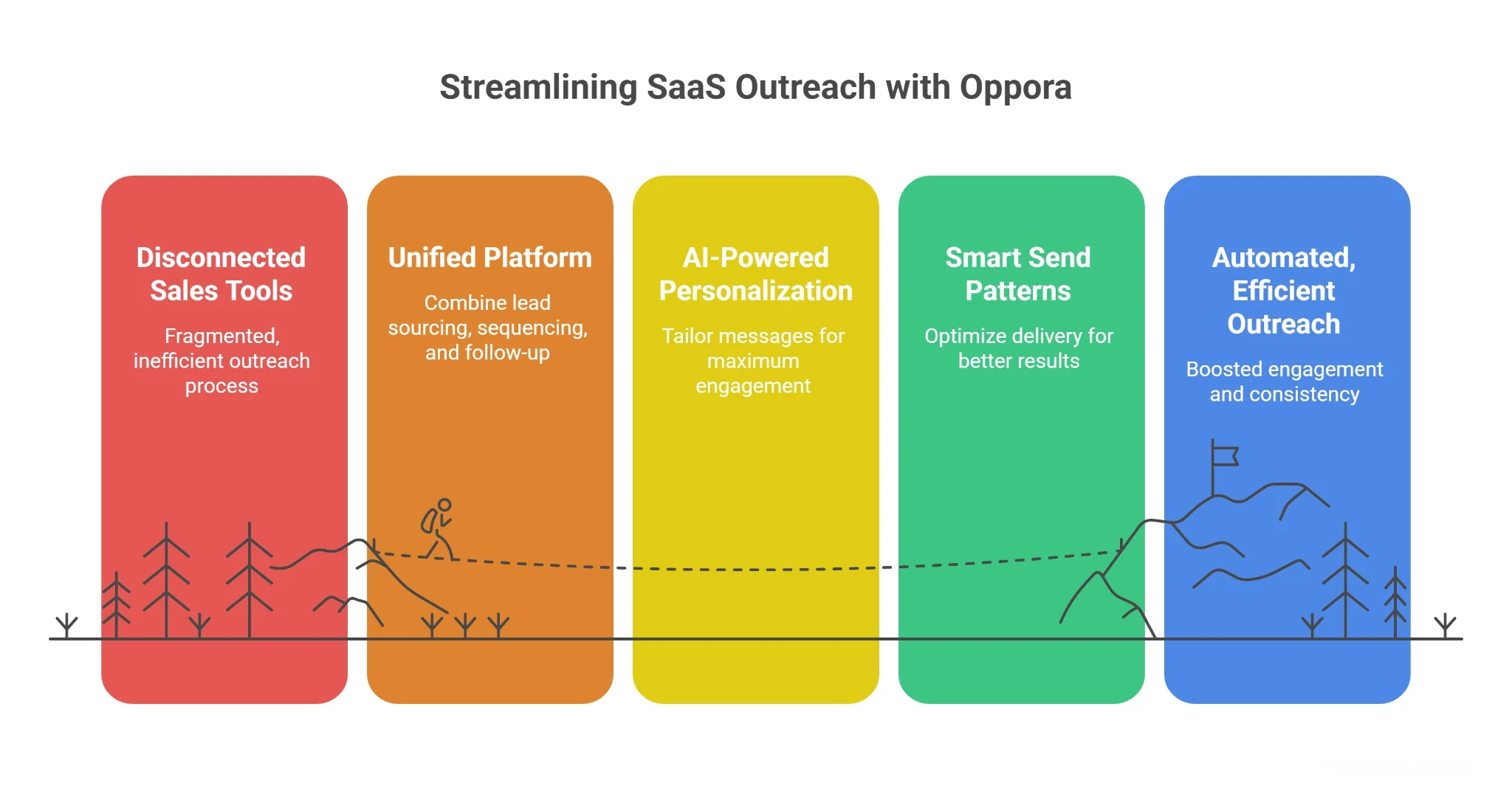
For SaaS teams, managing a scalable outreach process can be a significant challenge.
Oppora is an agentic sales platform that simplifies the creation of end-to-end outbound workflows.
Rather than relying on multiple disconnected tools for lead sourcing, enrichment, sequencing, sending, and follow-up handling, Oppora combines these functionalities into one unified solution.
Much like n8n, which automates workflows without visual builders, Oppora streamlines the sales outreach process through an AI-powered approach.
And here’s how Oppora supports SaaS outreach:
- Comprehensive Lead Database: With access to a 700M+ company and contact database, Oppora enables scalable prospecting, helping teams target the right leads more efficiently.
- Unified Workflow Automation: Oppora automates the entire outreach process from lead discovery to enrichment, sequencing, and reply handling removing the need for multiple separate tools.
- AI-Powered Personalization: Emails are automatically customized based on recipient data, reducing repetitive manual tasks and improving engagement through more relevant messaging.
- Smart Send Pattern Variation: Oppora adjusts send patterns automatically, avoiding spam signals and ensuring consistent outreach without compromising deliverability.
- Inbox Health & Warm-Up: Built-in warm-up and inbox health controls help protect deliverability, ensuring better email placement as outreach volume increases.
- Parallel Outreach Scaling: Oppora supports up to 50 mailboxes with domain rotation, allowing businesses to safely scale outreach without risking deliverability issues.
- CRM Synchronization: Automatically sync outreach activities and responses with your CRM, ensuring all communication is organized and updated in one place.
By automating these workflows, SaaS teams can significantly boost engagement, consistency, and the overall efficiency of their outreach.
Conclusion
Cold email works best when structure meets relevance.
These cold email templates for SaaS give you a solid starting point.
However, success comes from thoughtful use, testing, and clear workflows.
With the right process and tools, booking demos becomes a predictable outcome rather than random.
Frequently Asked Questions (FAQs)
What are the benefits of using cold email templates for SaaS?
Cold email templates for SaaS streamline outreach, ensure consistency, and save time. They also allow for personalized communication at scale, improving response rates and lead engagement. Effective use of templates can help SaaS teams maintain a more organized and efficient outreach process.
How do I improve the effectiveness of cold email templates?
To improve effectiveness, focus on personalization, A/B testing subject lines, and refining messaging based on responses. Regularly update your templates based on feedback and insights from your outreach campaigns to ensure they stay relevant and impactful.
How can I track the success of my cold email campaigns?
Track success using email tracking tools that monitor open rates, click-through rates, and response rates. Analytics from CRM systems and outreach platforms will also help you assess the effectiveness of your cold email templates and refine your approach over time.
Can I use these cold email templates for follow-up emails?
Yes, these templates can be adapted for follow-up emails. Customize them to reference previous interactions, reminding prospects of the value proposition while maintaining a polite, non-intrusive tone. Effective follow-up increases the chances of securing a meeting or demo.
What tools integrate well with cold email outreach for SaaS teams?
Tools like Oppora, HubSpot, and Outreach.io integrate well with cold email campaigns. They allow for automated outreach, CRM syncing, and tracking, helping SaaS teams manage large-scale outreach efficiently and with greater personalization.