Demand Generation vs Lead Generation: When to Use Each
Most B2B teams don’t struggle because they lack tools. They struggle because they mix up demand generation and lead generation — and then expect one strategy to do the job of the other.
The result?
• Lead forms with low intent
• Cold outreach to unaware buyers
• Long sales cycles that stall
Understanding the difference between demand gen vs lead gen isn’t just marketing theory — it directly impacts pipeline quality and growth efficiency.
Let’s break it down clearly and practically.
What Is Demand Generation?
Demand generation is the process of creating awareness and interest in your product or category before someone is ready to buy.
At this stage, your audience often doesn’t know:
- Your product exists
- They have a problem worth solving
- Why your approach is different
Demand gen focuses on educating and warming the market.
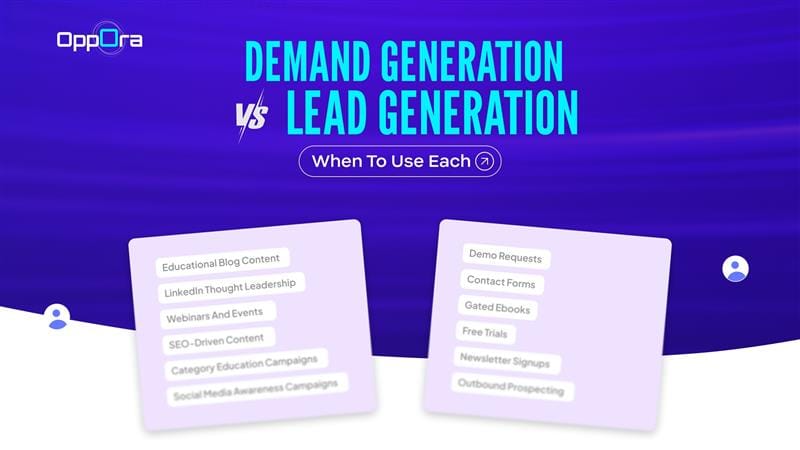
Common Demand Generation Activities
- Educational blog content
- LinkedIn thought leadership
- Webinars and events
- SEO-driven content
- Category education campaigns
- Social media awareness campaigns
Goal: Build trust and interest before capture.
Think of demand generation as filling the top of the funnel with the right attention.
What Is Lead Generation?
Lead generation is the process of capturing contact information from people who have already shown some level of interest.
This is where you convert attention into identifiable prospects your sales team can engage.
Common Lead Generation Activities
- Demo requests
- Contact forms
- Gated ebooks
- Free trials
- Newsletter signups
- Outbound prospecting
Goal: Turn interest into an actionable pipeline.
Lead gen works best when demand already exists — either created by your brand or present in the market.
Demand Generation vs Lead Generation: Key Differences
Simple way to remember:
Demand gen creates interest. Lead gen captures it.
Why Many Teams Get This Wrong
In many B2B organizations, there is pressure to show quick pipeline impact. So teams jump straight into lead generation tactics like:
- Cold email blasts
- Aggressive demo CTAs
- High-volume outbound
But if the market isn’t warmed, you see:
- Low reply rates
- Poor meeting quality
- High CAC
- Long nurture cycles
This is why the difference between demand gen and lead gen matters so much. One builds momentum; the other converts it.
When to Use Demand Generation
Demand generation works best when:
- You’re entering a new market
- Your category is not well understood
- Sales cycles are long
- Brand awareness is low
- Buyers need education
For example, if you’re introducing a new approach to outbound automation, prospects may not yet be actively searching. Educational content, thought leadership, and problem-framing should come first.
Signal you need more demand gen:Your outbound connection but prospects say, “Not now” or “Just browsing.”
When to Use Lead Generation
Lead generation becomes powerful when:
- There is existing category awareness
- Buyers are actively researching solutions
- You have proven messaging
- Traffic and engagement already exist
- You need to accelerate pipeline capture
At this stage, strong CTAs and outbound targeting can efficiently convert interest into meetings.
Signal you need more lead gen:High traffic and engagement but low conversion into pipeline.
How Demand and Lead Generation Work Together
The highest-performing growth teams don’t choose between demand gen vs lead gen — they orchestrate both.
Here’s the natural flow:
- Demand gen creates awareness and trust
- Buyers begin researching
- Lead gen captures high-intent prospects
- Sales engages warm opportunities
- Pipeline quality improves
When aligned properly, outbound stops feeling cold and inbound becomes more qualified.
How Oppora Supports Smarter Lead Generation
Platforms like Oppora are designed to improve the execution layer of lead generation once demand exists.
Oppora focuses on removing the manual friction in outbound by helping teams:
- Track real buying signals (like hiring activity)
- Find decision-maker emails accurately
- Build targeted lead lists for outreach
- Run personalized multi-channel sequences
- Manage inbox and reply handling
Instead of blasting cold lists, teams can prioritize higher-intent prospects, which aligns much better with a demand-led strategy.
This matters because strong demand gen without precise lead capture still leaks pipeline.
Final Thoughts
The debate around demand generation vs lead generation isn’t about choosing one over the other. It’s about sequencing them correctly.
- Demand generation builds trust and market readiness
- Lead generation converts that readiness into pipeline
- Smart outbound tools help you execute efficiently
Teams that align all three typically see:
- Higher reply rates
- Better meeting quality
- Lower acquisition costs
- Faster pipeline velocity
If your current outreach feels harder than it should, the issue is often not volume — it’s timing and targeting.
And that’s exactly where a demand-led strategy combined with precise outbound execution makes the biggest difference.
Frequently Asked Questions
Is outbound email demand generation or lead generation?
Outbound email is usually considered lead generation, especially when the goal is to book meetings or capture responses.
However, outbound can support demand generation if the messaging is educational and awareness-focused rather than purely sales-driven. The intent and messaging determine the category.
How does lead generation directly impact revenue?
Lead generation creates the bridge between marketing activity and sales pipeline. By identifying and capturing interested prospects, it enables sales teams to prioritize conversations that have real buying potential. When targeting and data quality are strong, lead gen directly improves meeting rates and pipeline predictability.
Why do many lead gen programs produce low-quality leads?
Low-quality leads usually stem from misaligned intent and targeting. Common causes include over-reliance on static lists, generic messaging, and pushing conversion too early in the buyer journey. Without demand support and accurate signals, teams often generate activity that looks busy but converts poorly.
What typically comes first in a modern B2B funnel?
In most cases, some level of demand generation comes first because buyers need context before they respond to outreach. That said, in well-established categories where buyers already understand the problem, companies can successfully run demand and lead programs in parallel from the start.