Email Salutation Examples That Work Better Than “Dear Sir/Madam”
Email salutations shape first impressions. This guide explains what a salutation in an email really is, why generic greetings no longer work, and how to choose better, modern salutations with practical examples.

Email communication has changed dramatically, but many inboxes are still filled with messages that begin the same way they did decades ago: “Dear Sir/Madam.” While it may sound polite on the surface, this salutation no longer fits how people read, interpret, or respond to emails today.
In a world where personalization is expected and attention spans are short, the opening line of your email plays a critical role. The right email salutation sets context, establishes tone, and signals effort. The wrong one creates distance before the message even begins.
This guide explains what a salutation in an email really is, why outdated greetings fail, and how to choose good salutations for emails that feel relevant, respectful, and effective in modern communication—especially for sales, recruiting, and professional outreach.
What Is a Salutation in an Email? (And Why It Matters More Than Ever)
A salutation in an email is the greeting that appears immediately before the body of your message. It’s not just a formality—it’s the reader’s first interaction with your intent, tone, and professionalism.
In practical terms, salutations help answer three unspoken questions for the reader:
- Is this email meant for me?
- How formal is this conversation?
- How much effort did the sender put into reaching out?
This is why understanding what is salutation in email communication matters. A well-chosen salutation makes your email feel intentional. A generic one makes it feel mass-sent, even if the rest of the message is thoughtful.
Why “Dear Sir/Madam” No Longer Works in Modern Emails
The problem with Dear Sir/Madam isn’t that it’s rude—it’s that it’s disconnected from how people communicate today.
Here’s why it consistently underperforms:
1. It Signals Zero Personal Context
When recipients see Dear Sir/Madam, they immediately know the sender doesn’t know who they are. In professional communication, that creates distance rather than trust.
2. It Feels Outdated and Transactional
Email has evolved into a faster, more conversational medium. Formality still has a place, but overly rigid salutatory greetings feel more like paperwork than conversation.
3. It Assumes Gender and Role
Modern workplaces are global and diverse. Gender-neutral, role-aware salutations for emails are safer, more respectful, and more accurate.
Because of these reasons, many recipients mentally downgrade emails that start with outdated greetings—even if the content itself is relevant.
Better Salutation Examples for Emails (With Context and Usage)
Below are email salutation examples grouped by scenario, with explanations so you understand why they work.
1. Personalized Email Salutations (Name-Based)
Personalized salutations are the most effective because they immediately tell the reader: this message is meant for you. They reduce friction and make the email feel intentional rather than automated.
Why this works
Using a first name mirrors how people speak in real conversations. It lowers formality just enough to feel approachable without being casual. In inboxes filled with mass emails, this stands out.
When to use
- One-to-one outreach
- Sales emails
- Follow-ups
- Partnerships and introductions
Email Example
Subject: Quick idea to improve outbound conversions
Hi Ankit,
I came across your team while researching companies scaling outbound sales in SaaS. One thing that stood out was how quickly you’ve expanded your SDR function over the past year.
We’ve been working with similar teams to reduce manual prospecting and improve reply rates without increasing email volume. I thought it might be worth sharing a quick idea that could be relevant to your setup.
Would you be open to a short conversation this week?
Best,
Manasa
This example shows how a simple salutation for email sets a conversational tone that flows naturally into the body.
2. Formal Salutation Email Examples (Professional Distance)
Formality is still necessary in certain contexts—but it needs to be precise, not generic.
Why this works
A formal salutation shows respect without sounding impersonal when it’s specific. Addressing someone by title and last name signals seriousness and professionalism.
When to use
- Enterprise or regulated industries
- Legal, financial, or academic communication
- Senior leadership outreach
Email Example
Subject: Proposal Review Request
Dear Ms. Sharma,
I’m writing to follow up on the proposal shared earlier this month regarding workflow automation for your sales operations team.
Based on your feedback, we’ve refined the scope to focus specifically on lead enrichment and outreach consistency. I’ve attached the updated document for your review.
Please let me know if you’d like to discuss this further or if any adjustments are required.
Sincerely,
Manasa
This formal salutation email works because it aligns with the seriousness of the content that follows
3. Role-Based Salutations (When the Name Is Unknown)
When you don’t know who exactly will read the email, addressing the role is far more effective than using outdated placeholders.
Why this works
Role-based salutations demonstrate intent. They show that the email is targeted to a function, not blindly sent.
When to use
- Job applications
- Shared inboxes
- Department-level outreach
Email Example
Subject: Application for Growth Marketing Role
Hello Hiring Manager,
I’m reaching out to apply for the Growth Marketing position listed on your careers page. With over four years of experience working on B2B SaaS acquisition strategies, I believe my background aligns well with what your team is building.
I’ve attached my resume and portfolio for reference. I’d welcome the opportunity to discuss how my experience could support your growth goals.
Kind regards,
Manasa
This salutations example feels purposeful, not generic.
4. Team or Group Salutations in Emails
When addressing multiple people, the salutation should unify rather than single out.
Why this works
Group salutations acknowledge everyone equally and set a collaborative tone.
When to use
- Internal communication
- Project updates
- Stakeholder announcements
Email Example
Subject: Q2 Campaign Timeline Update
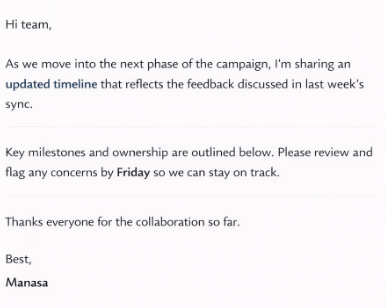
As we move into the next phase of the campaign, I wanted to share an updated timeline reflecting the feedback discussed in last week’s sync.
Key milestones and responsibilities are outlined below. Please review and flag any concerns before Friday so we can stay on track.
Thanks everyone for the collaboration so far.
Best, Manasa
This shows how salutations in emails help establish clarity and inclusion from the first line.
5. Neutral Salutations (Safe for Cold Outreach)
Neutral salutations are often underestimated. When used correctly, they are clean, modern, and effective.
Why this works
Neutral greetings remove assumptions and still feel human. They don’t force familiarity but don’t create distance either.
When to use
- Cold emails
- International outreach
- First-touch communication
Email Example
Subject: Reducing manual prospecting for growing sales teams
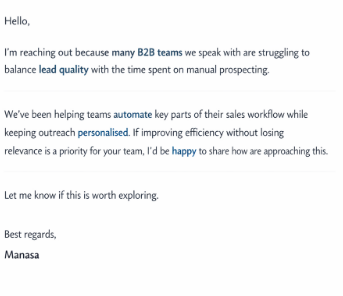
I’m reaching out because many B2B teams we speak with are struggling to balance lead quality with the time spent on manual prospecting.
We’ve been helping teams automate key parts of their sales workflow while keeping outreach personalised. If improving efficiency without losing relevance is a priority for your team, I’d be happy to share how others are approaching this.
Let me know if this is worth exploring.
Best regards, Manasa
This example answers what is a salutation in an email by showing how it frames the entire message.
How Oppora.ai Fits into Your Outreach Strategy
Now that your emails start with powerful salutations, you need a system that reinforces consistency and boosts results across your campaigns. That’s where Oppora.ai comes in.
Oppora.ai is a complete sales automation platform built to transform how teams find leads, personalize outreach, and close deals faster. Instead of manually chasing data and managing disjointed tools, Oppora brings everything together in one intelligent workflow.
Here’s what makes Oppora stand out:
Automate Every Step of Your Sales Workflow
With Oppora’s drag-and-drop workflow automation, you can automate company discovery, lead scoring, contact verification, and campaign creation — all in one flow. Configure agents once and run processes that would otherwise take hours of manual work.
Personalised Outreach at Scale
Oppora doesn’t just automate — it personalises. You can launch sequences that adapt based on prospect behavior, ensuring each email feels personal from the salutation to the closing remark.
Smart Lead Discovery and Enrichment
Whether capturing verified email addresses or enriching company data, Oppora’s built-in tools ensure your outreach — including salutations — reaches the right audience with high deliverability.
Integrated CRM and Analytics
Track every interaction, manage leads in a unified CRM, and see real results from your outreach — not just open rates, but real conversions and meetings booked.
Conclusion — Move Beyond Old-School Email Greetings
Great email salutations are the foundation of effective communication. Outdated greetings like Dear Sir/Madam may have been standard once, but in today’s email environment, they can make messages feel impersonal and reduce engagement. By choosing better salutatory greetings, you show respect for the recipient and increase clarity and connection from the first word.
Pair this with a powerful sales automation platform like Oppora.ai, and you’re not just writing better emails — you’re running smarter outreach that works harder and faster. With Oppora, every step from lead discovery to reply becomes efficient, personalised, and measurable.
Frequently Asked Questions
What are good salutations for cold emails that won’t sound awkward?
Neutral or lightly personalized salutations like “Hello,” “Hi [First Name],” or “Greetings [Role]” work well for cold outreach. They feel respectful without forcing familiarity.
How do email salutations affect response rates?
Email salutations influence first impressions. A relevant, thoughtful salutation increases the likelihood that the recipient reads beyond the first line, which directly impacts open rates and replies.
Are gender-neutral salutations better for professional emails?
Yes. Gender-neutral salutations reduce the risk of misidentification and reflect modern workplace norms. Role-based or name-based greetings are more accurate and inclusive than generic titles.
What is the difference between a salutation and a greeting in emails?
A greeting is conversational, while a salutation sets the professional context of the email. In practice, email salutations serve both purposes by framing tone and intent before the message begins.
Should internal emails use different salutations than external emails?
Yes. Internal emails can be more informal (“Hi team”), while external emails should match the relationship, industry, and purpose of communication to maintain professionalism.
How often should email salutations change in ongoing conversations?
After the first exchange, salutations can become more relaxed. Continuing to use overly formal greetings in ongoing threads may feel unnatural and slow down communication.