Follow Up Email on Business Proposal: How to Write + 15 Sample Emails
follow up on proposal email, following up on a proposal email, follow up email on proposal, email follow up on proposal, email to follow up on proposal, follow up email on proposal submitted, follow up email on business proposal, follow up on proposal email sample,
You have just hit "send" on a proposal you spent hours perfecting. You feel confident. But then, days go by, and your inbox remains empty. This silence is frustrating.
The difference between a lost deal and a signed contract often comes down to one thing: the follow up on proposal email.
This guide explains how to follow up without sounding pushy. You will learn when to send follow-ups, how to write them clearly, and see real email samples that help restart conversations.
Why Follow Up on a Proposal Email Matters
Silence after sending a proposal is common. Many professionals hesitate to follow up because they don’t want to be annoying. However, silence after sending a proposal is actually quite common and rarely indicates rejection.
Understanding the psychology behind this silence is key. A timely follow up email on a business proposal can revive interest and clarify hidden objections.
It keeps the opportunity alive when it might otherwise drift away. Most prospects don't reply simply because they are busy handling their own urgent tasks.
Following up on a proposal email is often the nudge they need. It brings your solution back to the top of their priority list.
It reminds them that you are waiting for them to proceed. A well-crafted message signals that you care about the project and are reliable.
Done right, it builds a partnership instead of pressure. It shows you are ready to help them solve their problem, not just close a quick deal.
Now that we know why it matters, let’s look at the specific timing so you don’t annoy your leads.
When to Send a Follow Up Email on Proposal
Timing matters more than wording. If you email too soon, you look desperate. If you wait too long, they might forget you entirely.
We need to look at the ideal time for your follow up email on proposal. The goal is to space emails so they feel helpful, natural, and distinct from spam.
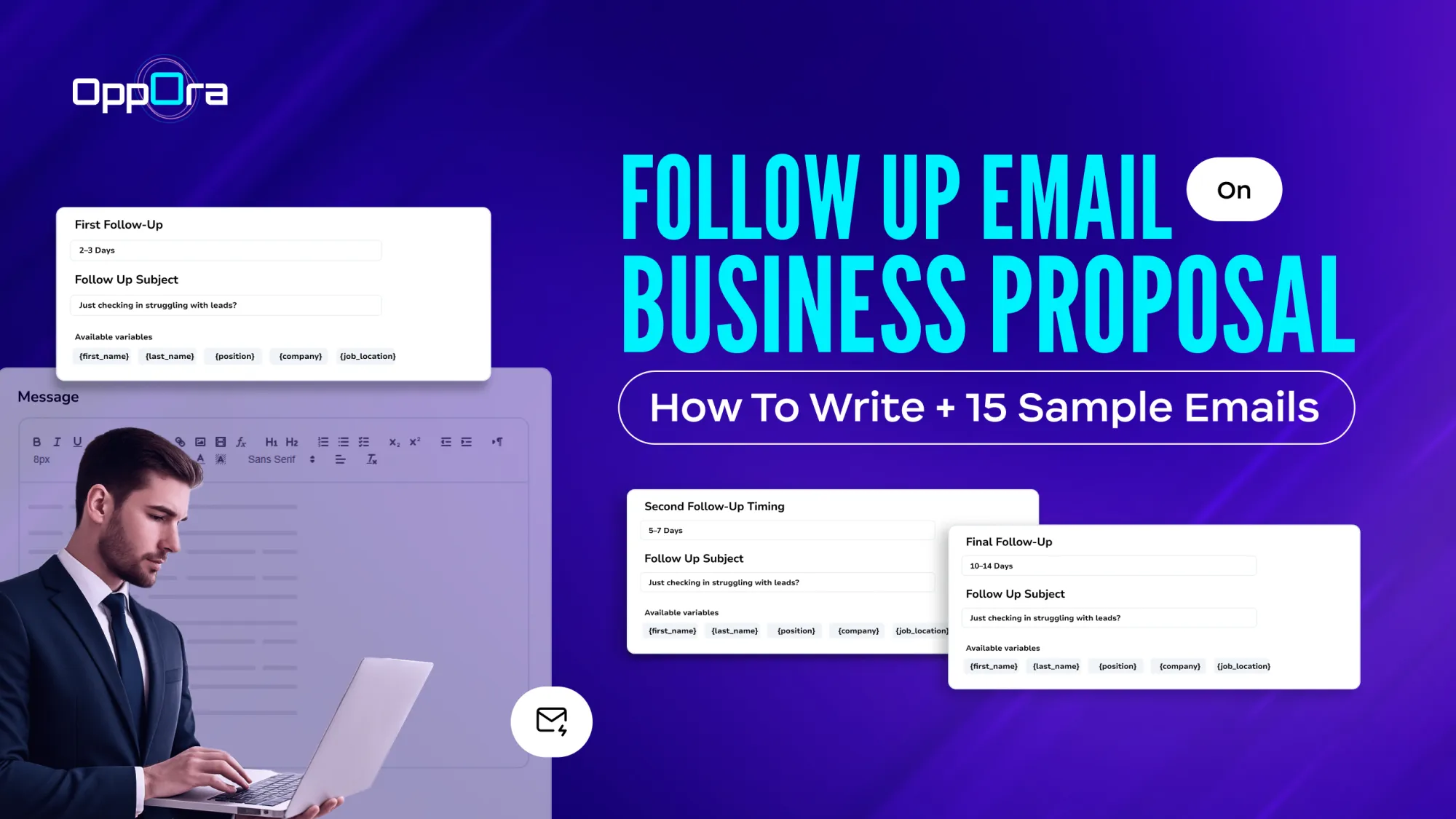
First Follow-Up Timing (2–3 Days)
The first message should be a gentle check-in. Send your first follow up email on proposal about 2 to 3 days after the initial submission.
Keep it short and neutral. It should feel like a helpful reminder, not a nudge for a signature. You aren't demanding an answer; you are just ensuring they received everything.
Second Follow-Up Timing (5–7 Days)
If you still haven’t heard back, wait a few more days. Your second follow up email on proposal submitted should go out around day 5 or 7.
This moves the conversation forward without simply repeating yourself. Offer clarity or answer potential questions to add value.
Final Follow-Up Timing (10–14 Days)
Finally, if the deal isn't ready to close, send a final email follow up on proposal around day 10 or 14. This helps you close the loop respectfully.
It lets them know you will step back. This often ironically prompts a quick reply because they don't want to lose the option.
Once you have the timing down, the next challenge is structuring the email so it actually gets read.
How to Write a Follow Up Email on a Proposal
Writing a follow-up is about clarity, not cleverness. You want to make it as easy as possible for the prospect to reply. Here is how to follow up on a proposal email effectively:
Start With Clear Context
Always remind the reader why you are emailing. Reference the specific project or meeting date in the first sentence. This grounds the reader immediately without needing them to search for your previous email to follow up on proposal.
Keep the Message Short and Focused
Long follow-ups get ignored. People scan emails; they don't read them like novels. Keep sentences short, remove filler words, and focus on one clear purpose per email.
End With a Soft Next Step
A good follow-up always ends with a simple action. Don't leave things open-ended. Your email follow up on proposal should ask for feedback, a quick confirmation, or a 5-minute call.
With the structure in place, let's look at specific templates you can copy and paste.
15 Follow Up Email Samples for Business Proposals
We have curated a list of ready-to-use templates for various scenarios. Each follow up on proposal email sample is short, clear, and written to sound human.
Sample 1: Initial Follow-Up (2-3 Days Later)
This sample is perfect for the first check-in. It is a polite follow up on proposal email sample that avoids pressure.
Subject: Quick check on the [Project Name] proposal
Hi [Name],
I’m writing to ensure you received the proposal I sent on Tuesday.
Do you have any initial questions I can help answer?
Best, [Your Name]
Sample 2: The Value Reminder
This serves as a simple check-in with added value. This follow up on proposal email sample reminds the recipient of the key benefits.
Subject: Thinking about [Client Goal]
Hi [Name],
Just checking in on the proposal. I was thinking about your goal to [Specific Goal], and I’m confident our strategy can help you hit that.
Let me know if you need any clarification on the pricing.
Best, [Your Name]
Sample 3: Gentle Nudge with Call to Action
This version keeps the tone light while prompting a decision. It’s a great follow up on proposal email sample when you need confirmation.
Subject: Next steps for [Project Name]?
Hi [Name],
Have you had a chance to review the proposal?
I’d love to get your thoughts so we can plan the kickoff.
Cheers, [Your Name]
Sample 4: Request for Feedback
This sample focuses on asking for feedback to uncover concerns. Use this follow up on proposal email sample to invite them to share hesitations.
Subject: Questions regarding the [Project Name] proposal
Hi [Name],
I’m checking in to see if the proposal aligned with your expectations.
Is there anything in the scope that you’d like to adjust or discuss further?
Best, [Your Name]
Sample 5: Offering a Meeting
Sometimes text isn't enough. Use this follow up on proposal email sample to offer a call and discuss complex details.
Subject: Quick call to discuss [Project Name]?
Hi [Name],
I know proposals can be dense.
Would you be open to a 10-minute call this Thursday to walk through the key points?
Best, [Your Name]
Sample 6: Second Follow-Up (No Response)
After no response, this second follow-up emphasizes your availability. It is a courteous follow up email on proposal that reassures them.
Subject: Following up on [Project Name]
Hi [Name],
I haven't heard back, so I assume you are busy.
I just wanted to bubble this to the top of your inbox. I’m ready to get started whenever you are.
Best, [Your Name]
Sample 7: Offering Additional Resources
This follow up email on proposal offers additional resources, like a case study, to build trust when the prospect needs more information.
Subject: Something that might help with [Project Name]
Hi [Name],
While you review the proposal, I thought you might find this case study interesting.
It shows how we helped a similar client achieve [Result]. Happy to discuss.
Best, [Your Name]
Sample 8: Creating Urgency
This sample incorporates mild urgency. Use this follow up email on proposal to highlight limited availability without being rude.
Subject: Timeline for [Project Name]
Hi [Name],
To meet your launch target of [Date], we would need to finalize the agreement by Friday.
Let me know if that timeline is still feasible on your end.
Best, [Your Name]
Sample 9: Personalized Connection
A personal touch can break the silence. This follow up email on proposal mentions something specific to their business.
Subject: quick idea for [Company Name]
Hi [Name],
I saw your recent post about [Topic]—congrats on the launch!
It ties in perfectly with the strategy in the proposal I sent. Do you have 5 minutes to chat?
Best, [Your Name]
Sample 10: Discussing Concerns
This follow up email on proposal creates a safe space for the prospect to voice concerns. It encourages dialogue.
Subject: Any hesitations regarding [Project Name]?
Hi [Name],
I haven't heard back, which usually means you might have some concerns about the budget.
I'm happy to adjust the proposal to better fit your needs. Let me know what you think.
Best, [Your Name]
Sample 11: The "Permission to Close"
This is a respectful final check. This follow up on sales proposal email gently proposes closing the file.
Subject: Permission to close your file?
Hi [Name],
I haven’t heard back regarding the proposal for [Project Name].
If you aren't interested, that is completely fine. I’ll close this file for now so I don't bother you.
Best, [Your Name]
Sample 12: Direct Question
A direct question often gets a direct answer. This follow up on sales proposal email is designed to elicit a quick "yes" or "no."
Subject: Are you still interested in [Project Name]?
Hi [Name],
Are you still looking to move forward with [Project Name]?
A quick reply would be much appreciated so I can plan my schedule.
Best, [Your Name]
Sample 13: Last Chance
This version emphasizes that it’s the last opportunity. This follow up on sales proposal email is a firm but respectful nudge.
Subject: Last check-in for [Project Name]
Hi [Name],
I’m doing a final check-in on the proposal I sent last month.
If I don’t hear back by Friday, I’ll assume this isn’t a priority right now.
Best, [Your Name]
Sample 14: The Break-Up
This follow up on sales proposal email is a polite "break-up" message. It expresses disappointment but leaves the door open.
Subject: Closing the loop on [Project Name]
Hi [Name],
Since I haven't heard back, I'll assume the timing isn't right.
I’m going to take this off my radar for now. Feel free to reach out in the future.
Best, [Your Name]
Sample 15: The Incentive
A final follow up on sales proposal email that includes a bonus can tip the scales. It adds immediate value.
Subject: One last thing for [Project Name]
Hi [Name],
If you are able to sign off by [Date], I can include [Bonus Service] as a thank you.
Let me know if that helps with your decision.
Best, [Your Name]
Even with great templates, you can still fail if you make common errors. Let’s avoid those.
Common Mistakes to Avoid in Follow Up Emails
Many follow-ups fail because of simple, avoidable errors. It isn't just about what you say, but how you say it.
Following Up Too Often
If you email every single day, you look desperate and annoying. Following up on proposal email requires patience. Stick to the schedule we outlined (2 days, then 5 days, then 10 days) to give them room to breathe.
Making It About You
Follow-ups that talk only about your quota or your timeline get deleted. An effective email follow up on proposal focuses on the prospect’s needs. Remind them how your solution helps them, rather than asking them to help you by signing.
Using Generic Subject Lines
Avoid using generic subject lines like "Following up" which often get ignored. Always try to be specific and relevant.
Being Passive-Aggressive
Avoid phrases like "Per my last email" or "Why haven't you replied?" which sound accusatory. Keep the tone helpful and professional to maintain the relationship.
Forgetting a Clear Call to Action
Don't end with vague phrases like "Let me know what you think." Always ask for a specific next step, like a quick call or a yes/no confirmation.
Tips for Effective Follow Up Emails on Business Proposals
Small improvements in your process can double your reply rates. You don't need to be a copywriter to get this right. Here are some tips on how to follow up on a proposal email:
- Personalize Lightly, Not Deeply You don’t need to write a novel about their recent vacation. Focus on light context. Mentioning a specific problem they faced or a goal they shared is enough to make it feel relevant.
- Track Replies and Timing Knowing when prospects open your emails helps you follow up better. If they open your proposal five times in one day, that is the perfect moment to call.
- Use Multi-Channel Outreach Don't just rely on email. If you don't hear back, try a polite message on LinkedIn. This increases the chances of your follow up email on business proposal being noticed.
Manual follow-ups are fine for a few leads, but scaling requires a smarter approach.
How Oppora.ai Helps You Follow Up on Business Proposals
Oppora.ai is an AI powered outreach platform that turns manual follow-ups into a fully automated system. It doesn't just send emails; it acts as a sales agent.
Instead of setting reminders or hoping you remember to check in, Oppora handles the entire lifecycle of the proposal. Here is how it automates the process:
- Smart Workflow Automation (OraFlow): Oppora’s AI planner, OraFlow, executes workflows conversationally. It triggers your proposal follow-ups based on specific prospect behaviors, ensuring the timing feels natural rather than robotic.
- Automated Follow-Up Sequencing: You can pre-set a sequence of emails with custom time gaps (e.g., 2 days, then 5 days). Oppora executes this schedule automatically, maintaining a consistent presence in their inbox until they reply.
- Human-Like Reply Handling (Replyora): When a lead replies, Reply Ora reads the intent and responds like a human. It can book meetings, share requested files, or answer questions instantly, keeping the deal moving even while you sleep.
- Inbox Placement Infrastructure: A proposal in spam is a lost deal. Oppora uses built-in domain warm-up and sender identity matching (Gmail to Gmail) to ensure your high-value emails land directly in the primary inbox.
By automating the process of email follow-up on proposals, Oppora helps maintain a steady flow of communication. It ensures timely, personalized engagement with prospects, without sounding robotic or repetitive.
Conclusion
A strong follow-up strategy turns silent proposals into real conversations. It transforms "maybe later" into "let's start now."
With the right timing, clear messaging, and helpful tools like Oppora.ai, the follow up on proposal email becomes a powerful asset. It allows you to be consistent and effective without ever sounding pushy or salesy.
Frequently Asked Questions (FAQs)
How many times should I follow up on a proposal? Most experts recommend a sequence of 3 to 4 emails. If there is still no response, it is best to send a final "break-up" email and move on to active leads.
Is it better to call or email for a follow-up? It depends on the relationship. Email is generally safer and less intrusive for the first check-in. If they don't reply to emails, a quick, polite phone call can often break the silence.
What is the best time of day to send a follow-up email? Studies suggest that mid-morning (around 10 AM) or early afternoon (around 2 PM) on Tuesdays, Wednesdays, and Thursdays usually get the highest open rates.
Should I attach the proposal again in the follow-up? Yes, it is often helpful. It saves the prospect from searching for the original email. You can simply say, "I've re-attached the proposal here for your convenience."