How to Build a High Ticket Sales Funnel (With 8 Ideas)
high ticket sales funnels high ticket sales funnel ideas high-ticket sales funnel lead magnet for high ticket sales funnel
Building a high ticket sales funnel is not about driving more traffic.
It is about designing a system that attracts the right buyers, filters out the wrong ones, and converts premium prospects through structured conversations.
When you sell high-value services or solutions, every step must reduce risk, build authority, and create confidence before a decision is made.
Premium offers require trust.They require filtering.They require structured conversations.
In this guide, you’ll learn what makes premium funnels different, the core structure behind consistent conversions, eight practical funnel models, how outbound fits strategically, and the common mistakes that reduce close rates.
What Makes High Ticket Sales Funnel Different
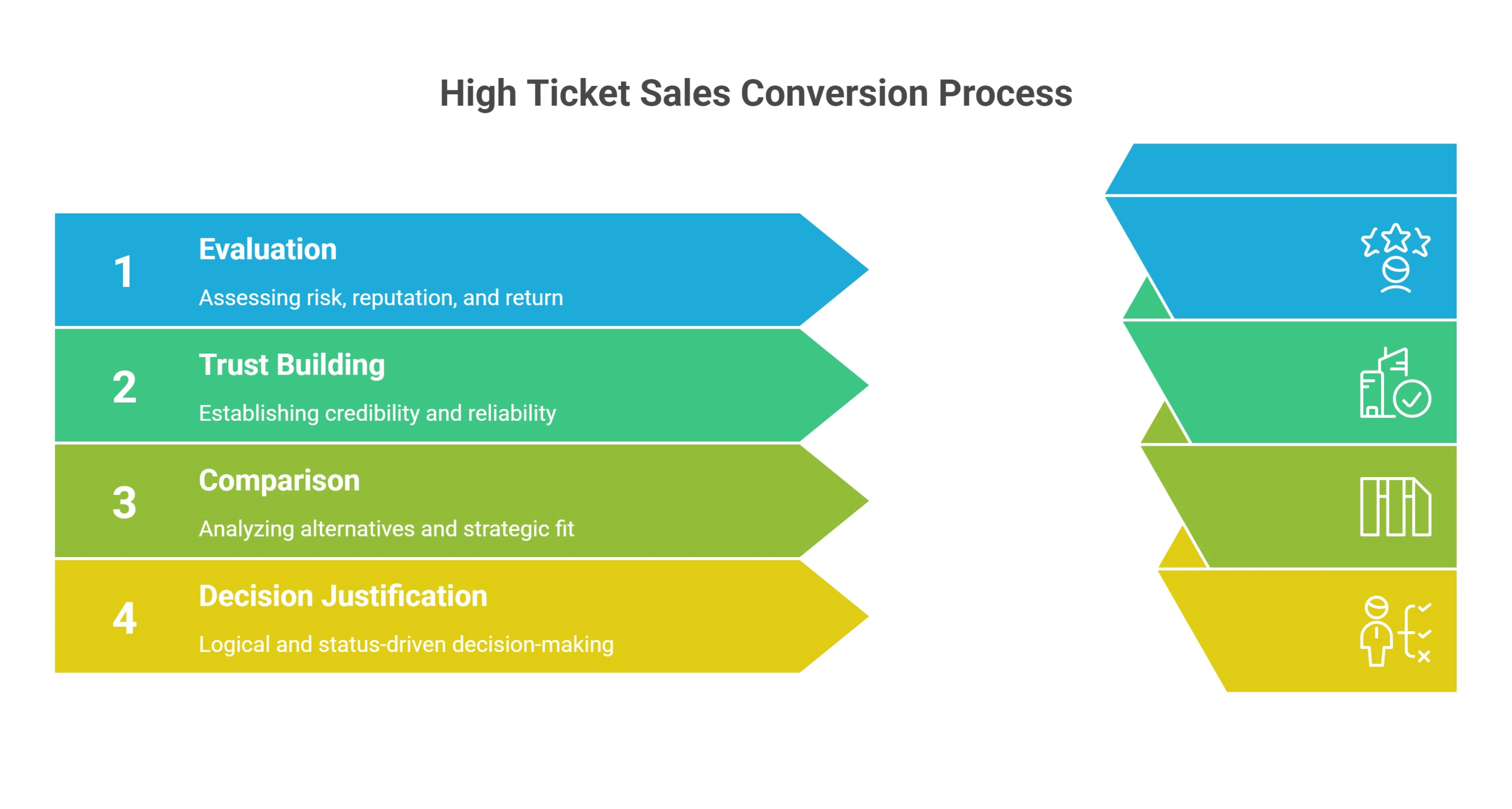
A high ticket sales funnel works differently because the buyer thinks differently.
When someone considers a premium investment, they are not reacting to impulse. They are evaluating risk, reputation, long-term return, and strategic fit before making a move.
The buying cycle is longer.
The trust requirement is higher.
Buyers compare alternatives carefully and justify the decision logically, while also considering status and positioning.
Most importantly, conversion does not happen through aggressive persuasion.
It happens through authority, clarity, and structured conversations that reduce uncertainty and increase confidence at every stage.
Core Structure of a High Ticket Sales Funnel
Now that you understand the psychology behind premium buyers, you need a structure that supports it.
A high ticket sales funnel is not complex, but it is disciplined. Each stage has a clear role: attract aligned prospects, build authority, filter misfits, and convert through structured conversations.
When this structure is clean, conversions become predictable. When it is messy, even strong offers struggle.
Let’s break it down step by step.
Stage 1 — Precision Traffic
Premium funnels do not chase attention.
They attract alignment.
Instead of broadcasting to everyone, you focus on reaching decision-makers who already feel the problem you solve. This can happen through LinkedIn targeting, strategic outbound, paid acquisition, or partnerships within specific industries.
The goal is not maximum reach.
It is controlled relevance.
When your traffic is precise, every downstream stage becomes easier because you are speaking to people who already fit your ideal client profile.
Clarity at the top reduces friction later.
Stage 2 — Lead Magnet for High Ticket Sales Funnel
Once aligned traffic arrives, you do not offer something generic.
You offer something strategic.
A lead magnet for a high ticket sales funnel is not a checklist or surface-level ebook. It is designed to pre-frame authority and filter serious buyers before conversations begin.
This could be a strategic audit, a diagnostic call, an ROI breakdown, or an industry-specific case study.
The purpose is simple.
Position expertise while identifying intent.
When someone engages with a deeper asset, they mentally shift from casual interest to active evaluation. That shift is critical in premium sales.
Stage 3 — Authority Nurture
After initial engagement, trust must deepen.
High ticket buyers rarely decide after one interaction.
This is where authority nurture comes in. You reinforce credibility through case studies, educational email sequences, long-form insights, testimonials, and video proof that demonstrates real results.
The objective is not to overwhelm.
It is to strengthen perception.
Your prospect moves from curiosity to confidence as they see consistent evidence of competence. When authority compounds over time, resistance decreases naturally.
Stage 4 — Qualification Layer
Before booking calls, you introduce filtering.
Premium time is expensive.
A qualification layer ensures that only aligned prospects move forward. This can include questions around budget range, role clarity, company size, current challenges, and timeline for implementation.
You are not rejecting people.
You are protecting focus.
Unfiltered calls reduce efficiency and lower close rates because conversations become exploratory instead of decisive. Clear qualification increases alignment, and alignment increases conversions.
Stage 5 — Conversion Conversation
High ticket deals close through structured conversations, not scripted pitches.
When a qualified prospect enters the call, your role is to diagnose first. Understand their situation, clarify their goals, and identify the cost of inaction before positioning your solution.
Then you present the path forward clearly.
No pressure. No theatrics.
You address objections logically, reinforce outcomes, and close confidently. Premium buyers want certainty, not hype. When the conversation feels strategic and grounded, decisions happen naturally.
Stage 6 — Strategic Follow-Up
Most premium deals do not close on the first call.
That is normal.
Strategic follow-up keeps momentum alive without creating pressure. You reinforce proof, clarify unanswered questions, address lingering objections, and maintain urgency around results.
Structure matters here.
Random check-ins feel weak.
Intentional follow-up sequences feel professional. When you combine reminders with value reinforcement, prospects stay engaged instead of drifting away.
A high ticket sales funnel works when each stage supports the next.
Traffic creates alignment.
Lead magnets pre-frame authority.
Nurture builds trust.
Qualification protects focus.
Conversations convert.
Follow-up finalizes decisions.
Simplicity creates clarity.
And clarity is what ultimately drives premium conversions.
8 Modern High Ticket Sales Funnel Ideas That Actually Work
Once your structure is clear, the next step is choosing the right model for your offer.
Not every high ticket sales funnel looks the same. Different industries, price points, and sales cycles require different execution strategies.
Below, you’ll find eight modern funnel models designed for premium positioning, stronger qualification, and controlled scaling. Each focuses on authority, alignment, and structured conversations instead of chasing volume.
1. Structured Outbound Qualification Funnel
Outbound works extremely well for high-ticket B2B services when it is structured correctly.
Let’s break down what that looks like in numbers.
If your average deal size is $5,000, and you send 20,000 targeted emails, here’s a realistic scenario:
- 30% open rate → 6,000 opens
- 5% reply rate → 300 replies
- 30% meeting booked rate → 90 meetings
- 10% close rate → 9 deals
That results in:
9 × $5,000 = $45,000 in revenue
Now compare that with your outbound infrastructure cost.
With tools like Oppora.AI, your setup can cost as little as $34–$79 per month.
And, instead of managing multiple tools and manual steps, Oppora runs the entire outbound cycle for you:
- Finds and enriches the right companies and decision-makers
- Pulls verified contacts with waterfall sourcing
- Warms domains and rotates inboxes for safe scaling
- Writes unique AI-personalized emails (no spintext)
- Auto-replies, qualifies interest, and books meetings
- Syncs everything directly to your CRM
- Tracks performance with built-in reporting
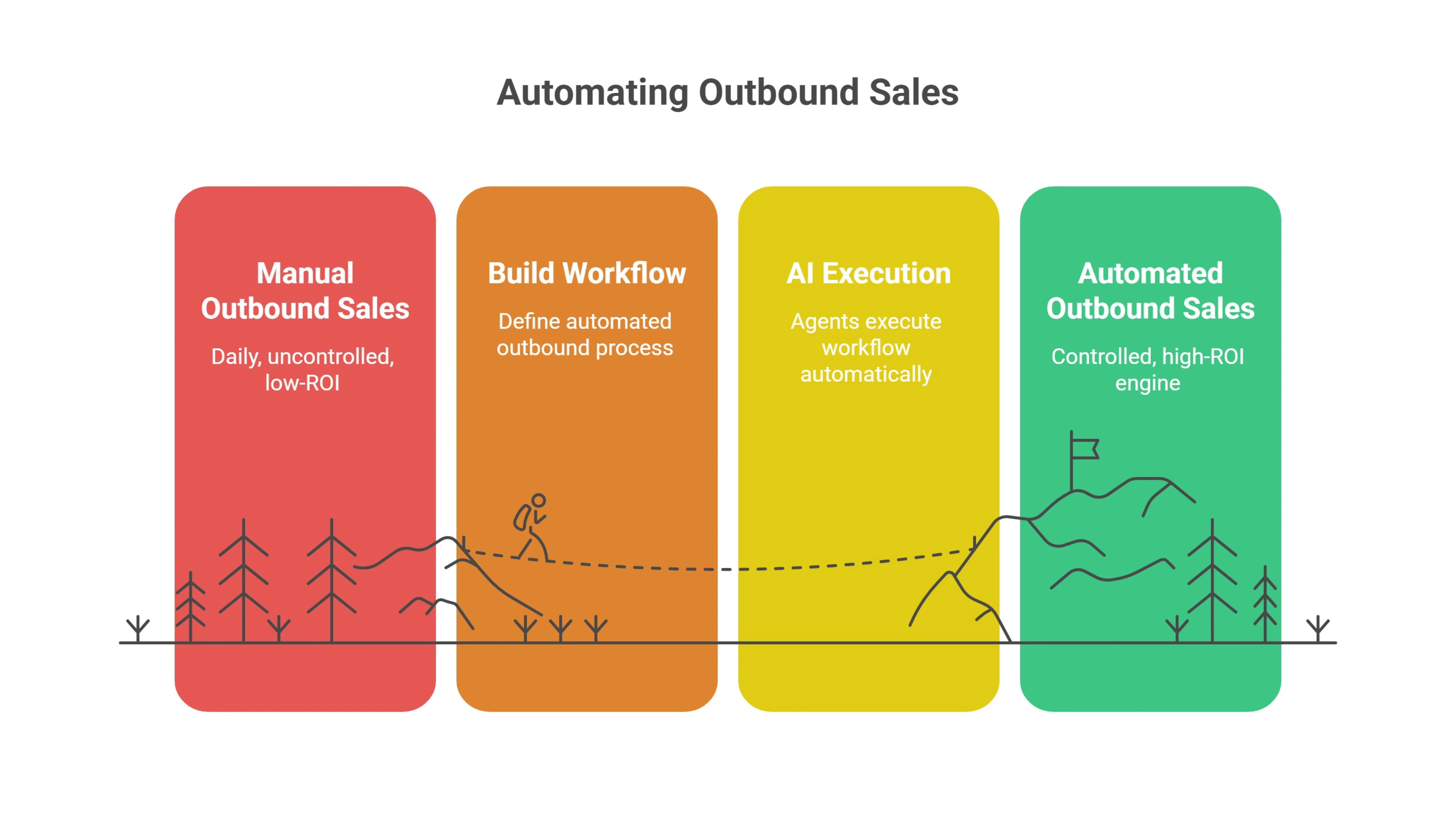
You build the workflow once.
Oppora’s AI agents keep executing it automatically.
And just like that outbound becomes a controlled, high-ROI engine inside your high ticket sales funnel and not some daily manual task.
2. Authority-First LinkedIn Content Funnel
If you sell expertise, your funnel can begin with visibility instead of outreach.
An Authority-First LinkedIn Content Funnel positions you as the trusted voice before any sales conversation happens. You consistently publish educational posts, share proof-based storytelling, and break down real case studies in a way that makes your thinking visible.
Over time, your audience stops seeing you as a service provider.
They start seeing you as the authority.
Each post moves prospects from awareness to belief. Strong calls to action guide serious readers toward consultations or diagnostic calls. By the time someone books, trust is already built, which shortens the sales cycle and increases close rates naturally.
3. Deep-Dive Diagnostic Funnel
Premium buyers respect depth.
Instead of offering quick introductory calls, this model centers around a detailed assessment that evaluates the prospect’s situation thoroughly. You collect structured information, analyze gaps, and present a customized roadmap during the session.
The diagnostic itself becomes valuable.
This attracts serious decision-makers who are willing to invest time before money. When you demonstrate insight before pitching, resistance decreases because you have already proven competence. The sales conversation shifts from persuasion to collaboration.
4. Paid Traffic → Application Funnel
When your positioning is strong, paid traffic can accelerate scale.
In this model, prospects are guided to a strong authority-driven landing page or video sales letter that explains the problem, outlines your framework, and presents results clearly.
Instead of sending people directly to a calendar, you use an application form.
This filters casual visitors and ensures that only aligned prospects book calls. Applications create psychological commitment and allow you to pre-qualify before investing time. The result is fewer calls, but significantly higher conversion rates.
5. Industry-Specific Micro Funnel
Generic funnels dilute authority.
An Industry-Specific Micro Funnel focuses entirely on one vertical, such as healthcare, SaaS, manufacturing, or finance. Messaging, case studies, and offers are tailored to that specific audience.
This hyper-specific positioning increases perceived expertise instantly.
When prospects feel that you understand their exact environment, objections decrease. Instead of explaining your relevance, you demonstrate it through precision. Micro funnels often outperform broad funnels because clarity creates trust faster than generalization ever can.
6. Case Study Breakdown Funnel
Proof reduces risk.
This funnel model takes one strong client transformation and turns it into a detailed breakdown. You walk through the initial challenge, your process, measurable outcomes, and strategic decisions made along the way.
Transparency builds credibility.
By showing how results were achieved rather than just claiming them, you make your methodology tangible. Prospects begin imagining similar outcomes for themselves. The funnel ends with an invitation to explore whether the same framework can be applied to their situation.
7. Webinar Funnel
Webinars allow you to build authority at scale while maintaining direct interaction.
In this model, qualified prospects are invited to a live educational session where you break down core industry problems, explain your framework, present relevant case studies, and answer questions in real time.
Live engagement builds trust faster than static content.
Attendees experience your expertise directly, which reduces skepticism. After the session, aligned participants are guided into structured sales conversations, already warmed and informed.
8. Hybrid Authority + Outbound Funnel
Sometimes the strongest strategy is combination.
A Hybrid Authority + Outbound Funnel blends content positioning with structured outreach. Authority content builds recognition, while outbound conversations accelerate pipeline growth. Retargeting and email nurture reinforce visibility across multiple touchpoints.
Multi-touch consistency builds momentum.
Prospects see your insights publicly, receive personalized outreach privately, and encounter proof repeatedly. This integrated approach strengthens credibility while maintaining proactive control over lead flow, making it one of the most scalable premium funnel models available
Common Mistakes That Break High Ticket Sales Funnel
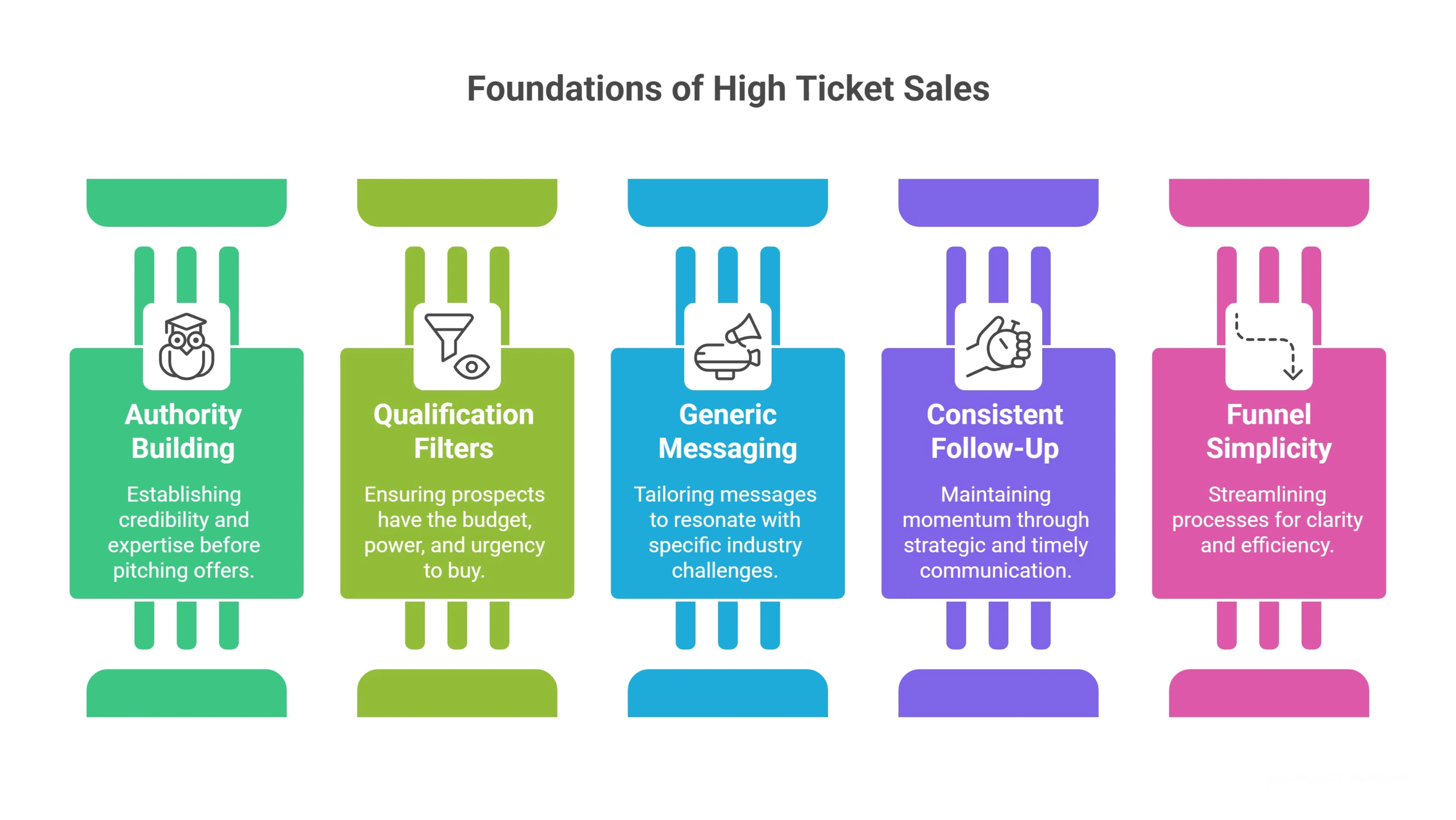
Even strong offers fail when structure breaks.
A high ticket sales funnel does not collapse because of one big error. It weakens through small, repeated mistakes that reduce authority, confuse prospects, or waste qualified opportunities.
If your conversions feel inconsistent, one of these issues is likely present inside your system.
Let’s break them down clearly.
Selling Before Authority Is Established
Premium buyers do not respond well to early pitching.
When you push your offer before building credibility, resistance rises immediately. The prospect has not yet developed confidence in your expertise, so the offer feels risky rather than strategic.
Authority must come first.
Through insights, case studies, diagnostics, or structured content, you earn the right to recommend a solution. When authority is established before positioning, the conversation feels logical instead of forced.
If you sell before trust exists, your close rate drops quietly.
Weak Qualification Filters
Not everyone who shows interest is ready to buy.
Without strong qualification layers, you end up taking calls with prospects who lack budget, decision power, urgency, or real alignment. That drains energy and reduces focus on serious buyers.
Filtering is not rejection.
It is protection.
Clear qualification questions around role, company size, challenges, and timeline ensure that conversations stay strategic. When your calendar is filled with aligned prospects, your close rate improves naturally because conversations move toward decisions instead of exploration.
Generic Messaging
Premium buyers expect relevance.
If your messaging sounds broad or interchangeable, it signals that you do not fully understand their environment. Generic positioning weakens perceived expertise before the conversation even begins.
Specificity builds authority.
Tailored messaging that reflects industry challenges, strategic language, and clear outcomes immediately differentiates you from competitors. When prospects feel understood, they lean in. When messaging feels copied, they disengage.
Relevance increases trust faster than persuasion ever can.
Inconsistent Follow-Up
Many premium deals close after multiple touchpoints.
If your follow-up is random, delayed, or emotionally driven, opportunities fade. Prospects get busy, priorities shift, and without structured reminders, momentum disappears.
Consistency signals professionalism.
Strategic follow-up reinforces proof, addresses objections, and maintains clarity around next steps. It keeps conversations alive without creating pressure. When you remove follow-up discipline, you lose deals that were already halfway closed.
Overcomplicating Funnel Logic
Complex funnels look impressive on paper.
But in practice, too many steps, tools, and transitions create confusion for both you and the buyer. Complexity reduces clarity, and clarity is what drives premium decisions.
Simplicity wins in high ticket environments.
Clear stages, defined roles, and structured conversations outperform chaotic systems. When your funnel is easy to understand and easy to manage, execution improves. And when execution improves, results become predictable.
Conclusion
A high ticket sales funnel works when authority, filtering, and structured conversations align.
Premium growth is not about chasing more leads. It is about attracting the right ones, qualifying them properly, and guiding them through a clear decision-making process.
When your system is controlled, sales stop feeling unpredictable.
They become measurable and repeatable.
Choose one funnel model. Build it with discipline. Test deliberately and optimize based on real signals.
And if outbound is part of your strategy, using a structured system like Oppora can help you manage targeting, sequencing, replies, and CRM sync without losing control of your premium pipeline.
Frequently Asked Questions (FAQs)
How long does it take to see results from a high ticket sales funnel?
It depends on your traffic source and sales cycle. Outbound-driven funnels can generate conversations within days, while authority-based funnels may take weeks to build momentum. Premium sales typically require longer nurturing, but structured systems shorten the path to predictable revenue.
What is the ideal price point for a high ticket offer?
There is no fixed number. Generally, high ticket refers to offers where buyers require deeper trust and structured conversations before purchasing. This could range from $2,000 to $50,000+, depending on your industry, positioning, and the complexity of the solution you provide.
Do high ticket funnels work for B2C businesses?
Yes, but the approach changes. In B2C, emotional drivers often play a stronger role, while structured authority still matters. Coaching programs, premium consulting, and luxury services commonly use high ticket funnel models successfully in consumer markets.
How many touchpoints are typically needed before closing a premium deal?
Most high ticket deals require multiple interactions. This can include content exposure, email nurture, diagnostic sessions, and follow-ups. It is common for premium buyers to engage across 5–12 touchpoints before making a confident investment decision.
Can you automate parts of a high ticket sales funnel without losing personalization?
Yes, as long as automation supports structure rather than replaces strategy. You can automate lead qualification, sequencing, reminders, and CRM updates while keeping sales conversations personalized. The key is maintaining relevance and clarity at every automated stage.