How to Find CEO Email Address in 2026 (28 Real Tactics)
how to find ceo email address for free find ceo email address find ceo email addresses find company ceo email addresses how to find a email address of company ceo ceo email address finder find a ceo email address find ceo email address from any company finding ceo email addresses

Finding a CEO’s email address in 2026 takes more than trial-and-error or random guessing.
Many old tactics no longer work and can damage deliverability or credibility.
This guide explains how to find ceo email address using accurate, legitimate methods that respect executive boundaries.
You’ll learn what still works today, what to avoid, and how to approach senior leaders thoughtfully without wasting time or risking trust.
28 Real Tactics to Find a CEO Email Address in 2026
This section moves from understanding the challenge to applying real tactics.
The methods below are not meant to be used all at once.
Each tactic serves a different purpose discovery, validation, or direct access depending on what information you already have.
Together, these 28 tactics show how to find an email address of company CEO in a structured, practical way.
When used selectively, they help you find CEO email address information with better accuracy, lower risk, and clearer intent without relying on shortcuts or mass scraping.
1. Email Finder Platforms
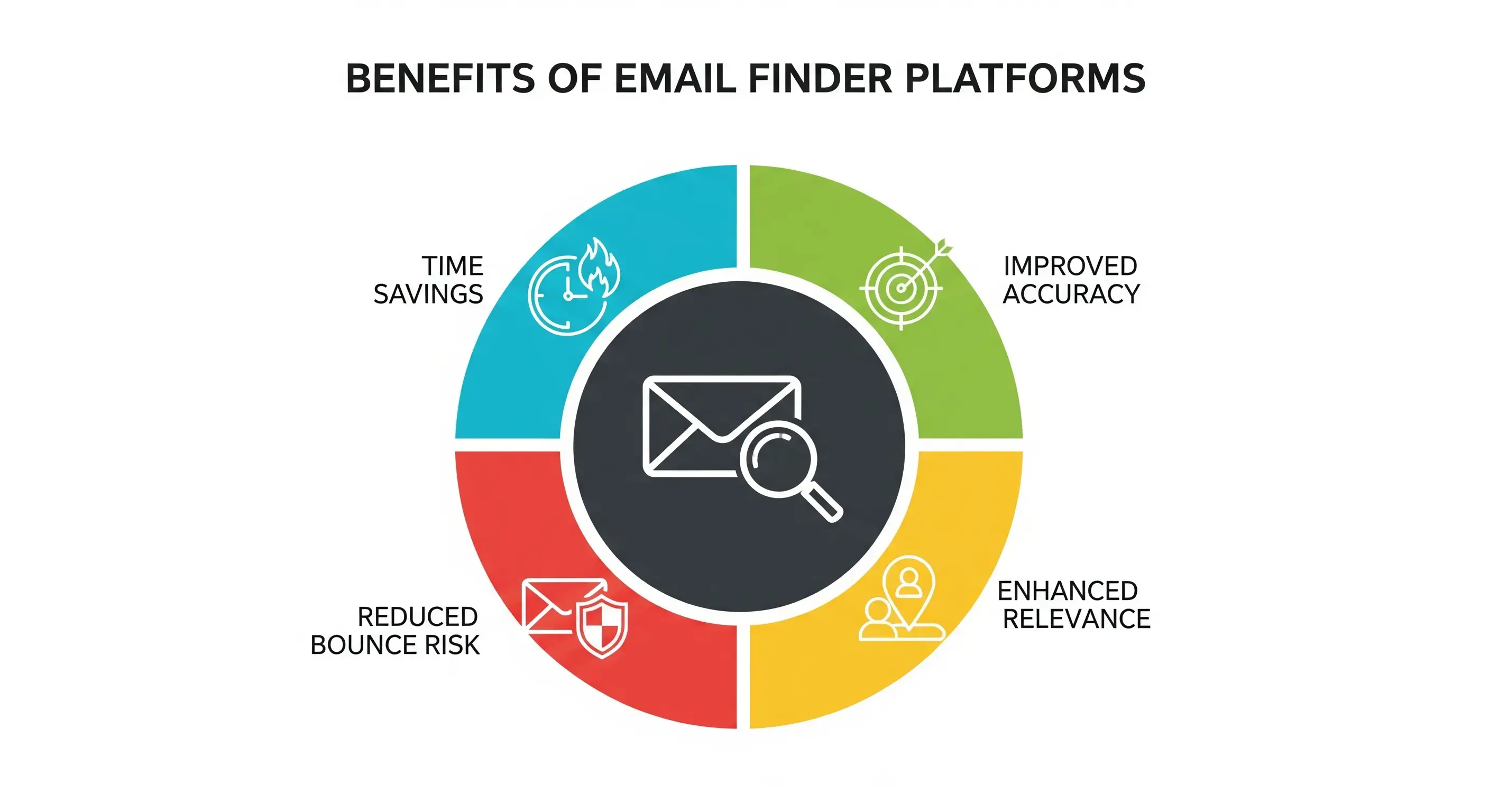
Email finder platforms help simplify early-stage CEO email discovery by pulling together verified business data from multiple sources.
Instead of guessing formats, these tools match executive roles with company domains, improving accuracy from the start.
A good CEO email address finder also adds context such as company size, industry, and location, so results are more relevant not just available.
Platforms like Oppora Lead Finder support role-based searches and apply advance filters to narrow results before outreach begins.
By combining discovery with verification, these tools reduce bounce risk and save time.
Used correctly, email finder platforms provide a strong foundation for research without replacing human judgment.
2. LinkedIn Contact Info Section
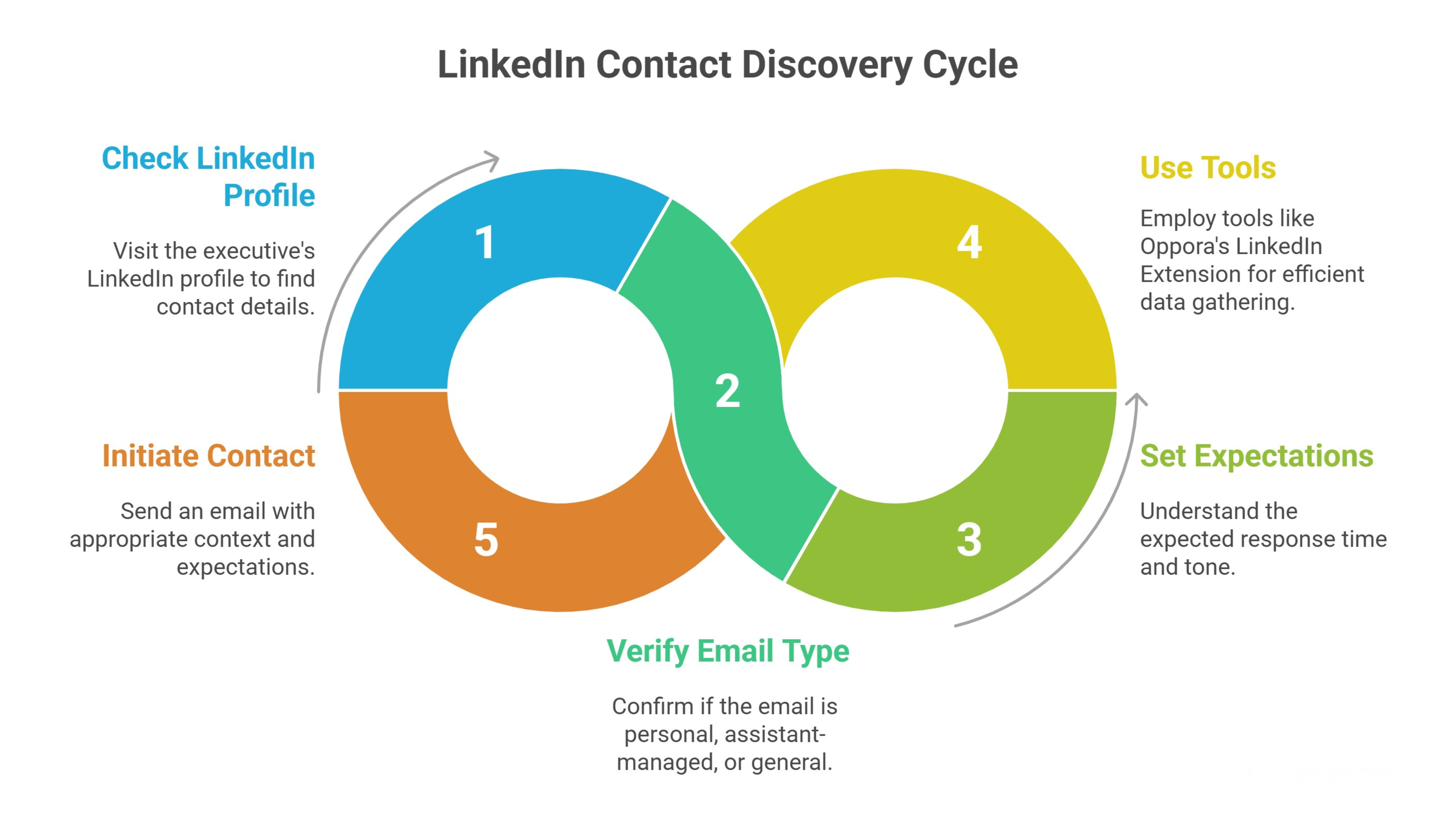
LinkedIn’s contact info section is one of the simplest places to check for executive contact details.
Some CEOs, especially founders who are active on the platform, choose to list an email address for professional communication.
This approach works best when profiles are updated and regularly maintained.
Before using any address, it’s important to confirm whether the email is personal, assistant-managed, or intended for general inquiries. That context helps set expectations for response and tone.
LinkedIn contact details can also be reviewed through tools like Oppora’s LinkedIn Extension, which surface available profile information in one place.
Used carefully, this method offers a low-risk starting point for email discovery without relying on guesswork or scraping.
3. LinkedIn DM (Ask for Email)
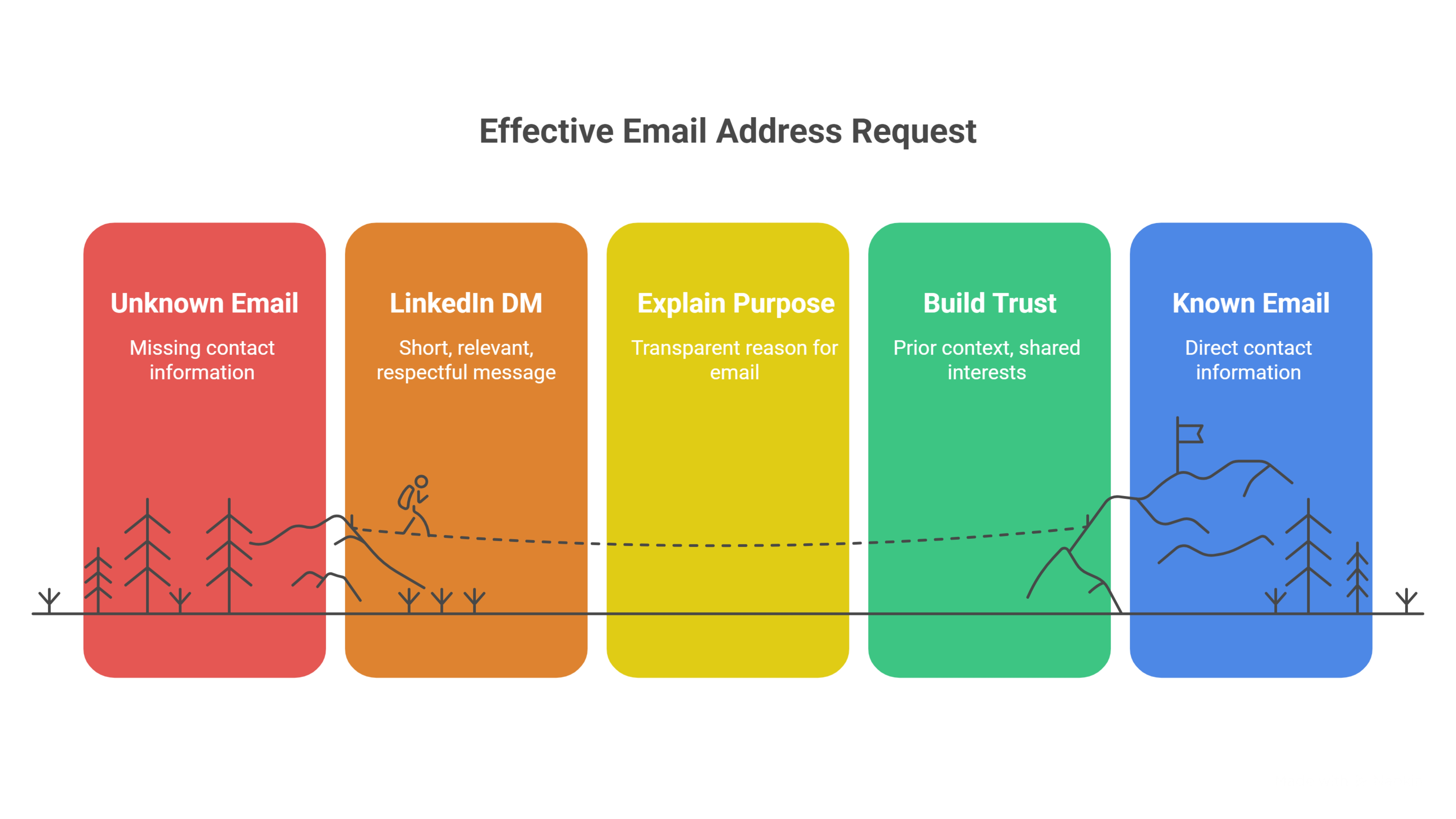
Reaching out through a LinkedIn direct message can be a straightforward way to request the correct email address.
This approach works best when the message is short, respectful, and clearly relevant to the CEO’s role or current focus.
Rather than pitching or selling, the intent should be to explain why continuing the conversation over email makes sense.
Being transparent about purpose helps build trust and avoids confusion.
This method is most effective when there is prior context, such as shared interests, mutual connections, or recent activity.
Used thoughtfully, a LinkedIn DM can open a direct path without relying on guesswork or external tools.
4. Email Pattern Guessing
Many organizations follow consistent email formats across their teams.
By observing how employee email addresses are structured, it becomes easier to understand how to find an email address of company CEO without starting from scratch.
This method usually begins by identifying confirmed emails from non-executive staff and noting the pattern used by the company.
Once a format is established, it can be applied carefully to executive roles.
Because this approach involves inference, verification is essential.
Testing the address through reliable validation steps helps reduce bounce risk and protect sender reputation.
When used thoughtfully, email pattern guessing works best as a supporting tactic rather than a standalone solution.
5. Email Permutators
Email permutator tools create multiple email combinations using a CEO’s name and the company’s domain.
They are often useful when the general email structure is known, but the exact format is unclear. In these situations, permutators help narrow down possible options without relying on random guessing.
This approach is commonly used when finding CEO email addresses at scale, but it should never be treated as a final step.
Because the output is only a list of possibilities, verification is critical. Confirming which address is active helps reduce bounce risk and prevents unnecessary outreach to inactive or incorrect inboxes.
6. Company Contact / About Pages
Company contact pages and leadership sections often provide useful clues, even when a direct email address is not listed.
These pages may reveal executive titles, shared inboxes, or naming conventions used across the organization.
Reviewing this information helps confirm patterns seen in employee email addresses or public communications.
While this method rarely reveals a CEO’s email on its own, it plays an important supporting role.
Used alongside other approaches, it adds clarity and confidence before moving forward with outreach.
7. Press Releases and Media Mentions
Press releases are created for journalists and partners, so they often include contact details for follow-up communication.
When CEOs are involved in funding rounds, acquisitions, or partnerships, their names frequently appear alongside official communication channels.
These details do not always point to a personal inbox.
In many cases, they reference press contacts or executive aliases connected to the CEO’s role.
Reviewing these sources carefully can still help find CEO email addresses used for professional outreach.
When combined with other methods, press releases add useful context and increase confidence before reaching out.
8. Public Documents (Annual Reports, Filings)
Public documents such as annual reports, regulatory filings, and investor disclosures often contain structured executive information.
While direct inboxes are not always visible, these records may reference official communication channels tied to leadership roles.
In some cases, contact sections, footnotes, or compliance disclosures reveal how executives are reached for investor or regulatory communication. Reviewing these details carefully can help find email address of CEO used in formal contexts.
Although this method takes more time, it adds credibility and clarity, especially when combined with other discovery approaches.
9. Personal Website of the CEO
Many founders maintain personal websites or online portfolios separate from their company pages.
These sites are often used to highlight speaking engagements, advisory work, or personal projects.
Because the intent is usually professional visibility, contact sections may include direct email addresses or well-managed contact forms.
These channels are often monitored more closely than general company inboxes.
Reviewing personal sites also helps you understand how the CEO prefers to be contacted and what types of requests they welcome.
Used carefully, this method offers a more direct and intentional path for reaching out.
10. Blog Author Bio Pages
When CEOs publish articles or thought-leadership content, their author bio often includes a way to get in touch.
This may be a direct email address or a contact link intended for professional communication.
These bios are written for readers, collaborators, or industry peers, which makes the contact information more relevant than generic company inboxes.
In some cases, this approach can help find CEO email address from any company without relying on external tools.
Because this information is shared intentionally, it often reflects the executive’s preferred communication channel and sets clearer expectations for outreach.
11. WHOIS Domain Records
WHOIS records store registration details for website domains and can sometimes reveal administrative or registrant email addresses.
In cases where a domain was registered years ago, these details may still be publicly visible.
While many companies now use privacy protection, older or personally registered domains may list contact information linked to a founder or early executive.
Reviewing these records can offer clues about how the domain was originally managed.
Because access varies widely, this method is inconsistent but occasionally useful.
When information does surface, it adds another layer of context that can support more confident outreach decisions.
12. Business Directories and Associations
Industry directories and professional associations often maintain member profiles that include leadership information.
In some cases, these listings publish executive contact details as part of professional visibility or membership requirements.
Because these platforms are usually curated, the information tends to be more reliable than data pulled from automated scraping sources.
Reviewing trusted directories can sometimes help find company CEO email addresses meant for formal business communication.
Even when direct emails are not available, these listings help confirm roles, affiliations, and credibility.
This makes them a valuable reference point during executive research.
13. Crunchbase Founder Profiles
Crunchbase founder profiles are often used to highlight company leadership, funding history, and professional background.
While direct email addresses are rarely listed, these profiles frequently link to personal websites or external pages.
Those links can lead to founder portfolios, advisory pages, or contact sections that offer clearer communication paths.
Reviewing connected profiles also helps verify roles and current involvement within the company.
Although Crunchbase is not designed for direct outreach, it serves as a useful starting point.
It points you toward more reliable and intentional contact sources.
14. AngelList / Wellfound Profiles
Startup founders often maintain active profiles on AngelList or Wellfound to connect with investors, partners, and early hires.
These profiles focus more on credibility and visibility than sales or promotion.
While direct emails are not always listed, many profiles include contact options or links to founder-led landing pages and personal sites.
Following these paths can sometimes help find CEO email address information shared intentionally for professional communication.
Because these profiles are actively maintained and role-specific, they provide useful signals about how a founder prefers to be contacted.
15. Twitter/X Bio Links
Some CEOs choose to share contact details directly in their Twitter/X bios.
These details may appear as an email address, a contact link, or a short call-to-action pointing to an external page.
In most cases, these links are intended for press inquiries, partnerships, or professional outreach rather than general messages.
Checking bio links, pinned posts, or linked pages can reveal direct communication paths that are actively monitored.
Because this information is shared publicly by the CEO, it often reflects their preferred channel for inbound requests.
16. Twitter/X Advanced Search
Twitter/X advanced search helps explore content beyond what appears on a profile bio.
CEOs sometimes share contact details in replies, older tweets, or event-related posts rather than in a visible profile section. These details can remain searchable long after they are posted.
Using filters like names, phrases, or time ranges makes it easier to trace these conversations. In certain cases, this process naturally leads to finding CEO email addresses that were shared publicly but are easy to overlook.
Because this method focuses on historical and contextual content, it adds depth when surface-level information is missing.
17. Other Social Media Platforms
Some CEOs share contact details on platforms beyond LinkedIn or Twitter/X.
Profiles on Facebook, Instagram, or GitHub may include email addresses in bios, profile metadata, or linked pages. This is more common with founder-led brands or technically active executives.
These platforms often reflect a more personal communication style, which can signal how open a CEO is to direct contact. Reviewing multiple profiles also helps confirm whether the same contact details appear consistently.
When used carefully, this approach adds another useful layer to executive research.
18. Podcast Guest Pages
Podcast guest pages are often designed to encourage follow-up and professional networking.
When CEOs appear as guests, these pages may include contact details or links shared for conversations after the episode.
In some cases, the contact routes to an assistant or a managed inbox rather than a personal address.
Reviewing guest bios, show notes, or linked profiles can lead to email contacts that were shared publicly for engagement.
Because this information is provided in a professional context, it is usually intended for relevant and respectful outreach.
19. Webinar and Event Speaker Pages
Webinar and event speaker pages are often created to support networking and post-event communication.
When CEOs appear as speakers, these pages may include contact details or links managed by event organizers. In many cases, they show how communication is routed rather than a direct inbox.
Reviewing speaker bios, session descriptions, or linked profiles helps clarify how organizers coordinate with the CEO. This context makes it easier to choose the right contact path.
Because these pages are built for professional engagement, they offer structured and reliable signals for follow-up.
20. Job Postings (Executive Contact)
Some job postings, especially for senior or confidential roles, include direct contact details for hiring coordination.
These listings may reference internal email formats or executive-level inboxes used during recruitment discussions. Reviewing how communication is handled in these postings can reveal patterns tied to leadership outreach.
In certain cases, this context helps clarify how to find an email address of company CEO by showing how executives are contacted internally rather than publicly.
Because hiring communication follows formal processes, these details are often accurate and current.
21. Founder Newsletters (Reply-To Emails)
Founder-led newsletters create a direct communication channel between the CEO and their audience.
These emails are often written in a personal tone and sent by the founder or a small, trusted team.
In many cases, the reply-to address is actively monitored, even if it does not appear elsewhere online.
Responding to a newsletter allows you to engage within an existing conversation rather than starting cold.
Replies are most effective when they are thoughtful, relevant, and clearly connected to the newsletter content.
This keeps outreach natural and increases the likelihood of being noticed.
22. Mutual Connections and Referrals
Mutual connections remain one of the most effective ways to reach a CEO without relying on cold outreach.
A shared contact provides context, credibility, and a clear reason for the introduction.
This approach often removes uncertainty about which email address is correct, since the connection usually shares the most appropriate contact or makes the introduction directly.
In this way, referrals support the process of finding CEO email addresses without guesswork.
When introductions come from genuine relationships, outreach feels more natural and credible, making responses far more likely.
23. Cold Calling the Company
Calling a company directly can sometimes help clarify how executive communication is handled.
This usually involves speaking with reception or administrative staff who manage incoming calls and internal routing.
Rather than requesting a CEO’s email outright, asking general questions about where leadership correspondence is directed often works better.
This approach keeps the interaction professional and avoids creating unnecessary friction.
While results vary, direct conversations can confirm email formats or point you toward the right channel.
Used selectively, this tactic supports accuracy when online information is limited.
24. Asking the Executive Assistant Directly
Executive assistants play a key role in managing a CEO’s inbox and communication flow.
They often decide which messages reach the executive and which channels are appropriate for different requests.
Approaching an assistant with a clear and respectful purpose can help confirm the correct contact path or result in your message being forwarded.
In some situations, this interaction can also help find CEO email address details that align with the nature of the outreach.
Requests work best when they are relevant, concise, and framed with professionalism.
This approach relies on cooperation rather than pressure and fits well within real executive communication practices.
25. Conferences and In-Person Networking
Conferences, industry events, and private meetups create natural opportunities for direct conversation with CEOs.
Face-to-face interactions help establish context quickly and remove barriers often present in online outreach.
When discussions are relevant and professional, executives are generally more open to exchanging contact details.
These moments often happen after panels, networking sessions, or small group conversations where intent is clear.
With clear context already established, follow-ups feel like a natural continuation of the conversation rather than a cold approach.
26. Affiliations and Board Memberships
Many CEOs serve on boards, advisory councils, or industry committees outside their primary company.
These affiliations are often listed on organizational websites with leadership profiles.
In some cases, board or advisory pages include direct contact details or links intended for professional communication.
Reviewing these pages can sometimes help find email address of CEO that is actively used for governance or partnership discussions.
Because these roles involve formal responsibilities, the contact information shared is usually current and well managed.
27. Lead Generation Agencies
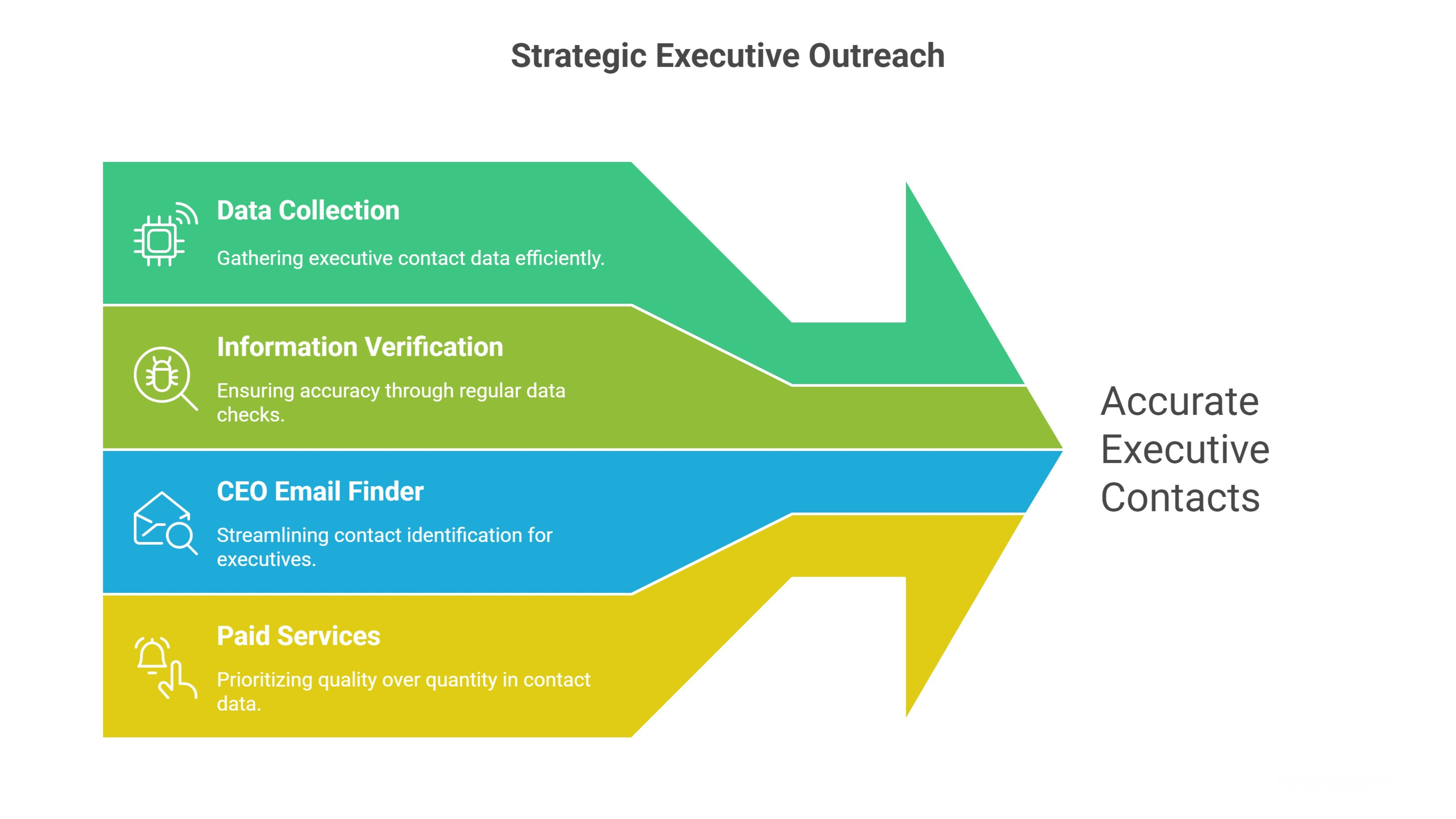
Lead generation agencies specialize in collecting and maintaining executive contact data across industries.
These services often verify information regularly, which can improve accuracy compared to manual research.
For teams with limited time, working with a CEO email address finder service can reduce the effort required to identify reliable contacts.
This option is usually paid, but it prioritizes quality over volume.
This approach is best suited for situations where accuracy matters more than speed or exploration.
28. Direct Ask via Warm Email or Introduction
When some level of access already exists, a direct and respectful request can be one of the simplest ways to confirm the right email contact.
This usually applies when there has been prior interaction, a referral, or an ongoing conversation.
A warm email allows you to explain context clearly and state why the request is relevant.
Transparency helps remove uncertainty and shows that the outreach is intentional, not random.
This approach is most effective when the message is concise and aligned with the recipient’s role or current priorities.
It keeps communication clear and avoids unnecessary back-and-forth.
Turning CEO Email Discovery Into Verified Outreach
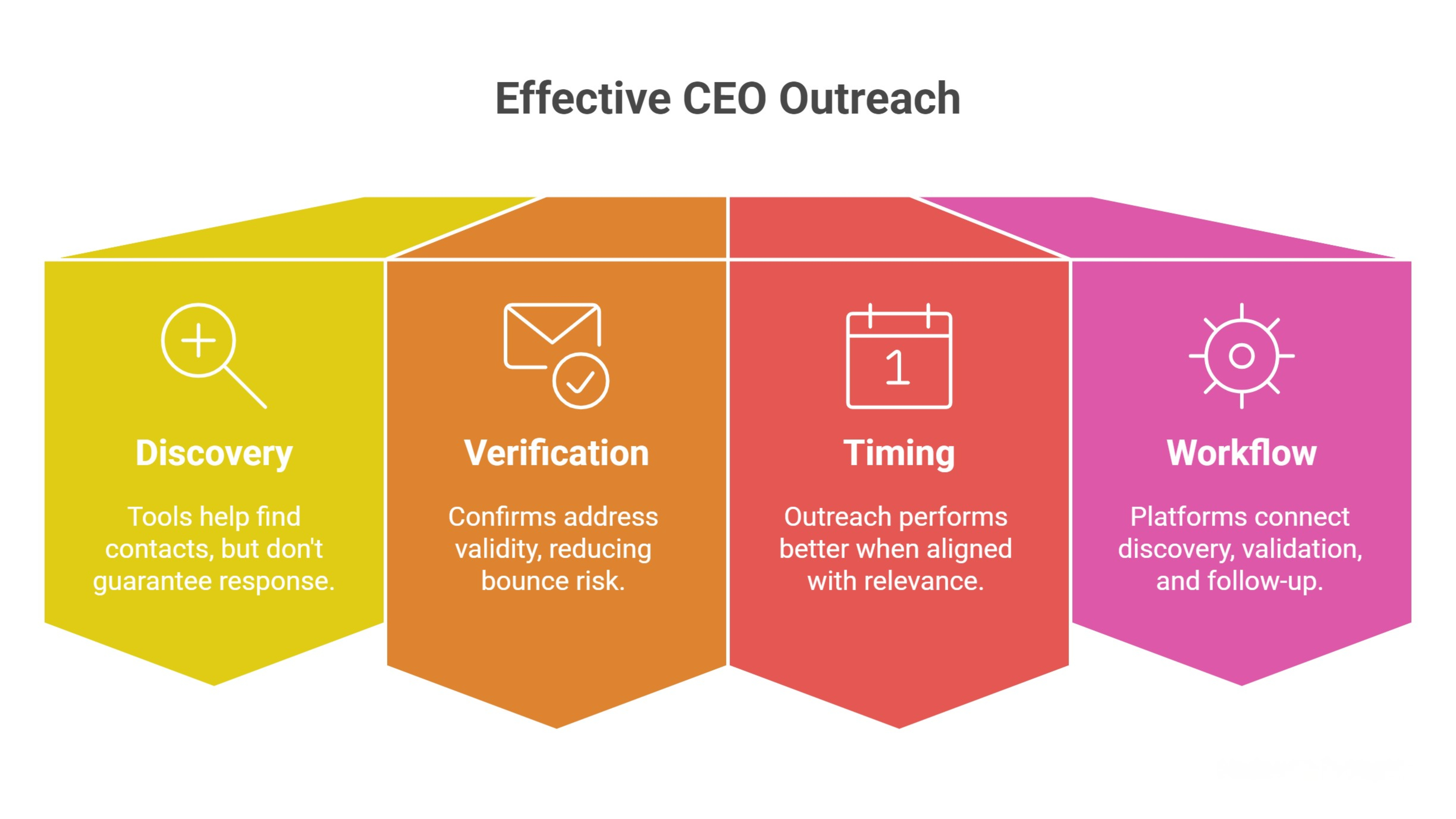
Finding a CEO’s email address is only the first step. Outreach becomes effective when discovery is paired with verification, timing, and structured execution.
- Discovery as a Starting Point:Tools such as a CEO email address finder help surface potential executive contacts, but discovery alone does not guarantee reachability or response.
- Verification Before Action:Validation confirms whether an address is active, assistant-managed, or outdated. This step reduces bounce risk and protects sender credibility.
- Context and Timing Alignment:Outreach performs better when aligned with relevance, recent activity, or a clear business trigger rather than sent immediately after discovery.
- Connected Outreach Workflow:Platforms like Oppora connect discovery, validation, and follow-up into a single workflow, making it easier to find CEO email address details and act on them with consistency and control.
By treating discovery, verification, and execution as linked steps, outreach remains intentional, measurable, and focused on real communication rather than volume.
Conclusion
Finding a CEO’s email address in 2026 requires research, judgment, and restraint.
Understanding how to find CEO email address information starts with choosing the right tactic based on context and access, not speed or volume.
Accuracy and verification matter more than reach, as they help protect credibility and reduce unnecessary risk.
Timing and relevance also play a critical role in shaping outcomes.
When used thoughtfully, tools like Oppora support discovery and validation while keeping outreach measured, respectful, and aligned with real executive communication behavior.
Frequently Asked Questions (FAQs)
Is it legal to look for a CEO’s email address online?
Yes, as long as the information is publicly available or shared voluntarily. Ethical outreach means avoiding private data leaks, respecting privacy laws, and using emails only for relevant, professional communication.
How do I know if a CEO email address is still active?
An address is more likely active if it appears in recent public sources, newsletters, event pages, or verified databases. Combining discovery with validation checks helps reduce bounce risk.
What should I avoid when reaching out to a CEO by email?
Avoid mass emailing, generic pitches, and misleading subject lines. CEOs respond better to concise messages that clearly explain context, relevance, and why the outreach matters to them.
Is it better to contact a CEO directly or go through an assistant?
It depends on context. Direct contact works when the email is shared intentionally. Assistants are often the right path for formal requests, partnerships, or scheduling discussions.
How many tactics should I use to find a CEO email address?
Usually, one or two well-chosen tactics are enough. Using too many methods at once increases noise and risk. Focus on accuracy, verification, and relevance rather than volume.