10 Best Instantly AI Alternatives (Free & Paid Tools Compared)
alternatives to instantly instantly ai alternatives instantly.ai alternatives instantly ai alternative instantly ai free alternative
Looking for a better instantly alternative but not sure where to start?
You’re not alone.
As outbound becomes more competitive, small deliverability gaps, weak automation, or poor personalization can quietly reduce reply rates and pipeline growth. What once felt “good enough” with Instantly can start feeling limiting when you try to scale safely.
That’s why comparing instantly ai alternatives strategically matters.
In this guide, you’ll explore 10 free and paid tools ranked by automation depth, deliverability control, personalization quality, and scalability so you can decide whether to optimize your current setup or switch with confidence.
Why Businesses Look for Instantly AI Alternatives
Most businesses don’t search for an Instantly alternative because of shiny features.
It’s about fixing problems that directly affect revenue.
When outbound drives pipeline, even small inconsistencies in deliverability, warm-up behavior, or platform stability can create hesitation. Over time, that hesitation turns into a search for instantly ai alternatives that offer more control and predictability.
Let’s break down where most frustrations actually come from.
Real Deliverability Headaches
Deliverability is the foundation of cold email.
If emails don’t land in the inbox, nothing else matters.
On Reddit, some users report that campaigns were technically “running,” but reply rates suddenly dropped.
Even with warm-up enabled, emails reportedly started landing in spam without clear warnings.
That forced teams to pause campaigns, rotate domains manually, or question their sending setup.
Warm-Up & Domain Health Issues
Warm-up should build confidence, not confusion.
Yet some Reddit users mention inbox health scores declining during active warm-up periods.
Others discuss account restrictions or domain concerns while using shared warm-up pools.
The biggest issue mentioned is lack of clarity.
Users say it’s difficult to understand how warm-up activity affects real campaigns or domain reputation over time.
When scaling requires constant technical monitoring, growth slows down.
Example discussion:Accounts banned after warm-up usage leading to domain concerns — a thread where several sending domains were banned while warming up campaigns.
Platform Reliability & Support Frustrations
Outbound systems need to feel stable.
Some Reddit users express concerns about performance inconsistency.
Emails show as “sent,” but users question actual inbox placement.
There are also complaints about slow or unhelpful support during critical moments.
When revenue depends on outreach, stability and fast support become non-negotiable.
That’s often when businesses start exploring alternatives.
Example discussion:User expresses disappointment with Instantly performance and seeks alternatives — criticisms include performance inconsistency and support comparisons with other tools.
10 Best Instantly AI Alternatives Ranked by Automation & Scalability
Not all instantly ai alternatives are built the same.
Some focus on email volume, while others prioritize workflow automation, personalization depth, or infrastructure control. The real difference shows up when you try to scale without breaking deliverability or adding manual work.
Below, you’ll find 10 tools ranked by automation strength, scalability, and operational reliability — so you can clearly see which platform fits your growth stage and outbound strategy best.
1. Oppora.ai
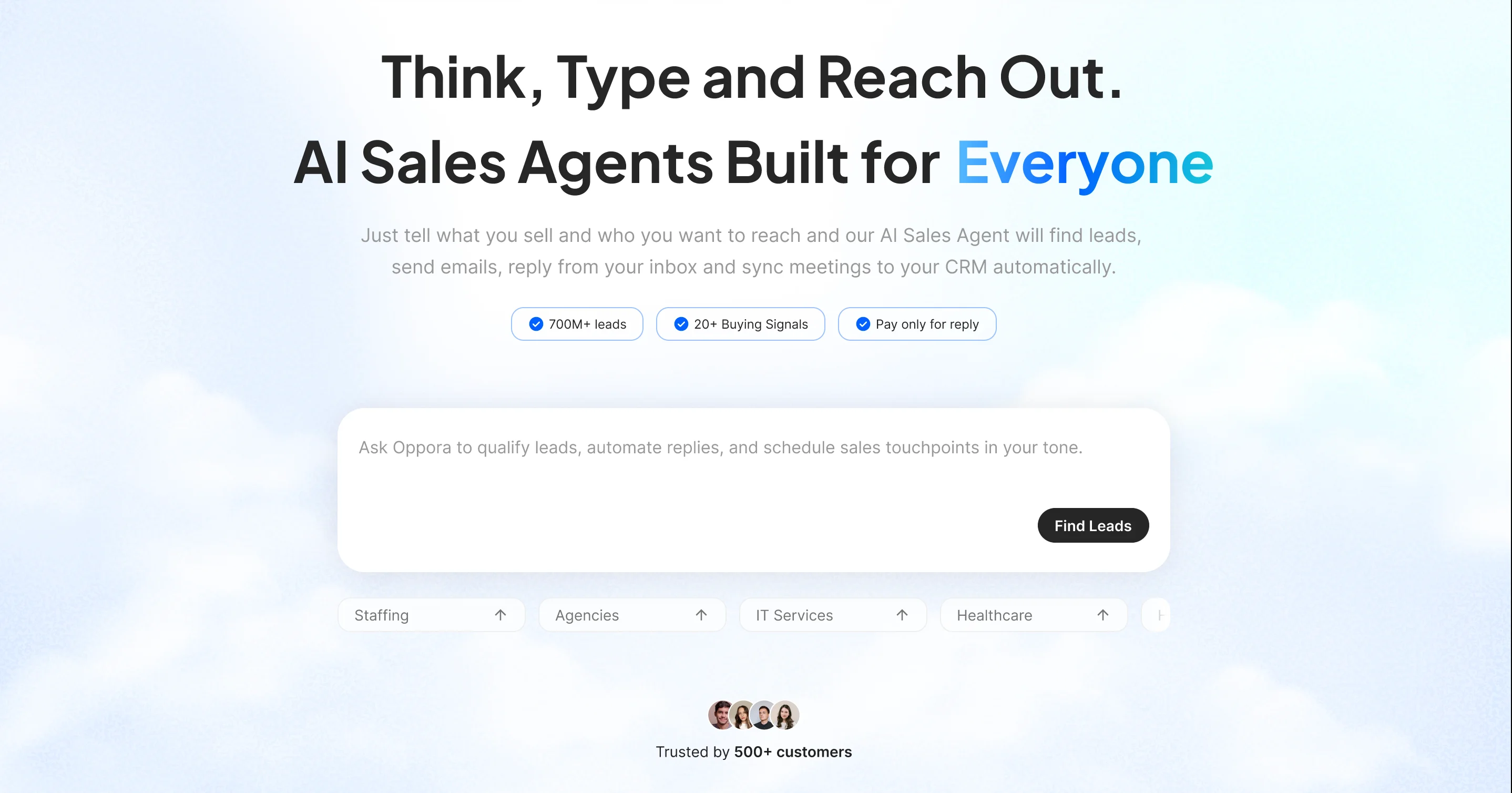
If you’re looking for more than just a sending tool, Oppora.ai positions itself differently.
Instead of giving you features to operate manually, it gives you an outbound system that runs end to end.
Oppora is built around 8 AI Sales Agents that work together inside a structured workflow. You define what you sell and who you want to target, then the agents handle prospect sourcing, enrichment, email writing, sending, replying, qualification, and meeting booking automatically.
This makes it less of a cold email tool and more of an agentic outbound engine.
Best For
- For founders, agencies, and SDR teams who want full automation without daily management.
- No need to constantly monitor warm-up processes or adjust technical settings.
- Reduces time spent tweaking copy and managing inbox rotation.
- Automates reply handling and campaign flow, significantly cutting down manual work.
Key Features
- 120M+ verified contacts with waterfall sourcing
- Built-in enrichment and real-time email verification
- Multi-mailbox scaling (connect up to 50 inboxes)
- Automatic domain warm-up and sender identity matching
- Real AI personalization (no spintext recycling)
- AI reply handling and instant meeting booking
- CRM sync with HubSpot, Salesforce, Pipedrive, or built-in CRM
- Drag-and-drop workflow builder
Oppora focuses heavily on deliverability safeguards while automating the entire outreach lifecycle.
Pricing
- Free Forever Plan Available – Get started with core features at no cost.
- All-in-One Pricing Model – One simple plan covers all core sales tasks. No separate charges for lead finding, outreach, automation, or reply handling.
- Task-Based Credit System – Separate credits for separate actions, so usage stays fair and transparent across features.
- Unused Credits Roll Over – Any unused credits move to the next month, ensuring nothing goes to waste.
- Flexible Add-Ons – Scale-specific usage without being forced into a higher-tier upgrade, (available for both free and paid users)
- Cost Advantage – While many tools may cost $200+ to find and email 5,000 prospects monthly, Oppora can handle it starting at just $34.
2. Reply.io
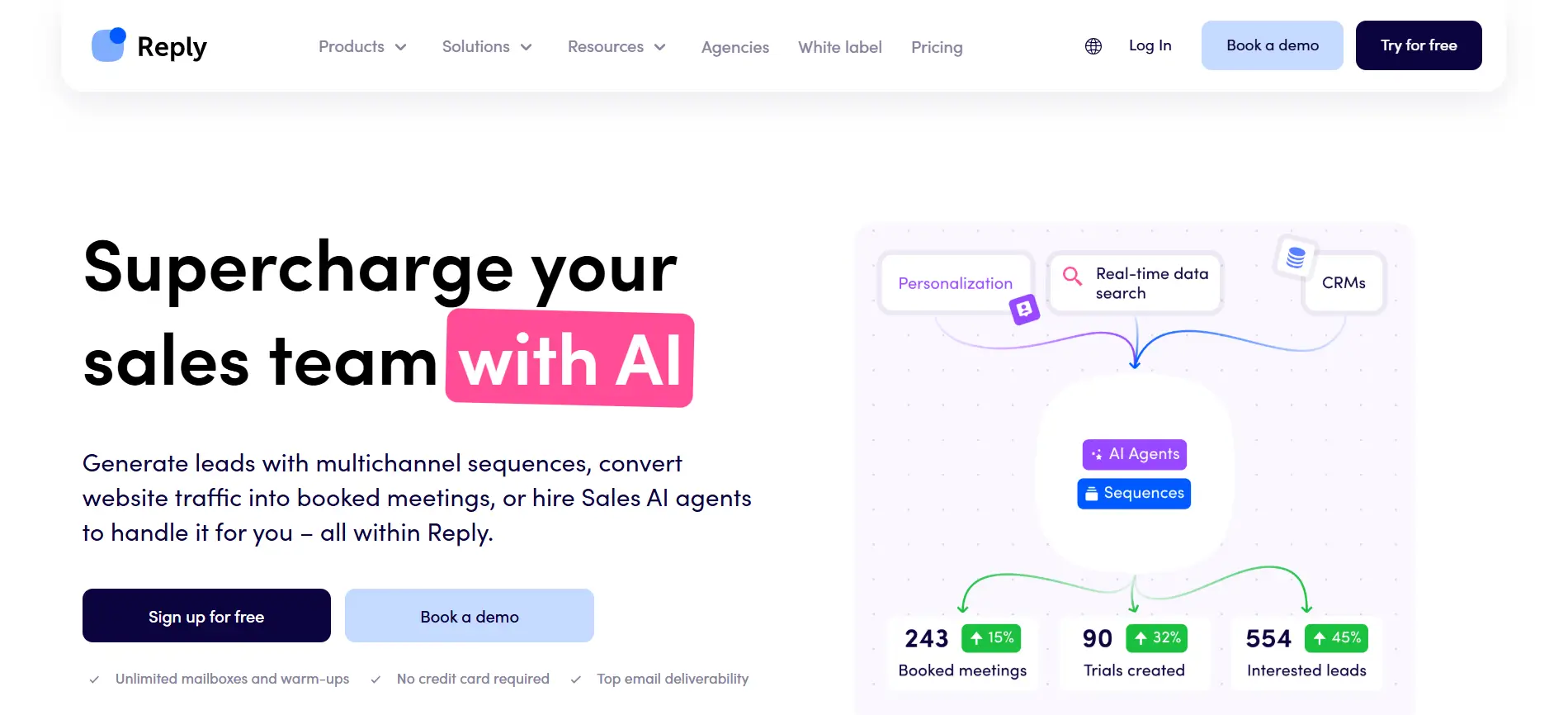
If your outbound strategy goes beyond email, Reply.io becomes relevant quickly.
It’s designed as a multichannel sales engagement platform that combines email, LinkedIn automation, calling, and task management in one structured environment.
Instead of focusing purely on cold email scale, Reply.io helps you coordinate touchpoints across different channels. That makes it useful when your sales process requires more than one interaction before booking a meeting.
Best For
Sales teams running coordinated multichannel campaigns with clear SDR workflows.
If you already operate inside a CRM-heavy setup and need structured task flows for reps, Reply.io supports that model well.
Key Features
- Multichannel sequences (email, LinkedIn, calls)
- CRM integrations and native sync
- Sales team management tools
- Task automation and follow-up tracking
- Reporting dashboards for engagement insights
Reply.io leans more toward structured sales engagement rather than deep AI-driven workflow automation.
Pricing
No free plan available.
If your priority is organized multichannel coordination instead of fully autonomous outbound execution, Reply.io can be a practical instantly alternative.
3. Woodpecker
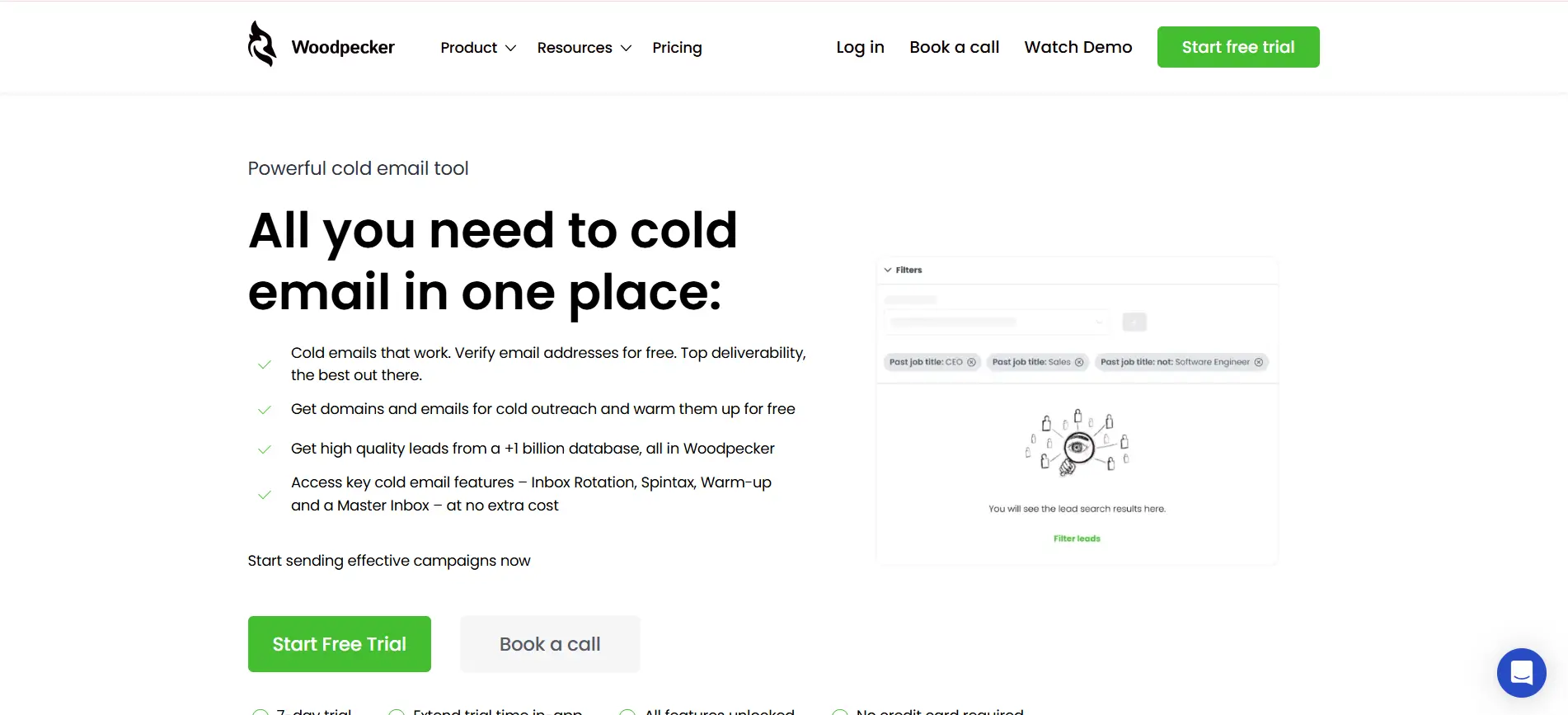
If your main concern is stable cold email performance, Woodpecker keeps things simple.
It doesn’t try to be an all-in-one AI system. Instead, it focuses on reliable email outreach with strong deliverability foundations and minimal complexity.
Woodpecker is often chosen by agencies managing multiple client domains because it supports inbox rotation and campaign separation cleanly. That reduces the risk of cross-domain reputation issues when running outreach at scale.
Best For
Agencies and consultants handling outreach for multiple clients who need clean domain management and dependable sending infrastructure.
If you value clarity over heavy automation layers, this structure can feel easier to manage.
Key Features
- Bounce detection and automatic follow-ups
- Inbox rotation for safer sending
- Reply detection and tracking
- Simple campaign builder
- Basic team collaboration tools
Woodpecker prioritizes controlled scaling rather than aggressive volume automation.
Pricing
No free plan available.
If your goal is steady, deliverability-focused cold email without complex AI workflows, Woodpecker remains a practical instantly alternative.
4. Saleshandy
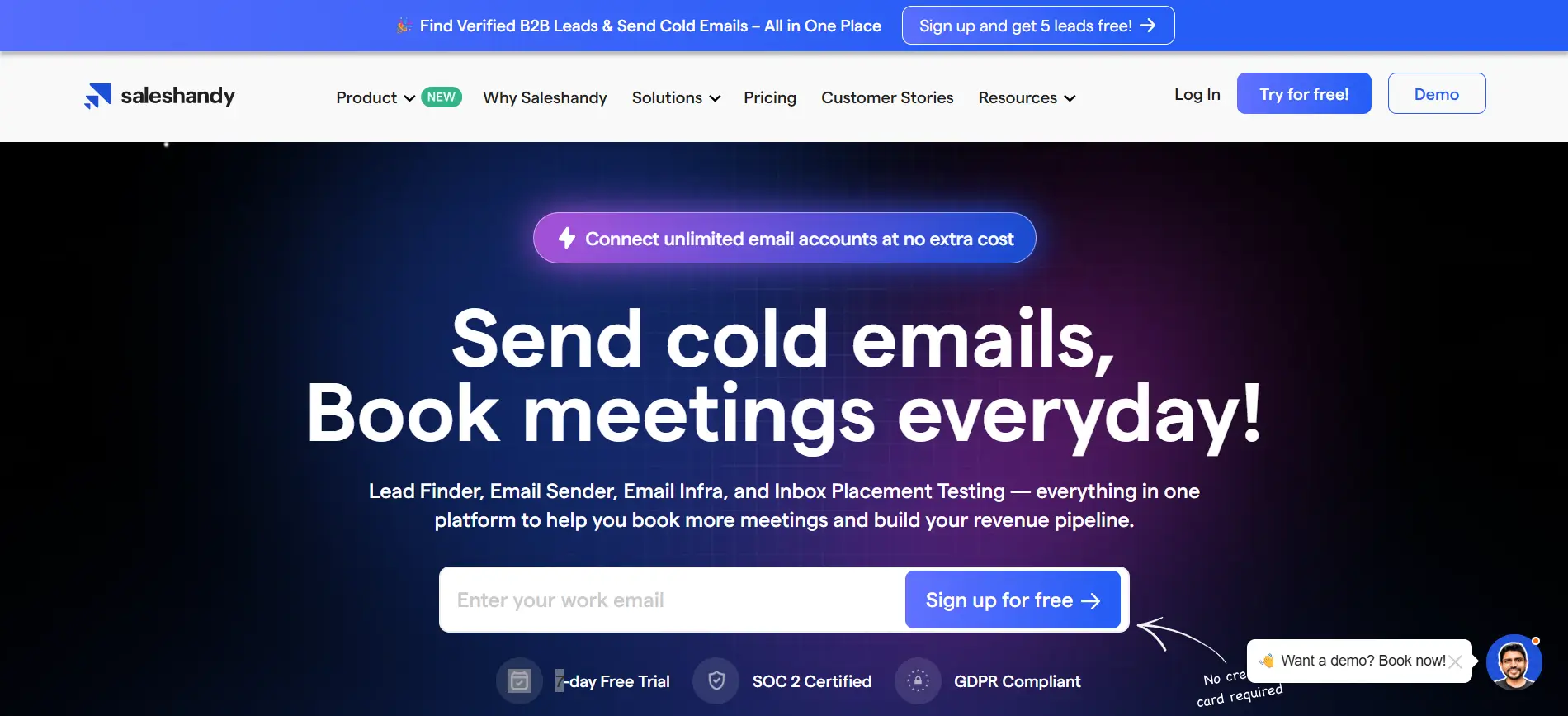
If you’re early in your outbound journey, complexity can slow you down.
That’s where Saleshandy positions itself — as an affordable and straightforward cold email platform for startups and small teams.
It focuses on giving you the essential tools needed to launch campaigns without overwhelming you with advanced workflow layers. You get email sequencing, tracking, and warm-up capabilities inside a clean interface that’s relatively easy to manage.
Best For
Startups, founders, and small teams that want budget-friendly outreach without heavy automation systems.
If your priority is getting campaigns live quickly rather than building agent-driven workflows, Saleshandy fits that stage well.
Key Features
- Email sequencing and automation
- Built-in warm-up functionality
- Basic personalization support
- Campaign tracking and analytics
- Simple dashboard and setup
Saleshandy leans toward accessibility and affordability over deep automation depth.
Pricing
No free plan available.
If you need a practical instantly alternative that covers the fundamentals without stretching your budget, Saleshandy can be a solid starting point.
5. Lemlist
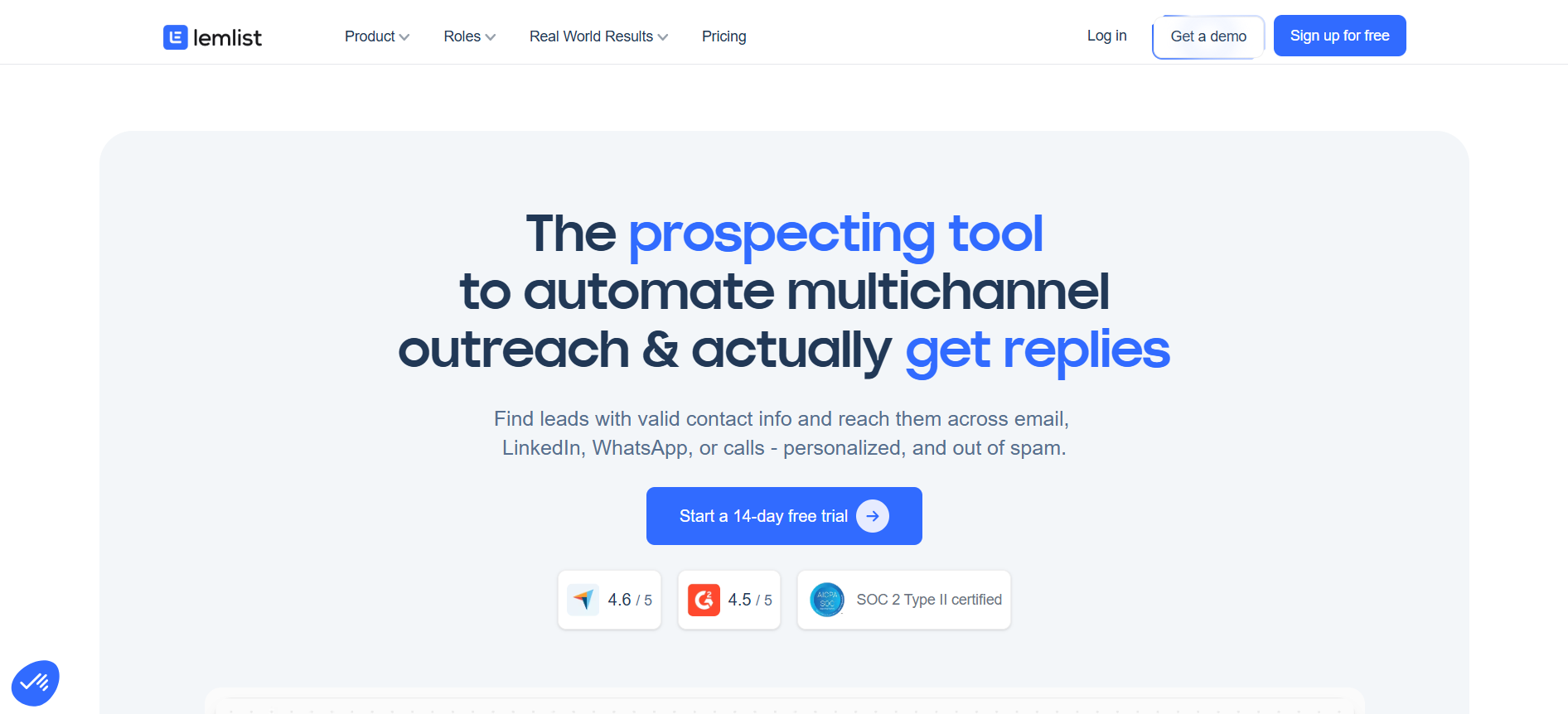
If personalization is your competitive edge, Lemlist stands out quickly.
It’s known for helping you create visually engaging and highly customized outreach campaigns that feel different from standard cold emails.
Instead of focusing only on inbox infrastructure, Lemlist leans into creative engagement. You can personalize images, landing pages, and multichannel sequences to make your outreach feel handcrafted even at scale. That makes it attractive for teams trying to stand out in crowded inboxes.
Best For
Teams running creative outbound campaigns where differentiation and brand tone matter as much as deliverability.
If your strategy relies on strong first impressions, Lemlist gives you tools to support that approach.
Key Features
- Image and dynamic personalization
- Multichannel outreach (email + LinkedIn)
- Sequence automation
- Campaign analytics and tracking
- Collaboration tools for teams
Lemlist emphasizes creative personalization more than deep agent-based automation.
Pricing
No free plan available.
If your goal is to make outreach feel memorable rather than purely operational, Lemlist can serve as a strong instantly alternative.
6. Apollo.io
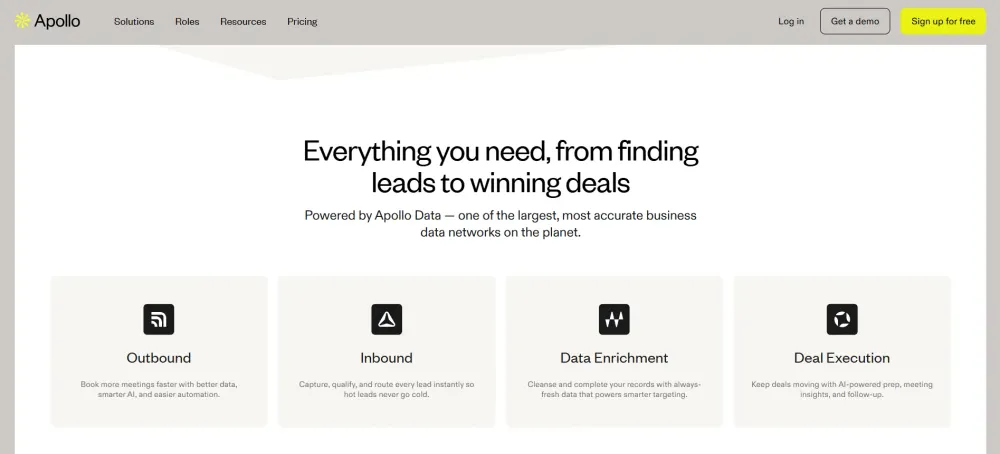
If prospecting volume is your priority, Apollo.io becomes hard to ignore.
It combines a large B2B contact database with outreach functionality, making it both a lead discovery and engagement platform in one place.
Instead of sourcing leads separately and importing them into another tool, Apollo lets you search, filter, enrich, and contact prospects inside a unified system. That convenience is why many growing sales teams start here.
Best For
Teams that prioritize prospect discovery and database depth alongside outbound execution.
If your biggest bottleneck is finding verified decision-makers at scale, Apollo’s database-first model supports that need well.
Key Features
- Large B2B contact database
- Advanced filtering and enrichment tools
- Built-in email sequencing
- CRM sync and integrations
- Basic analytics and reporting
Apollo focuses more on data access and enrichment than fully autonomous AI workflows.
Pricing
Free plan available (limited credits and features).
If you want an instantly alternative that blends prospecting and outreach under one roof, Apollo.io offers strong database-driven value.
7. Smartlead.ai
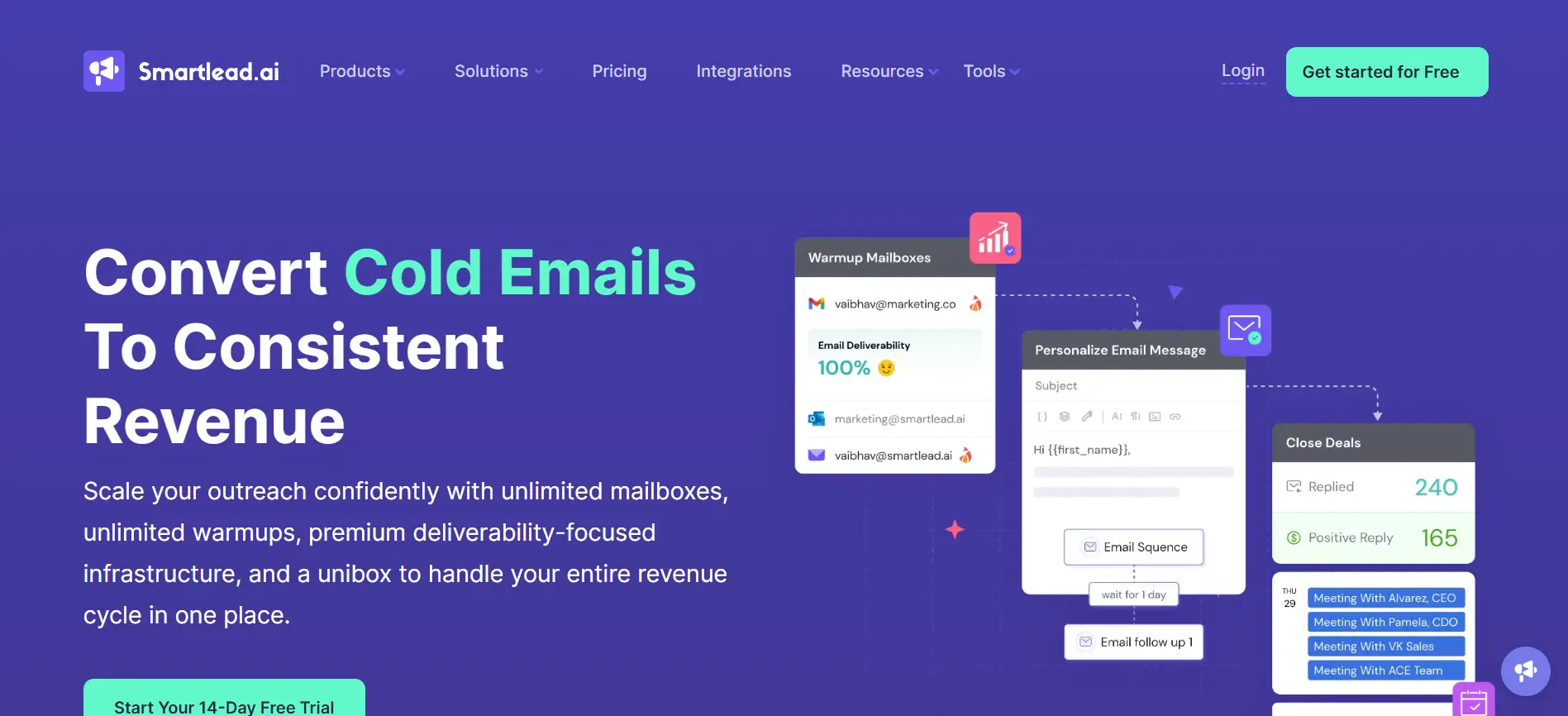
If your goal is aggressive cold email scaling, Smartlead.ai is built for that environment.
It focuses heavily on infrastructure control, mailbox management, and sending capacity rather than creative personalization or deep AI workflow automation.
Smartlead is often chosen by teams running high-volume outbound campaigns across multiple domains. Its strength lies in managing inbox rotation, domain distribution, and scaling without manually juggling accounts.
Best For
Large outbound operations and growth teams that prioritize volume and infrastructure stability.
If your strategy involves managing dozens of mailboxes and multiple domains, Smartlead provides the operational backbone to support that scale.
Key Features
- Advanced mailbox scaling
- Multi-domain management
- Automated warm-up
- Inbox rotation
- Centralized campaign controls
Smartlead is more infrastructure-focused than agent-driven.
Pricing
No free plan available.
If you’re looking for an instantly alternative designed specifically for high-volume sending and mailbox expansion, Smartlead.ai fits that scaling-first approach well.
8. Mailshake
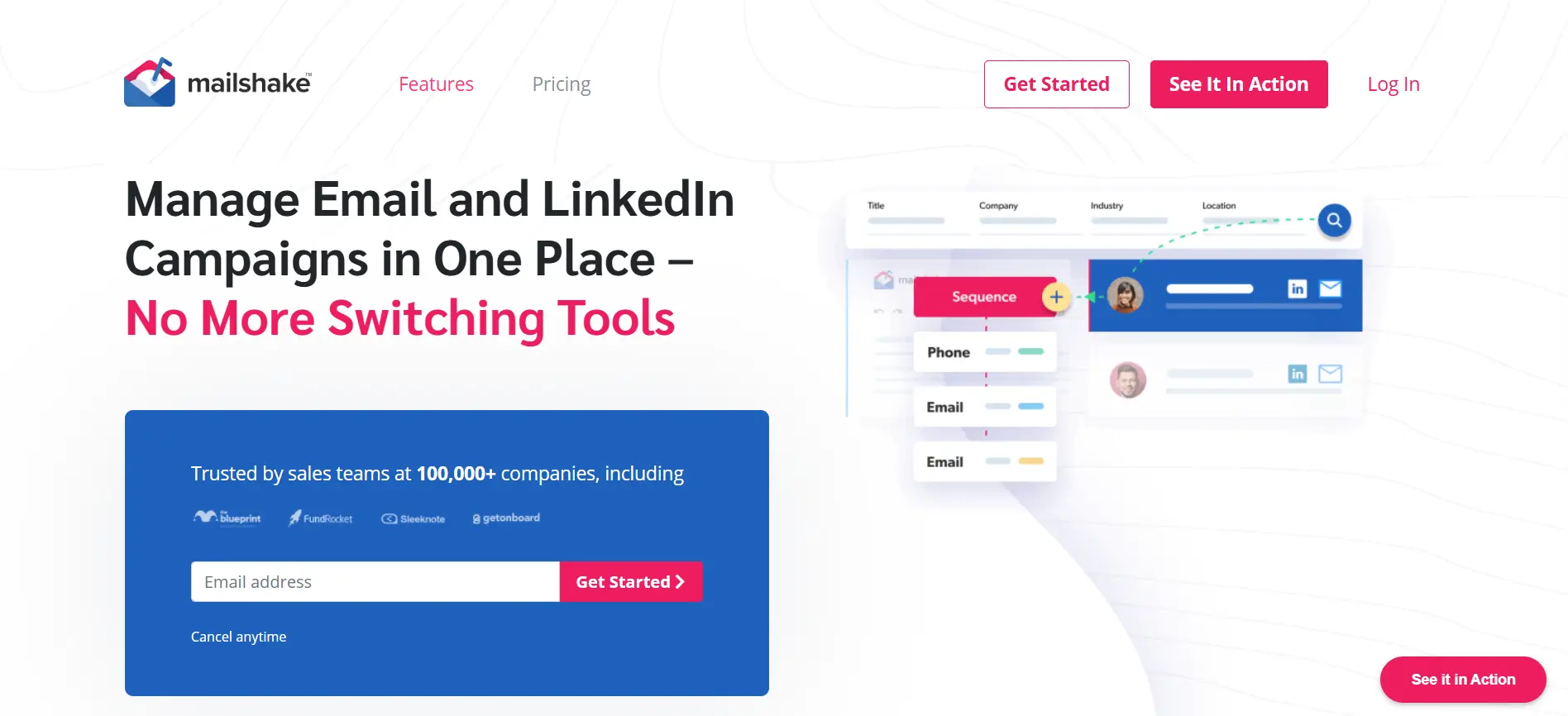
If you want something balanced and easy to operate, Mailshake keeps things straightforward.
It combines email outreach with LinkedIn touches inside a clean interface that doesn’t overwhelm smaller sales teams.
Mailshake focuses on usability. You can build sequences, track replies, and manage follow-ups without dealing with heavy infrastructure settings or complex AI systems. That makes it attractive for mid-sized teams that want consistency without deep technical involvement.
Best For
Mid-sized sales teams that need simple multichannel engagement with clear reporting and CRM visibility.
If your outbound process is structured but not highly technical, Mailshake supports that workflow comfortably.
Key Features
- Email and LinkedIn sequencing
- CRM integrations and sync
- Campaign performance tracking
- A/B testing capabilities
- Simple campaign builder
Mailshake prioritizes ease of use over advanced automation depth.
Pricing
No free plan available.
If you’re searching for an instantly alternative that balances functionality and simplicity without becoming infrastructure-heavy, Mailshake can be a reliable option.
9. Snov.io
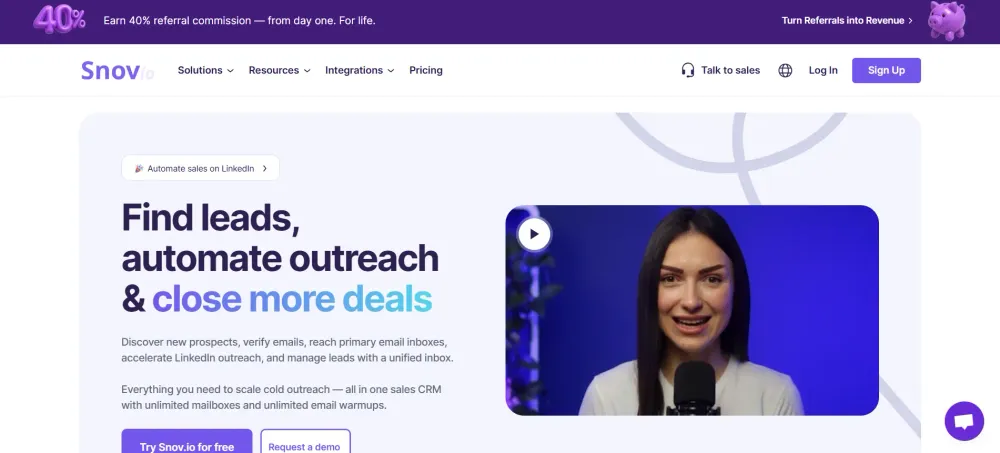
If your workflow starts with finding and verifying emails, Snov.io fits naturally into that process.
It combines email discovery, verification, and outreach tools in one platform, making it especially useful for prospecting-heavy teams.
Instead of relying only on a sending engine, Snov.io helps you build cleaner lead lists before campaigns even begin. You can search by domain, use database filters, verify emails in bulk, and then launch drip campaigns directly inside the same system. That structure reduces the need for multiple disconnected tools.
Best For
Teams that prioritize lead generation, enrichment, and email verification before scaling outreach.
If your biggest risk is inaccurate data hurting deliverability, Snov.io’s verification layer adds an extra safety net.
Key Features
- Email finder and domain search
- Built-in email verification
- Drip campaign automation
- Chrome extension for lead capture
- CRM integrations
Snov.io focuses more on data accuracy and prospecting efficiency than autonomous AI workflow execution.
Pricing
Free plan available (limited credits and features).
If you want an instantly alternative that strengthens lead sourcing and verification alongside outreach, Snov.io offers a data-driven approach.
10. Klenty
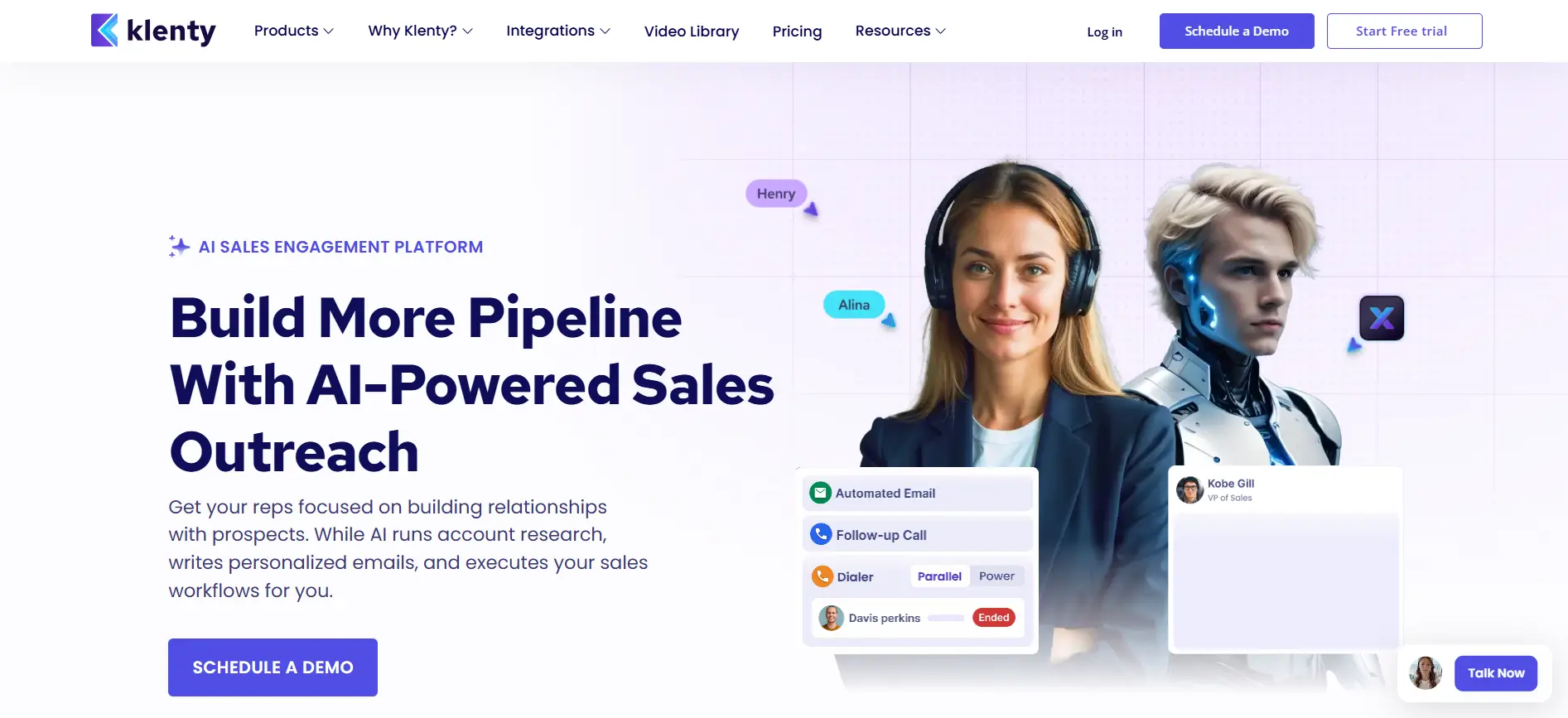
Klenty is a sales engagement platform focused on structured outbound and multichannel sequencing.
It combines email automation with LinkedIn touches and task management, making it suitable for teams running coordinated outreach.
Unlike simple sending tools, Klenty emphasizes workflow tracking and sales team activity visibility.
Best For
Sales teams running multichannel outreach with task-based follow-ups.
Key Features
- Email sequencing
- LinkedIn automation
- CRM integration
- Task automation
- Team performance tracking
- Klenty focuses more on sales engagement workflow rather than just mailbox scaling infrastructure.
Pricing
Paid plans only.
Free trial available.
Klenty works well for structured outbound teams that need coordination and visibility.
For businesses comparing instantly ai alternatives, it represents a more workflow-oriented approach rather than infrastructure-focused scaling.
Conclusion
Choosing the right instantly alternative isn’t about chasing more features.
It’s about choosing the right level of automation, control, and scalability for how you actually sell.
If you only need email volume, several tools can handle that. But if you’re aiming for structured workflows, built-in prospect sourcing, AI-driven personalization, and automated reply handling, depth starts to matter more than volume.
Before switching, define how you want your outbound system to operate long term.
And if you’re ready to move from manual campaign management to a fully automated outbound engine, Oppora is worth exploring as your next step.
Frequently Asked Questions (FAQs)
Is switching from Instantly.ai risky for active campaigns?
Switching tools can temporarily affect campaign momentum if not planned properly. It’s best to warm up new domains, replicate sequences carefully, and test inbox placement before fully migrating. A phased transition helps protect deliverability while you evaluate the new platform’s performance.
How long does it take to see results after changing outreach tools?
Results depend on your domain health, targeting accuracy, and messaging quality. Most teams notice performance differences within two to four weeks, especially in reply rates and inbox placement stability. However, infrastructure setup and warm-up periods may slightly delay immediate scaling.
Do instantly AI alternatives improve reply rates automatically?
No tool guarantees higher replies automatically. Better automation and deliverability controls create stronger conditions, but targeting, offer clarity, and personalization still determine outcomes. Technology improves execution, but strategy ultimately drives response rates.
Should I prioritize deliverability features or automation depth?
It depends on your growth stage. Early-stage teams often need reliable deliverability first. Scaling teams benefit more from workflow automation that reduces manual effort. Ideally, you want both — stable infrastructure combined with structured outbound execution.
Is a fully automated outbound system better than manual campaign control?
Full automation reduces workload and human error, especially at scale. However, strategic oversight remains essential. The strongest systems combine automation with visibility, reporting, and optimization controls so you can scale confidently without losing direction.