Top 7 LinkedIn Marketing Tools to Generate Leads and Book Meetings
Getting leads on LinkedIn sounds easy until you actually try to turn connections into booked meetings.
Most tools help you send messages, but very few help you manage the entire journey from prospecting to conversion.
That’s where choosing the right tool becomes critical.
In this guide, you’ll discover:
- The best LinkedIn marketing tools for lead generation
- Which tools actually help you book meetings
- What to look for before choosing one
Types of LinkedIn Marketing Tools You Should Know
Before you start comparing tools, it helps to understand what each category actually does.
Not every LinkedIn marketing tool is built for the same job, and picking the wrong type can slow down your entire lead generation process.
1. LinkedIn outreach and automation tools
These tools focus on sending connection requests, follow-ups, and messages at scale.
You can automate repetitive tasks like profile visits, message sequences, and connection nurturing without doing everything manually.
- Automate connection requests and follow-ups
- Run multi-step outreach campaigns
- Save time on manual LinkedIn activity
Most of these tools stop at sending messages, so you still need additional systems to handle replies and booking meetings.
Suggested Reading:
How to Generate B2B Leads on LinkedIn2. Lead generation and data enrichment tools
This category helps you find the right people and collect their contact details.
You can filter prospects by role, company, or industry and enrich profiles with verified emails or additional data.
- Build targeted lead lists
- Find verified emails and contact details
- Enrich data for better personalization
These tools are essential when your biggest challenge is getting high-quality leads before starting outreach.
3. Content scheduling and engagement tools
If your strategy involves building authority, these tools help you stay consistent on LinkedIn.
You can schedule posts, track engagement, and interact with your audience without logging in multiple times a day.
- Schedule and automate LinkedIn posts
- Track likes, comments, and engagement
- Stay consistent with content strategy
They focus more on inbound interest rather than direct outreach or immediate meeting booking.
4. Analytics and performance tracking tools
Once your campaigns are running, you need to know what’s working and what’s not.
These tools track key metrics so you can improve your LinkedIn marketing performance over time.
- Monitor response and acceptance rates
- Track campaign performance
- Optimize outreach for better conversions
They help you refine your strategy so you can generate more leads and book more meetings consistently.
Top 7 LinkedIn Marketing Tools to Generate Leads and Book Meetings
Now that you understand the different types of LinkedIn marketing tools, let’s look at the ones that actually help you move from prospecting to booked meetings.
Instead of just focusing on sending messages, these tools are selected based on how well they support real outcomes like lead generation, follow-ups, and conversions.
Oppora.ai — Turn LinkedIn prospecting into automated multi-channel outreach
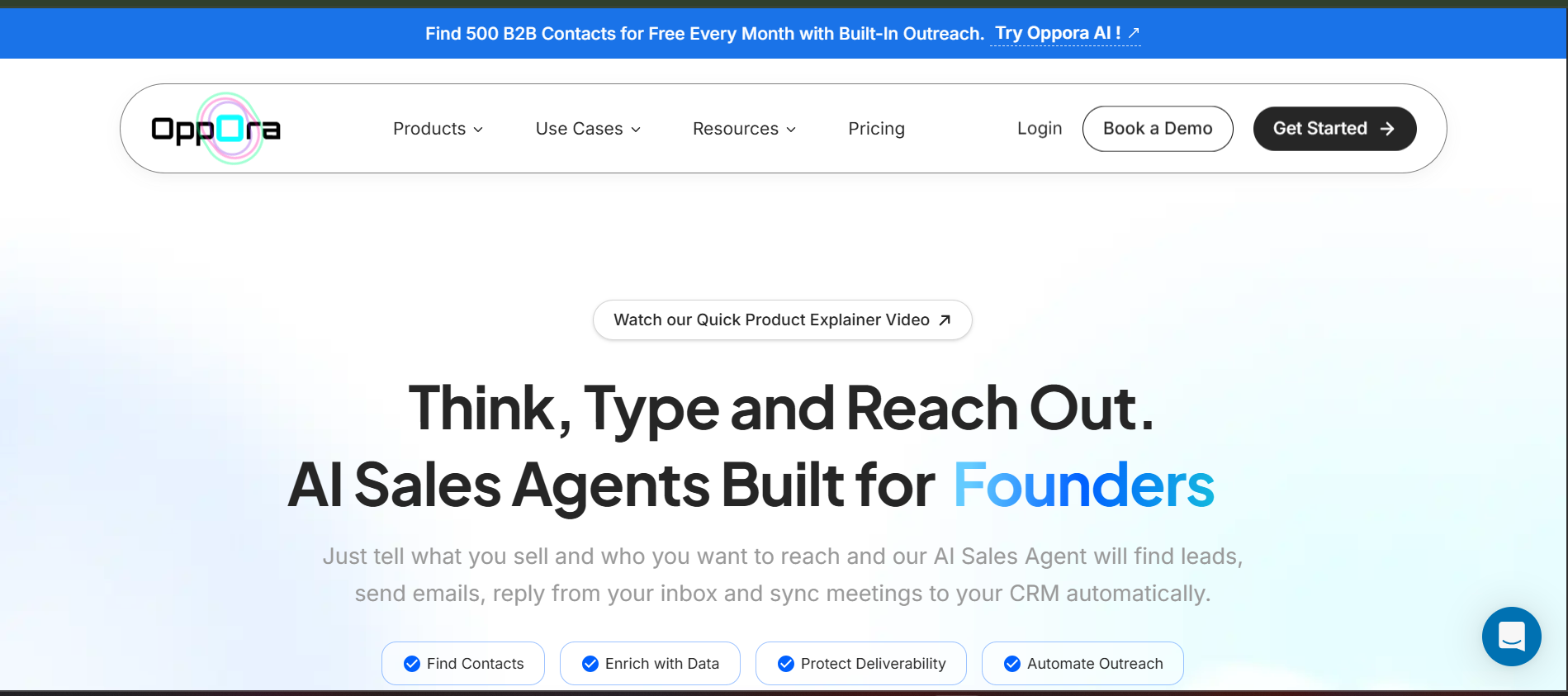
Most LinkedIn marketing tools help you with just one part of the process.
Oppora.ai works differently by turning your entire outbound workflow into one automated system that runs across LinkedIn and email together.
You can use its 1B+ lead database search to find decision-makers with their LinkedIn IDs using filters like role, company, intent signals, and automate your connection sending
From there, Oppora automatically enriches those profiles with verified contact data, so you don’t have to manually search for emails or switch tools.
Instead of just sending connection requests, you can:
- Build targeted LinkedIn lead lists in minutes
- Enrich contacts with verified emails for multi-channel outreach
- Launch LinkedIn + email sequences from one place
- Auto-withdraw connection request if the person does not accept it after “x” number of days
- Personalize messages using AI without writing everything manually
What makes it more practical is how everything stays connected.
Your LinkedIn prospecting flows directly into outreach, follow-ups, and reply handling without breaking your workflow.
You can even automate follow-ups and let AI handle responses while you focus on qualified conversations.
So instead of treating LinkedIn as just a prospecting platform, you turn it into a consistent pipeline for booked meetings.
From a pricing perspective, it is built to stay scalable as your outreach grows.
- Starts at $34/month with access to thousands of email credits
- Includes unlimited leads search, connection sending automation, and campaigns
- Option to use smaller credit packs if you only need data
So instead of stitching together multiple LinkedIn marketing tools, you are running one complete outbound system that handles everything from prospecting to meeting booking.
Heyreach — LinkedIn automation and multi-account outreach
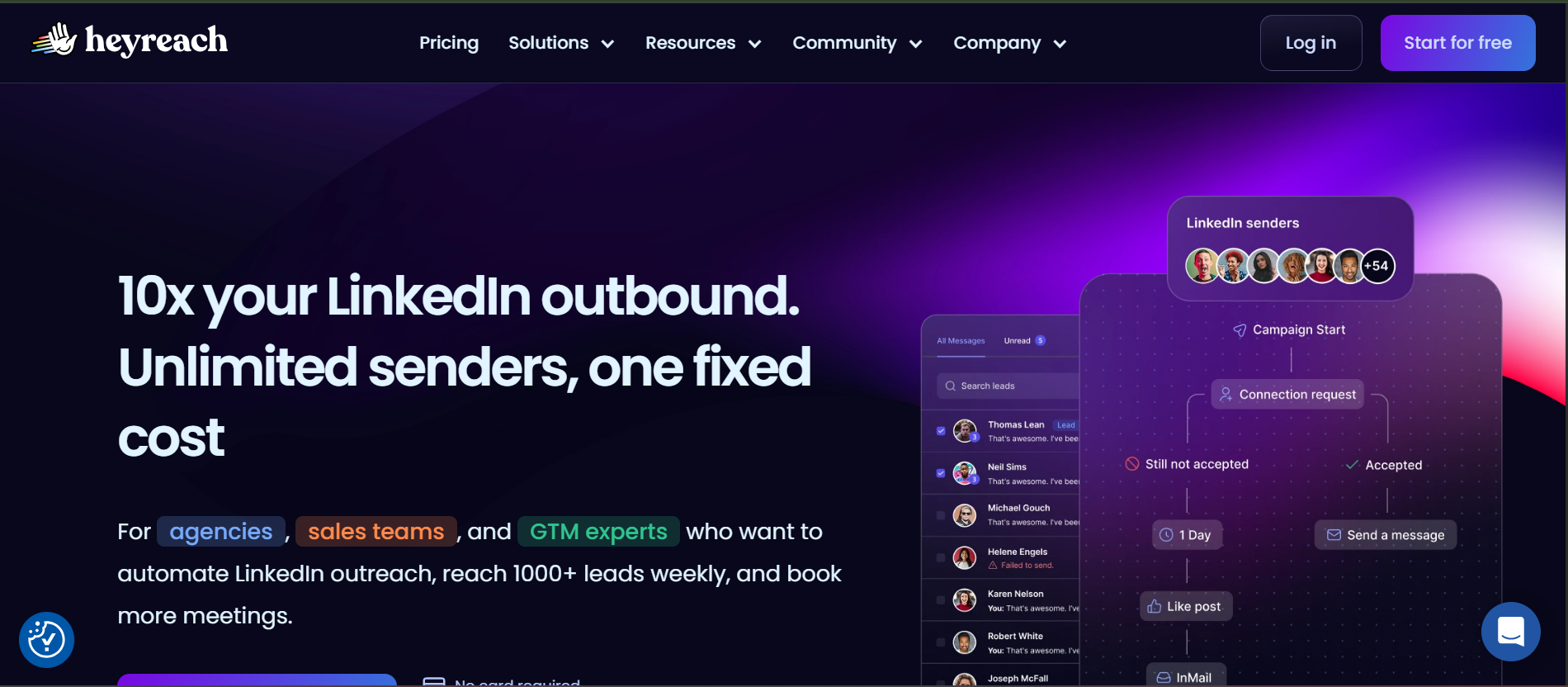
If you are managing outreach across multiple LinkedIn accounts, Heyreach is built specifically for that use case.
It allows you to scale campaigns without getting restricted by LinkedIn limits while keeping activity distributed across accounts.
- Connect and manage multiple LinkedIn accounts from one dashboard
- Run automated connection requests and message sequences
- Built for agencies and teams handling high-volume outreach
- Native integrations with tools like CRMs and outreach platforms
Heyreach is strong when your goal is scaling LinkedIn outreach safely across accounts, but it still focuses only on LinkedIn without handling full funnel conversion.
Suggested Reading:
How to Combine LinkedIn Outreach with Email CampaignsLinkedIn Sales Navigator — Advanced prospecting and lead discovery
LinkedIn Sales Navigator is one of the most widely used tools for finding high-quality B2B leads directly on LinkedIn.
It gives you deeper filtering and insights compared to the free LinkedIn experience.
- Access to 850M+ LinkedIn member profiles
- Advanced filters like job changes, company growth, and seniority
- Real-time alerts for lead activity and updates
- Save leads and accounts for ongoing tracking
It is powerful for prospecting, but you still need separate tools for outreach, follow-ups, and meeting booking.
Clay — Lead enrichment and workflow automation
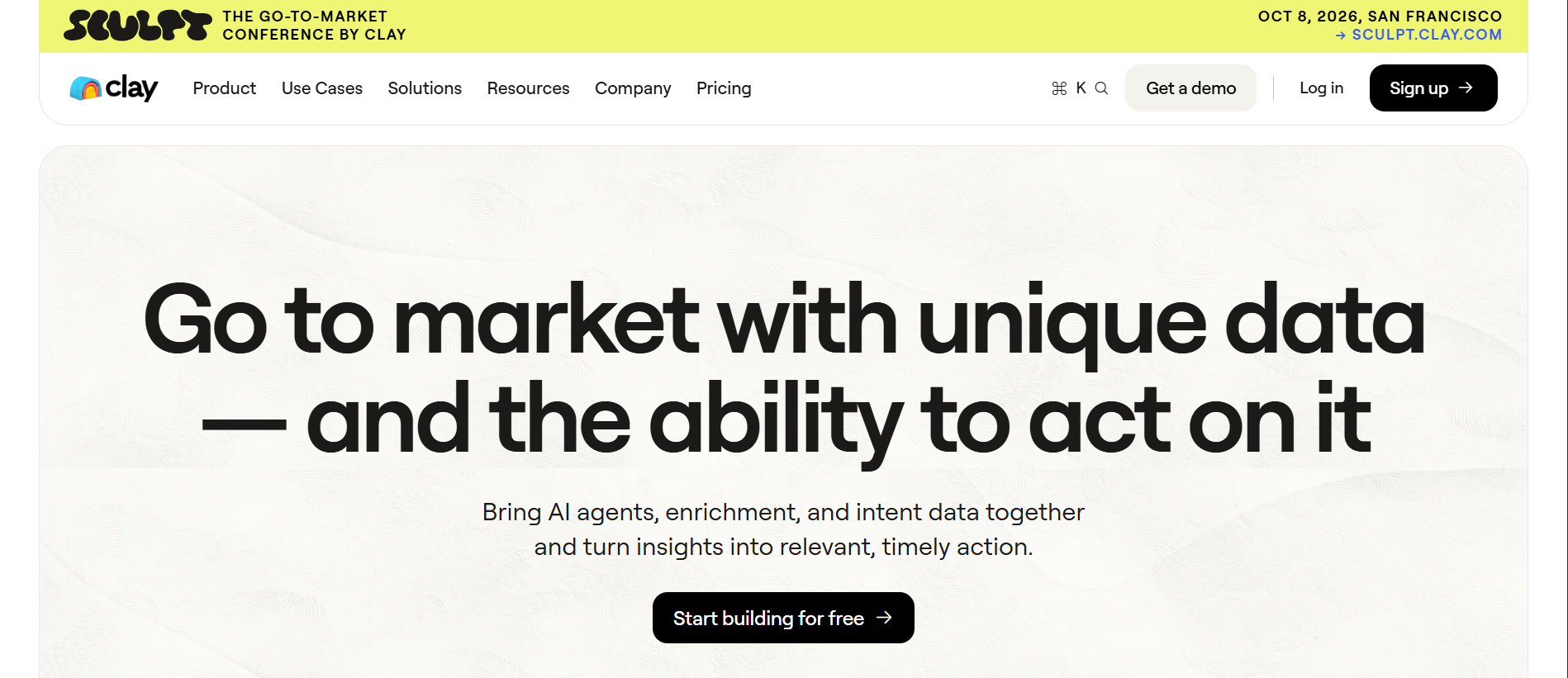
Clay is designed for teams that want to build highly customized lead generation workflows with enriched data.
It connects multiple data sources and lets you automate enrichment at scale.
- Access to 100+ data providers and integrations
- Enrich leads with emails, phone numbers, and firmographic data
- Build automated workflows using APIs and logic-based steps
- Use AI for personalization and research
Clay is flexible and powerful, but it requires setup and works best for teams comfortable building workflows.
PhantomBuster — Data extraction and growth automation
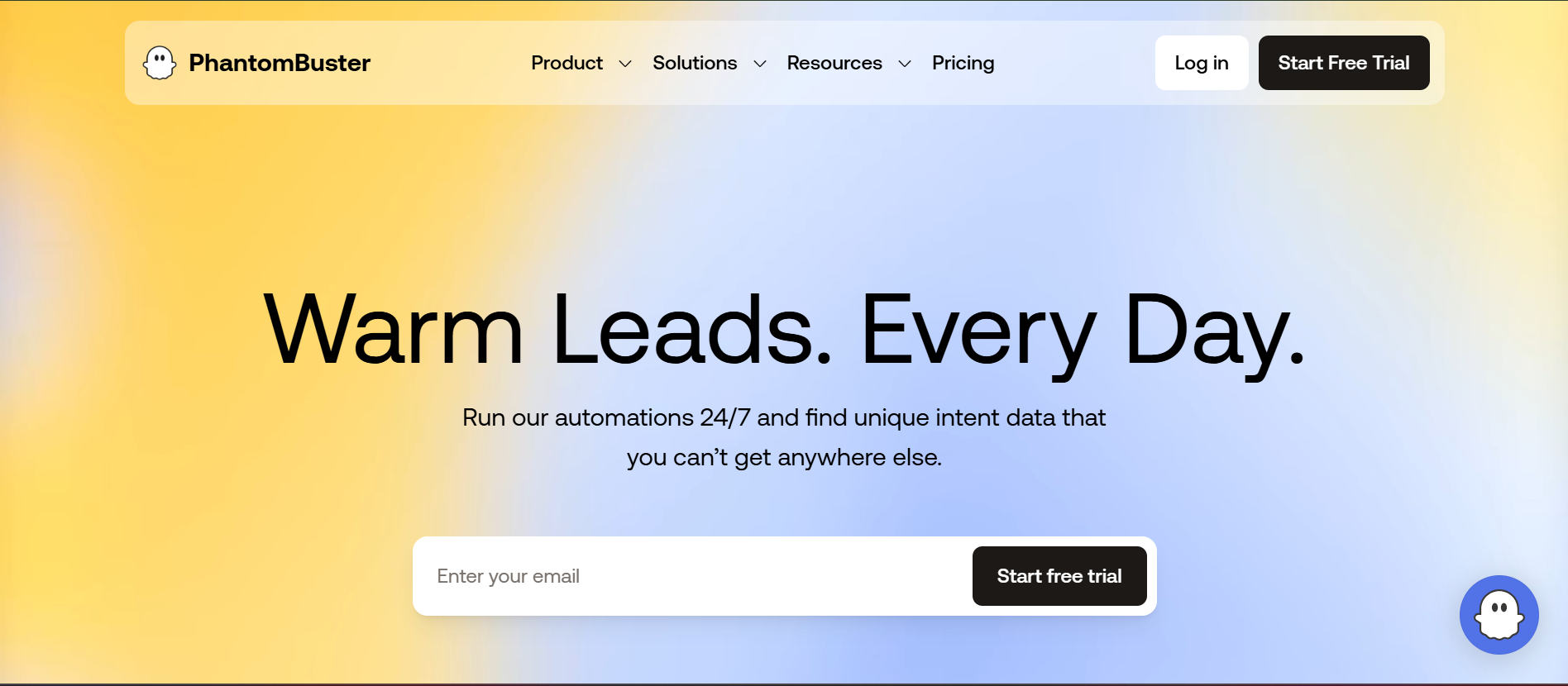
PhantomBuster is known for scraping and automating actions across LinkedIn and other platforms.
It helps you extract data and trigger automated workflows based on that data.
- Library of 150+ automation workflows (“Phantoms”)
- Extract LinkedIn profiles, search results, and engagement data
- Automate profile visits, connections, and messaging actions
- Cloud-based execution with scheduled workflows
It is useful for data extraction and automation, but it often requires combining with other tools for outreach and conversions.
Taplio — Content scheduling and engagement growth
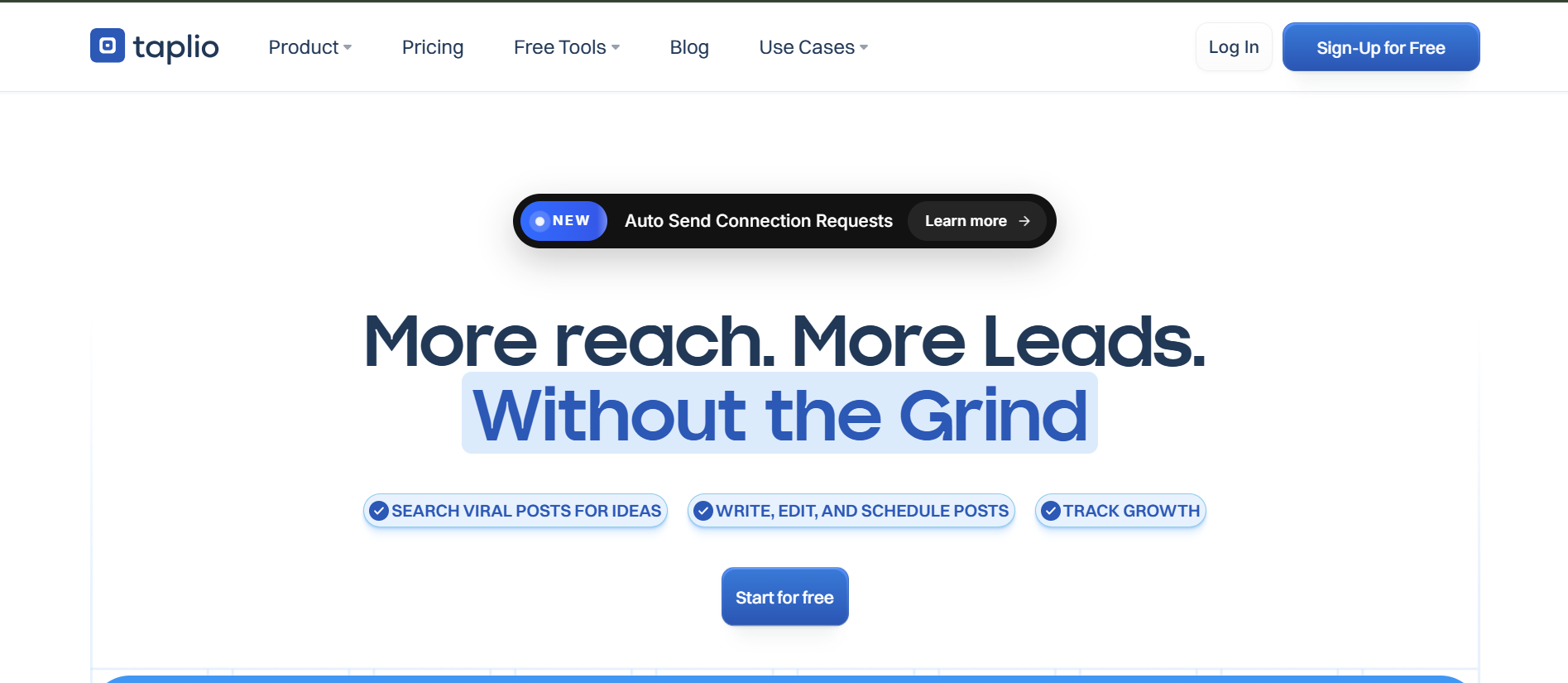
Taplio focuses on helping you grow your personal brand on LinkedIn through consistent content.
It is built for creators, founders, and marketers who rely on inbound lead generation.
- Access to 4M+ viral LinkedIn posts database for inspiration
- AI-powered post creation and scheduling
- Analytics for tracking engagement and performance
- Tools to engage with your audience efficiently
Taplio is great for content-driven growth, but it does not directly handle outbound lead generation or meeting booking.
EasyGen — AI-powered content creation for consistent posting
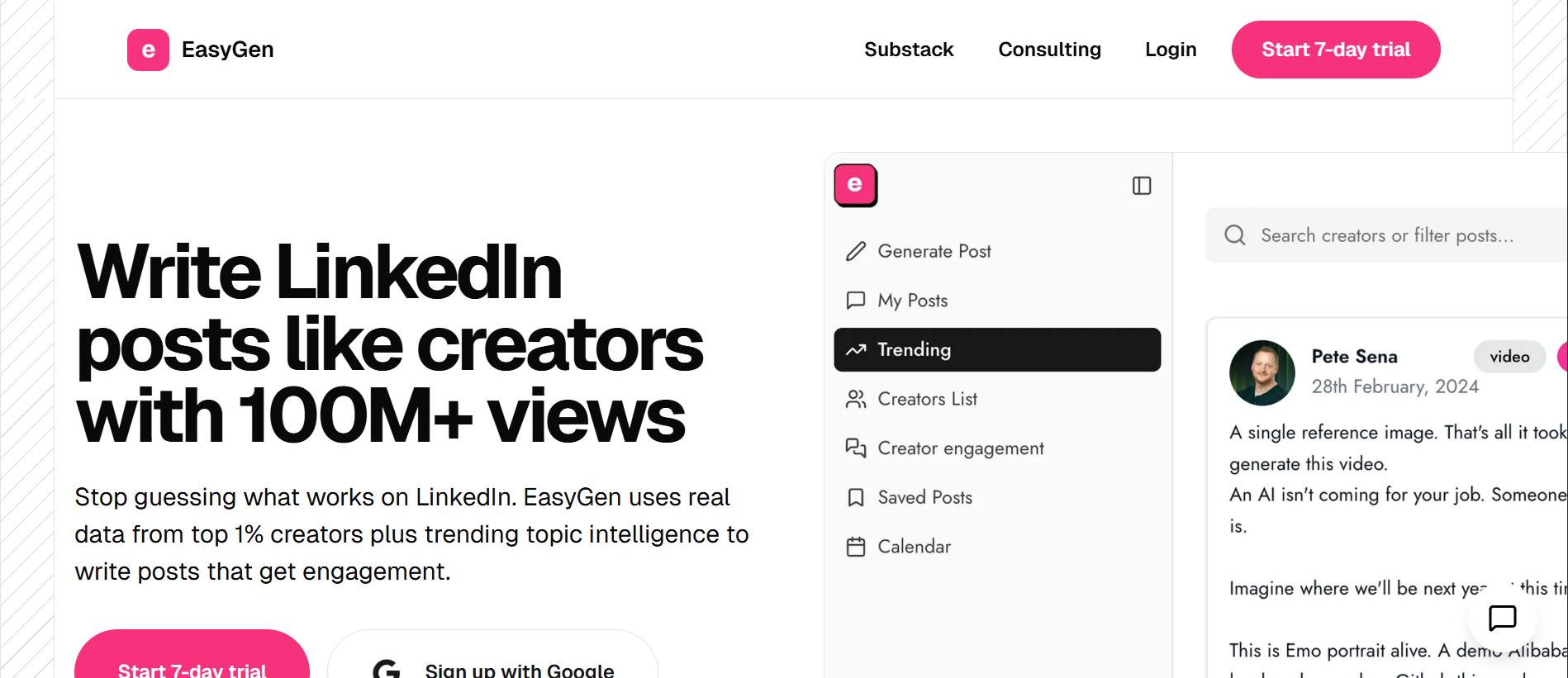
EasyGen is designed to help you create LinkedIn content quickly using AI.
It simplifies the process of turning ideas into posts without spending hours writing.
- Generate LinkedIn posts using AI prompts
- Maintain consistent posting without manual effort
- Simple workflow focused on speed and ease of use
- Built for founders and creators who want to stay active
EasyGen helps with visibility and engagement, but like other content tools, it plays a supporting role rather than directly driving meetings.
How to Choose the Right LinkedIn Marketing Tool for Your Goals
Now that you’ve seen the different LinkedIn marketing tools available, the real question is which one actually fits your workflow.
The right choice depends less on features and more on what outcome you are trying to achieve.
If your focus is lead generation vs content growth
Some tools are built to help you find and reach prospects, while others focus on building visibility through content.
If your goal is direct lead generation, you should prioritize tools that:
- Help you find decision-makers quickly
- Allow you to reach out at scale
- Support outbound campaigns
But if you are focused on inbound growth, content tools will help you:
- Stay consistent with posting
- Build authority in your niche
- Attract leads over time
The key is to avoid mixing both goals without a clear strategy, as they require different tools and timelines.
If you want automation vs manual control
Some LinkedIn marketing tools give you full automation, while others require hands-on execution.
If you prefer control, manual tools help you:
- Personalize every interaction
- Carefully manage outreach
- Experiment step by step
But automation becomes important when you want to scale.
- Automate repetitive tasks like follow-ups
- Run campaigns without daily effort
- Handle higher outreach volume efficiently
The trade-off is simple: more control means more time, while more automation means faster scaling.
If you need data enrichment along with outreach
Many tools only handle one part of the process.
You might find leads in one tool, enrich data in another, and run outreach somewhere else.
If your workflow looks like this, it can slow you down and create inconsistencies.
Instead, look for tools that combine:
- Lead generation
- Data enrichment
- Outreach execution
This reduces tool-switching and helps you maintain a cleaner, more efficient pipeline.
If your goal is booking meetings, not just engagement
This is where most LinkedIn marketing tools fall short.
Getting profile views, likes, or replies is useful, but it does not guarantee actual business outcomes.
If your goal is to book meetings, your tool should support:
- Multi-step follow-ups
- Multi-channel outreach (LinkedIn + email)
- Reply handling and qualification
- Direct meeting scheduling
This is the difference between tools that create activity and tools that drive results.
When you evaluate LinkedIn marketing tools with this lens, it becomes much easier to choose one that actually helps you generate leads and book meetings consistently.
Common Mistakes When Using LinkedIn Marketing Tools
Even with the right LinkedIn marketing tools, results don’t come automatically.
Most teams struggle not because of the tools they use, but because of how they use them.
Focusing only on content without outreach
Posting regularly can help you stay visible, but it rarely translates into consistent leads on its own.
Content builds awareness, not immediate conversations.
- You may get likes and comments but no qualified leads
- Your audience sees you, but you never initiate outreach
- Growth becomes slow and unpredictable
If you want meetings, you need to combine content with direct outreach.
Over-automating without personalization
Automation can save time, but overusing it makes your outreach feel robotic.
When messages look generic, people simply ignore them.
- Same message sent to everyone
- No reference to the prospect’s role or context
- Low reply rates despite high activity
Automation should support personalization, not replace it.
Not capturing or enriching lead data
Many people jump straight into outreach without building a solid lead foundation.
This leads to poor targeting and wasted effort.
- Reaching out to the wrong audience
- Missing key details for personalization
- Lower conversion rates
Clean and enriched data is what makes outreach effective in the first place.
Ignoring follow-ups after initial engagement
Most replies and meetings don’t come from the first message.
They come from consistent and well-timed follow-ups.
- Sending one message and stopping
- Missing warm leads who showed interest
- Losing opportunities due to lack of persistence
Follow-ups are where most conversions actually happen.
Using too many disconnected tools
One of the biggest mistakes is trying to stitch together multiple tools for different tasks.
It creates a fragmented workflow that is hard to manage and scale.
- One tool for leads, another for emails, another for LinkedIn
- Manual data transfer between platforms
- Inconsistent messaging and tracking
Instead of simplifying your process, it adds more complexity and slows you down.
Key Takeaways
Choosing the right LinkedIn marketing tools depends on your goal, not just features.
- Use lead generation tools for outreach, content tools for visibility
- Balance automation with personalization for better replies
- Focus on high-quality, enriched lead data
- Follow-ups are essential for converting leads into meetings
- Avoid using too many disconnected tools
The real advantage comes from using a system that handles the entire workflow, not just one part of it.
Frequently Asked Questions
1. What is the best LinkedIn marketing tool for generating leads?
The best LinkedIn marketing tool depends on your goal.
If you want end-to-end lead generation and meeting booking, you should look for tools that combine prospecting, outreach, and follow-ups instead of handling just one part of the process.
2. Can LinkedIn automation tools help you book meetings?
Most LinkedIn automation tools only help with sending messages.
To actually book meetings, you need tools that support multi-step follow-ups, reply handling, and ideally multi-channel outreach like LinkedIn plus email.
3. Is LinkedIn outreach still effective for B2B lead generation?
Yes, LinkedIn outreach is still highly effective when done right.
The key is targeting the right audience, personalizing your messages, and consistently following up instead of relying on one-time outreach.
4. Should you focus on content or outreach for LinkedIn lead generation?
Both play different roles, but they serve different timelines.
Content helps you build authority and attract inbound interest, while outreach helps you start conversations and generate leads faster.
5. What features should you look for in a LinkedIn marketing tool?
You should prioritize features that directly impact results, not just activity.
Look for tools that offer lead discovery, data enrichment, automated follow-ups, and the ability to manage the entire journey from prospecting to booked meetings.