45+ Trigger Words You Can Use in Sales, Marketing & Emails
In today’s crowded digital space, grabbing attention is harder than ever. People scroll fast, ignore ads, and delete emails without a second thought. This is where trigger words come in.
Trigger words are powerful, emotion-driven words or phrases that instantly capture attention and influence action. Whether you’re writing a sales email, landing page, or ad copy, the right words can significantly improve click-through rates, conversions, and engagement.
Let's get started,
What Are Trigger Words?
Trigger words are specific words or phrases that evoke an emotional or psychological response, prompting the reader to take action.
They work because they tap into:
- Curiosity
- Fear of missing out (FOMO)
- Trust and credibility
- Urgency
- Desire for gain or relief
👉 Example: Instead of saying “Check our product”, say: “Discover how you can save 50% today”
The second version triggers curiosity + value + urgency.
Why Trigger Words Matter in Sales, Marketing & Emails
Trigger words are not just about sounding persuasive—they help guide user behavior across every stage of the journey. From the moment someone sees your email to the point they take action, the right words influence how they think, feel, and respond.
1. Increase Open Rates (Emails)
Your subject line is your first—and often only—chance to grab attention. Trigger words like “Exclusive,” “Limited,” or “Today” tap into curiosity and urgency, making emails stand out in crowded inboxes.
Example:
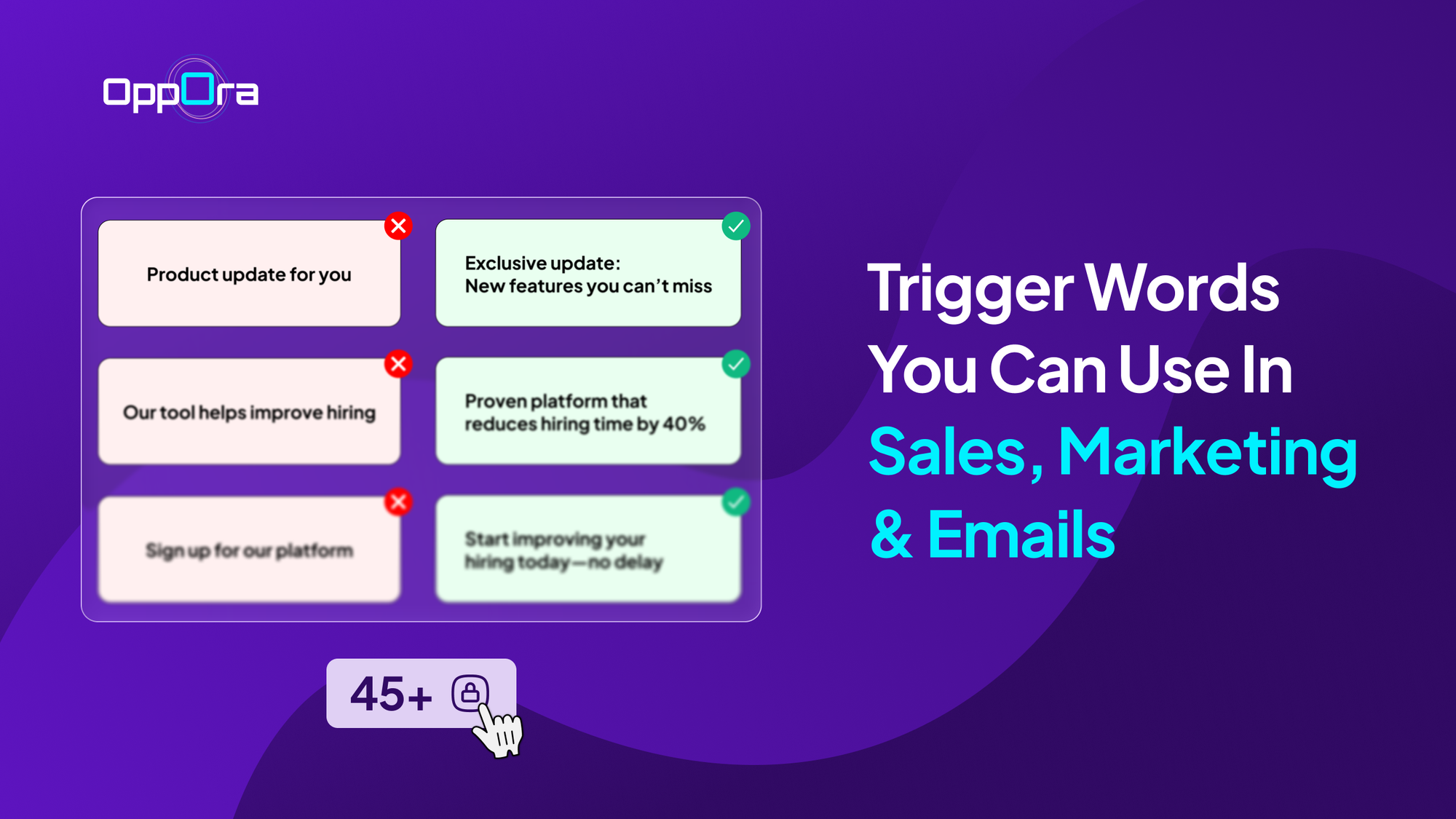
❌ “Product update for you”
✅ “Exclusive update: New features you can’t miss”
Even a small increase in open rates can significantly improve overall campaign performance.
2. Boost Conversions (Sales Pages)
- Once users land on your page, they need confidence to act. Words like “Proven,” “Guaranteed,” and “Results” reduce doubt and address common objections.
Example:
❌ “Our tool helps improve hiring”
✅ “Proven platform that reduces hiring time by 40%”
- By combining trust, value, and risk-reduction, trigger words help turn interest into action.
3. Improve Engagement (Marketing Content)
- In blogs, ads, and social posts, engagement depends on emotional connection. Trigger words make content more relatable and human by addressing user pain points and desires.
Example:
❌ “Hiring process challenges explained”
✅ “Frustrated with slow hiring? Here’s a smarter way” - This leads to higher engagement, better recall, and stronger trust.
4. Speed Up Decision-Making
- Users often delay decisions. Trigger words like “Now,” “Today,” and “Limited” create urgency and highlight immediate value, reducing hesitation.
Example:
❌ “Sign up for our platform”
✅ “Start improving your hiring today—no delay”
Bringing It All Together
Trigger words influence every stage of the user journey:
The Ultimate List of Trigger Words
Not all trigger words work the same way. Each category taps into a different psychological driver—urgency, curiosity, trust, emotion, or action. Understanding why they work helps you use them more effectively instead of just inserting them randomly.
Below is a deep dive into each category, along with how to use them strategically.
1. Urgency & Scarcity Trigger Words
These trigger words create a sense of FOMO (fear of missing out) and push users to act immediately rather than delay.
Why they work:
Humans are naturally wired to avoid loss more than seek gain. When something feels limited or time-bound, its perceived value increases.
Words like:
- Now
- Today
- Limited
- Hurry
- Last chance
- Closing soon
- Only X left
- Deadline
- Final call
signal that waiting = losing an opportunity.
How to use them effectively:
- Pair urgency with a clear benefit
- Use them in CTAs, subject lines, and banners
- Avoid fake urgency (users can sense it)
Example breakdown:
👉 “Last chance to book your demo today”
- “Last chance” → scarcity
- “Today” → urgency
- “Book your demo” → action
Pro Tip:
Combine urgency with numbers for stronger impact: 👉 “Only 5 demo slots left for today”
2. Curiosity Trigger Words
Curiosity-driven words make users feel like they’re missing important information, pushing them to click or read further.
Why they work:
The brain seeks closure. When there’s a knowledge gap, people feel compelled to fill it.
Words like:
- Secret
- Hidden
- Discover
- Revealed
- Unknown
- Insider
- What happens next
- Unlock
create an information gap.
How to use them effectively:
- Use in headlines, email subject lines, and ad copy
- Always deliver value (avoid clickbait)
- Combine with specificity for better results
Example breakdown:
👉 “Discover the hidden hiring strategy top companies use”
- “Discover” → curiosity
- “Hidden strategy” → exclusivity
- “Top companies” → authority
Pro Tip:
Curiosity works best when paired with credibility: 👉 “Insider hiring secrets used by Fortune 500 teams”
3. Value & Benefit-Based Trigger Words
These words focus on what the user gets, making your message outcome-driven rather than feature-driven.
Why they work:
Users don’t care about features—they care about results and benefits. These trigger words directly answer: 👉 “What’s in it for me?”
Words like:
- Save
- Boost
- Increase
- Grow
- Faster
- Easy
- Simple
- Proven
- Results
highlight efficiency, improvement, and outcomes.
How to use them effectively:
- Focus on specific results
- Quantify benefits whenever possible
- Keep messaging clear and simple
Example breakdown:
👉 “Boost your hiring speed by 2X with smarter sourcing”
- “Boost” → improvement
- “2X” → measurable value
- “Smarter sourcing” → solution
Pro Tip:
Specificity increases credibility: 👉 “Save 10+ hours per week on candidate screening”
4. Trust & Credibility Trigger Words
These words reduce doubt and build confidence, especially important in sales and decision-making stages.
Why they work:
Before taking action, users ask:
- “Can I trust this?”
- “Is this proven?”
- “Will it work for me?”
Trust-based trigger words directly answer these concerns.
Words like:
- Trusted
- Verified
- Backed
- Certified
- Proven
- Guaranteed
- Recommended
- Case study
act as risk reducers.
How to use them effectively:
- Support with evidence (numbers, testimonials, logos)
- Place them near CTAs and key decision points
- Avoid overclaiming without proof
Example breakdown:
👉 “Trusted by 1000+ recruiters worldwide”
- “Trusted” → credibility
- “1000+” → social proof
- “Worldwide” → scale
Pro Tip:
Stack trust signals for stronger impact: 👉 “Proven results backed by real customer case studies”
5. Emotional Trigger Words
These connect with users on a personal and emotional level, making your message more relatable and memorable.
Why they work:
Most decisions are emotion-driven first, logic-driven later. Emotional trigger words help users feel understood.
Words like:
- Effortless
- Stress-free
- Powerful
- Exciting
- Frustrating (problem-focused)
- Life-changing
- Confidence
tap into both:
- Pain points (frustration, stress)
- Aspirations (confidence, success)
How to use them effectively:
- Address a specific pain point or desire
- Use conversational language
- Avoid exaggeration
Example breakdown:
👉 “Make hiring stress-free and efficient”
- “Stress-free” → emotional relief
- “Efficient” → logical benefit
Pro Tip:
Combine pain + solution: 👉 “Tired of slow hiring? Make it effortless with automation”
6. Action-Oriented Trigger Words
These are direct commands that guide users on what to do next.
Why they work:
Even if users are interested, they may hesitate without clear direction. Action words remove that friction.
Words like:
- Get started
- Try now
- Book a demo
- Join
- Claim
- Access
- Start today
create a clear next step.
How to use them effectively:
- Use in buttons, CTAs, and closing lines
- Keep them short and direct
- Pair with urgency or value
Example breakdown:
👉 “Get started with smarter candidate sourcing today”
- “Get started” → action
- “Smarter sourcing” → value
- “Today” → urgency
Pro Tip:
Make CTAs benefit-driven: 👉 “Start saving time today” instead of just “Sign up”
How to Use Trigger Words Effectively
Using trigger words blindly won’t deliver results. The real impact comes from using them with context, clarity, and balance so they guide the user naturally instead of overwhelming them.
1. Match Words to User Intent
Every user is at a different stage in their journey, and your trigger words should align with that.
- In the awareness stage, users are exploring, so curiosity-driven words like “Discover” or “Learn” work best.
- In the decision stage, users need reassurance and a push, so combine urgency and trust with words like “Limited” or “Guaranteed”.
When your words match intent, your message feels relevant rather than pushy.
2. Avoid Overuse
One of the most common mistakes is stuffing too many trigger words into a single sentence. This makes your content feel spammy and reduces credibility.
❌ “Limited exclusive secret offer—buy now!!!”
✅ “Limited-time offer: Save 30% today”
The second example works because it’s clear, focused, and believable. Less is more when it comes to persuasion.
3. Combine Triggers for Impact
High-performing content rarely relies on just one type of trigger. Instead, it blends multiple psychological drivers.
- Curiosity + Value → “Discover how to reduce hiring costs”
- Urgency + Action → “Book your demo before slots fill”
This combination ensures your message not only grabs attention but also drives action.
4. Keep It Natural
Trigger words should feel like a natural part of the conversation, not forced marketing language. Write the way you speak—clear, simple, and human.
If your sentence sounds unnatural when read aloud, it likely needs refinement.
👉 The goal isn’t to “use trigger words”—it’s to communicate value in a way that resonates and converts.
Conclusion
Trigger words are a powerful tool when used with intention. They help you capture attention, build trust, and guide users toward action—but their real impact comes from how strategically you use them. By aligning trigger words with user intent, balancing clarity with persuasion, and combining emotional and logical cues, your messaging becomes far more effective.
When used correctly, trigger words evolve from simple phrases into conversion drivers that improve engagement, accelerate decisions, and deliver stronger overall results.
Frequently Asked Questions
What is the difference between trigger words and power words?
Trigger words are designed to drive action by tapping into psychology (urgency, fear, curiosity), while power words focus more on enhancing impact and persuasion in general writing.
Do trigger words work better in short-form or long-form content?
Trigger words are highly effective in both, but they perform best in high-impact areas like headlines, CTAs, and opening lines where attention matters most.
How do trigger words differ for B2B vs B2C audiences?
- B2B: Focus on logic-driven triggers like “Proven,” “Efficient,” “ROI”
- B2C: Lean more on emotional triggers like “Exciting,” “Life-changing,” “Instant”
Can AI tools help optimize trigger word usage?
Yes, AI tools can analyze performance data, suggest high-converting phrases, and personalize messaging—making trigger words more effective and contextually relevant.