9 Best AI Email Marketing Tools Ranked by Use Case & Performance

Email marketing isn’t broken, but the way you’re expected to run it probably is.
Writing emails, segmenting lists, following up, and tracking replies manually quickly becomes overwhelming as you try to scale.
That’s where AI email marketing tools step in, helping you automate outreach, personalize messages at scale, and improve reply rates without burning time or domains.
In this guide, you’ll discover:
- The best AI email marketing tools based on real use cases
- How each tool performs in actual outreach scenarios
- Which tool fits your workflow, goals, and scale best
Suggested Reading:
B2B Email Segmentation Strategy: 10 Proven Ways to Segment Your ListKey Features of AI Email Marketing Software
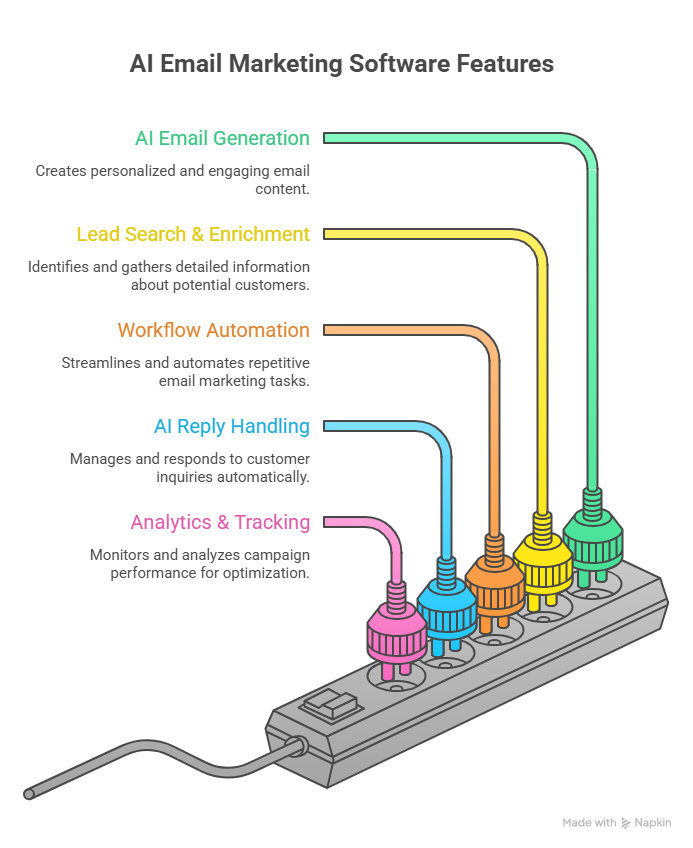
Once you start exploring different tools, you’ll notice they all promise automation and better results.
But what actually makes an AI email marketing tool effective comes down to a few core features that directly impact how fast you can scale and how well your campaigns perform.
AI Email Generation & Personalization
Writing emails manually for every prospect is where most of your time disappears.
AI solves this by generating emails that feel relevant and human, using data like job role, company, and intent signals to tailor each message without you rewriting copy every time.
This means you’re not just sending more emails, you’re sending messages that actually feel personal, which naturally improves reply rates.
Suggested Reading:
AI Email Personalization ToolsLead Search & Enrichment
Before you even send an email, the quality of your lead list determines everything.
AI tools help you find the right people and enrich their data with details like company size, role, and verified email addresses, removing the need to manually research every prospect.
As a result, your targeting becomes sharper, and you spend your effort reaching people who are more likely to respond.
Workflow Automation & Campaign Building
Running campaigns manually is not just slow, it’s inconsistent and hard to scale.
AI email marketing tools let you build workflows with sequences, delays, triggers, and follow-ups so your outreach keeps running in the background without constant monitoring.
Once set up, your campaigns continue executing step by step, ensuring no lead is missed and no follow-up is forgotten.
AI Reply Handling & Meeting Booking
Handling replies is where most workflows break, especially when volume increases.
AI can read incoming responses, understand intent, and reply automatically while qualifying leads and sharing booking links, so conversations move forward without waiting on you.
This speeds up the entire process from first email to booked meeting while keeping interactions timely and relevant.
Analytics & Campaign Performance Tracking
Without clear data, improving your campaigns becomes guesswork.
AI tools track metrics like open rates, replies, and conversions, giving you a clear view of what’s working and what’s not across your campaigns.
With these insights, you can double down on winning messages, fix weak spots, and continuously improve performance without relying on assumptions.
How We Ranked These AI Email Marketing Tools
With so many tools claiming to “automate everything,” it’s easy to get lost in feature lists that don’t reflect real usage.
So instead of surface-level comparisons, we focused on how these tools actually perform when you try to run and scale outreach campaigns.
Here’s the criteria we used to rank them.
Ease of Use & Setup Speed
The first thing that matters is how quickly you can go from signup to sending your first campaign.
We looked at how simple the interface feels, how smooth the onboarding is, and whether you can launch without needing technical skills or spending hours setting things up.
Tools that let you start fast without friction scored higher here.
Automation Depth & AI Capabilities
Not all AI tools actually automate your workflow, some just help you write emails.
We evaluated how much of the process each tool handles, from lead generation and sequencing to reply handling and optimization, instead of just assisting with one part.
The more complete and hands-off the automation, the higher the ranking.
Deliverability & Inbox Placement
Even the best emails don’t matter if they land in spam.
We analyzed how each tool protects your sender reputation through features like email warmup, inbox rotation, domain health monitoring, and smart sending limits.
Tools that consistently improve inbox placement and reduce risk ranked higher.
Pricing & Cost Efficiency
Pricing isn’t just about how much you pay, it’s about what you actually get for it.
We compared whether tools offer transparent pricing, flexible plans, and the ability to scale without running into hidden limits like shared credits, seat restrictions, or capped sending.
Better value and predictable costs made a big difference in rankings.
Scalability & Multi-Use Flexibility
As your outreach grows, your tool should grow with you, not slow you down.
We evaluated how well each platform supports multiple inboxes, team collaboration, agency workflows, and larger campaigns without adding complexity or breaking processes.
Tools that handle scale smoothly without constant adjustments ranked the highest.
9 Best AI Email Marketing Tools (Ranked by Use Case)
Not every AI email marketing tool is built for the same purpose, and that’s where most comparisons go wrong.
Some tools focus on writing emails, others on lead data, while a few try to handle the entire outreach workflow from start to finish.
Instead of comparing everything blindly, this list breaks down tools based on what they actually do best, so you can quickly find the one that fits your workflow.
1. Oppora
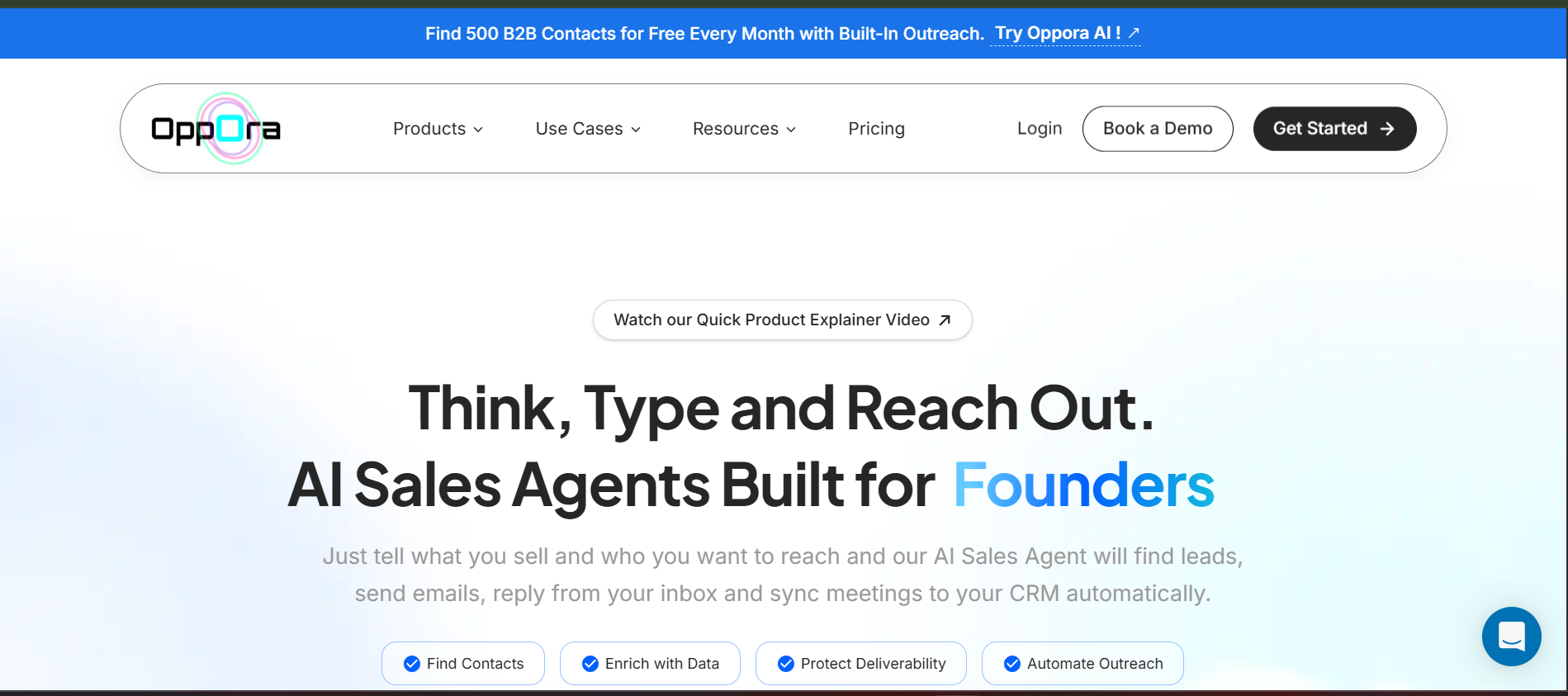
If you’re tired of juggling multiple tools just to run one campaign, this is where things start to change.
Oppora.ai is built to replace the entire outbound process, not just assist with one part of it, so you’re not switching between tools for leads, emails, follow-ups, and replies.
You still get everything you expect from a typical lead generation platform:
- Access to 1B+ contact database
- Verified emails and phone numbers
- Advanced targeting filters like job changes, hiring signals, funding events, industry, and company size
But the real value shows up after the leads are found.
Instead of stopping at data, Oppora helps you turn those leads into conversations automatically by handling outreach end to end:
- Write and send personalized emails using AI
- Run automated follow-ups without manual effort
- Handle replies and book meetings directly from your inbox
So instead of stitching together separate tools, you’re running one complete outbound system.
It also comes with deeper automation layers that most tools don’t cover:
- AI campaign builder that executes workflows automatically
- AI-generated replies that continue conversations without delays
- Multi-inbox support (3 to 50 accounts) with built-in warm-up for safe scaling
This makes it especially useful if you’re trying to scale outreach without increasing manual workload or risking deliverability.
Pricing is another area where it stands out.
While many tools limit you with shared credits or expensive tiers, Oppora keeps things more flexible and scalable:
- Free plan available
- Paid plan starts from $34/month for up to 10,000 email lookup credits and unlimited cold emails
- Flexible add ons for specific use cases
2. Instantly
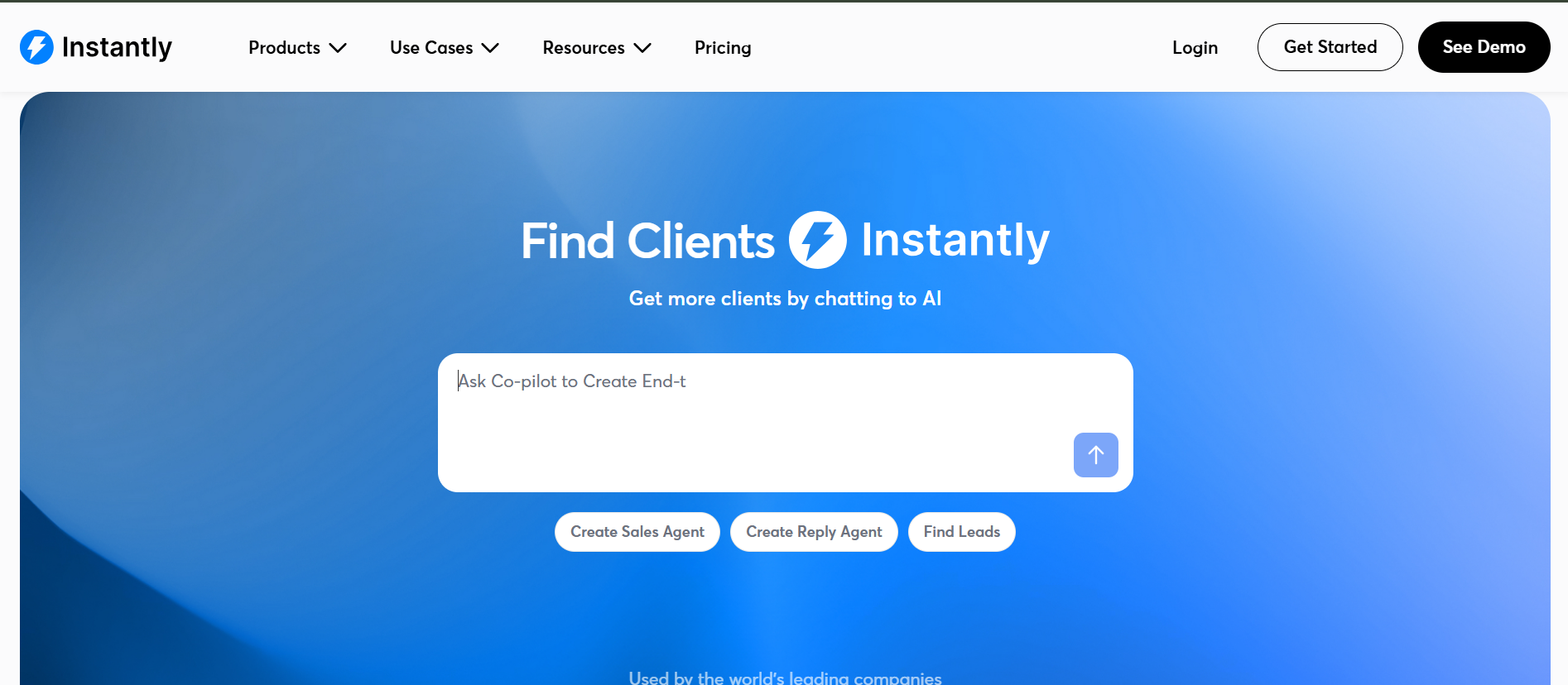
If your strategy depends on sending thousands of emails daily, Instantly is built to handle that scale.
It focuses heavily on infrastructure, helping you manage and send across multiple inboxes without damaging deliverability.
Some of the key strengths that make it stand out for volume-focused teams:
- Supports sending at scale across multiple inboxes
- Built-in inbox rotation to distribute sending load
- Email warm-up to maintain domain health
- Focus on inbox placement and deliverability optimization
This makes it a strong fit for agencies and teams running high-volume outbound where consistency and safe scaling matter more than deep AI automation.
3. Apollo
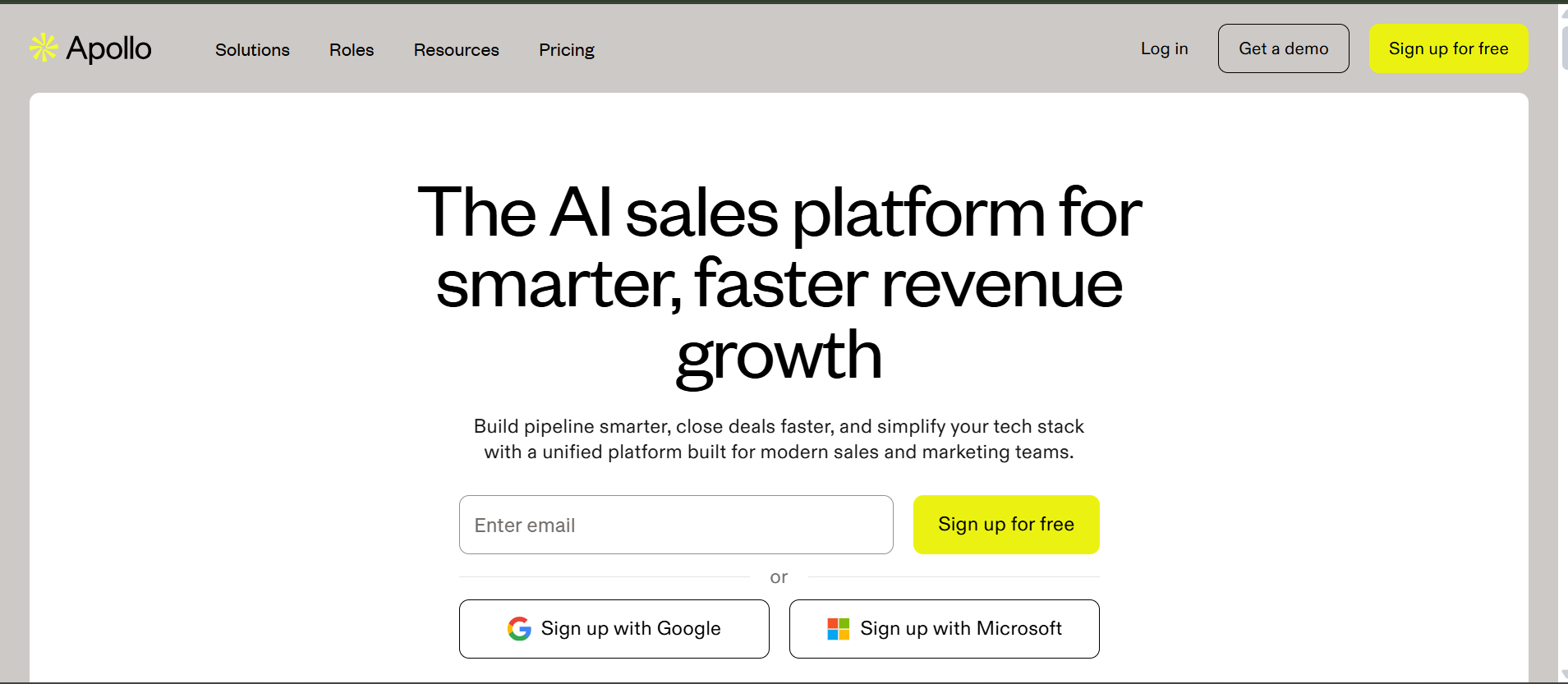
If you want both prospect data and outreach in one place, Apollo offers a balanced setup.
It combines a large B2B database with built-in sequencing, so you can move from finding leads to contacting them without switching tools.
Here’s where it stands out:
- Access to a large database of 200M+ contacts
- Built-in filters for job roles, industries, and company size
- Email sequencing and basic automation features
- Chrome extension for quick lead capture
This works well for teams that want a simple all-in-one solution, even if the automation depth is not as advanced as more AI-driven platforms.
4. Lemlist
When your goal is to stand out rather than send more, Lemlist focuses on creative personalization.
It helps you craft emails that feel tailored and engaging, especially in competitive inbox environments.
Key capabilities include:
- Personalized images and dynamic visuals in emails
- Custom variables for deeper personalization
- Multi-step email sequences with creative control
- Engagement-focused campaign design
This makes it ideal for teams that prioritize response quality and engagement over pure sending volume.
5. Smartlead
As your outreach grows, managing multiple inboxes becomes a challenge, and Smartlead is designed to solve that.
It gives you the infrastructure to scale campaigns safely while maintaining deliverability across accounts.
Important features that support scaling:
- Unlimited or high-volume inbox connections
- Automated inbox rotation for safer sending
- Built-in email warm-up and deliverability controls
- Centralized campaign management across inboxes
This makes it especially useful for agencies or teams handling multiple clients and running large-scale campaigns simultaneously without breaking workflows.
Suggested Reading:
Smartlead Alternatives6. Snov.io
If you’re just getting started and don’t want to invest heavily upfront, Snov.io offers a more affordable entry point.
It covers the basics well, helping you find, verify, and reach out to leads without needing multiple tools.
Here’s what you get at a lower cost:
- Email finder and domain search capabilities
- Built-in email verification to reduce bounce rates
- Basic email campaign and sequencing features
- Chrome extension for quick lead collection
This makes it a solid choice for freelancers and small teams that need essential functionality without complex workflows.
7. Mailshake
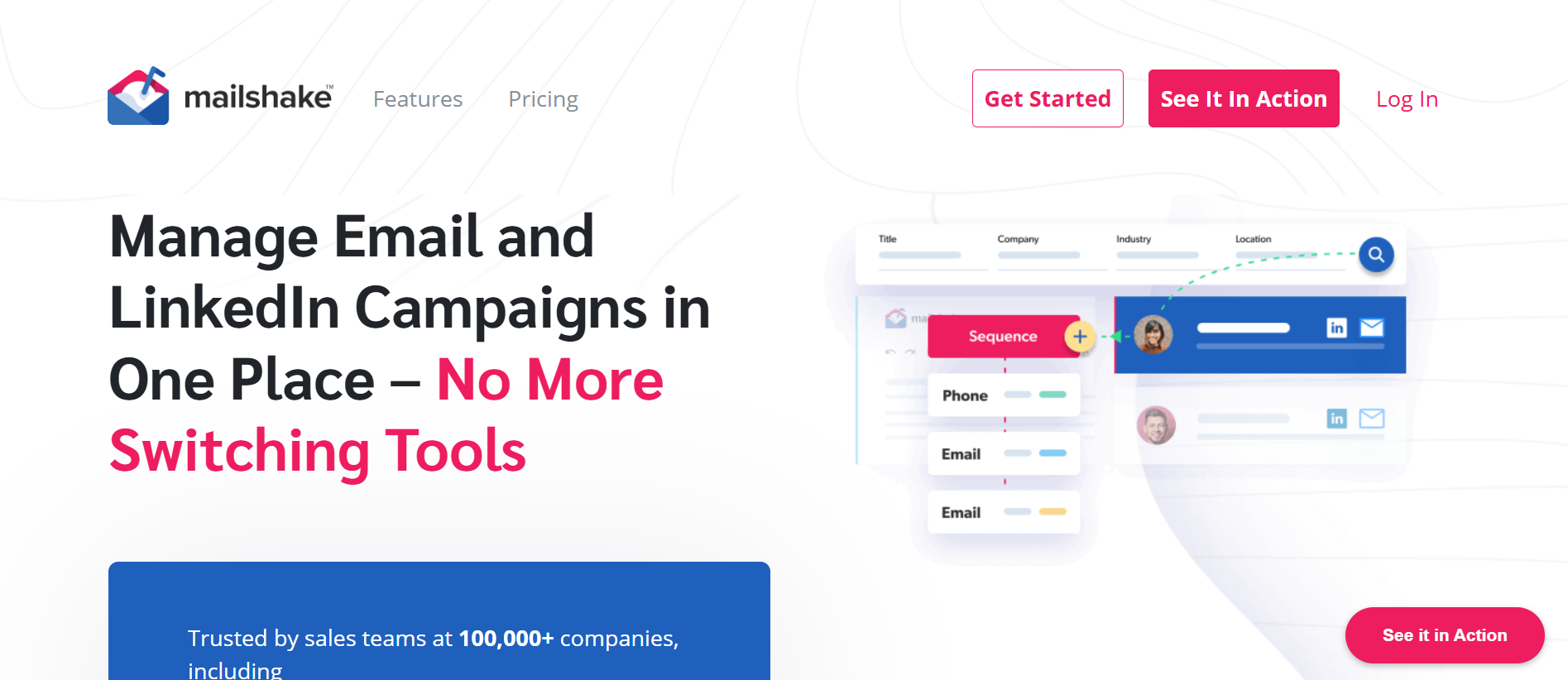
If you prefer simplicity over advanced features, Mailshake keeps things straightforward.
It’s designed for users who want to launch campaigns quickly without dealing with complicated setups or overwhelming dashboards.
Key features that make it easy to use:
- Simple campaign builder with guided setup
- Pre-built templates for faster email creation
- Basic automation for follow-ups
- Clear and minimal interface for managing campaigns
This makes it ideal for beginners or teams that want a no-friction tool to run outreach without a learning curve.
8. Woodpecker
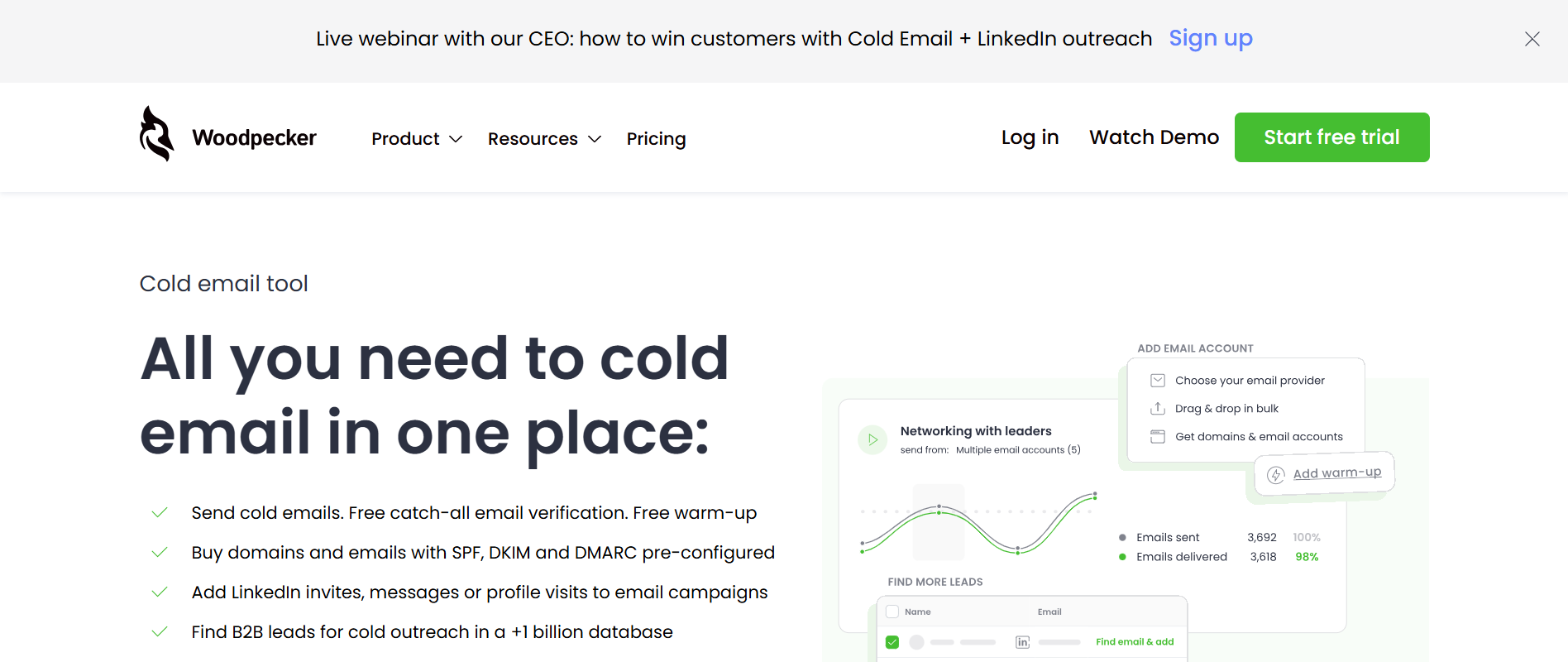
When your priority is making sure emails land in the inbox, Woodpecker focuses on safe sending practices.
It helps you maintain a healthy sender reputation while running consistent outreach campaigns.
Important deliverability-focused features include:
- Controlled sending limits to avoid spam triggers
- Automated follow-ups with smart timing
- Reply detection to stop sequences automatically
- Email verification and bounce protection
This makes it a good fit for teams that are more cautious about spam risks and want stable, long-term deliverability.
9. Reply.io
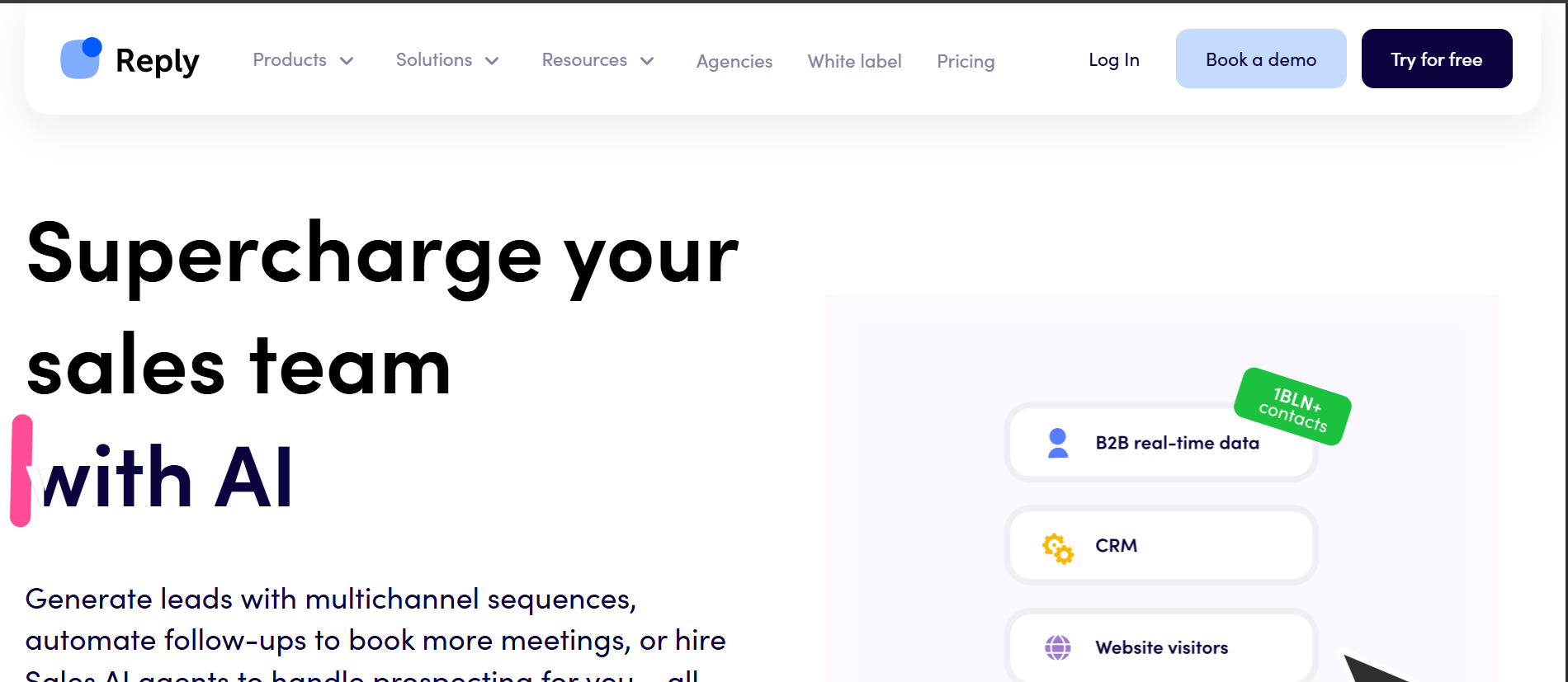
If your outreach goes beyond just email, Reply.io helps you manage multiple channels in one place.
It combines email, LinkedIn, and calls so you can create more touchpoints across your campaigns.
Key capabilities for multi-channel outreach:
- Email sequences combined with LinkedIn steps
- Call tasks and reminders within workflows
- AI-assisted email writing and personalization
- Centralized dashboard to manage all interactions
This makes it ideal for teams running coordinated outreach strategies where connecting across channels increases response rates.
How to Choose the Right AI Email Marketing Tool
Choosing the right tool becomes easier when you focus on your workflow instead of feature lists.
You don’t need the “most advanced” tool, you need the one that aligns with how you plan to use it.
Start with these factors:
- Goal: Are you optimizing for volume, replies, or full automation?
- Budget: Check for hidden limits like credits, inbox caps, or scaling costs
- Team size: Solo users need simplicity, while teams need collaboration and control
- Automation level: Decide if you need help with emails or a system that runs everything
When you evaluate tools this way, the right choice becomes clear without overthinking every option.
Conclusion
Choosing the right AI email marketing tool isn’t about picking the most popular option, it’s about finding what fits your workflow.
Some tools help you send more emails, while others help you automate the entire process from leads to meetings.
Focus on what actually moves your business forward:
- Better replies
- More booked meetings
- Consistent pipeline growth
When you prioritize outcomes over features, the right tool becomes an obvious choice.
Frequently Asked Questions
1. What is an AI email marketing tool?
An AI email marketing tool helps you automate tasks like writing emails, finding leads, sending campaigns, and handling replies.
Instead of doing everything manually, you can run outreach faster while keeping messages personalized and relevant.
2. Do AI email tools really improve reply rates?
Yes, but only when used correctly.
AI improves personalization, timing, and follow-ups, which increases the chances of getting replies compared to generic, manual campaigns.
3. Can I use AI email tools without technical knowledge?
Most modern tools are built for non-technical users.
You can set up campaigns, create workflows, and start outreach without coding or complex integrations.
4. Are these tools safe for email deliverability?
Good tools include features like email warm-up, inbox rotation, and sending limits to protect your domain.
If used properly, they actually improve deliverability instead of harming it.
5. Which AI email marketing tool is best for me?
There’s no one-size-fits-all answer.
The best tool depends on your goal, whether it’s sending volume, improving personalization, or fully automating outreach from lead generation to meeting booking.