10 Best B2B Database Tools for High-Volume Lead Generation
Finding high-quality leads at scale is one of the biggest challenges in outbound today.
A B2B database tool helps you access verified contact and company data, so you can focus on outreach instead of manual research. But not all tools deliver accurate, up-to-date information consistently.
When your pipeline depends on volume and precision, the right tool can make or break your results.
That’s why choosing the best B2B database tool isn’t just a tech decision—it directly impacts how fast and effectively you grow your pipeline.
Key Features to Look for in a Top B2B Database Tool
Before you choose a tool, you need to know what actually impacts results.
The best B2B database tools stand out based on data accuracy, depth of enrichment, automation capabilities, and transparent pricing. These factors directly influence how efficiently you find, qualify, and convert leads at scale.
Data Accuracy and Coverage
Accurate data is the foundation of successful outbound campaigns.
If your emails are outdated or incorrect, you’ll see higher bounce rates, damaged sender reputation, and lost opportunities.
The best tools offer verified contacts, frequent updates, and strong global coverage, so you can confidently target the right people across industries without wasting outreach effort.
Lead Enrichment Capabilities
Basic contact data only gets you started, but enrichment helps you go deeper.
The best tools add firmographics, technographics, and intent signals to every lead, giving you context beyond just name and email. This allows you to target smarter, personalize outreach better, and focus on prospects most likely to convert.
Search Filters and Segmentation
Advanced filters help you narrow down exactly who you want to reach without wasting effort on irrelevant leads.
You can segment prospects using filters like job title, company size, industry, location, revenue, and even technology usage.
This level of precision ensures your outreach stays highly relevant, improves personalization, and ultimately drives better response rates and stronger campaign performance.
Email Verification and Deliverability Support
Email verification plays a critical role in keeping your outreach effective and out of spam folders.
Top B2B database tools offer real-time validation to ensure emails are active and safe to contact before you send anything.
Combined with deliverability features like domain checks and inbox rotation, this helps protect your sender reputation, reduce bounce rates, and ensure your emails consistently land where they should—in the primary inbox.
Pricing Model (Credits vs Unlimited)
Pricing directly impacts how far and how fast you can scale your outbound.
Credit-based models charge per contact or action, which can quickly limit volume and make costs unpredictable.
Unlimited plans, on the other hand, give you more freedom to experiment and scale without constant constraints, making them a better fit for high-volume teams focused on consistent pipeline growth.
Check This Out:
B2B Lead Generation ToolsQuick Comparison Table for B2B Database Tools
Before diving deeper into individual tools, it helps to quickly compare how they stack up side by side.
Here’s a simple breakdown of popular B2B database tools based on features, pricing models, and ideal use cases, so you can identify what fits your outbound strategy best.
10 Best B2B Database Tools for High-Volume Lead Generation
Now that you know what features matter, let’s look at the tools that actually deliver on them.
This list of the best B2B database tools is based on scalability, data quality, features, and pricing flexibility. Each tool serves different needs, whether you're an agency, SaaS team, or running high-volume outbound campaigns.
1. Oppora.ai (Best All-in-One Platform for B2B Data and Outreach)
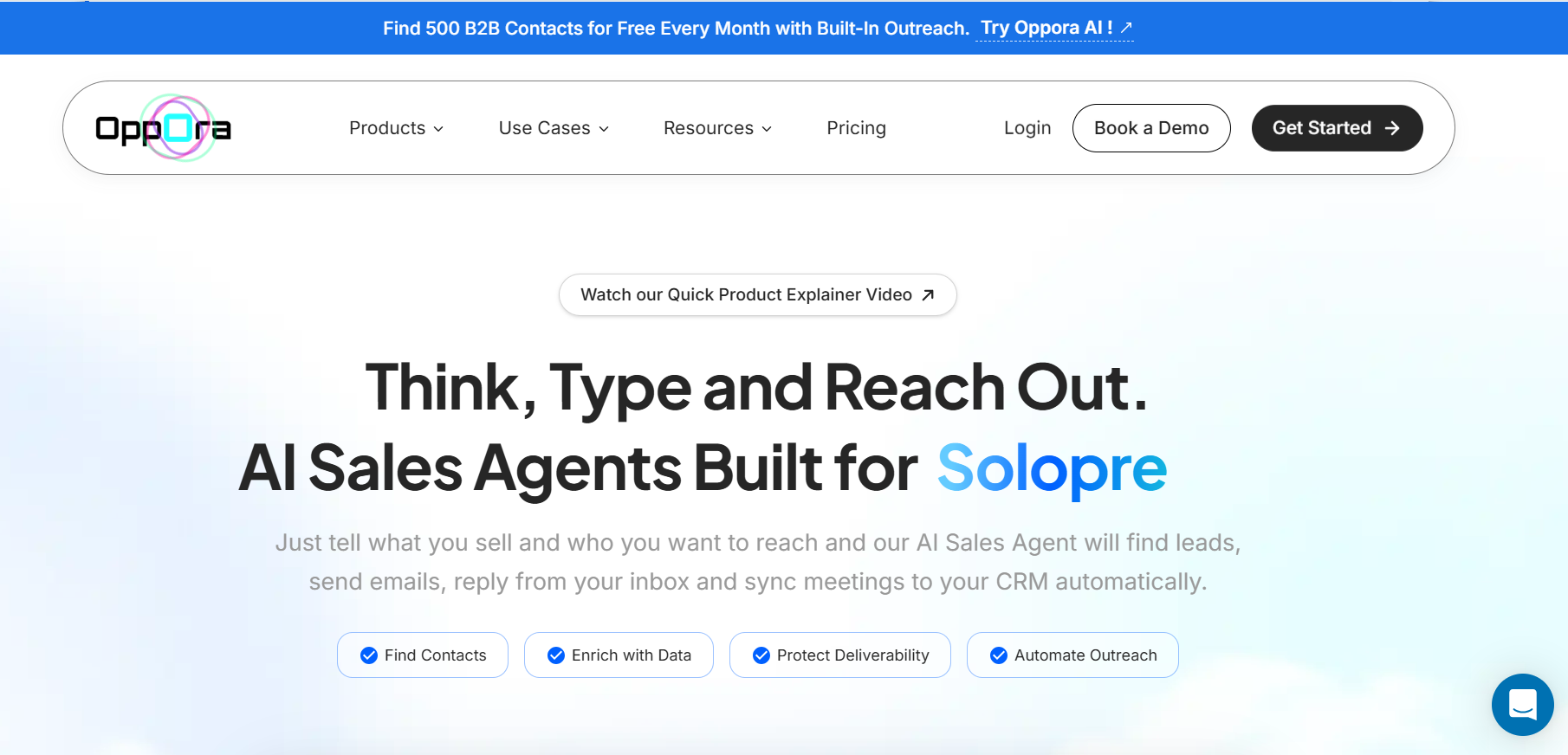
Oppora.ai is a B2B database and outreach platform built for teams that need scale, accuracy, and automation. You get access to 700M+ verified contacts, but it goes beyond data by helping you enrich, segment, and fully automate your outreach for high-volume lead generation.
Key Features
Built to handle data, targeting, and execution at scale:
- Access to 700M+ verified contacts using waterfall data sources
- Real-time enrichment with firmographics, job roles, and company insights
- Built-in email verification to keep bounce rates low
- Advanced filters like funding round, last funding date, company type, skills, etc
- Continuous data refresh to keep lead lists accurate
- CRM sync to manage and activate thousands of leads
Pricing
Clear and scalable pricing based on usage:
- $7 → 1,000 data credits (data-only)
- $34/month → 5,000 emails + lead access
- $79/month → up to 10,000 emails + full features
- Unlimited lead access included in paid plans
- Separate credit buckets for data and outreach
Pros
- Single pricing covers data, outreach, and automation
- Credits roll over, so unused volume is not wasted
- Separate credit buckets for data and outreach tasks
- Cost-efficient compared to using multiple tools
Cons
- Still expanding in some niche segments
- Requires initial setup
- Best for outbound-focused teams
2. Bookyourdata (Best Pay-As-You-Go B2B Database)
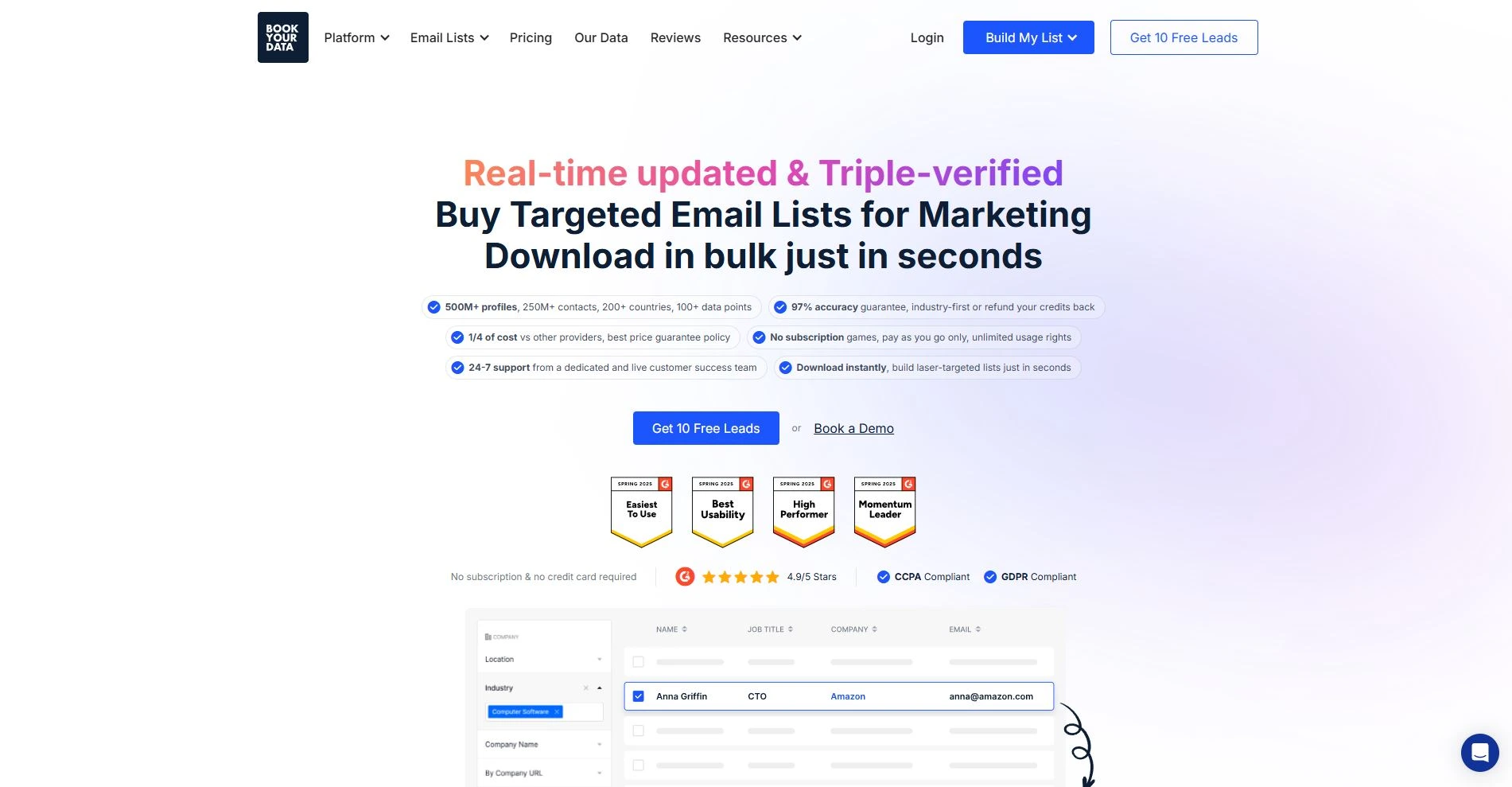
Bookyourdata is a B2B contact database platform designed for teams that need verified business contacts without committing to monthly subscriptions.
Unlike many competitors that rely on recurring contracts or credit-heavy plans, Bookyourdata allows users to purchase data on demand. This makes it particularly useful for agencies, recruiters, consultants, startups, and sales teams that need flexibility in how they source leads.
Key Features
- Pay-as-you-go pricing model
- Access to millions of B2B contacts
- Real-time email verification
- Advanced filtering by industry, location, job title, and company size
- Direct email and phone number access
- Buyer intent and firmographic data
- Global contact coverage
Pros
- No subscription required
- Flexible purchasing model
- Verified contact information
- Easy-to-use interface
- Suitable for occasional and large-scale prospecting
Cons
- No built-in email sequencing
- Limited sales engagement capabilities compared to Apollo
- Fewer workflow automation features than Oppora.ai
3. ZoomInfo (Enterprise-Grade Sales Intelligence Platform)
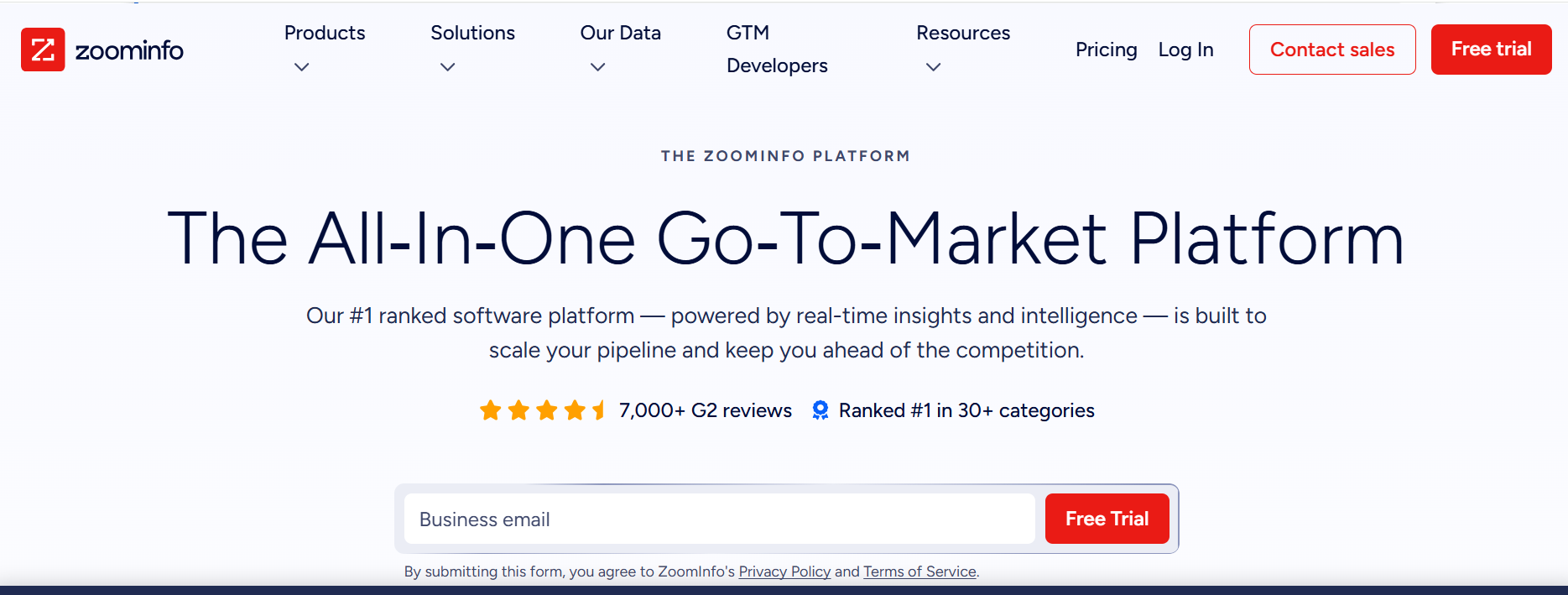
ZoomInfo is built for large sales teams that need deep insights and precise targeting. It provides detailed company and contact data along with intent signals, helping you identify high-value prospects and prioritize outreach at scale.
Key Features
Built for advanced targeting and enterprise workflows:
- Detailed company profiles with firmographic insights
- Extensive contact database with verified information
- Buying intent signals to identify ready-to-convert leads
- Advanced filters for precise segmentation
- CRM integrations for seamless workflow management
- Continuous data updates to maintain accuracy
Pros
- Highly detailed and reliable data at scale
- Strong targeting with intent-based insights
- Ideal for enterprise and large sales teams
- updates improve data freshness
Cons
- Expensive compared to most alternatives
- Often requires long-term contracts
- Can feel complex for smaller teams
4. Cognism (Compliance-Focused Contact Data Platform)
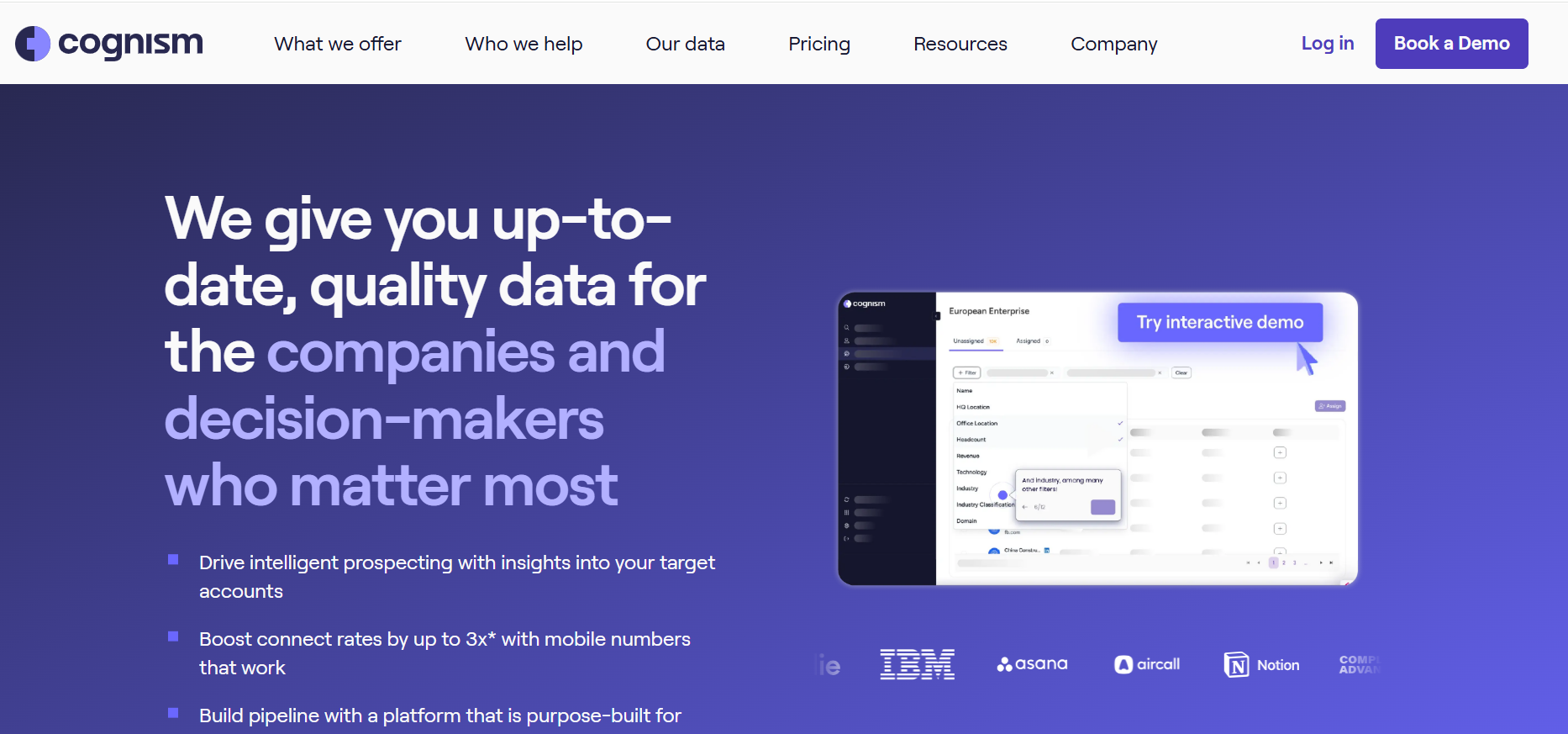
Cognism is designed for teams that prioritize compliant data, especially in European markets. It helps you access accurate contact information while staying aligned with regulations like GDPR, making it a strong choice for risk-aware outbound teams.
Key Features
Built for compliant and reliable prospecting:
- Verified phone numbers and high-quality contact data
- Strong coverage across European markets
- GDPR-compliant data sourcing and handling
- Intent data to identify active buyers
- CRM integrations for smooth workflow management
- Global database with regular data updates
Pros
- Strong compliance with GDPR and data regulations
- Reliable contact data in European regions
- Includes phone numbers for multi-channel outreach
- Good fit for compliance-focused teams
Cons
- More expensive than many alternatives
- Limited depth in some non-European regions
- May not suit budget-conscious teams
5. Lusha (Simple Lead Lookup Tool)
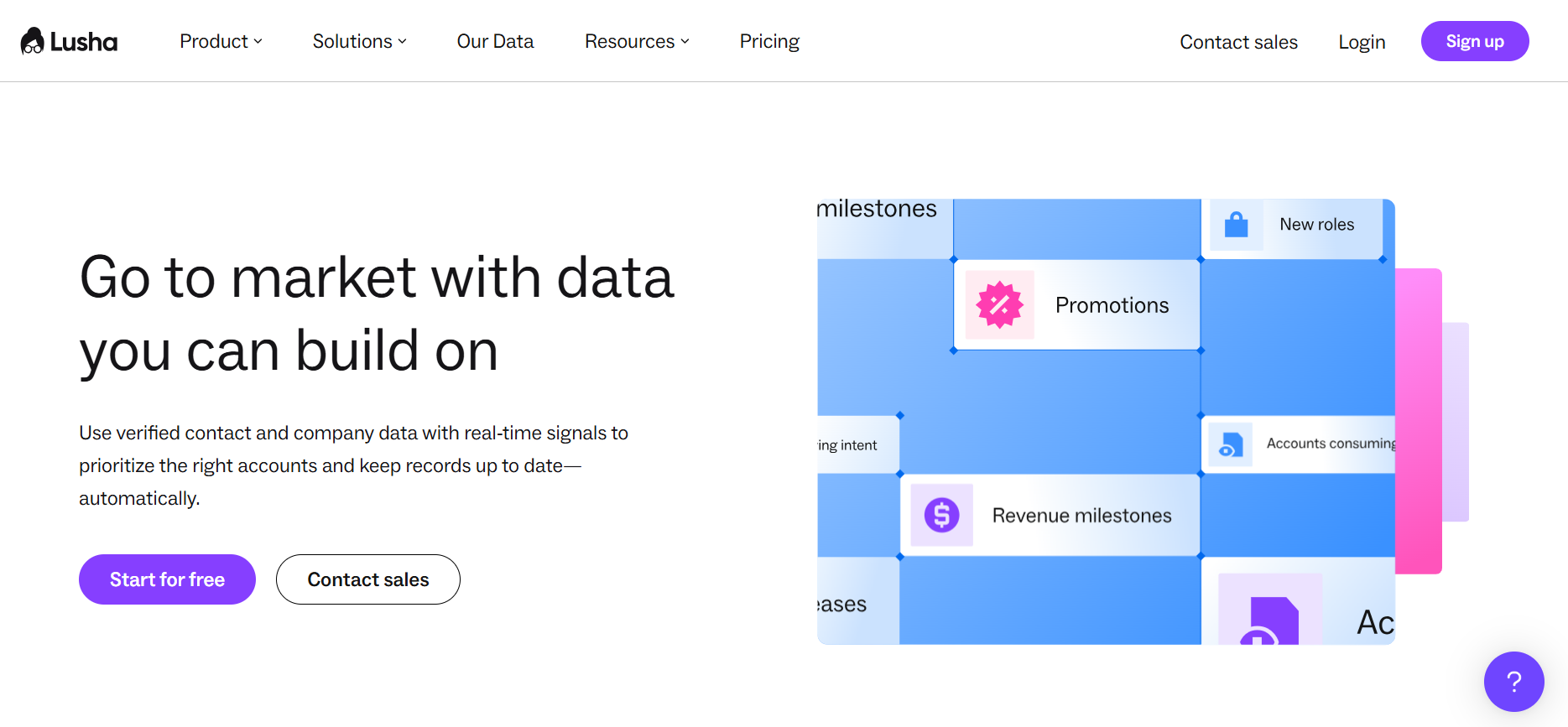
Lusha is a lightweight tool built for sales reps who need quick access to contact details. It helps you find emails and phone numbers instantly without complex setup, making it ideal for fast, day-to-day prospecting tasks.
Key Features
Focused on speed and simplicity:
- Browser extension for instant contact lookup
- Access to emails and phone numbers quickly
- Basic lead enrichment for added context
- CRM integrations for easy data sync
- Simple interface with minimal setup required
Pros
- Very easy to use and quick to get started
- Great for quick, on-the-go prospecting
- Clean interface with minimal learning curve
- Works well as a lightweight add-on tool
Cons
- Limited advanced filtering capabilities
- Lacks automation for scaling outreach
- Not ideal for high-volume outbound teams
Check This Out:
Top Lusha Alternatives6. Seamless.AI (Real-Time Prospecting Platform)
Seamless.AI is built for teams that need a constant flow of new leads. It uses AI-driven search to find contacts in real time, helping you continuously discover prospects and build targeted lead lists without manual effort.
Key Features
Designed for ongoing prospect discovery:
- AI-powered search to find leads instantly
- Real-time contact discovery and updates
- Large database for continuous prospecting
- CRM integrations for easy workflow sync
- List-building tools for quick segmentation
- Ongoing data refresh to keep lists updated
Pros
- Strong for real-time lead generation
- Large volume of accessible contacts
- Helps maintain a steady pipeline
- Easy to build and update lead lists
Cons
- Data accuracy can be inconsistent
- Credit-based usage limits scaling
- Requires verification for best results
7. UpLead (High-Accuracy Contact Data Tool)
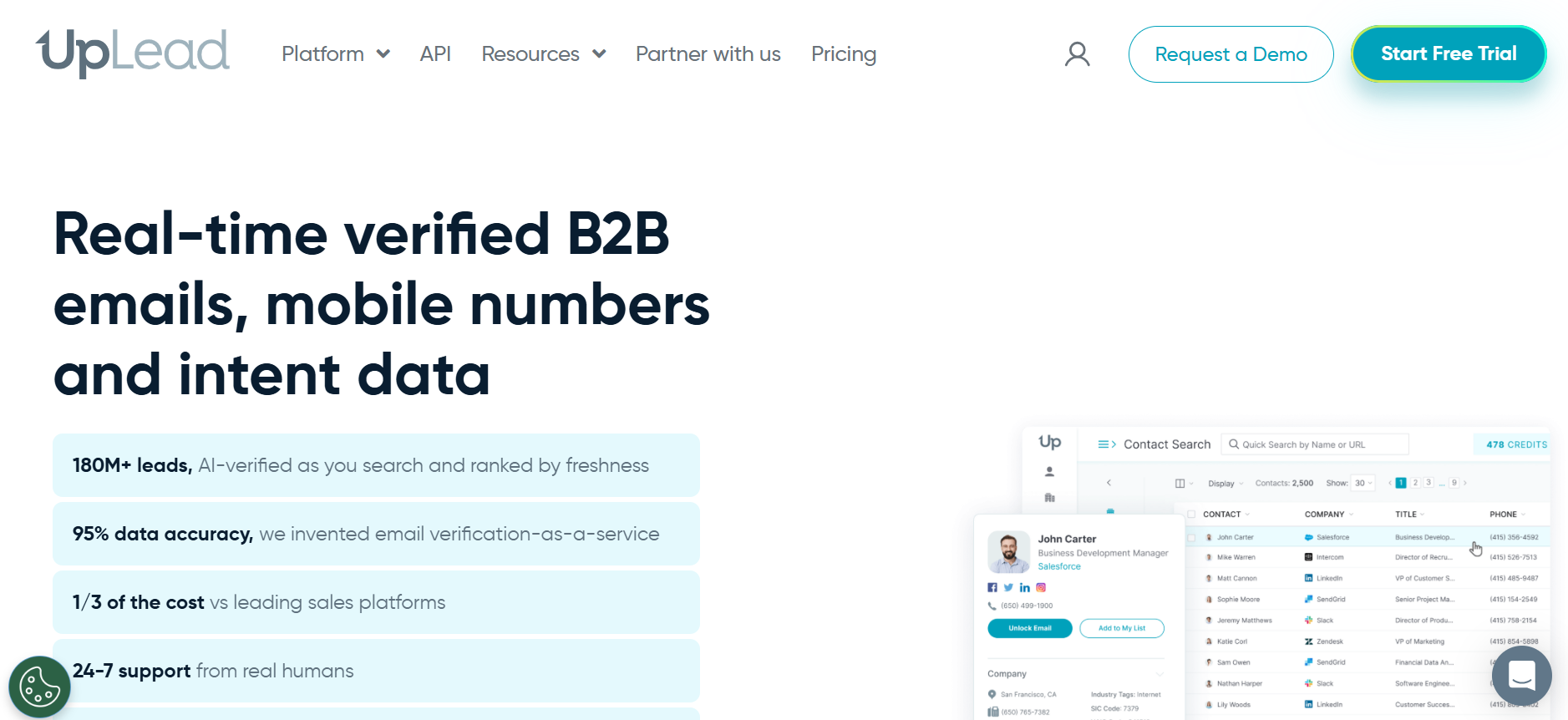
UpLead is built for teams that care most about data accuracy. It provides verified contact information to help you reduce bounce rates and improve email performance, making your outbound campaigns more reliable and effective.
Key Features
Focused on accuracy and clean data:
- Real-time email verification before export
- High-quality contact data with strong accuracy
- Advanced filters for precise targeting
- Company insights for better context
- CRM integrations for smooth data sync
- Simple interface for quick prospecting
Pros
- High accuracy compared to many tools
- Real-time verification reduces bounce rates
- Easy to use with clean interface
- Reliable for quality-focused campaigns
Cons
- Smaller database compared to competitors
- Credit-based pricing limits scale
- Fewer advanced features for automation
8. Snov.io (Affordable Outreach and Prospecting Tool)
Snov.io is a budget-friendly platform designed for startups and small teams. It combines email finding, outreach, and basic CRM features, making it easier to run simple outbound campaigns without investing in multiple expensive tools.
Key Features
Built for simple and affordable outreach:
- Email finder to discover contact details quickly
- Drip campaigns for automated email sequences
- Basic lead tracking to monitor engagement
- Simple automation for outreach workflows
- Chrome extension for easy prospecting
- CRM features to manage leads in one place
Pros
- Affordable pricing for small teams
- Easy to use with minimal setup
- Combines prospecting and outreach in one tool
- Good starting point for beginners
Cons
- Limited advanced features for scaling
- Smaller database compared to larger tools
- Basic automation capabilities only
9. Clay (Flexible Data Workflow Platform)
Clay is built for teams that want more control over their data workflows. Instead of just providing contacts, it helps you combine multiple data sources, enrich leads, and automate processes to build highly customized outbound systems.
Key Features
Designed for flexibility and customization:
- Integrations with multiple data providers
- Custom enrichment workflows for deeper insights
- Automation tools to streamline data processes
- Ability to combine and transform data sources
- API and no-code workflows for flexibility
- Real-time data updates across workflows
Pros
- Highly flexible for custom use cases
- Powerful enrichment and automation capabilities
- Works well with multiple data sources
- Ideal for advanced outbound teams
Cons
- Steeper learning curve for new users
- Requires setup and experimentation
- Not a plug-and-play database tool
10. LeadIQ (Sales Prospecting and Capture Tool)
LeadIQ is designed to help sales teams capture and organize leads while prospecting. It makes it easy to collect contact data and sync it directly into your CRM, so you can move faster without manual data entry.
Key Features
Built for quick lead capture and organization:
- Browser extension for capturing leads instantly
- One-click CRM sync for seamless data transfer
- Basic enrichment to add context to contacts
- Prospect tracking during outreach workflows
- Simple interface for easy adoption
Pros
- Easy to capture and organize leads
- Smooth CRM integration and syncing
- Speeds up manual prospecting tasks
- Simple and quick to use
Cons
- Lacks deep database capabilities
- Limited advanced filtering options
- Not ideal for large-scale prospecting
Check This Out:
B2B Outbound Lead Generation StrategiesHow to Choose the Top B2B Database Tool for Your Team
When selecting a B2B database tool, consider the following points:
- Team Size & Workflow: Choose a tool that fits your team’s structure and daily processes.
- Budget: Ensure pricing aligns with your resources and expected ROI.
- Features & Integrations: Look for lead accuracy, CRM syncing, and automation capabilities.
- Outbound Volume & Growth: Match the tool to your prospecting scale and expansion plans.
- Ease of Use & Scalability: Prioritize tools that are easy to adopt and grow with your team.
- Data Compliance & Security: Ensure the tool adheres to data privacy regulations and protects sensitive information.
- Support & Training: Look for reliable customer support and onboarding resources to get your team up to speed fast.
- Analytics & Reporting: Choose a tool that offers actionable insights to track performance and optimize outreach effectiveness.
Conclusion
Choosing the right B2B database tool is more than a technical decision—it directly impacts lead quality, outreach efficiency, and revenue growth.
A reliable platform ensures accurate data, scalable campaigns, and seamless workflows. Evaluating tools with your long-term goals in mind helps avoid wasted effort and missed opportunities.
For teams looking to simplify and automate their outbound strategy while maintaining high-quality leads, Oppora.ai provides an end-to-end solution that streamlines data, outreach, and follow-ups, allowing you to focus on growth without compromising efficiency or accuracy.
Frequently Asked Questions
1. What is a B2B database tool and how does it work?
A B2B database tool helps businesses find and access contact and company data for prospecting. It allows teams to search, filter, and export leads based on specific criteria, making it easier to build targeted lists for outbound campaigns and sales outreach.
2. What is the best B2B database tool for high-volume lead generation?
The best B2B database tool depends on your needs. Some platforms focus on data accuracy, while others offer full automation. Teams doing high-volume outreach should choose a solution that supports scalability, reliable data, and efficient workflow management.
3. How accurate are B2B contact databases?
Accuracy varies between tools. Some platforms provide real-time verification, while others rely on static datasets. Choosing a reliable data provider is important because accurate contact information reduces bounce rates, improves deliverability, and increases the success of outbound campaigns.
4. What features should I look for in a top B2B database tool?
A top B2B database tool should offer accurate data, advanced search filters, enrichment capabilities, and email verification. It should also support scalability and integrate with your workflow, helping your team manage lead generation and outreach more efficiently.
5. Can small teams use B2B database tools effectively?
Yes, small teams can benefit from using a B2B data platform. Many tools offer simple interfaces and affordable plans. Choosing the right solution helps smaller teams find leads faster, improve targeting, and run outbound campaigns without needing large resources.