12 B2B Lead Scraper Tools With Email and Phone Extraction
b2b lead scraper
Most B2B lead generation tools promise bigger prospect lists.
But the real challenge is finding accurate emails and phone numbers without wasting hours on manual research or outdated data.
That’s where B2B lead scraper tools become useful.
Some help you pull verified contacts from LinkedIn and company websites.
Others combine scraping, enrichment, verification, and outreach in one workflow so your team can move faster with less manual work.
In this guide, you’ll discover:
- Different types of B2B lead scraper tools
- Features that actually matter before buying
- 12 tools for extracting emails and phone numbers at scale
What is a B2B Lead Scraper?
A B2B lead scraper is a tool that helps you collect business contact data from platforms like LinkedIn, company websites, directories, and public databases.
Instead of manually searching for prospects one by one, these tools automate the process.
Most B2B lead scrapers can extract:
- Work email addresses
- Phone numbers
- Company information
- Job titles
- LinkedIn profiles
- Technology and firmographic data
The goal is simple.
Help sales teams, agencies, recruiters, and founders build prospect lists faster without spending hours on research.
Some tools focus only on scraping data.
Others combine lead discovery with enrichment, email verification, outreach automation, and CRM syncing in one workflow.
That’s why choosing the right type of scraper matters more than just picking the biggest database.
Suggested Reading:
10 Best B2B Phone Number Finder Platforms Compared (2026)Types of B2B Lead Scraper Tools
Not every lead scraper works the same way.
Some are built for large contact databases.
Others specialize in LinkedIn scraping or outbound automation.
Understanding the differences helps you avoid paying for features you may never use.
Database and Sales Intelligence Platforms
These tools provide access to massive B2B contact databases.
You can search companies and decision-makers using filters like:
- Industry
- Company size
- Revenue
- Job title
- Hiring activity
- Technologies used
Platforms like Oppora, Apollo.io, ZoomInfo, and UpLead fall into this category.
They usually include built-in email verification, intent data, enrichment, and export functionality.
These tools work well if you need large-scale prospecting with structured filtering.
Especially for outbound sales teams running consistent campaigns.
Suggested Reading:
10 Best B2B Database Tools for High-Volume Lead GenerationLinkedIn and Web Scraping Tools
These tools focus more on extracting data directly from LinkedIn, websites, and online directories.
Instead of relying entirely on static databases, they pull information from live sources.
Tools like PhantomBuster, Skrapp.io, and GetProspect are commonly used for this.
They’re useful when you want highly targeted lead lists from niche industries or specific LinkedIn searches.
Many also support Chrome extensions that let you scrape profiles while browsing.
The downside is that some scraping tools still require separate enrichment or verification tools afterward.
So the workflow can become fragmented as you scale.
Suggested Reading:
How to Generate B2B Leads on LinkedIn Without Manual ProspectingEnrichment and Outreach Workflow Tools
This category goes beyond scraping.
These platforms combine lead extraction with enrichment, verification, outreach, inbox management, and automation.
Instead of moving leads between multiple tools, the entire workflow runs in one place.
Oppora focuses heavily on this workflow-driven approach.
Its AI sales agents can automate prospecting, enrichment, email writing, replying, LinkedIn outreach, and CRM syncing inside one workflow system.
This type of setup becomes useful when your outbound process starts growing beyond simple lead collection.
Key Features That Matter Most in a B2B Lead Scraper Tool
Many lead scraping tools look similar on the surface.
But once you start using them daily, the differences become obvious very quickly.
Here are the features that actually matter.
Accurate Email and Phone Extraction
The biggest problem with cheap lead scrapers is inaccurate data.
Invalid emails increase bounce rates.
Wrong phone numbers waste SDR time.
A good tool should prioritize verified business contacts instead of scraped junk data.
Waterfall enrichment and multiple data providers usually improve accuracy significantly.
Real-Time Verification and Enrichment
Finding contact information is only half the process.
You also need to verify whether the data is still active.
Many modern platforms now include:
- Real-time email verification
- Company enrichment
- Buying signals
- Job change tracking
- Funding data
- CRM syncing
This keeps your lead lists cleaner and more actionable.
Especially at scale.
Bulk Scraping and Export Capabilities
Manually exporting leads one by one becomes painful very quickly.
Strong scraping tools should support:
- Bulk extraction
- CSV exports
- Bulk email verification
- Batch enrichment
- API access
The faster you can move data into your outbound workflow, the easier scaling becomes.
Automation and Workflow Capabilities
This is where many newer platforms are evolving.
Businesses no longer want separate tools for:
- Finding leads
- Verifying contacts
- Writing emails
- Sending campaigns
- Managing replies
They want connected workflows.
Platforms like Oppora now combine scraping, enrichment, outreach, and AI-powered follow-up automation inside one system.
That reduces manual work significantly for lean sales teams.
Pricing and Scalability for Growing Teams
Lead generation costs can increase very fast as your outreach volume grows.
Some platforms charge separately for:
- Lead credits
- Verification
- Outreach
- Team seats
- Exports
Others bundle everything into unified pricing models.
You should also check whether unused credits roll over and whether scaling requires expensive plan upgrades.
Compliance, Privacy, and Data Quality Considerations
Scraping contact data comes with compliance responsibilities.
Especially when handling personal emails or international outreach.
Look for platforms that support standards like:
- GDPR
- CCPA
- SOC 2
You should also verify how frequently their databases are updated.
Because even large databases become useless if the data quality drops over time.
12 B2B Lead Scraper Tools With Email and Phone Extraction
Now that you know what separates a good lead scraper from a bad one, the next step is choosing the right platform for your workflow.
Some tools are built for large databases.
Others focus on LinkedIn scraping, enrichment, or outbound automation.
Here are some of the most widely used B2B lead scraper tools for extracting emails and phone numbers.
1. Oppora
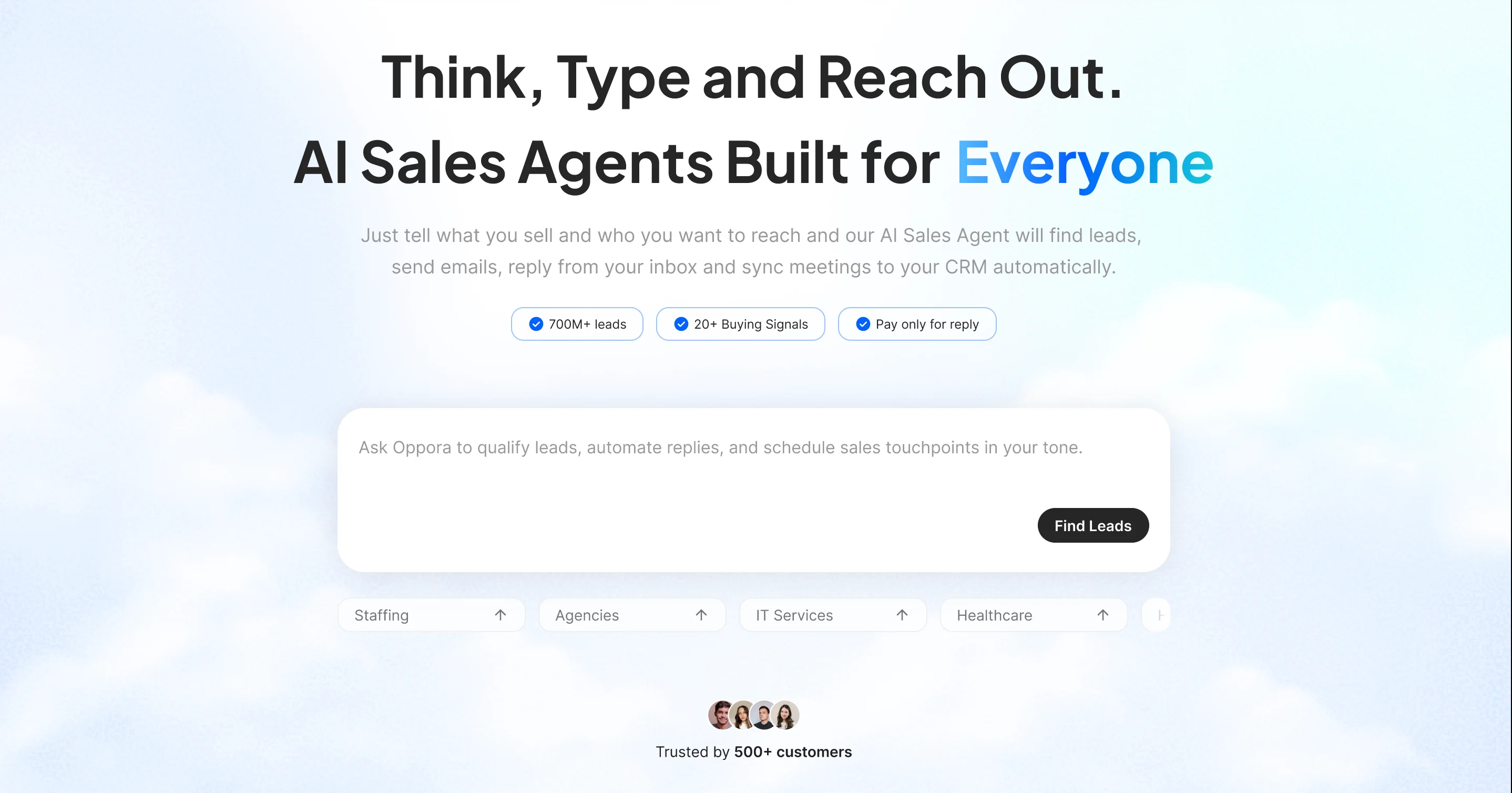
Oppora is more than a traditional lead scraper.
It is an AI Outbound sales agent that combines lead discovery, enrichment, email verification, LinkedIn outreach, AI email writing, inbox management, and CRM syncing inside one workflow-driven platform.
Instead of using separate tools for scraping, outreach, and follow-ups, you can manage the entire outbound workflow from one place.
That makes it especially useful for founders, agencies, SDR teams, and lean outbound teams trying to scale without adding operational complexity.
Standout Features
- 1B+ lead database with verified contact data
- Multi-source database and real-time web search
- Built-in email verification and enrichment workflows
- AI sales agents for prospecting, outreach, replies, and CRM syncing
- LinkedIn outreach automation inside outbound workflows
- Unlimited campaigns and email sending on paid plans
- Separate credits for different tasks instead of one shared credit pool
Price
Oppora offers a free plan alongside paid plans starting at $34/month, offering 10K verified emails.
There are also smaller add-on credit packs for teams that only need email or enrichment credits without upgrading plans.
2. Apollo.io
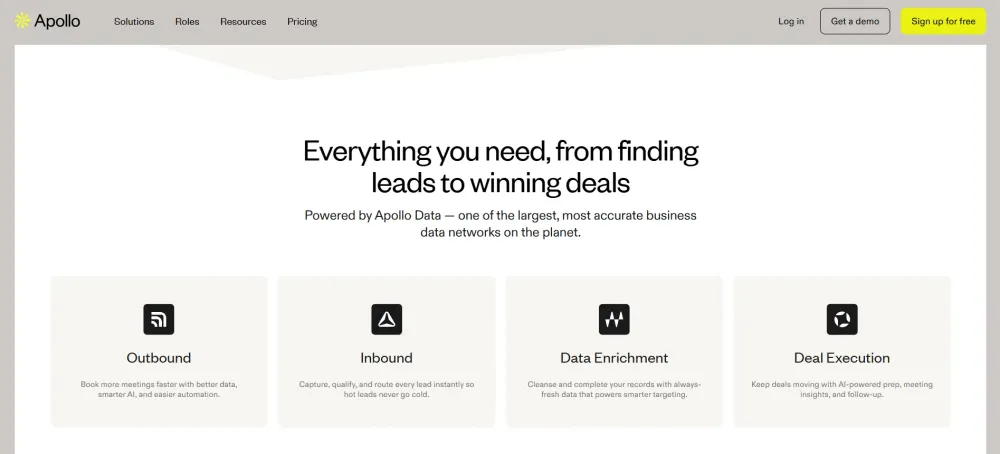
Apollo.io is one of the most popular B2B prospecting platforms for outbound sales teams.
It combines a large contact database with sequencing, enrichment, intent signals, and CRM integrations.
Many startups use Apollo because it offers both prospecting and outreach inside one platform without enterprise-level pricing.
Standout Features
- Large B2B contact and company database
- Advanced filtering for job titles, funding, hiring activity, and technologies
- Built-in email sequencing and outreach tools
- Chrome extension for LinkedIn prospecting
- Intent data and buying signals
Price
Apollo offers a limited free plan.
Paid plans typically start around $49/month per user depending on credits and outreach volume.
Suggested Reading:
5 Best Apollo.io Alternatives for B2B Lead Generation3. ZoomInfo
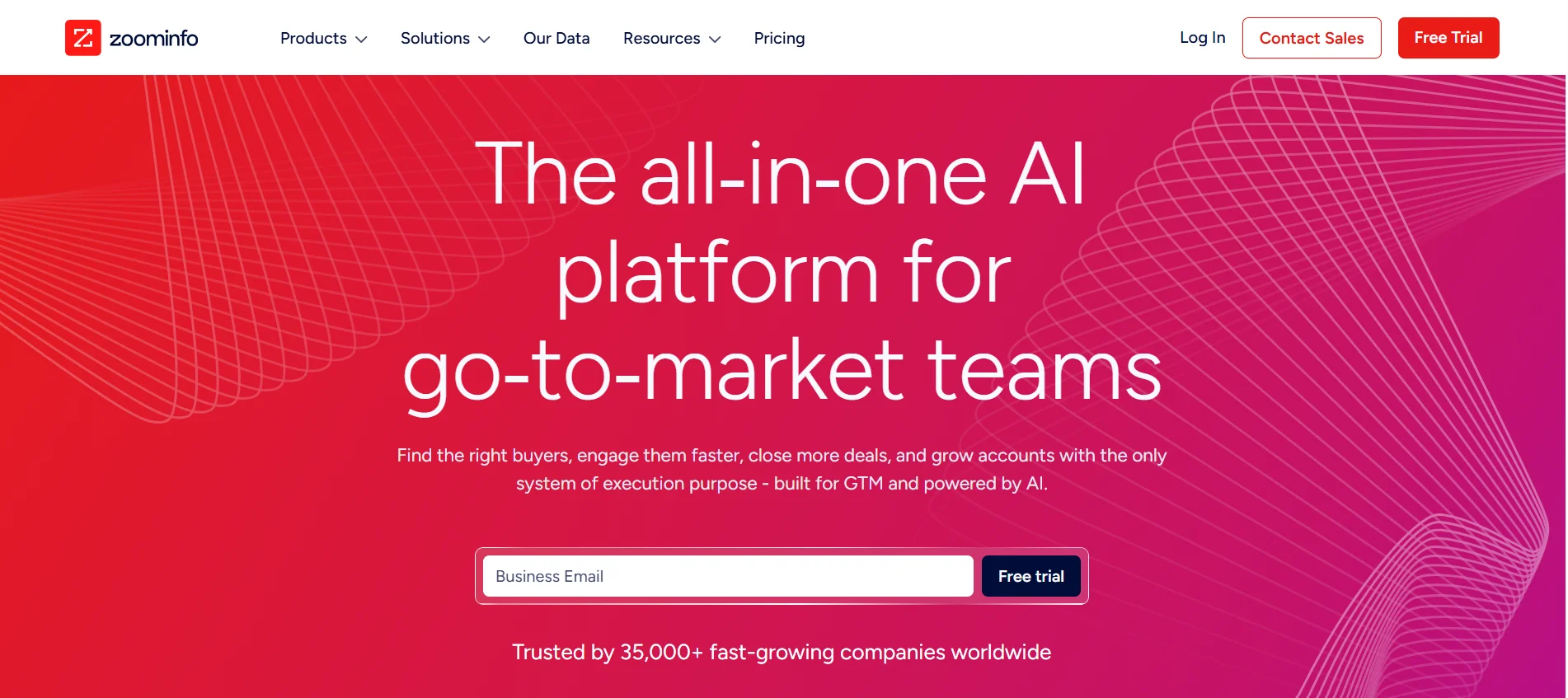
ZoomInfo is one of the biggest enterprise-focused sales intelligence platforms on the market.
It’s widely used by large B2B sales organizations that need deep company data, org charts, buyer intent, and direct-dial phone numbers.
The platform focuses heavily on data depth and enterprise integrations.
Standout Features
- Extensive company and contact database
- Strong direct-dial phone number coverage
- Buyer intent and technographic data
- Enterprise-grade CRM integrations
- Advanced organizational charts and account intelligence
Price
ZoomInfo pricing is custom.
Most plans are significantly more expensive than SMB-focused alternatives and usually require annual contracts.
4. Seamless.AI
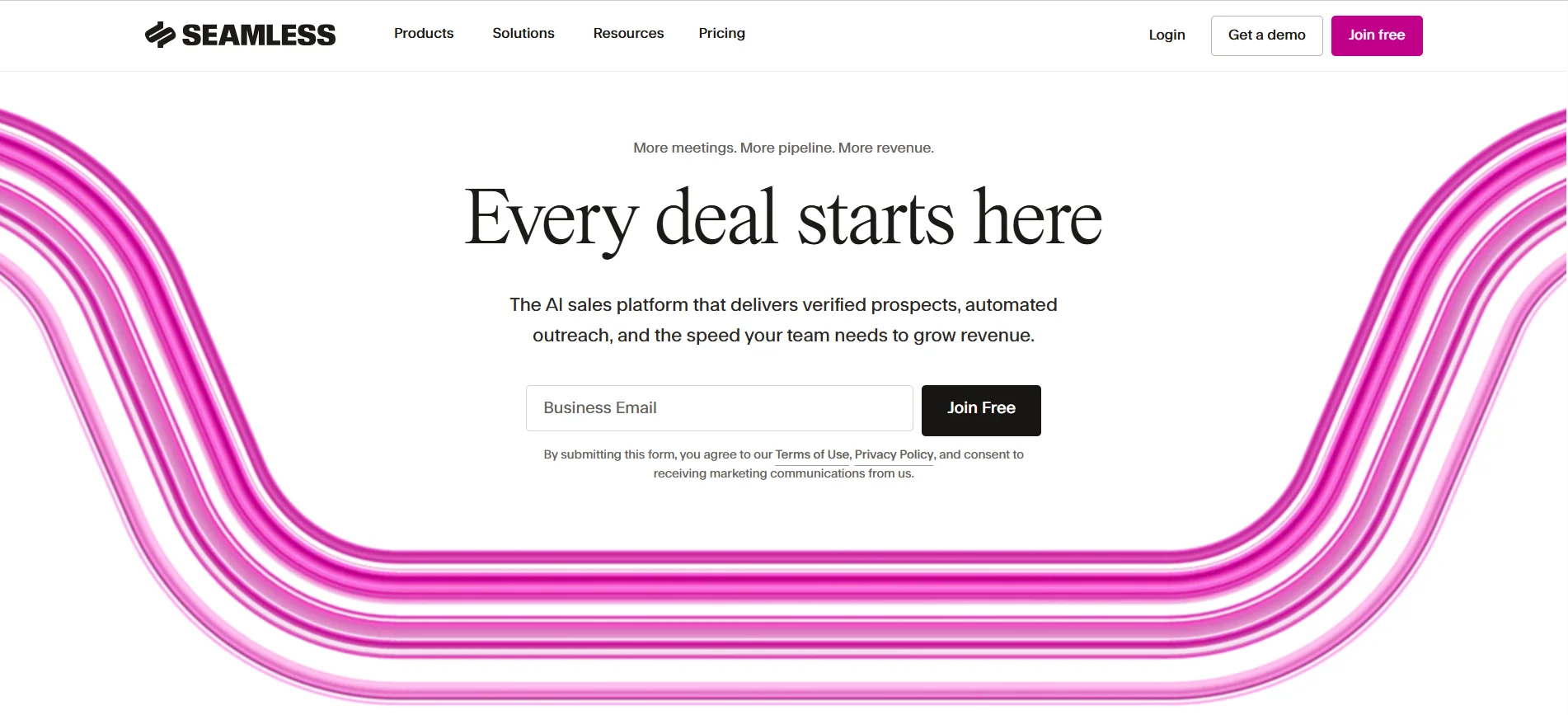
Seamless.AI focuses heavily on real-time contact discovery and lead generation.
The platform is designed to help sales teams find verified emails and phone numbers quickly while prospecting.
Its Chrome extension is commonly used alongside LinkedIn workflows.
Standout Features
- Real-time search for emails and phone numbers
- LinkedIn Chrome extension
- AI-powered lead recommendations
- Contact enrichment and list building
- CRM integrations
Price
Seamless.AI offers custom pricing depending on credits and team size.
There’s also a free version with limited searches.
5. UpLead
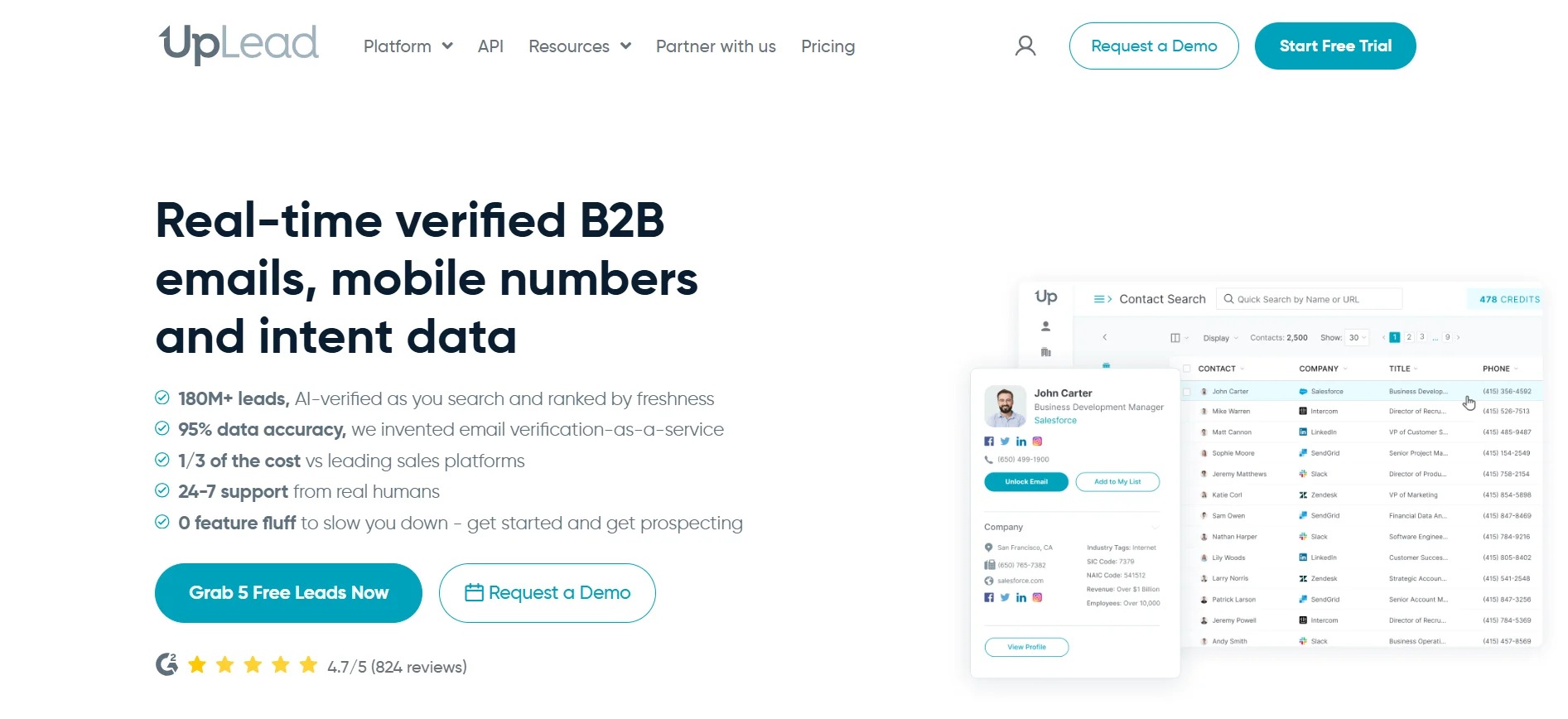
UpLead is known for prioritizing data accuracy over database size.
It focuses heavily on verified contact information and simpler prospecting workflows.
That makes it a good option for smaller sales teams that care more about clean data than huge databases.
Standout Features
- Real-time email verification
- Technographic and intent-based filtering
- Direct-dial phone numbers
- CRM and Zapier integrations
- Simple and beginner-friendly interface
Price
UpLead plans usually start around $99/month depending on credit usage.
The platform also offers free trials for testing data quality.
6. PhantomBuster
PhantomBuster is a workflow automation and scraping tool commonly used for LinkedIn lead extraction.
Unlike database-focused platforms, PhantomBuster works more like an automation engine.
You can build automated workflows that scrape LinkedIn profiles, Sales Navigator searches, social platforms, and web directories.
It’s especially popular among growth hackers and outbound agencies.
Standout Features
- LinkedIn profile and Sales Navigator scraping
- Automated workflows and data extraction
- Cloud-based scraping automation
- Integrations with Google Sheets, CRMs, and APIs
- Multi-platform scraping support
Price
PhantomBuster offers limited free usage.
Paid plans typically start around $69/month depending on automation hours and workflow limits.
7. Skrapp.io
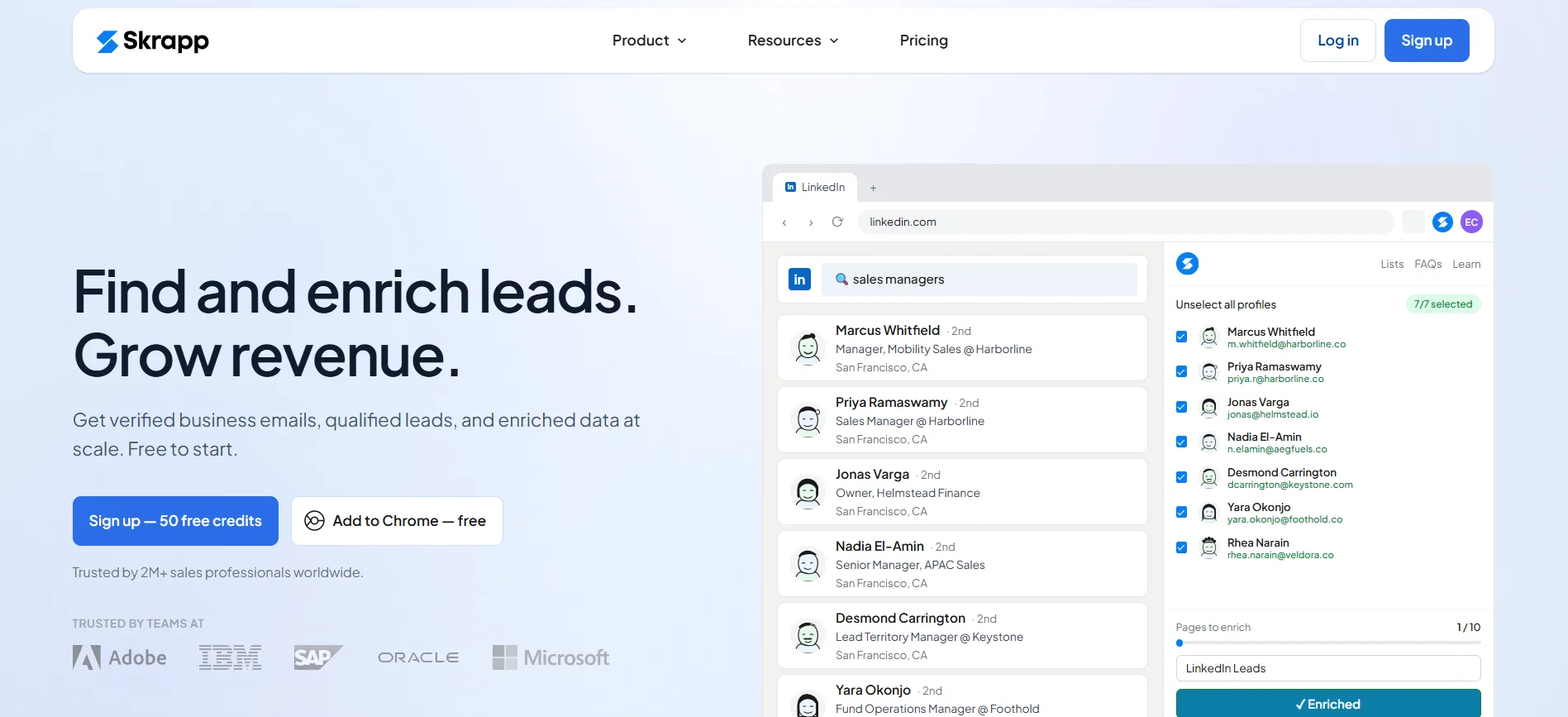
Skrapp.io is a lightweight B2B email finder tool designed mainly for LinkedIn prospecting.
It’s commonly used by recruiters, freelancers, agencies, and smaller outbound teams that want a simple way to collect verified business emails from LinkedIn profiles and company domains.
The platform keeps things relatively straightforward compared to larger sales intelligence tools.
Standout Features
- LinkedIn email extraction through Chrome extension
- Bulk email finder and CSV enrichment
- Domain-based email search
- Email verification tools
- Integrations with CRMs and outreach platforms
Skrapp.io works best for teams that rely heavily on LinkedIn prospecting and want a simpler alternative to enterprise sales platforms.
Price
Skrapp.io offers a free plan with limited credits.
Paid plans generally start around $49/month depending on email search volume.
8. GetProspect
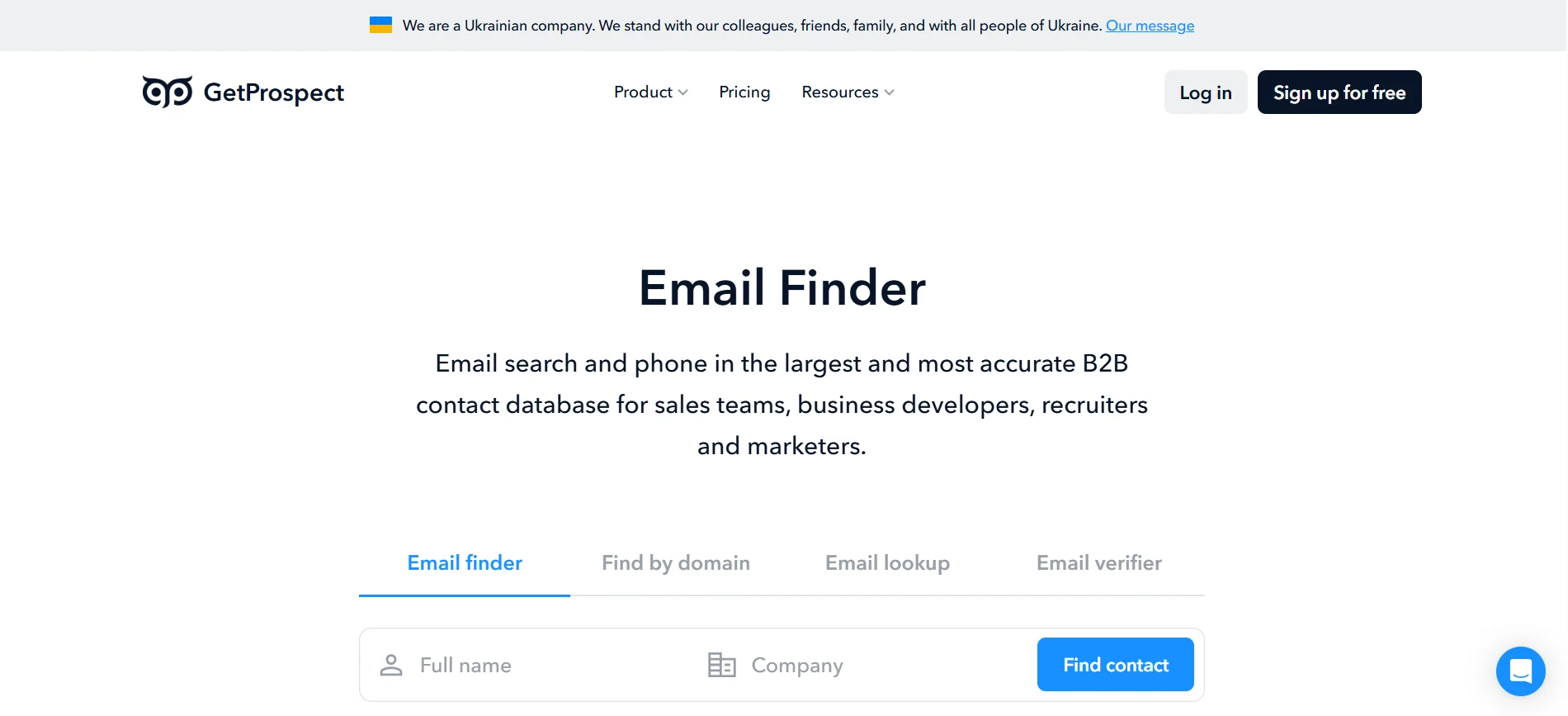
GetProspect focuses on LinkedIn lead generation and email discovery.
The platform helps users extract contact information directly from LinkedIn profiles while organizing leads inside lightweight prospecting workflows.
It’s especially useful for startups and smaller sales teams running targeted outbound campaigns.
Standout Features
- LinkedIn email finder extension
- Email verification and enrichment
- Lead list management
- CRM export functionality
- Team collaboration tools
GetProspect also includes filtering features that help users organize leads by industry, role, or company size before exporting them into outreach campaigns.
Price
GetProspect has a limited free plan.
Paid plans usually start around $49/month based on credits and team requirements.
9. Hunter.io
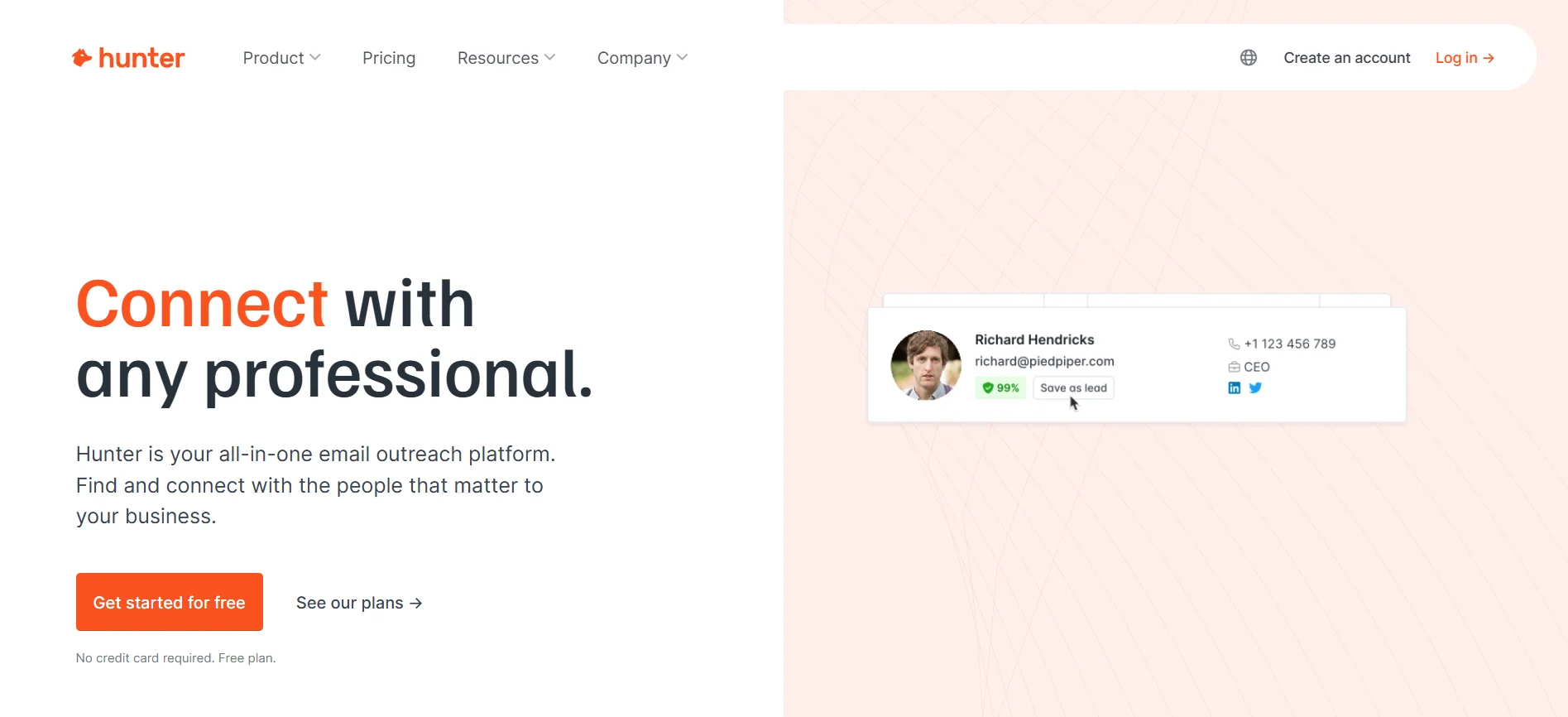
Hunter.io is one of the most widely known tools for finding professional email addresses.
Unlike broader sales intelligence platforms, Hunter focuses heavily on domain-based email discovery and verification.
That simplicity is exactly why many marketers and outbound teams still use it daily.
Standout Features
- Domain search for company emails
- Email pattern detection
- Email verification tools
- Chrome extension for website prospecting
- Bulk tasks and API access
Hunter is particularly useful when you already know the company you want to target but need verified contacts tied to that domain.
It’s also commonly used alongside LinkedIn prospecting workflows.
Price
Hunter offers a free plan with limited searches.
Paid plans typically start around $49/month and scale based on verification and search limits.
10. Clay
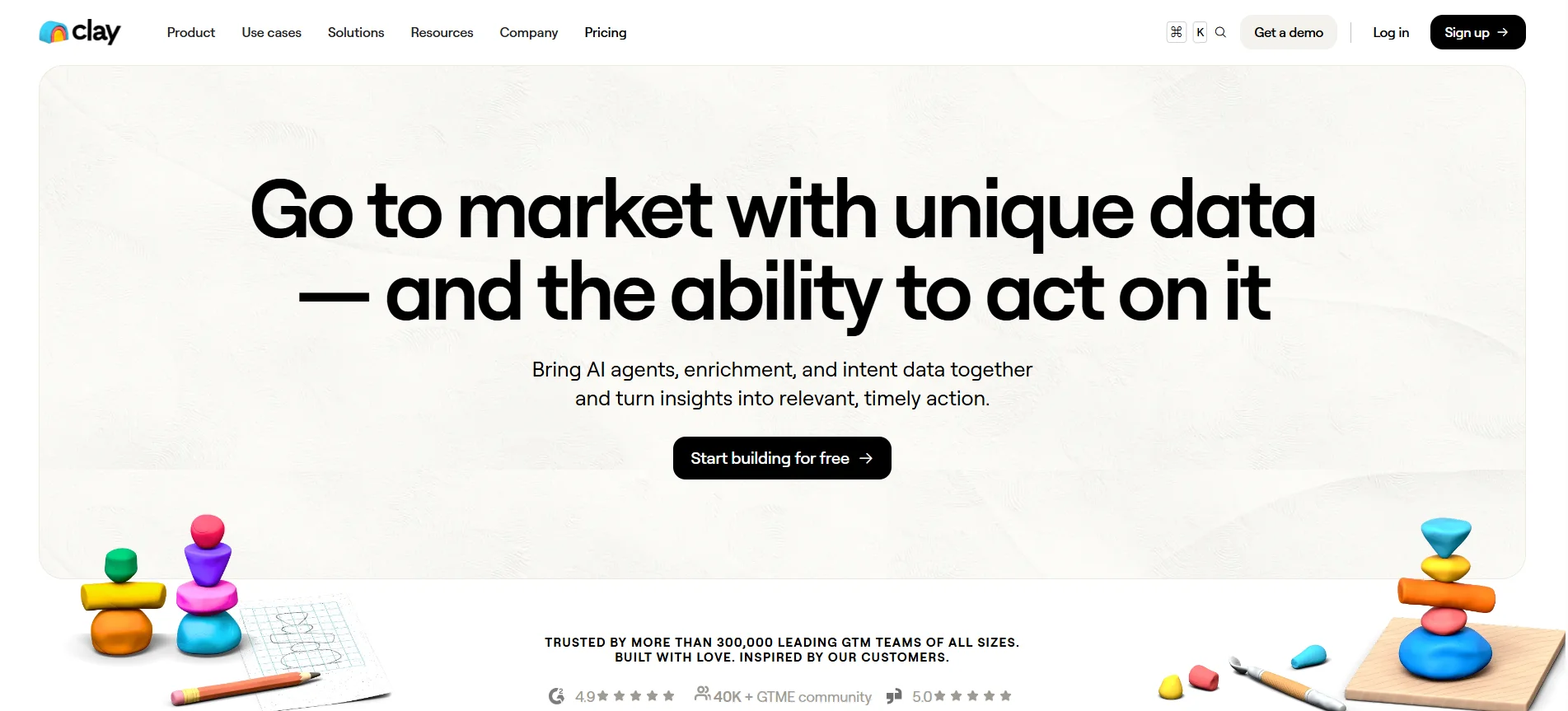
Clay has become extremely popular among modern outbound and growth teams.
Instead of functioning like a traditional lead database, Clay acts more like a flexible enrichment and workflow engine.
You can pull data from multiple providers, enrich records automatically, run AI workflows, and build highly customized prospecting systems.
That flexibility makes it powerful, but also more advanced than beginner-friendly lead scraping tools.
Standout Features
- Multi-provider data enrichment
- AI-powered lead research workflows
- Custom outbound automation
- Spreadsheet-style workflow interface
- Integrations with dozens of data sources and APIs
Clay is especially useful for teams running highly personalized outbound campaigns at scale.
Many growth teams use it to combine data scraping, enrichment, AI personalization, and automation inside one system.
Price
Clay offers several pricing tiers depending on usage and enrichment volume.
Paid plans usually start around $149/month, with higher costs tied to advanced workflows and data providers.
Suggested Reading:
10 Best Clay Alternative & Competitors for AI Outreach & Lead Enrichment11. Lusha
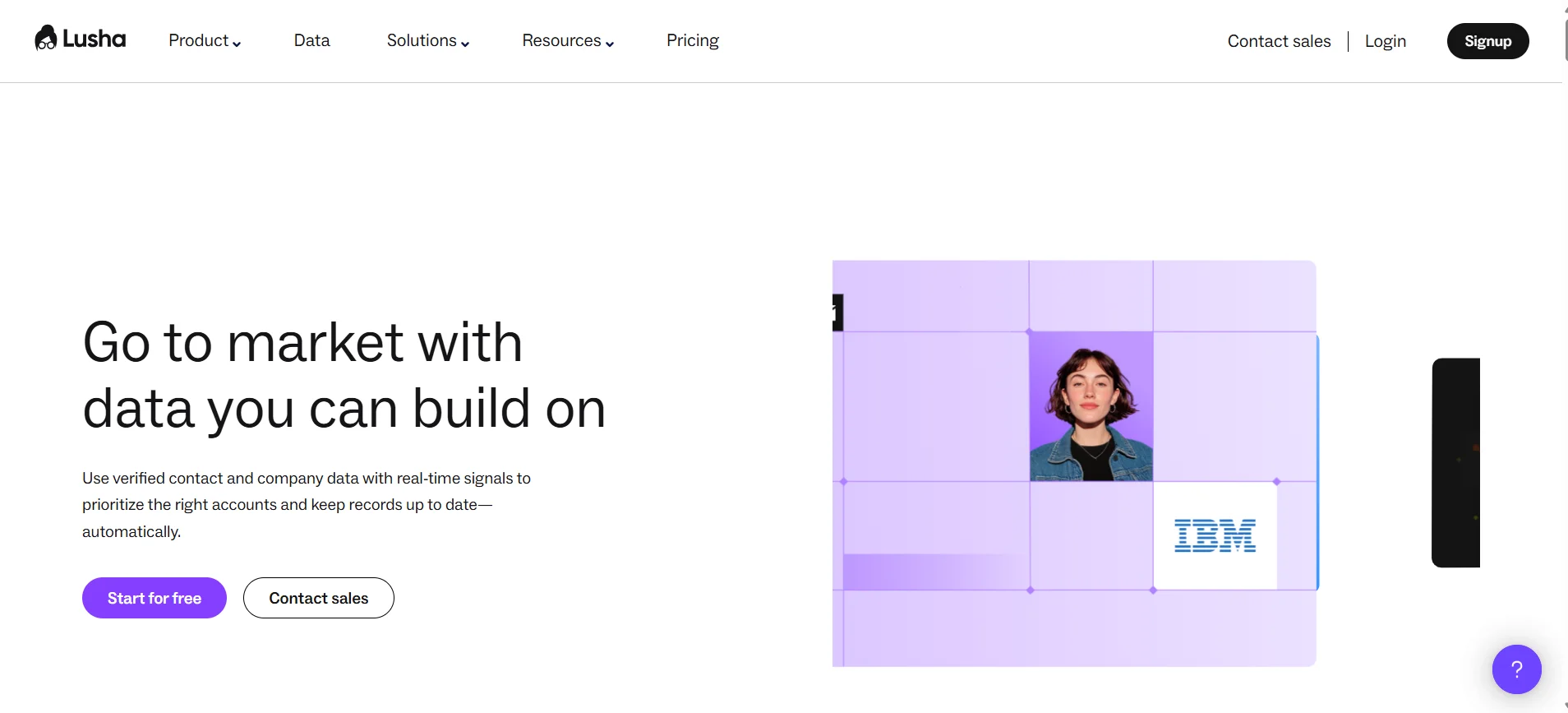
Lusha is known for providing direct contact data for sales teams and recruiters.
The platform focuses heavily on verified business emails and phone numbers with a simple user experience.
Its Chrome extension is particularly popular for LinkedIn prospecting.
Standout Features
- Direct-dial phone numbers and business emails
- LinkedIn Chrome extension
- Contact and company enrichment
- CRM integrations
- Intent and buying signal data
Lusha works well for sales reps that want quick access to verified contact information without overly complex workflows.
The interface is relatively simple compared to larger enterprise platforms.
Price
Lusha offers a free plan with limited credits.
Paid plans generally start around $39–$59/month depending on credit allocation and features.
12. LeadScrape
LeadScrape is a desktop-based lead generation tool focused on scraping business contact information from public sources.
Unlike cloud-first platforms, LeadScrape is more locally focused and designed for users who want direct ownership of extracted lead data.
It’s commonly used by agencies, local businesses, and smaller outbound teams.
Standout Features
- Business lead scraping by industry and location
- Email and phone number extraction
- Local business prospecting
- CSV exports
- One-time purchase options available
LeadScrape is often chosen by businesses targeting local or niche markets where directory scraping still works effectively.
The workflow is simpler compared to AI-driven outbound platforms, but it remains useful for straightforward lead list generation.
Price
LeadScrape pricing varies depending on licensing.
Some versions are available through one-time payments, while cloud versions may include recurring monthly subscriptions.
Most plans remain more affordable than enterprise sales intelligence platforms.
Conclusion: Choosing the Right B2B Lead Scraper for Your Business
The best B2B lead scraper depends on how you actually run outbound.
Some teams only need verified emails from LinkedIn.
Others need full workflows that handle prospecting, enrichment, outreach, follow-ups, and CRM syncing together.
That’s where newer platforms are changing the process.
Instead of stitching multiple tools together, platforms like Oppora combine lead scraping, AI-powered outreach, verification, LinkedIn automation, and reply handling into one outbound system.
As outbound becomes more automated, connected workflows will matter far more than just having the biggest database.
Frequently Asked Questions (FAQs)
Can B2B lead scraper tools integrate with CRM platforms?
Yes, many B2B lead scraper tools integrate with CRMs like HubSpot, Salesforce, and Pipedrive. This helps you automatically sync leads, organize prospect data, track outreach activity, and reduce manual data entry during sales workflows.
Are B2B lead scraper tools useful for small businesses?
Yes, small businesses and startups often use lead scraper tools to build prospect lists faster without hiring large sales teams. Many platforms also offer affordable plans or free credits for smaller outreach operations.
What is the difference between lead scraping and lead enrichment?
Lead scraping focuses on collecting contact data like emails and phone numbers. Lead enrichment adds extra details such as company size, industry, technologies used, hiring activity, or buying signals to improve targeting and personalization.
Can I scrape leads from LinkedIn safely?
Many tools offer LinkedIn scraping features, but usage should still follow LinkedIn’s policies and local data privacy regulations. Using verified tools responsibly and avoiding aggressive automation helps reduce account risks.
Do B2B lead scraper tools help improve cold email performance?
Yes, verified contact data and enrichment features can improve targeting accuracy, reduce bounce rates, and help you personalize outreach better. This often leads to higher reply rates and more qualified sales conversations.