8 Proven Ways to Build a B2B Sales Pipeline (Step-by-Step Guide)
building a b2b sales pipeline,how to increase b2b sales pipeline
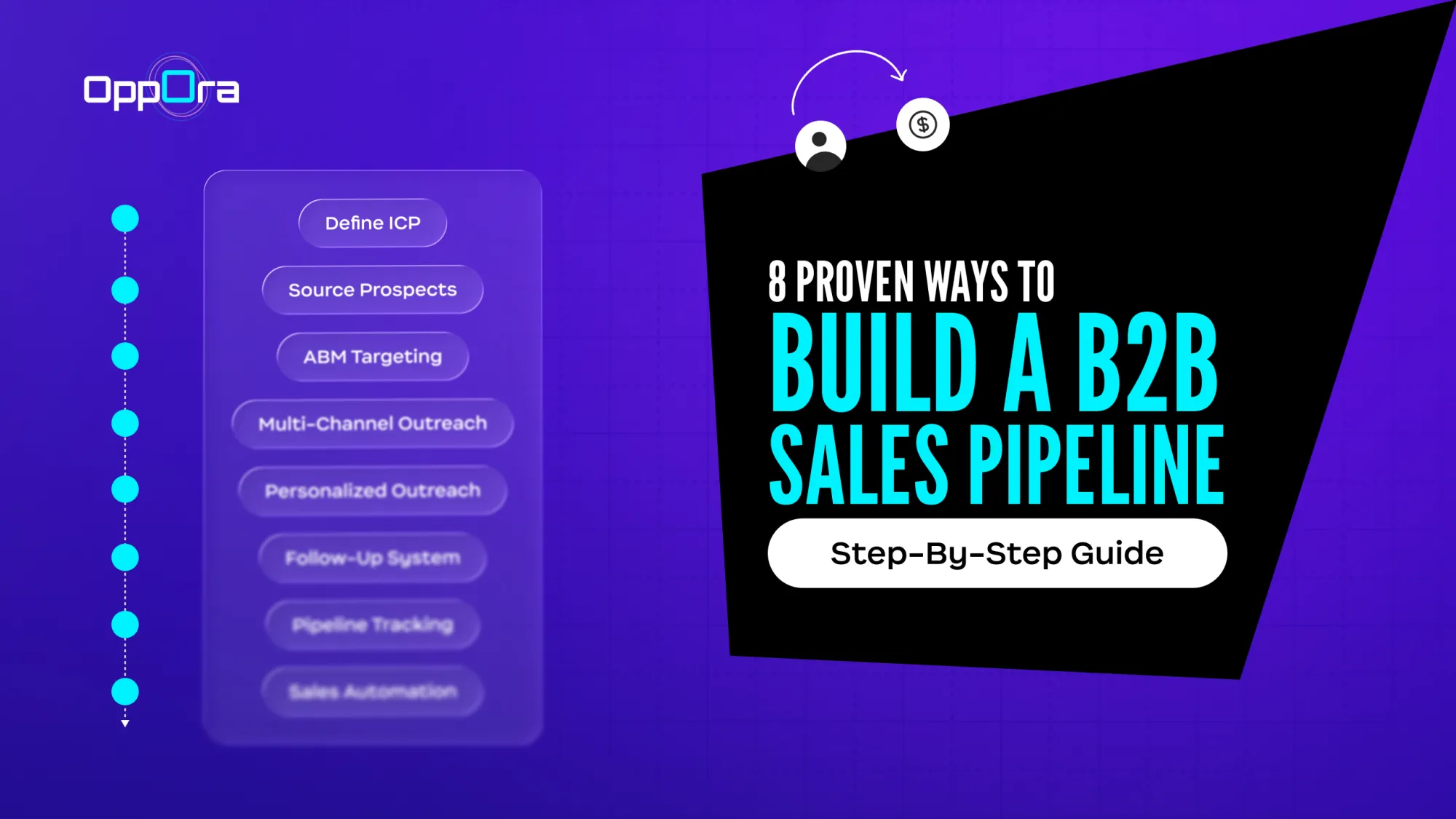
A strong B2B sales pipeline is the foundation of predictable revenue for growing companies. Without a steady flow of qualified opportunities, sales results quickly become inconsistent.
Many teams rely on referrals or occasional inbound leads to close deals. However, these sources rarely generate enough opportunities for consistent growth.
That is why building a B2B sales pipeline requires a clear and repeatable prospecting system. You need a process that consistently identifies the right companies and decision-makers.
When your pipeline is structured correctly, sales activity becomes easier to manage and scale. This guide will show you eight proven ways to build a B2B sales pipeline and grow it consistently.
Why Most B2B Sales Pipelines Fail to Generate Consistent Revenue
Many companies attempt to build a B2B sales pipeline, yet revenue still feels unpredictable month after month. Deals may appear occasionally, but the pipeline rarely produces a steady stream of opportunities.
In most cases, the issue is not the product or market demand. The real problem is usually an inconsistent prospecting process and poor pipeline management.
Understanding these common problems is important when building a B2B sales pipeline that actually generates consistent revenue. Let’s look at the main reasons pipelines struggle to perform.
Relying Only on Inbound Leads
Many businesses depend heavily on inbound marketing to generate sales opportunities. While inbound leads can be valuable, they rarely arrive in a consistent and predictable flow.
Inbound demand often changes based on content performance, advertising budgets, or search visibility. Without outbound prospecting, your B2B sales pipeline can slow down quickly.
Lack of a Structured Prospecting System
Prospecting is often treated as an occasional activity rather than a daily process. Sales teams may contact prospects randomly without a clear targeting strategy.
Without a repeatable prospecting system, pipeline growth becomes difficult to predict or scale. A structured process is essential when building a B2B sales pipeline that consistently produces new opportunities.
Poor Lead Qualification
Not every prospect is a good fit for your product or service. When teams skip proper qualification, they spend time pursuing deals that will never close.
This wastes sales effort and slows pipeline progress significantly. Clear qualification criteria help you focus only on prospects with real buying potential.
No Visibility into Pipeline Performance
Many teams do not track pipeline performance closely enough. Without clear metrics, it becomes difficult to identify bottlenecks in the sales process.
Sales leaders need visibility into deal stages, conversion rates, and pipeline movement. Tracking these metrics helps you understand how to increase B2B sales pipeline performance over time.
Core Stages of a High-Performing B2B Sales Pipeline
A strong B2B sales pipeline follows a clear set of stages that guide prospects from first contact to closed deals. Each stage helps you understand the buyer better and move opportunities forward with purpose.
Without defined stages, deals often stall because sales teams lack direction. A structured pipeline ensures every opportunity progresses logically through the sales process.
These stages also make it easier to measure performance and identify bottlenecks early. Let’s explore the key stages that define a high-performing B2B sales pipeline.
Prospect Identification
Every pipeline begins by identifying companies that may benefit from your product or service. This stage focuses on finding businesses that match your ideal customer profile.
You typically analyze factors like industry, company size, and decision-maker roles. When prospect identification is accurate, your outreach becomes far more effective.
Lead Qualification
Once prospects enter the pipeline, the next step is evaluating whether they are a good fit. Lead qualification helps you determine if the opportunity is worth pursuing.
Sales teams often assess factors such as budget, authority, need, and timeline. Proper qualification ensures your efforts focus on prospects who are more likely to convert.
Discovery and Needs Analysis
In the discovery stage, you work to understand the prospect’s challenges and goals. This usually happens through calls or meetings focused on asking the right questions.
The goal is to uncover problems your solution can genuinely solve. A strong discovery process builds trust and positions you as a helpful advisor.
Solution Presentation or Demo
After discovery, you present how your product or service solves the prospect’s challenges. This may involve a tailored presentation, proposal, or product demonstration.
The key is connecting your solution directly to the prospect’s needs. When done well, this stage increases confidence and moves the deal closer to a decision.
Negotiation and Decision
At this stage, both sides discuss pricing, timelines, and contract terms. Buyers may raise objections or request adjustments before making a final decision.
Clear communication is critical during this phase. Addressing concerns carefully helps move the opportunity toward agreement.
Closing and Customer Expansion
Closing is where the prospect officially becomes a customer. Contracts are finalized, and onboarding begins to ensure a smooth implementation.
However, a strong B2B sales pipeline does not end after the sale. Successful teams focus on long-term relationships, upsells, and referrals that expand revenue over time.
8 Proven Ways to Build a B2B Sales Pipeline
Once you understand the stages of a pipeline, the next challenge is consistently filling it with qualified opportunities. This is where many companies struggle when building a B2B sales pipeline.
Successful pipelines are not created through random outreach or occasional inbound leads. They grow through repeatable prospecting methods that continuously introduce your company to the right buyers.
Below are eight proven ways to build a B2B sales pipeline that can generate consistent opportunities over time.
1. Define Your Ideal Customer Profile (ICP)
A strong B2B sales pipeline begins with knowing exactly who you want to sell to. Without a clear target, prospecting becomes inefficient and unpredictable.
Your Ideal Customer Profile (ICP) describes the type of companies that benefit most from your product. It usually includes factors such as:
- Industry or niche
- Company size or revenue range
- Geographic region
- Technology stack
- Decision-maker roles
You should also identify the stakeholders involved in the buying process. Common decision-makers often include:
- Founders or CEOs
- Sales or marketing leaders
- Operations managers
- Procurement or partnerships teams
A well-defined ICP ensures your outreach targets companies that are most likely to convert.
2. Use Cold Email Outreach to Reach New Prospects
Cold email remains one of the most scalable channels for generating B2B sales pipeline opportunities. It allows sales teams to reach decision-makers directly without relying on inbound traffic.
A structured cold email process typically includes:
- Prospect list building
- Personalized outreach messages
- Follow-up email sequences
- Tracking replies and engagement
Consistent cold outreach keeps new prospects entering the pipeline every week. Over time, this creates a predictable flow of sales conversations.
3. Generate Pipeline Through LinkedIn Prospecting
LinkedIn is one of the most powerful platforms for B2B prospecting and pipeline generation. It allows sales teams to find decision-makers in targeted industries and companies.
Typical LinkedIn prospecting activities include:
- Searching for decision-makers using filters
- Sending personalized connection requests
- Starting conversations through direct messages
- Sharing relevant content or insights
LinkedIn outreach often complements email campaigns effectively. Combining both channels increases the chances of starting meaningful conversations.
4. Use Content Marketing to Attract Qualified Leads
Content marketing helps attract prospects who are actively researching solutions. Educational resources position your company as a trusted authority.
Common content formats that generate pipeline include:
- Blog articles and industry guides
- Case studies and success stories
- Webinars or online workshops
- Downloadable reports or playbooks
These resources help prospects understand their challenges and possible solutions. When readers find value in your content, they are more likely to enter your B2B sales pipeline.
5. Leverage Referrals and Customer Introductions
Referrals are one of the most effective sources of qualified leads. Prospects who come through referrals already trust your company.
Satisfied customers and professional contacts can introduce you to potential buyers. These introductions often shorten the sales cycle and increase conversion rates.
Companies can encourage referrals by:
- Asking satisfied customers for introductions
- Building strong professional networks
- Offering referral incentives or programs
Referral-based opportunities often convert faster than cold outreach leads.
6. Partner with Complementary Companies
Strategic partnerships can significantly expand your reach. Partner companies often serve the same audience but offer different solutions.
By collaborating with complementary businesses, companies can exchange qualified leads. This allows both partners to access new markets and prospects.
Examples of effective partnerships include:
- Technology integrations
- Consulting partners
- Industry service providers
- Marketing collaborations
These partnerships help companies generate opportunities that might not be reachable through traditional prospecting.
7. Attend Industry Events and Webinars
Industry events create opportunities to meet potential buyers directly. Conferences, networking events, and webinars bring together professionals interested in specific topics.
These interactions help sales teams build relationships earlier in the buying process. Conversations started at events can later move into the B2B sales pipeline.
Events also allow companies to:
- Showcase expertise through speaking sessions
- Demonstrate products or solutions
- Build trust through direct interaction
Virtual webinars have also become an effective way to connect with decision-makers globally.
8. Use Sales Automation to Scale Pipeline Generation
As outreach volume grows, manual prospecting becomes difficult to manage. Sales automation tools help streamline repetitive tasks while maintaining consistent outreach.
Automation platforms can support activities such as:
- Lead discovery and enrichment
- Email outreach sequences
- Automated follow-ups
- Reply tracking and reporting
Modern tools also use AI to personalize outreach messages. This allows sales teams to scale prospecting while maintaining relevance.
When used effectively, automation helps companies increase their B2B sales pipeline without dramatically increasing manual effort.
How Oppora.ai Helps Teams Generate a B2B Sales Pipeline Faster
Building a strong B2B sales pipeline often requires multiple tools, manual research, and constant follow-ups. Many sales teams spend 40–60% of their time on prospecting tasks instead of actual selling.
Platforms like Oppora.ai simplify this process by combining prospect discovery, outreach, and automation into one system. Instead of managing several tools, teams can run a complete outbound workflow through connected AI sales agents.
Oppora focuses on automating the key steps involved in building a B2B sales pipeline, helping teams scale prospecting while maintaining quality outreach.
Discovering Target Prospects from Large Lead Databases
Finding qualified prospects is one of the most time-consuming steps in pipeline building. Oppora helps teams discover prospects quickly using large verified contact datasets.
Sales teams can search and filter prospects using criteria such as:
- Industry and company size
- Job titles and decision-maker roles
- Location and target markets
- Technology stack or growth stage
Oppora connects to 700M+ verified contacts using waterfall data sources. This allows teams to quickly build high-quality prospect lists without spending hours on manual research.
Automating Cold Email Outreach at Scale
As prospect lists grow, sending emails manually becomes difficult to manage. Oppora automates outreach so sales teams can contact more prospects without increasing workload.
Key automation capabilities include:
- Up to 50 connected mailboxes for scaling outreach safely
- Automatic domain warm-up to maintain sender reputation
- Scheduled follow-up sequences that run automatically
- Mailbox matching (Gmail-to-Gmail or Outlook-to-Outlook) to improve deliverability
These safeguards help teams scale outreach while protecting email deliverability.
Using AI Personalization to Improve Reply Rates
Personalized messages significantly increase reply rates in outbound prospecting. However, writing unique emails for hundreds of prospects can take hours.
Oppora’s AI generates personalized messages automatically by analyzing details such as:
- Company industry and business context
- Decision-maker role and responsibilities
- Relevant challenges the prospect may face
- Value propositions related to the prospect’s situation
Because every email is uniquely generated instead of using repetitive templates, outreach feels more relevant to prospects.
Managing Prospecting and Outreach Workflows
Outbound sales often requires multiple tools for prospecting, outreach, and tracking. Switching between platforms can slow down pipeline generation.
Oppora connects these steps into a single automated workflow. A typical outbound sequence can include:
- Prospect discovery and data enrichment
- Contact verification and lead scoring
- Cold email outreach and follow-ups
- AI-generated replies and meeting booking
- Automatic CRM syncing and reporting
By automating these activities, Oppora.ai helps teams generate a B2B sales pipeline faster while reducing manual effort. Sales teams can spend more time closing deals instead of managing tools.
Key Metrics That Show a Healthy B2B Sales Pipeline
Building a B2B sales pipeline is only the first step toward predictable revenue. To improve results, you must track metrics that show how efficiently opportunities move through the pipeline.
These metrics help identify bottlenecks and reveal whether your pipeline contains enough opportunities to meet revenue goals.
Pipeline Coverage Ratio
Pipeline coverage shows whether you have enough deals to hit your sales target. Most companies aim for 3×–5× pipeline coverage.
Example:
- Revenue target: $100,000
- Recommended pipeline: $300,000–$500,000
- Coverage ratio: 3×–5×
This buffer protects revenue even if several deals fail to close.
Pipeline Conversion Rate
Conversion rate measures how many prospects become customers. It reveals how effective your sales process is.
Example:
- Prospects entering pipeline: 100
- Deals closed: 20
- Conversion rate: 20%
Tracking this helps identify stages where deals drop off.
Sales Cycle Length
Sales cycle length measures how long deals take to close. Shorter cycles usually indicate better qualification and stronger buyer interest.
Typical B2B cycles include:
- Small deals: 30–60 days
- Mid-size deals: 60–90 days
- Enterprise deals: 3–6 months
Pipeline Velocity
Pipeline velocity measures how fast revenue moves through the pipeline. It depends on:
- Number of opportunities
- Average deal size
- Win rate
- Sales cycle length
Improving any of these factors helps increase B2B sales pipeline performance.
Conclusion
Building a strong B2B sales pipeline requires more than occasional prospecting or inbound leads. It depends on a clear strategy and consistent outreach.
Defining your ideal customer profile helps you focus on the right companies. Multi-channel prospecting and personalized outreach help generate more conversations.
Consistent follow-ups also play a critical role in keeping opportunities active. Sales automation can further improve efficiency and scale pipeline growth.
Tracking metrics like pipeline coverage, conversion rates, and sales cycle length is equally important. These numbers help you understand whether your pipeline is healthy.
When these strategies work together, your pipeline becomes predictable and scalable. A well-managed B2B sales pipeline creates consistent opportunities for long-term revenue growth.
Frequently Asked Questions (FAQs)
What is a B2B sales pipeline?
A B2B sales pipeline is a structured process that tracks potential customers from the first interaction to closing a deal. It helps sales teams manage opportunities at different stages and predict future revenue more accurately.
How do you build a B2B sales pipeline?
To build a B2B sales pipeline, businesses must define their ideal customer profile, identify qualified prospects, and start consistent outreach. Regular follow-ups and tracking pipeline performance help maintain steady pipeline growth.
How can you increase a B2B sales pipeline?
You can increase a B2B sales pipeline by expanding prospect sources, improving outreach personalization, and using multi-channel prospecting strategies. Sales automation and consistent follow-ups also help generate more opportunities.
What are the stages of a B2B sales pipeline?
A typical B2B sales pipeline includes stages such as prospect identification, lead qualification, discovery and needs analysis, solution presentation, negotiation, and closing. These stages help sales teams track deals and move prospects toward purchase decisions.
What metrics show a healthy B2B sales pipeline?
A healthy B2B sales pipeline is measured using metrics like pipeline coverage ratio, conversion rate, sales cycle length, and pipeline velocity. Tracking these metrics helps sales teams identify bottlenecks and improve overall pipeline performance.