11 Best Company Research Tools for Sales & Marketing
You know the frustration of trying to find the right companies to target, but ending up stuck between spreadsheets, LinkedIn tabs, and half-complete data.
Most sales and marketing teams don’t struggle because they lack effort, they struggle because company research is scattered, slow, and hard to scale without the right tools.
In this guide, you’ll learn:
- What company research tools actually do
- Why most teams struggle with company research
- 11 tools you can use to research and analyze companies faster
What Are Company Research Tools for Sales & Marketing
Company research tools are platforms that help you find, analyze, and understand businesses based on specific criteria.
Instead of manually browsing websites or profiles, you can quickly access structured data about companies, their size, industry, growth stage, and more.
These tools turn scattered information into something you can actually use for targeting and decision-making.
Types of Data Used (Firmographic, Technographic, Intent)
To make company research useful, these tools rely on different types of data that give you a fuller picture.
- Firmographic data includes company size, industry, revenue, and location
- Technographic data shows what tools or technologies a company uses
- Intent data signals whether a company is actively researching or interested in a solution
When combined, this data helps you prioritize companies that are not just a fit, but also more likely to convert.
Why Most Sales & Marketing Teams Struggle With Company Research
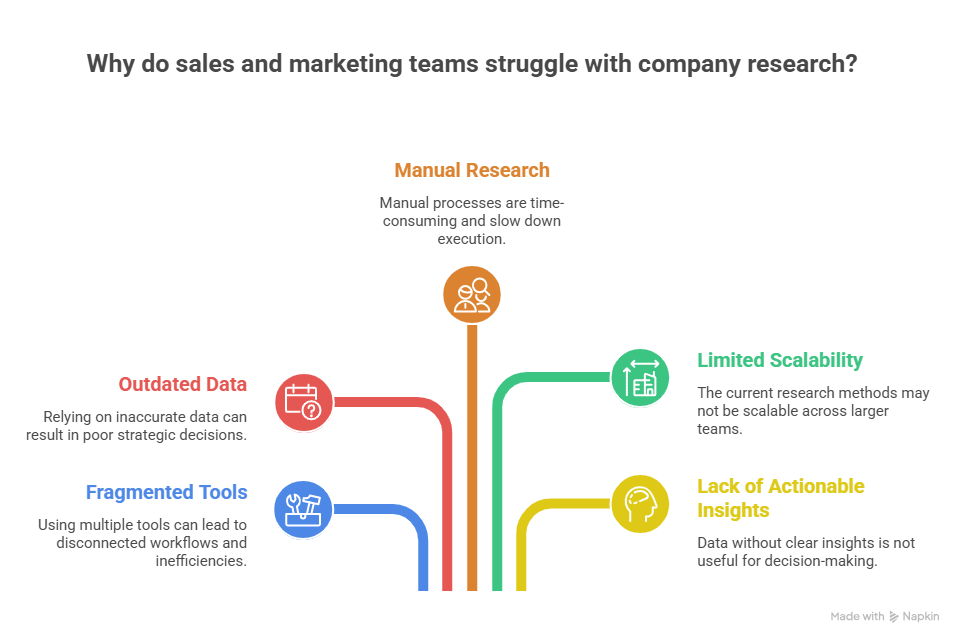
Now that you understand what company research tools are, the real question is, why do teams still struggle even after using them?
The issue usually isn’t effort or intent, it’s how the research process is structured and executed across tools, data, and teams.
Fragmented Tools and Disconnected Workflows
Most teams rely on multiple tools to complete one simple workflow, like finding companies, enriching data, and then starting outreach.
You might use one tool for lead discovery, another for enrichment, and a third for outreach, which creates constant context switching.
This fragmentation makes it harder to maintain consistency, and small gaps between tools often lead to missed opportunities or duplicated work.
Outdated or Inaccurate Company Data
Even if you’re using a reliable tool, there’s always a risk that the data you’re working with is outdated or incomplete.
Company size, hiring activity, or even contact details can change quickly, and stale data leads to poor targeting decisions.
When your research is based on inaccurate information, your campaigns feel irrelevant, which directly impacts response rates.
Manual Research Slows Down Execution
A lot of teams still depend on manual research to fill gaps that tools don’t cover properly.
This means jumping between LinkedIn, company websites, and databases just to validate a single prospect.
While it may seem manageable at first, this process becomes a bottleneck when you need to scale outreach or hit aggressive pipeline targets.
Limited Scalability Across Teams
What works for one SDR or marketer doesn’t always translate well across the entire team.
Without a standardized research process, everyone ends up following their own approach, which leads to inconsistent results.
As the team grows, it becomes harder to maintain quality, speed, and alignment across campaigns.
Lack of Actionable Insights From Data
Having access to data doesn’t automatically mean you know what to do with it.
Many tools provide raw information but fail to turn it into clear next steps or priorities.
Without actionable insights, teams spend more time analyzing data than actually using it to drive meaningful outreach.
11 Best Company Research Tools for Sales & Marketing
Once you understand where most tools fall short, the next step is choosing platforms that don’t just give you data, but actually help you act on it.
Let’s start with a tool that goes beyond traditional company research and connects it directly to execution.
Oppora (AI Company Research + Outbound Automation)
Most company research tools help you find data, but leave you figuring out what to do next.
Oppora closes that gap by turning company research into a system that actually helps you execute outreach.
You still get strong research capabilities:
- 1B+ verified contacts and 60M+ company profiles to build targeted company lists
- Automated list building based on your ideal customer profile
- 20+ Intent Signals to find ideal company data
But the real value shows up after the research part is done.
- Writes personalized cold emails for you
- Sends and follows up automatically
- Handles outreach at scale without manual effort
Instead of juggling multiple tools, you’re working with one system that runs everything in the background.
You also get:
- 10,000 email lookup credits
- Unlimited leads and campaigns
- Scalable outreach starting at $34/month
This isn’t just email automation.
It’s a complete outbound pipeline engine that runs from research to conversion without constant input from your side.
Apollo.io
If you’re looking for a balance between company research and outreach, Apollo.io is one of the most commonly used tools.
It gives you access to a database of 275M+ contacts and companies, allowing you to filter based on industry, company size, job titles, and location.
You can:
- Find verified emails and direct dials
- Segment companies using intent and activity signals
- Build highly targeted prospect lists
Apollo also includes outreach features like email sequencing and tracking, which makes it easier to act on your research.
However, as your volume grows, teams often pair it with other tools for better automation and scalability.
ZoomInfo
ZoomInfo is known for its depth and accuracy, especially for enterprise sales teams.
It offers access to 300M+ contacts and 100M+ company profiles, along with detailed firmographic and organizational data.
With ZoomInfo, you can:
- Identify key decision-makers within companies
- Access revenue, hiring trends, and company insights
- Use intent data to prioritize high-interest accounts
It’s a powerful platform for large teams that rely heavily on data-driven targeting.
That said, it comes with a higher price point and is often best suited for companies with larger budgets.
Clearbit
Clearbit focuses on enriching your existing company and lead data rather than just helping you discover new ones.
It works with 100M+ company records and integrates directly into your workflows to provide real-time data updates.
You can use Clearbit to:
- Enrich company profiles with firmographic and technographic data
- Identify anonymous website visitors
- Segment leads for better campaign targeting
It’s especially useful for marketing teams that want to improve personalization and targeting.
Instead of replacing research tools, Clearbit enhances the data you already have.
Clay
Clay is designed for teams that want flexibility and control over how they research and enrich company data.
It connects with 50+ data sources and APIs, allowing you to build highly customized workflows.
With Clay, you can:
- Pull and combine data from multiple providers
- Automate enrichment and qualification workflows
- Build dynamic company lists based on custom logic
It’s powerful for advanced users and growth teams who want to experiment and iterate quickly.
However, it comes with a learning curve and requires setup to unlock its full potential.
Snov.io
Snov.io is a simple and practical tool for teams focused on email discovery and outreach.
It provides access to a database of 100M+ contacts, along with tools for finding and verifying email addresses.
You can:
- Search emails by domain or company name
- Verify emails to reduce bounce rates
- Run basic email outreach campaigns
It’s easy to use and works well for startups or smaller teams.
While it may not offer deep company insights, it’s effective for straightforward prospecting and outreach.
Suggested Reading:
Snov.io AlternativesLinkedIn Sales Navigator

LinkedIn Sales Navigator is one of the most widely used tools for company and prospect research.
Built on LinkedIn’s network of 900M+ professionals and 60M+ companies, it gives you real-time insights into companies and decision-makers.
You can:
- Filter companies based on size, industry, and growth signals
- Track job changes and company updates
- Build lead lists directly from LinkedIn
It’s especially useful for relationship-driven sales and outbound prospecting.
However, it doesn’t provide verified contact data like emails, so teams often combine it with other tools.
Crunchbase
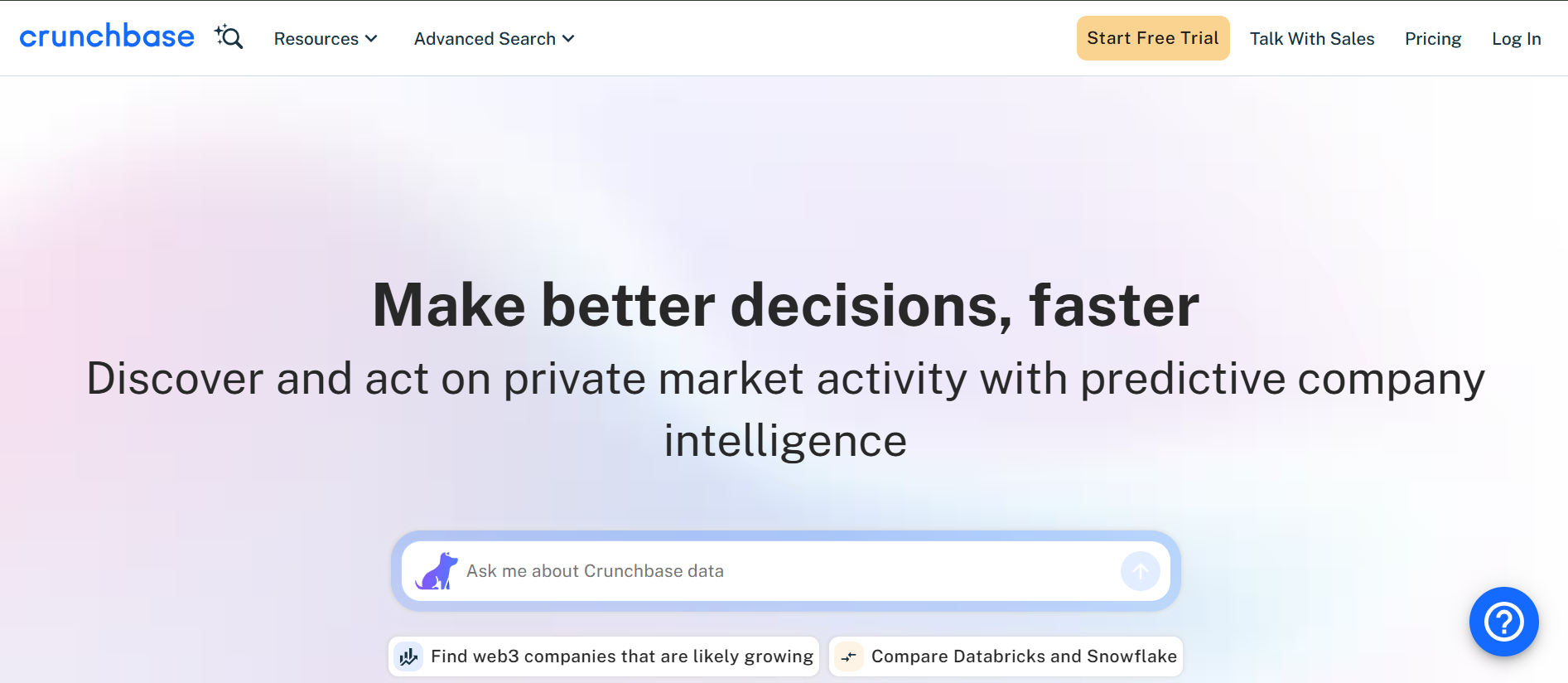
Crunchbase is a go-to tool for researching startups, funding activity, and company growth trends.
It tracks data on 5M+ companies and investors, making it useful for identifying high-growth opportunities.
With Crunchbase, you can:
- Discover companies based on funding rounds and industry
- Track investments and acquisition activity
- Identify fast-growing companies
It’s widely used by investors, marketers, and sales teams targeting startups.
However, it focuses more on company insights rather than contact-level data.
Owler
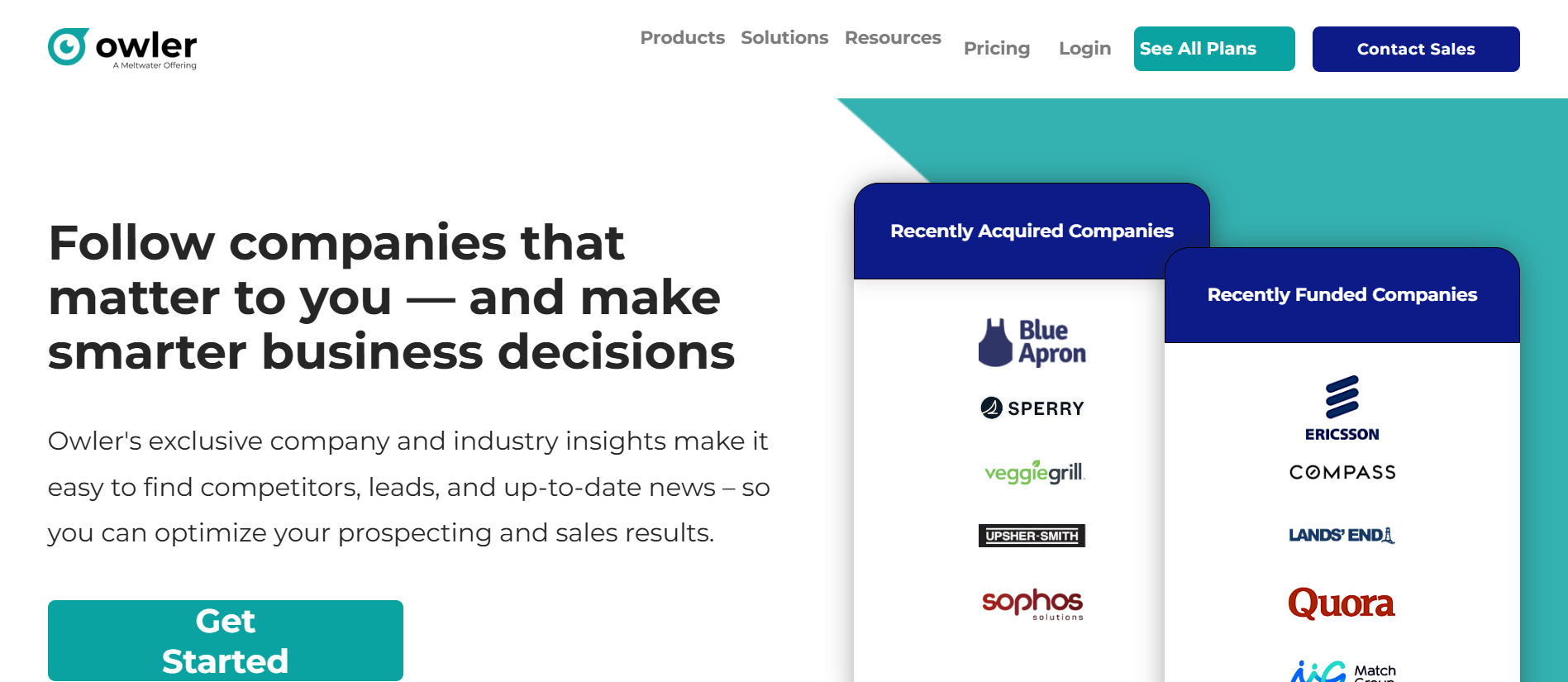
Owler is focused on competitive intelligence and company insights rather than lead generation.
It provides data on 15M+ company profiles, along with news, competitor tracking, and revenue estimates.
You can use Owler to:
- Monitor competitors and industry trends
- Get real-time company updates and alerts
- Analyze company performance and positioning
It’s useful for understanding the broader market landscape.
However, it’s not designed for direct prospecting or outreach.
BuiltWith
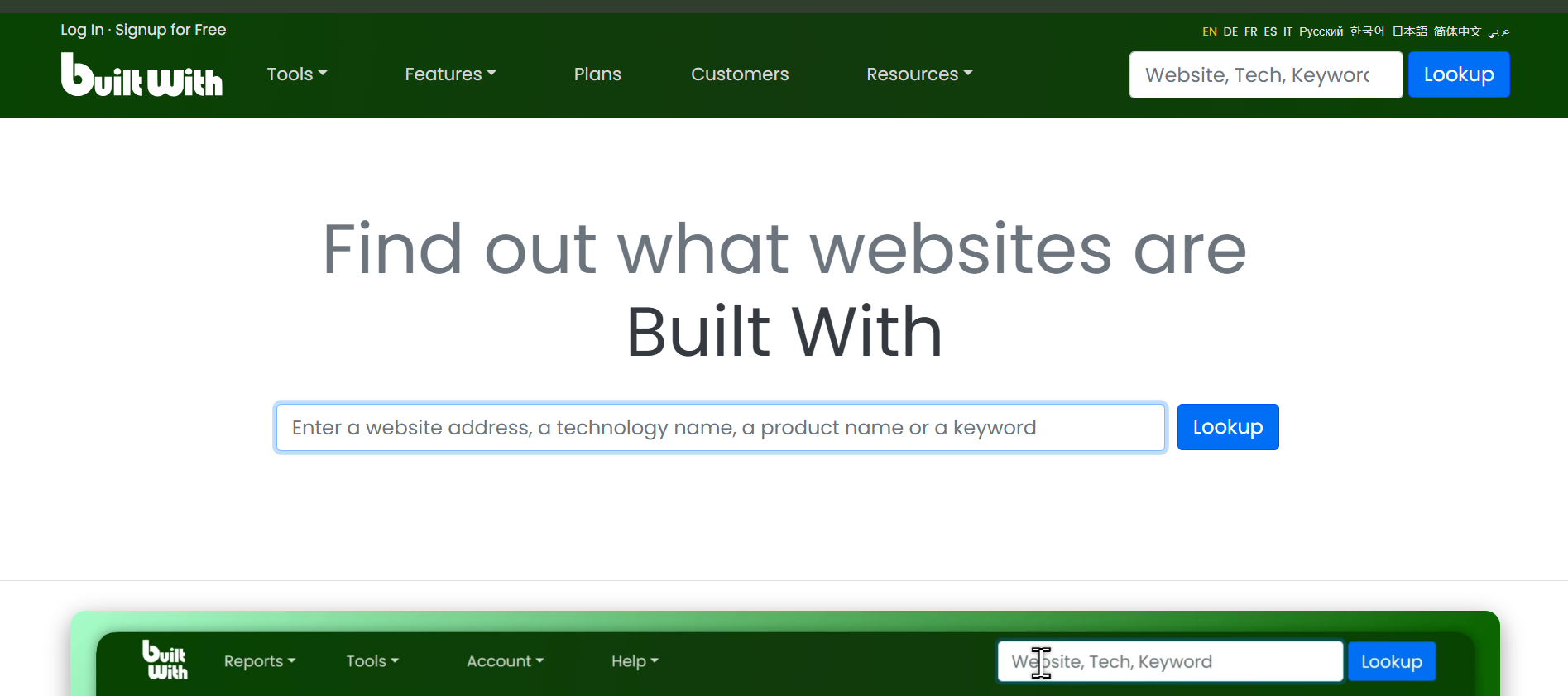
BuiltWith helps you understand the technology stack behind websites and companies.
It tracks 90,000+ web technologies across 60M+ websites, making it useful for technographic research.
With BuiltWith, you can:
- Identify what tools and platforms a company uses
- Filter companies based on tech stack
- Find leads based on specific technologies
It’s especially valuable for SaaS companies targeting businesses using certain tools.
However, it focuses only on technographic data, not full company profiles.
Hunter.io
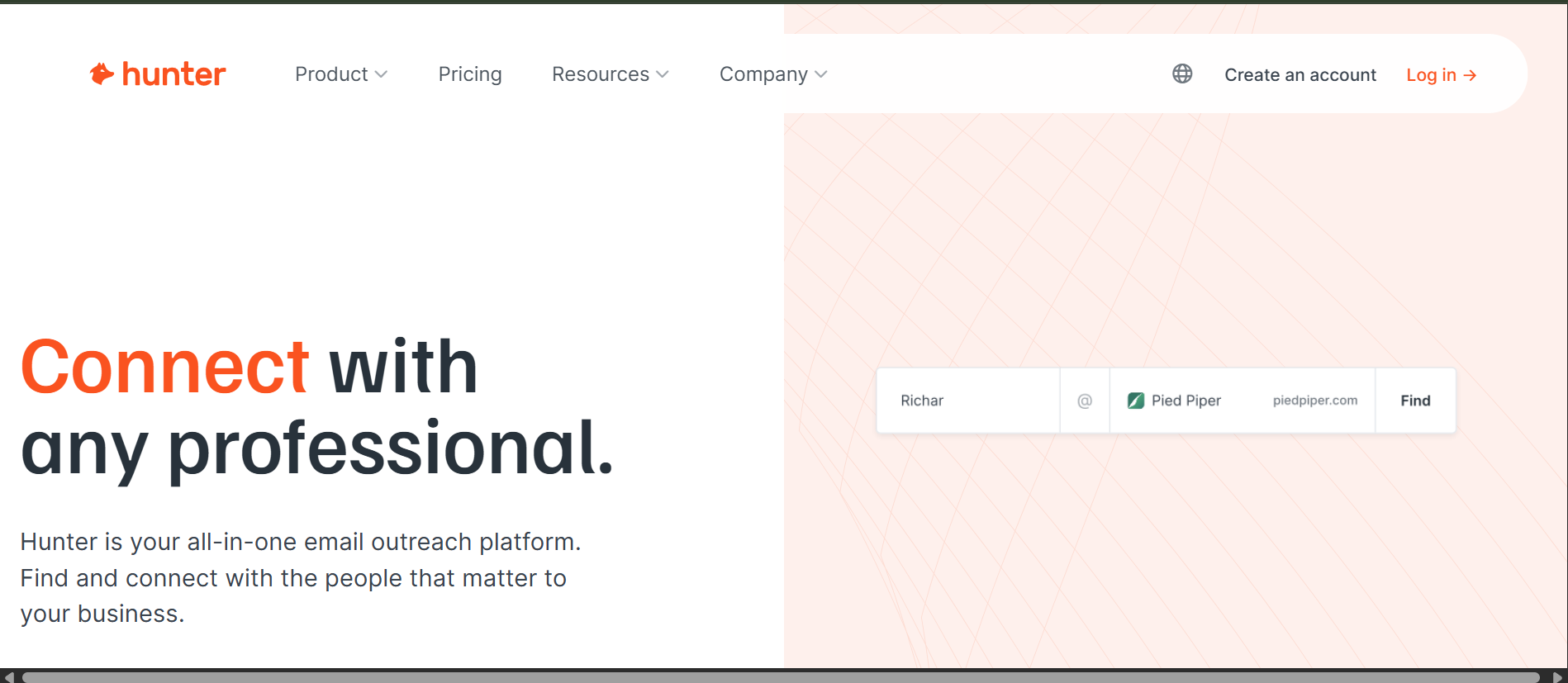
Hunter.io is primarily an email discovery and verification tool.
It helps you find email addresses associated with domains and companies, with access to 100M+ email addresses.
You can:
- Search emails by company domain
- Verify email deliverability
- Send simple outreach campaigns
It’s lightweight, easy to use, and effective for quick prospecting.
However, it doesn’t provide deep company insights, so it’s often used alongside other research tools.
How to Choose the Right Company Research Tool
Now that you’ve seen different company research tools, the challenge isn’t finding options, it’s choosing the one that actually fits your workflow.
The right tool depends less on features alone and more on how well it aligns with your targeting, process, and scale.
Based on Your ICP and Target Market
Start by looking at your ideal customer profile and the type of companies you want to reach.
If you’re targeting startups, tools with funding and growth data will be more useful, while enterprise sales teams may need deeper firmographic insights and decision-maker visibility.
You should also check:
- Industry and geographic coverage
- Access to verified contacts
- Signals like hiring trends or buying intent
Some tools go a step further by not just helping you find companies, but also helping you act on that data.
For example, platforms like Oppora don’t just match your ICP, they continuously build and update target lists based on it.
Based on Workflow (Manual vs Automated)
Next, think about how you want your research process to run daily.
Some tools are manual, where you search, filter, and export lists every time you want new data.
Others are automated, where workflows run in the background and keep generating and engaging leads without constant input.
If your team is spending hours switching between tools, automation becomes a major advantage.
Tools like Oppora combine research with execution, so once you define your targeting, the system continues finding companies and running outreach automatically.
This reduces manual work and helps you move faster from research to actual conversations.
Based on Budget and Scale
Finally, consider how the tool fits your budget and how it scales as your outreach grows.
Some tools charge heavily for credits or limit how much you can do within a plan, which can slow you down as volume increases.
Others are built for scalability, offering:
- Flexible pricing
- Higher outreach limits
- Better cost per lead at scale
The goal is to choose a tool that not only fits your current needs but also supports your growth without adding complexity.
Conclusion
Company research doesn’t have to feel slow or complicated when you have the right setup.
With the right tools, you can find better-fit companies, prioritize the right opportunities, and move faster from research to outreach.
The key is to focus on accuracy, speed, and how easily you can act on the data.
Because in the end, the teams that win aren’t the ones with the most data, but the ones who use it consistently to build pipeline.
Frequently Asked Questions
What are company research tools used for?
Company research tools help you find and analyze businesses based on your ideal customer profile.
They give you access to data like company size, industry, decision-makers, and buying signals so you can target the right accounts and improve your outreach.
Which is the best company research tool for sales teams?
There’s no single “best” tool, it depends on your workflow and goals.
If you only need data, tools like Apollo or ZoomInfo work well, but if you want to combine research with execution, platforms like Oppora can help you move faster from research to outreach.
How do company research tools improve targeting?
These tools let you filter companies based on specific criteria like industry, size, technology stack, or intent signals.
This helps you focus only on high-fit accounts instead of reaching out to a broad, unqualified audience.
Are company research tools suitable for small teams?
Yes, many tools offer flexible plans that work well for startups and small teams.
The key is to choose a tool that balances cost with usability and doesn’t require too much manual effort to get results.
Can company research tools automate outreach as well?
Some tools only provide data, while others also include outreach features.
Advanced platforms combine both, allowing you to find companies, build lists, send emails, and manage replies in one workflow, which saves time and improves consistency.