10 Best Practices for CRM Lead Scoring in 2026

Struggling to figure out which leads actually deserve your sales team’s attention? You’re not alone—most CRM systems still rely on outdated scoring methods that miss real buying intent.
In 2026, CRM lead scoring is smarter, faster, and deeply driven by data and AI, helping you prioritize the right opportunities with confidence.
In this guide, you’ll learn:
- How modern lead scoring CRM systems work
- The latest strategies and tools shaping 2026
- Best practices to improve conversions and sales outcomes
Key Components of an Effective Lead Scoring CRM System
A strong CRM lead scoring system relies on structured data inputs, clear scoring logic, and real-time behavioral signals, helping you build a scalable lead scoring CRM that consistently identifies and prioritizes high-quality leads.
1. Demographic and Firmographic Data in CRM Lead Scoring
Demographic and firmographic data form the foundation of CRM lead scoring by helping you understand who your leads are.
Details like job title, company size, and industry help define your Ideal Customer Profile and improve targeting accuracy.
- Identify high-fit leads based on role and company profile
- Align scoring with your ideal customer profile
- Improve accuracy in lead scoring CRM systems
2. Behavioral Data for Lead Scoring in CRM
Behavioral data shows how leads interact with your brand, making it a key part of CRM lead scoring.
Actions like email opens, clicks, website visits, and replies indicate interest and help prioritize active prospects.
- Track engagement through emails and website activity
- Identify leads showing real-time interest
- Strengthen scoring accuracy in a CRM with lead scoring
3. Engagement and Intent Signals
Not all interactions carry the same value in CRM lead scoring.
High-intent actions like demo requests or direct replies signal strong buying interest and should significantly impact scoring.
- Prioritize leads showing strong buying intent
- Differentiate between passive and active engagement
- Improve lead scoring CRM decision-making
4. Negative Scoring Factors in Lead Scoring CRM
Effective CRM lead scoring also requires identifying and filtering out low-quality leads.
Assigning negative scores to inactivity or poor-fit profiles ensures your system stays focused on valuable opportunities.
- Penalize inactive or irrelevant leads
- Reduce noise in your lead scoring CRM
- Improve overall efficiency and lead quality
Types of Lead Scoring Models in CRM Systems
Lead scoring CRM models range from simple rule-based systems to predictive and AI-driven approaches, helping you choose the right model for your CRM with lead scoring based on data, scale, and accuracy needs.
1. Rule-Based Lead Scoring CRM Models
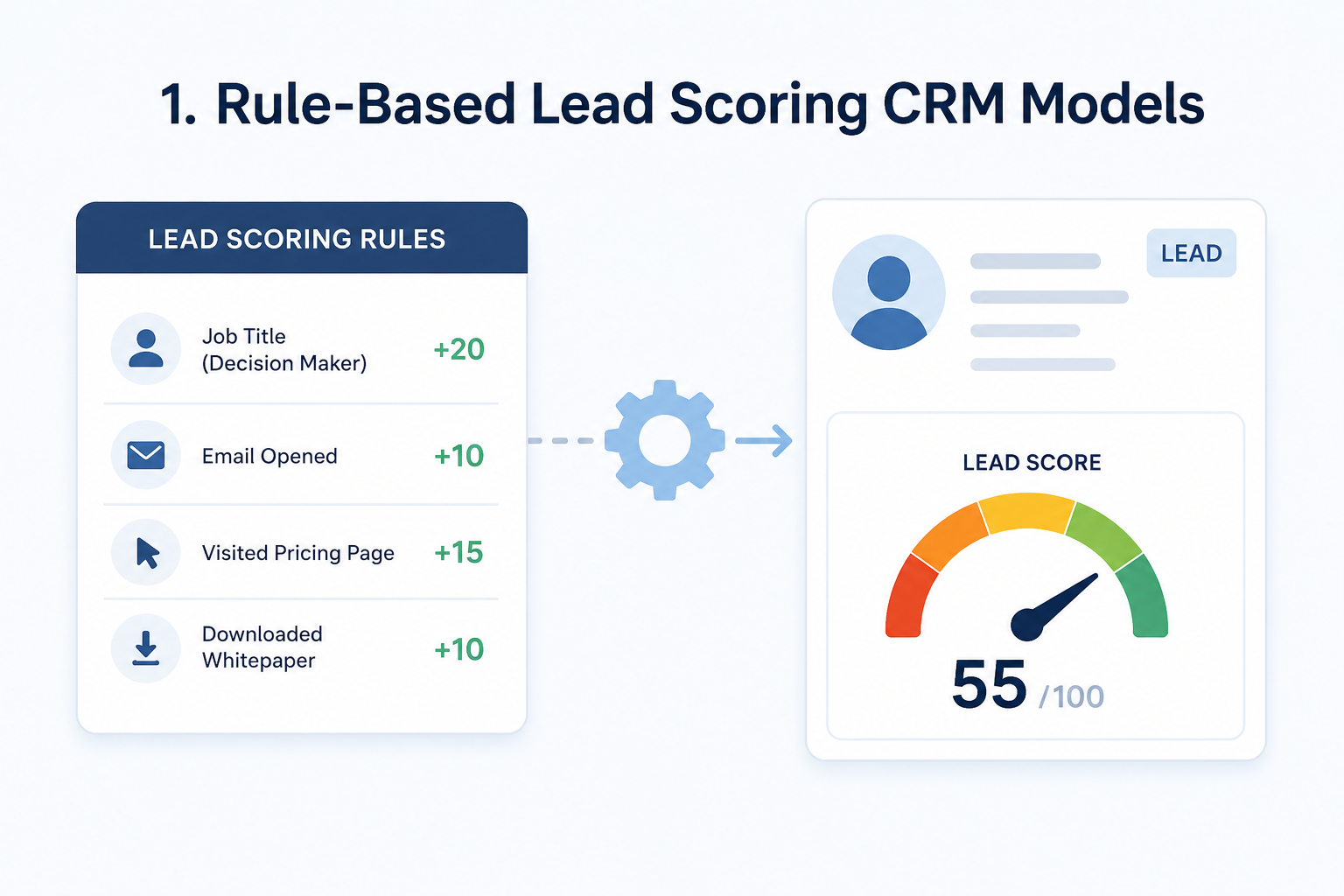
Rule-based lead scoring CRM models rely on manually assigning points based on predefined criteria like job title, email opens, or website visits.
While easy to set up, these systems lack flexibility and struggle to adapt to changing buyer behavior, making them less effective for modern lead scoring in CRM environments.
2. Predictive Lead Scoring in CRM
Predictive lead scoring in CRM uses historical data to identify patterns that indicate which leads are more likely to convert.
By analyzing past conversions, this approach improves CRM lead scoring accuracy and helps teams focus on leads with higher probability, rather than relying only on assumptions or manual rules.
3. AI-Powered Lead Scoring CRM Systems
AI-powered lead scoring CRM systems take automation and accuracy to the next level by continuously learning from data.
They analyze multiple signals in real time, adjust scoring dynamically, and optimize performance over time, making them essential for any CRM with lead scoring looking to scale efficiently in 2026.
10 Best Practices for CRM Lead Scoring in 2026
These best practices help you improve CRM lead scoring accuracy, reduce inefficiencies, and build a scalable lead scoring CRM system that consistently prioritizes high-quality leads and drives better conversions.
1. Define Your Ideal Customer Profile Clearly
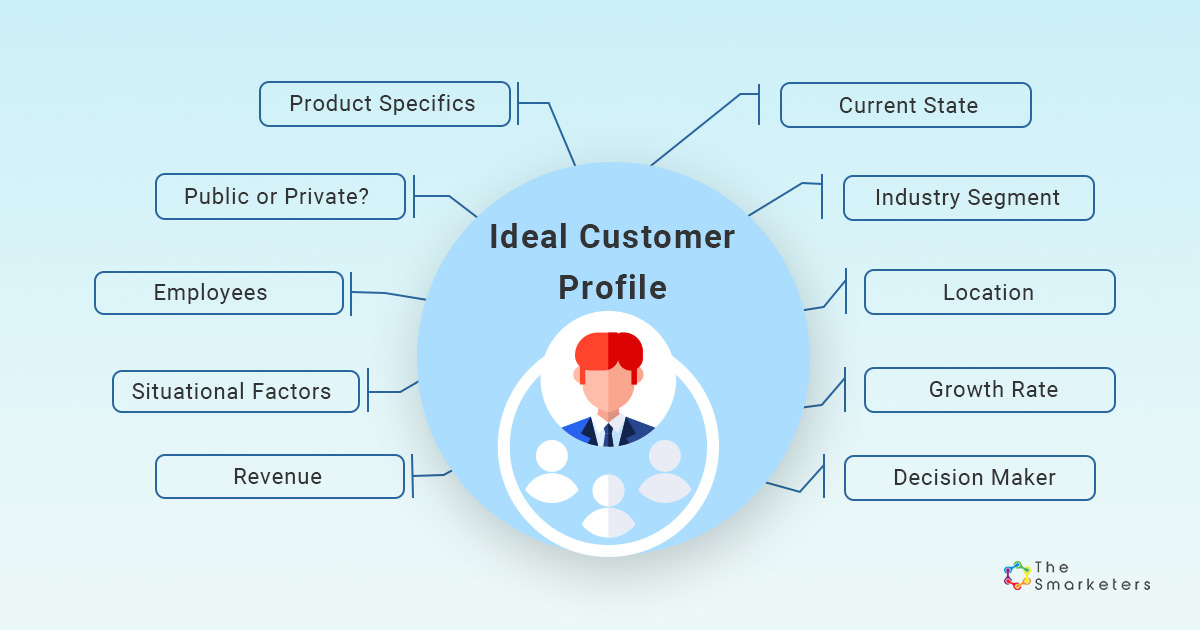
Your CRM lead scoring is only as strong as the foundation it’s built on, and that foundation is your Ideal Customer Profile (ICP).
Without clearly defining who you want to target, your lead scoring CRM will assign value to the wrong leads, leading to wasted effort and poor conversions.
By identifying factors like industry, company size, job roles, and pain points, you give your CRM with lead scoring a clear direction.
This alignment ensures your scoring prioritizes high-fit leads, filters out irrelevant ones early, and improves overall accuracy, consistency, and revenue impact.
2. Use Both Demographic and Behavioral Data
Relying only on static data limits the effectiveness of your CRM lead scoring system.
Demographic data helps you understand who the lead is, but behavioral data reveals how interested they are in your solution.
When you combine both, your lead scoring CRM becomes more dynamic and insightful.
A CRM with lead scoring that tracks actions like email engagement, website visits, and content interaction helps you identify leads that not only fit your ICP but are actively moving toward conversion.
3. Assign Negative Scores for Low-Quality Signals
Not every lead action should increase their score in your CRM lead scoring model.
Leads that come from irrelevant industries, show no engagement, or use invalid contact details should be penalized.
Adding negative scoring helps your lead scoring CRM filter out poor-fit prospects and avoid wasting sales efforts.
A CRM with lead scoring that balances positive and negative signals ensures your team focuses only on leads that have real potential to convert.
4. Align Sales and Marketing Teams
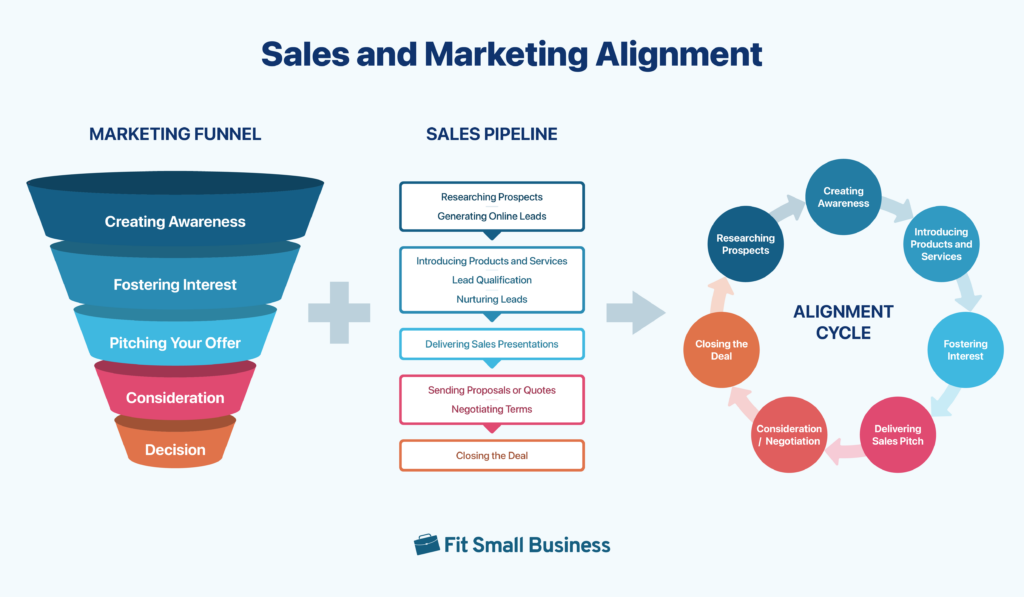
Your CRM lead scoring becomes far more effective when sales and marketing teams are aligned.
Marketing defines lead criteria, but sales teams validate which leads actually convert.
By incorporating feedback from sales, your lead scoring CRM becomes more accurate and practical.
A CRM with lead scoring that reflects real-world insights creates a smoother pipeline, reduces friction between teams, and improves overall conversion rates.
5. Use AI for Predictive Lead Scoring CRM
Traditional scoring methods struggle to keep up with complex buyer journeys.
AI-powered CRM lead scoring analyzes large datasets to identify patterns and predict which leads are most likely to convert.
This makes your lead scoring CRM more intelligent and proactive.
A CRM with lead scoring that uses AI continuously learns from new data, improves accuracy over time, and helps your team focus on high-impact opportunities instead of manual guesswork.
Suggested Reading:
Best AI SDR Tools for Smarter Sales Automation6. Regularly Update Your Scoring Model
Buyer behavior, market trends, and engagement patterns change constantly, so your CRM lead scoring should evolve too.
A static model quickly becomes outdated and loses effectiveness.
Regularly reviewing and updating your lead scoring CRM ensures it reflects current data and real buyer intent.
A CRM with lead scoring that adapts over time helps maintain accuracy, improves decision-making, and ensures your team always works with relevant and actionable insights.
7. Set Clear Score Thresholds
Without clear thresholds, your CRM lead scoring insights can become difficult to act on.
Defining score ranges for marketing-qualified and sales-qualified leads helps your team know exactly when to engage.
This makes your lead scoring CRM more actionable and efficient.
A CRM with lead scoring that uses clear thresholds improves pipeline visibility, reduces confusion, and ensures high-priority leads are followed up at the right time.
8. Integrate Multiple Data Sources
Your CRM lead scoring becomes more powerful when it pulls data from multiple sources.
Combining CRM data, marketing automation platforms, and external enrichment tools gives you a complete view of each lead.
This makes your lead scoring CRM more accurate and reliable.
A CRM with lead scoring that leverages rich, multi-source data helps you identify better opportunities and make smarter prioritization decisions.
9. Track Performance and Optimize Continuously
CRM lead scoring is not a one-time setup but an ongoing process.
Tracking metrics like conversion rates, lead quality, and response times helps you understand what’s working.
Using these insights, you can refine your lead scoring CRM model regularly.
A CRM with lead scoring that is continuously tested and optimized becomes more effective over time, delivering better results and higher efficiency.
10. Automate Lead Routing Based on Scores
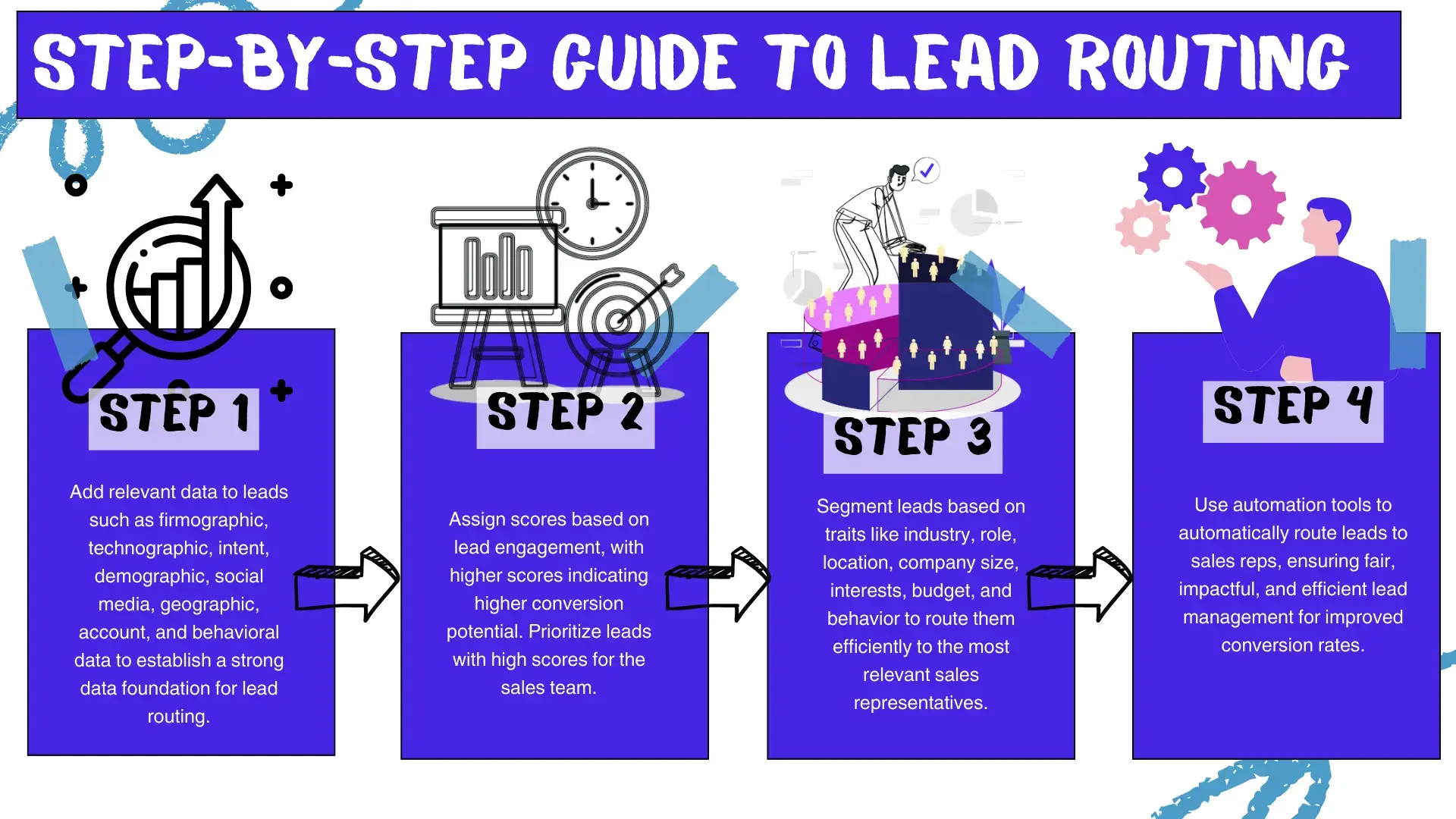
Speed plays a critical role in converting high-quality leads.
Automating lead routing ensures that top-scoring leads are instantly assigned to the right sales representatives.
This reduces delays and improves response time.
A CRM with lead scoring that includes automation helps your team act faster, engage leads at the right moment, and significantly improve overall conversion rates.
Common Mistakes to Avoid in Lead Scoring CRM
Avoid common CRM lead scoring mistakes like relying on outdated data, ignoring negative signals, and misaligned teams, as these reduce accuracy, efficiency, and overall conversions in your lead scoring CRM system.
1. Overcomplicating the Scoring Model
Adding too many rules to your CRM lead scoring model makes it harder to manage and understand.
Complex systems often create confusion and inconsistency.
A simpler lead scoring CRM with clear logic is easier to maintain, more scalable, and often performs better in real-world scenarios.
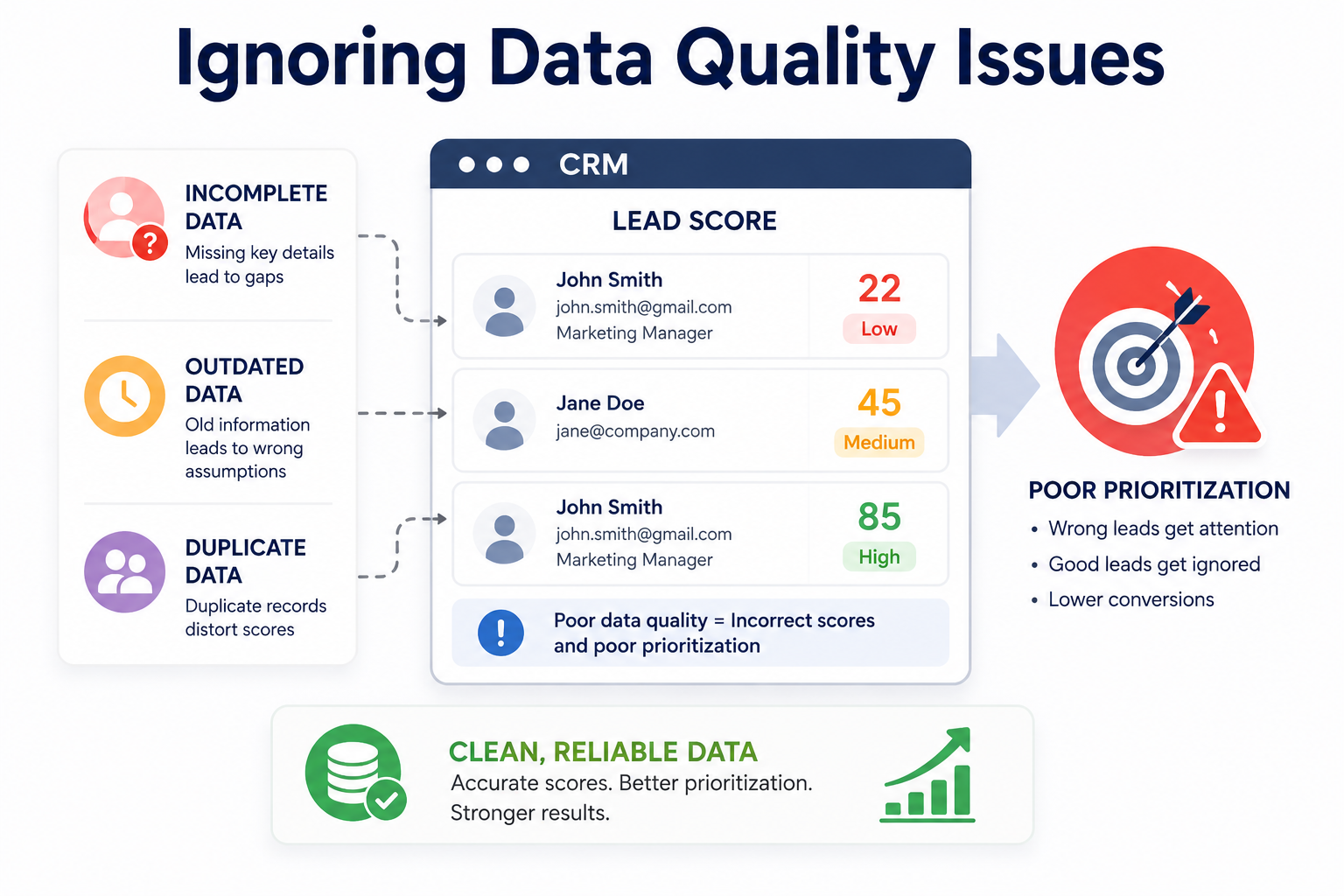
2. Ignoring Data Quality Issues
Your CRM lead scoring is only as accurate as the data behind it.
Incomplete, outdated, or duplicate data can lead to incorrect scoring and poor prioritization.
Maintaining clean and reliable data ensures your lead scoring CRM produces consistent and trustworthy results for better decision-making.
3. Not Aligning with Sales Feedback
Ignoring sales team feedback can weaken your CRM lead scoring effectiveness.
Sales teams interact directly with leads and understand what converts.
Incorporating their insights helps refine your lead scoring CRM, ensuring it reflects real-world outcomes and improves overall lead quality and conversion rates.
4. Static Scoring Without Optimization
A static CRM lead scoring model quickly becomes outdated as buyer behavior evolves.
Without regular updates, your scoring loses relevance and accuracy.
Continuously analyzing performance and optimizing your lead scoring CRM ensures it stays aligned with current trends and delivers consistent results over time.
Suggested Reading:
CRM Data Migration Best PracticesConclusion
CRM lead scoring has evolved into a critical system for improving conversions, prioritizing the right leads, and aligning sales with marketing.
By using the right models, clean data, and continuous optimization, your lead scoring CRM becomes a powerful decision-making tool rather than a static feature.
With AI and automation shaping modern workflows, a CRM with lead scoring is no longer optional.
If you’re looking to simplify and scale your outbound alongside smarter scoring, exploring tools like Oppora.ai can help you build a more efficient, end-to-end system.
Frequently Asked Questions (FAQs)
1. How often should you update your CRM lead scoring model?
You should update your crm lead scoring model every quarter. Buyer behavior changes quickly, so regular updates ensure your lead scoring crm stays accurate and reflects real conversion trends.
2. What is the ideal score threshold for passing leads to sales?
There is no fixed threshold in lead scoring in crm. It depends on your ICP, sales cycle, and past data, and should align closely with sales team expectations.
3. Can small businesses benefit from CRM with lead scoring?
Yes. A crm with lead scoring helps small teams focus on high-quality leads, reduce manual work, and improve conversions without needing large teams or complex systems.
4. What data is most important for accurate lead scoring CRM?
Accurate lead scoring crm depends on firmographics, behavioral data, and engagement signals. Combining these helps your lead scoring in crm identify both lead quality and buying intent effectively.
5. How does AI improve lead scoring in CRM systems?
AI improves lead scoring in crm by analyzing patterns, predicting conversions, and updating scores in real time. It makes crm lead scoring more accurate, efficient, and scalable.