20 Best Discovery Call Questions to Improve Sales Conversions
discovery questions for sales calls best discovery call questions sales discovery call questions

Most sales calls don’t fail because of a bad pitch they fail because the right questions were never asked.
You jump on a call, explain your product, and hope it clicks. But without truly understanding the prospect, even the best pitch falls flat.
That’s where discovery call questions change everything.
They help you uncover real problems, align your solution, and move conversations forward with clarity.
In this guide, you’ll learn:
- What discovery call questions actually are
- Why they matter more than pitching
- 20 best questions to ask on every call
- How to use them to improve conversions
What Are Discovery Call Questions in Sales?
Discovery call questions are the questions you ask to understand a prospect’s situation, challenges, and goals before offering any solution.
Instead of jumping into a pitch, you use these questions to uncover real needs and context.
This helps you qualify opportunities, guide the conversation naturally, and ensure your solution actually fits what the prospect is trying to achieve.
Why Discovery Calls Matter More Than Pitching
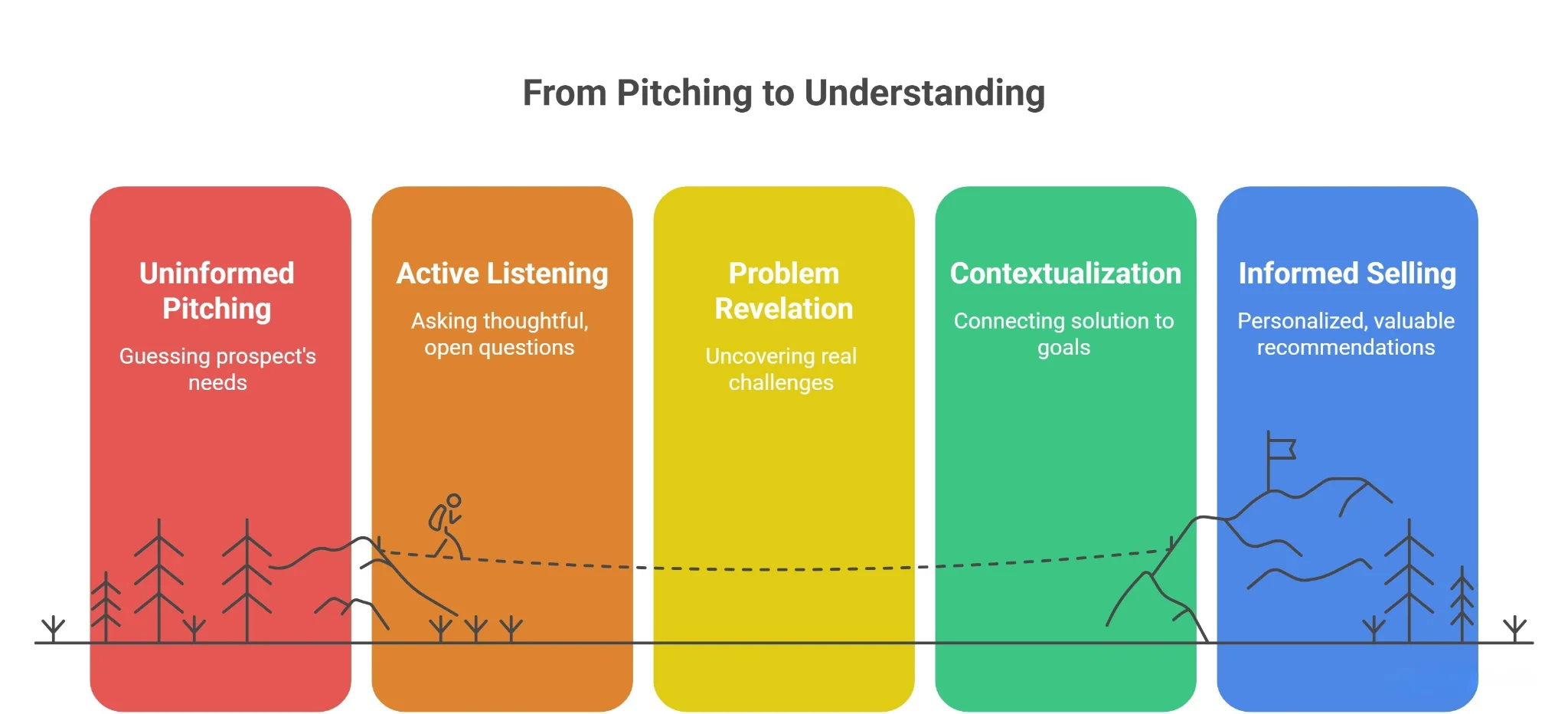
Before you think about pitching, you need to understand what the prospect actually cares about.
Discovery calls shift the focus from talking to listening, which is where real sales conversations begin.
Builds Trust Through Genuine Conversations
When you ask thoughtful questions instead of pushing your product, the conversation feels natural and balanced.
You give the prospect space to speak, which makes them feel heard and understood.
This early trust makes them more open, honest, and willing to share deeper insights about their situation.
Reveals Problems That Actually Matter
Without discovery, you’re guessing what the problem is.
Good discovery questions help you uncover the real challenges behind the surface-level issues.
This ensures you’re not solving the wrong problem and helps you focus only on what truly needs attention.
Creates Context for Better Conversations
Once you understand the prospect’s situation, every part of the conversation becomes more relevant.
You can connect your solution directly to their goals, priorities, and constraints.
This context helps you guide the discussion with clarity and makes your recommendations feel more personalized and valuable.
What Makes the Best Discovery Call Questions Effective
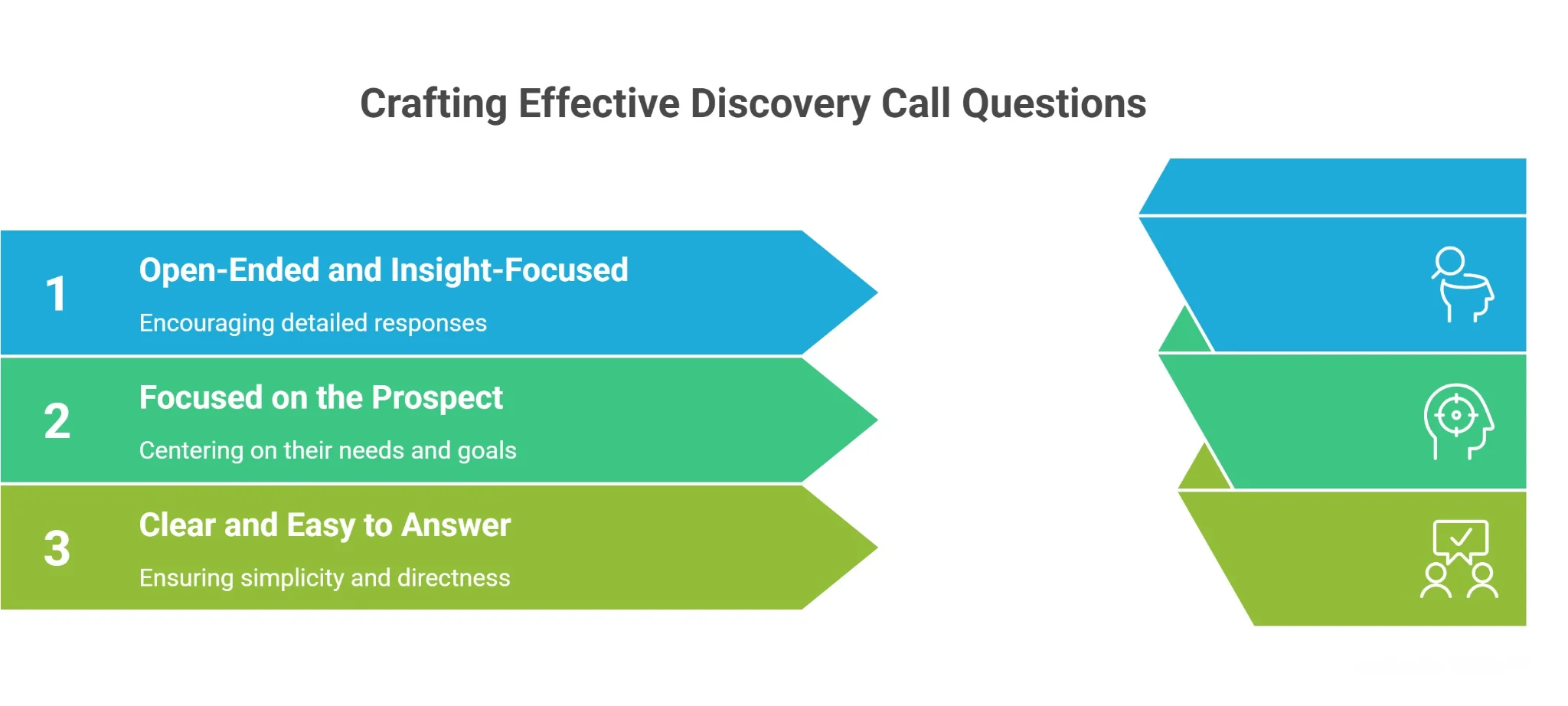
Once you understand why discovery matters, the next step is knowing what makes a question actually effective.
Not all questions create meaningful conversations, and the difference often comes down to how they are framed and delivered.
Open-Ended and Insight-Focused
The best discovery call questions invite the prospect to explain, not just respond.
Instead of yes or no answers, you encourage detailed insights that reveal context, priorities, and underlying challenges.
This helps you move beyond surface-level information and understand what is really happening behind the scenes.
Focused on the Prospect
Effective questions are always centered around the prospect, not your product or solution.
You’re exploring their goals, processes, and obstacles rather than steering the conversation toward what you offer.
This approach keeps the discussion relevant and ensures the prospect feels like the focus, not the pitch.
Clear and Easy to Answer
Complex or vague questions can slow down the conversation and create confusion.
Strong discovery questions are simple, direct, and easy to understand without overthinking.
This keeps the flow natural, helps prospects respond confidently, and allows you to gather better insights without interrupting the rhythm of the call.
20 Best Discovery Call Questions to Improve Sales Conversions
Now that you understand what makes a strong discovery process, the next step is knowing exactly what to ask.
These aren’t random questions you throw into a call. Each one is designed to help you move from surface-level conversation to real insight—so you can guide the deal forward with clarity.
1. Can You Walk Me Through Your Current Process?
This is one of the best discovery call questions to start with because it opens the conversation naturally.
Instead of assuming anything, you let the prospect explain how things actually work today.
You’ll start to notice:
- How their workflow is structured
- Where handoffs happen between teams
- Hidden inefficiencies they may not even realize
It also helps you understand context before jumping into problems or solutions.
2. What Tools or Systems Are You Using Today?
Once you understand the process, the next step is understanding the tools behind it.
This question gives you a clear picture of their current setup and comfort level with technology.
You can uncover:
- Existing tools they rely on daily
- Gaps between tools that create friction
- Opportunities where improvements can fit naturally
It also helps you avoid suggesting something that overlaps or creates unnecessary change.
3. Where Do You See Gaps or Inefficiencies?
Now you gently shift the conversation toward improvement.
Instead of pointing out problems yourself, you let the prospect reflect on what isn’t working.
This is powerful because people trust their own conclusions more than external opinions.
You’ll often hear things like:
- Manual work that takes too much time
- Processes that feel disconnected
- Areas where results don’t match effort
These insights become the foundation for the rest of your conversation.
4. What Challenges Are You Facing Right Now?
At this stage, you go deeper into the problems that actually matter.
This question helps you move from general inefficiencies to real, active challenges.
It gives you direct insight into:
- What is frustrating the team
- What keeps getting delayed or blocked
- What they’ve already tried to fix
The goal here is not just to list problems, but to understand their importance and urgency.
5. What Is Slowing Down Your Team the Most?
Every team has bottlenecks, but not all of them are obvious.
This question helps you identify the biggest constraint affecting productivity.
When you ask this, you often uncover:
- Repetitive manual tasks
- Dependency on other teams or approvals
- Lack of visibility across workflows
This is where conversations start becoming more specific and actionable.
6. What Happens If This Problem Continues?
Now you shift from understanding the problem to understanding its impact.
This is where urgency starts to build naturally without you forcing it.
You help the prospect think about:
- Lost opportunities or revenue
- Increased workload or inefficiency
- Long-term risks if nothing changes
Instead of pushing urgency, you let them realize the cost of inaction on their own.
7. How Is This Affecting Your Results?
Once impact is clear, you connect it directly to outcomes.
This question helps quantify the problem in terms that matter to the business.
You can guide the conversation toward:
- Missed targets or KPIs
- Lower productivity or output
- Reduced team performance
This makes the conversation more concrete and easier to align with value later.
8. What Are You Trying to Achieve in the Next Few Months?
After exploring the current state and challenges, you shift toward the future.
This question helps you understand short-term goals and priorities.
It gives you clarity on:
- What they want to improve immediately
- Which problems matter most right now
- How they are thinking about progress
It also helps you position your conversation in a way that feels relevant and timely.
9. What Does Success Look Like for You?
This is where everything comes together.
You move from problems and goals to defining success in the prospect’s own words.
That clarity helps you:
- Align expectations early
- Avoid misunderstandings later
- Shape the direction of the conversation
A strong answer here gives you a clear target to work toward throughout the sales process.
10. What Does Success Look Like for You?
At this stage, you move from understanding problems to defining outcomes.
This question helps you see the end goal from the prospect’s perspective, not yours.
When they describe success clearly, you get:
- A benchmark to align your solution with
- Clarity on expectations early in the process
- A way to guide the conversation toward real value
It also prevents misalignment later because both sides are working toward the same definition.
11. What Are Your Top Priorities Right Now?
Even if multiple problems exist, not everything matters equally.
This question helps you understand where the prospect is actually focused today.
You can identify:
- What they care about most right now
- Which initiatives are getting attention internally
- Where your conversation should stay focused
This keeps your discovery call relevant instead of scattered.
12. How Do You Measure Success Today?
Now you go one level deeper into how they track progress.
Understanding metrics helps you connect the problem to something measurable.
You might uncover:
- KPIs they are responsible for
- Performance benchmarks they are trying to hit
- Gaps between current results and expected outcomes
This is critical because decisions are rarely made on opinions—they are made on numbers.
13. Who Is Involved in the Decision Process?
A great discovery call doesn’t stop at understanding problems.
You also need to understand how decisions actually happen.
This question helps you map:
- Key stakeholders involved
- Decision-makers vs influencers
- Internal approval processes
It prevents surprises later and helps you plan your next steps more strategically.
14. Do You Have a Budget Planned for This?
This is where qualification becomes clearer.
Instead of avoiding the topic, you bring it in naturally after establishing value.
You’re not just asking about money—you’re understanding readiness.
You can learn:
- Whether this is already a planned initiative
- If budget has been allocated or not
- How serious the opportunity is
This saves time and helps you focus on the right opportunities.
15. What Timeline Are You Working With?
Timing plays a huge role in conversions.
A prospect might have a strong need, but if the timeline is unclear, momentum can slow down.
This question helps you understand:
- How urgent the problem is
- Whether they are actively looking to solve it
- How quickly decisions might move
It also helps you prioritize deals based on real intent.
16. What Could Delay or Block This Decision?
Every deal has friction.
The earlier you identify it, the easier it becomes to handle.
This question helps surface hidden objections before they become real blockers.
You might uncover:
- Internal resistance from teams
- Budget or approval challenges
- Competing priorities
Instead of reacting later, you can prepare and address these early.
17. What Would Your Ideal Solution Look Like?
Now you bring the conversation closer to a solution—but still from their perspective.
This question helps you understand expectations without pitching too soon.
You’ll get insights into:
- Features or outcomes they value most
- What they’ve been missing so far
- What “perfect” looks like in their mind
This ensures your positioning feels relevant and not forced.
18. What Would Be the Next Step If This Fits?
At this point, you gently transition toward action.
This question helps you test intent without being pushy.
It allows the prospect to define:
- What they would do if the solution makes sense
- How they prefer to move forward
- What the buying process might look like
It also keeps the conversation moving instead of ending without direction.
19. When Would You Like to Move Forward?
Now you make the timeline more specific.
This question reinforces urgency while still keeping things natural.
You’re helping the prospect think about commitment, not just interest.
You can understand:
- Their readiness to act
- Whether the timing aligns with your process
- How soon the deal could realistically close
This clarity helps you avoid vague follow-ups.
20. Can We Schedule a Follow-Up Conversation?
Every strong discovery call should end with a clear next step.
Without this, even a great conversation can lose momentum.
This question ensures continuity and keeps the opportunity alive.
Instead of leaving things open-ended, you:
- Secure the next interaction
- Maintain engagement
- Move the deal forward with intent
When used together, these best discovery call questions help you move from understanding to alignment without making the conversation feel forced.
Instead of jumping into a pitch, you create a natural flow where every answer builds on the previous one and that’s what ultimately improves conversions.
How to Use Discovery Call Questions to Improve Conversions
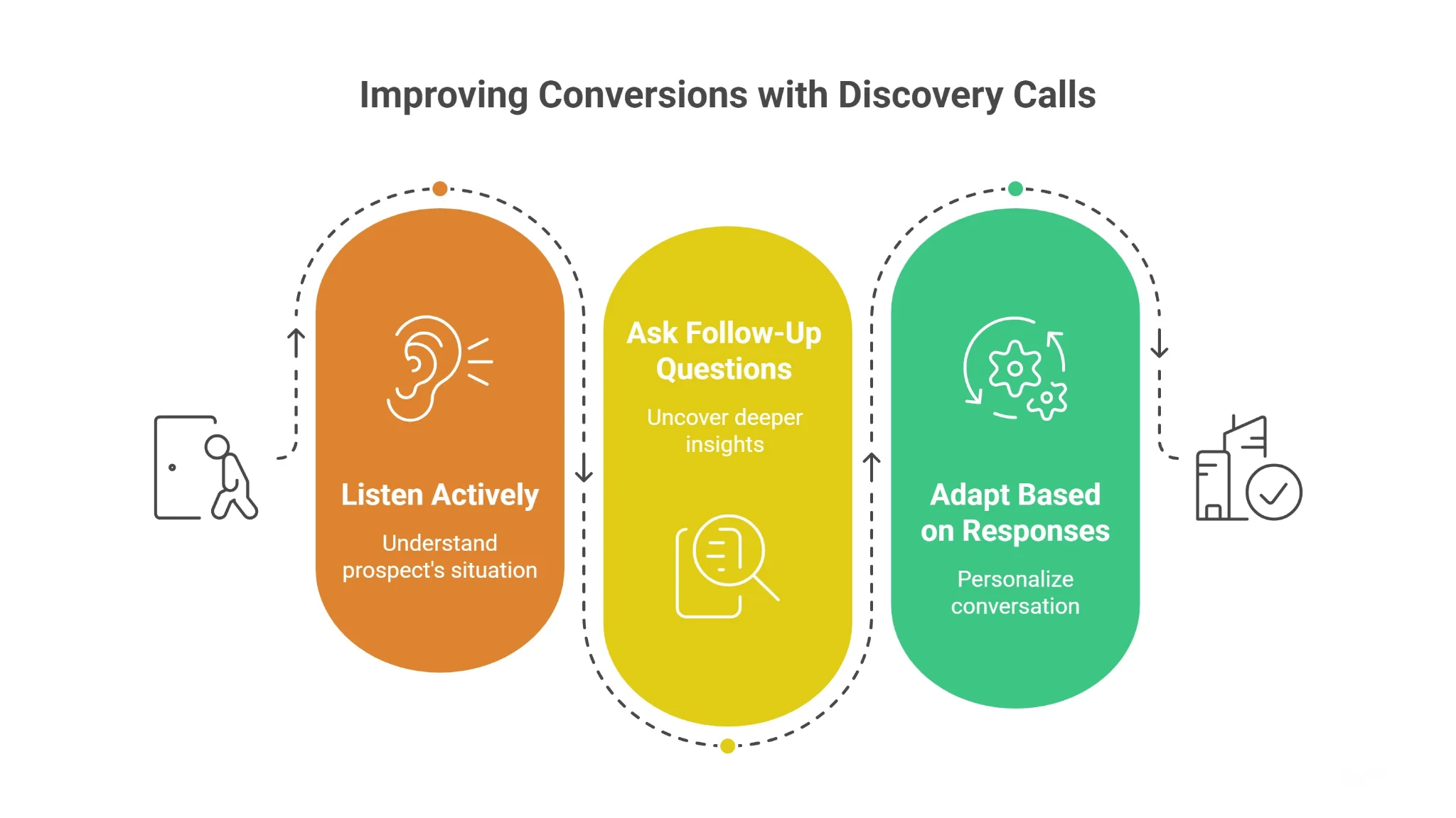
Asking the right discovery call questions is only half the job.
What really improves conversions is how you handle the conversation after asking them.
Listen More Than You Talk
Most sales calls fail because the rep talks too much and listens too little.
Your goal is to let the prospect explain their situation fully without interruption.
When you listen carefully, you start to notice patterns, priorities, and emotions behind their answers.
This helps you respond with relevance instead of assumptions, making the conversation feel natural and valuable.
Ask Follow-Up Questions
The first answer is rarely the full picture.
Follow-up questions help you go deeper and uncover insights that are not obvious at the surface.
You can use them to:
- Clarify vague responses
- Explore specific challenges in detail
- Understand the “why” behind their answers
This is where real discovery happens, not just at the question level.
Adapt Based on Responses
No two discovery calls are the same.
Instead of sticking to a fixed script, adjust your questions based on what the prospect shares.
Focus on what matters most to them, skip what doesn’t, and guide the conversation accordingly.
This flexibility makes your approach feel personalized and that’s what drives better engagement and higher conversions.
Common Mistakes in Sales Discovery Call Questions
Even with the right discovery call questions, small mistakes can reduce the effectiveness of your conversation.
Most of these issues are not about what you ask, but how you ask it and how the conversation feels to the prospect.
Asking Too Many Unstructured Questions
When you ask too many random questions without a clear flow, the conversation starts to feel scattered.
The prospect struggles to understand where the discussion is going, which reduces clarity and engagement.
This often leads to:
- Confusion about the purpose of the call
- Surface-level answers instead of meaningful insights
- A conversation that feels more like a checklist than a discussion
Instead, guide your questions in a logical sequence so each answer builds on the previous one.
Making It Feel Like an Interrogation
Discovery should feel like a conversation, not an interview.
If you keep firing questions without context or acknowledgment, the prospect may become uncomfortable or guarded.
This can result in:
- Short, less honest responses
- Reduced willingness to share real challenges
- Lower overall engagement
Balance questions with reactions, insights, and natural transitions to keep the tone conversational.
Pitching Too Early
One of the most common mistakes is jumping into a pitch before fully understanding the problem.
When you do this, your solution often feels generic and disconnected.
It can:
- Break trust early in the conversation
- Miss important context about the prospect’s needs
- Reduce the impact of your eventual pitch
Focus on understanding first, then position your solution based on what truly matters to them.
How Oppora Helps You Run Smarter Discovery and Convert Faster
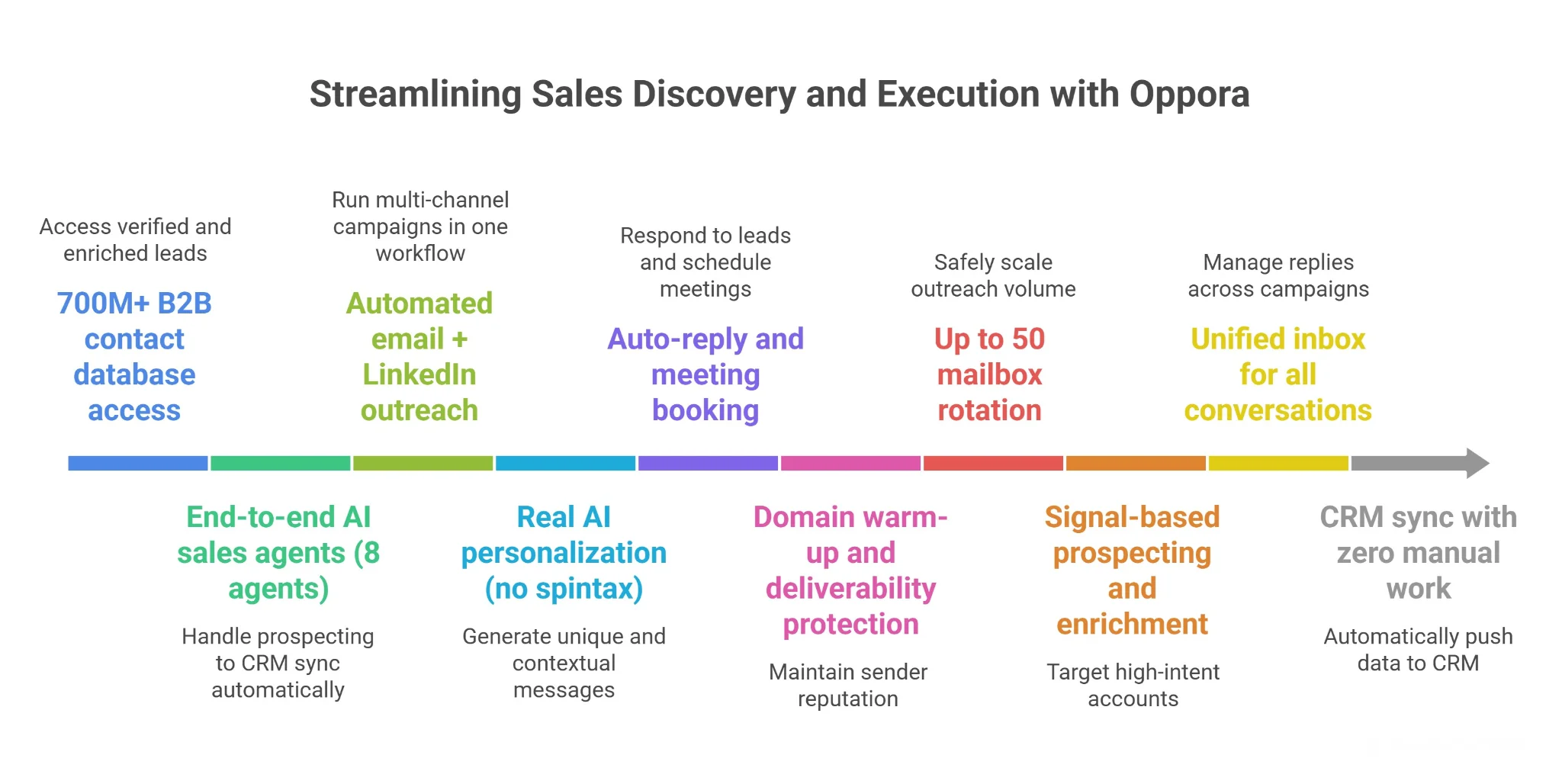
Even when your discovery calls are strong, most deals slow down in the execution phase.
Follow-ups get delayed, outreach becomes inconsistent, and opportunities lose momentum.
Oppora is an AI outbound sales agent built to bridge that gap by turning your discovery insights into consistent, automated action.
Instead of juggling multiple tools, you create one system that runs your entire outbound workflow end to end.
Here’s how Oppora helps you convert faster:
- 700M+ B2B contact database access Get verified and enriched leads using waterfall data sources for higher accuracy
- End-to-end AI sales agents (8 agents) Handle prospecting → enrichment → outreach → replies → CRM sync automatically
- Automated email + LinkedIn outreach Run multi-channel campaigns in one unified workflow without switching tools
- Real AI personalization (no spintax) Every message is uniquely generated to feel contextual and human
- Auto-reply and meeting booking Respond to leads and schedule meetings directly from your inbox
- Domain warm-up and deliverability protection Keep your emails out of spam and maintain sender reputation
- Up to 50 mailbox rotation Safely scale outreach volume without burning domains
- Signal-based prospecting and enrichment Target high-intent accounts based on real buying signals
- Unified inbox for all conversations Manage replies across campaigns without missing opportunities
- CRM sync with zero manual work Automatically push data to HubSpot, Salesforce, Pipedrive, and more
- A/B testing and performance insights Continuously improve campaigns with clear data on what works
- Drag-and-drop workflow builder Create your outbound system once and let it run automatically
With Oppora, discovery doesn’t end at understanding the prospect.
It turns directly into execution, helping you move deals forward faster with less manual effort.
Conclusion
Discovery call questions shape the quality of your entire sales process.
When you focus on understanding instead of pitching, you uncover real needs, build trust, and guide prospects toward the right decision with clarity.
The key is to stay curious, listen actively, and always connect answers back to meaningful outcomes.
But asking the right questions is only half the job.
If you want to turn those insights into consistent follow-ups, conversations, and conversions, having a system behind you makes all the difference.
That’s where Oppora can quietly support your process, helping you move from great discovery calls to actual closed deals without losing momentum.
Frequently Asked Questions (FAQs)
What is the ideal length of a discovery call?
A good discovery call usually lasts between 20 to 45 minutes.It should be long enough to understand the prospect’s situation in detail, but not so long that it feels exhausting. Focus on quality of conversation, not duration.
How many discovery questions should you ask in one call?
There’s no fixed number, but asking 8–12 meaningful questions is usually effective.The goal is to go deep, not wide. It’s better to explore fewer topics thoroughly than rush through too many questions without real insight.
Should discovery calls follow a strict script?
No, discovery calls should follow a flexible structure, not a rigid script.A script can help guide the flow, but you should adapt based on the prospect’s responses to keep the conversation natural and relevant.
How do you handle prospects who give short or vague answers?
Use follow-up questions to dig deeper and add context to your responses.You can also reframe the question or give examples to help them open up, making it easier for them to share meaningful information.
Can discovery calls be done over email or chat instead of calls?
Yes, but calls are more effective for deeper conversations. Email or chat can work for initial qualification, but real-time discussions help you understand tone, urgency, and context much better, which improves overall conversion chances.