25 LinkedIn Outreach Message Templates for Sales & Networking
linkedin outreach message template linkedin outreach template linkedin outreach templates
LinkedIn has become one of the most powerful places to start professional conversations.
Founders, recruiters, sales teams, and industry experts all use the platform to discover new people and opportunities.
Yet many professionals hesitate when it comes to sending the first message. They worry about sounding too promotional, too generic, or simply getting ignored.
The truth is that effective LinkedIn outreach is usually simple.
When your message feels relevant, respectful, and conversational, people are far more likely to reply.
In this guide, you’ll learn practical outreach approaches along with 25 LinkedIn outreach message templates you can use for networking, partnerships, and sales conversations.
Why LinkedIn Outreach Works for Sales and Networking
Unlike many other social platforms, people join LinkedIn with the intention of building connections, exploring opportunities, and learning from others in their industry.
Because of this professional mindset, outreach messages are often received more openly than traditional cold emails or calls.
When your message feels relevant and respectful, it can quickly turn into a meaningful conversation.
Understanding why LinkedIn outreach works can help you approach networking and sales conversations more confidently.
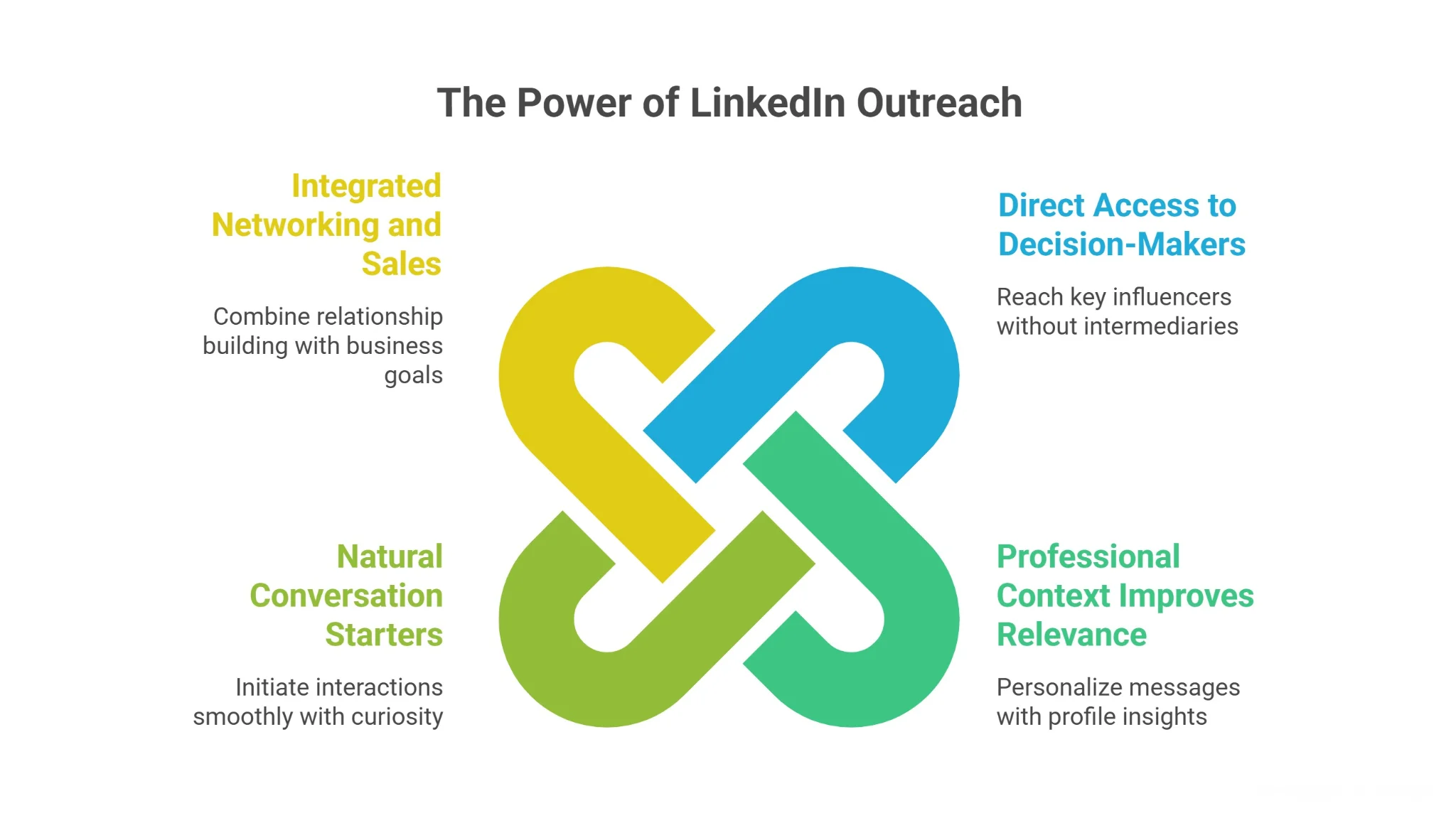
Direct Access to Decision-Makers
One of LinkedIn’s biggest advantages is the ability to reach decision-makers directly.
Founders, executives, managers, and department leaders actively maintain their profiles and regularly interact with their networks.
In many cases, you can send a connection request or message without needing introductions, referrals, or complicated approval processes.
This direct communication channel removes many of the barriers that traditionally exist in business outreach.
For sales professionals and founders, this means you can start conversations with the people who actually influence purchasing decisions.
Professional Context Improves Message Relevance
Another reason LinkedIn outreach works well is the amount of context available on every profile.
You can see a person’s role, company, industry, experience, and sometimes even the content they share or engage with.
This information makes it much easier to personalize your message and explain why you are reaching out.
Instead of sending a generic introduction, you can reference something specific about their work or interests.
When recipients immediately see that the message is relevant to them, they are far more likely to read it and respond.
Conversations Start More Naturally
LinkedIn is built for professional interaction, which makes outreach feel more natural than other communication channels.
People expect to receive connection requests, comments, and messages from professionals they may not already know.
Because of this expectation, messages that start with curiosity, appreciation, or shared interests rarely feel intrusive.
A simple message acknowledging someone’s work, content, or expertise can often open the door to a meaningful conversation.
Over time, these conversations can evolve into collaborations, partnerships, or sales opportunities.
Networking and Sales Opportunities in One Platform
LinkedIn combines networking, hiring, partnerships, and sales activity in one place.
Professionals often use the platform to discover new ideas, connect with peers, and explore potential business opportunities.
This environment encourages relationship-building first, rather than pushing immediate transactions.
When you focus on starting genuine conversations and learning about other professionals, trust builds naturally.
And once trust exists, discussing business opportunities becomes much easier and more productive.
How to Write a LinkedIn Outreach Message That Gets Replies
Writing a LinkedIn outreach message is not about being clever or overly persuasive.
It is about starting a simple, respectful conversation that feels relevant to the person receiving it.
Most professionals receive many connection requests every week.
So the messages that stand out are usually the ones that feel natural, personalized, and easy to respond to.
When your outreach follows a simple structure, you increase the chances of getting a reply and starting a real conversation.
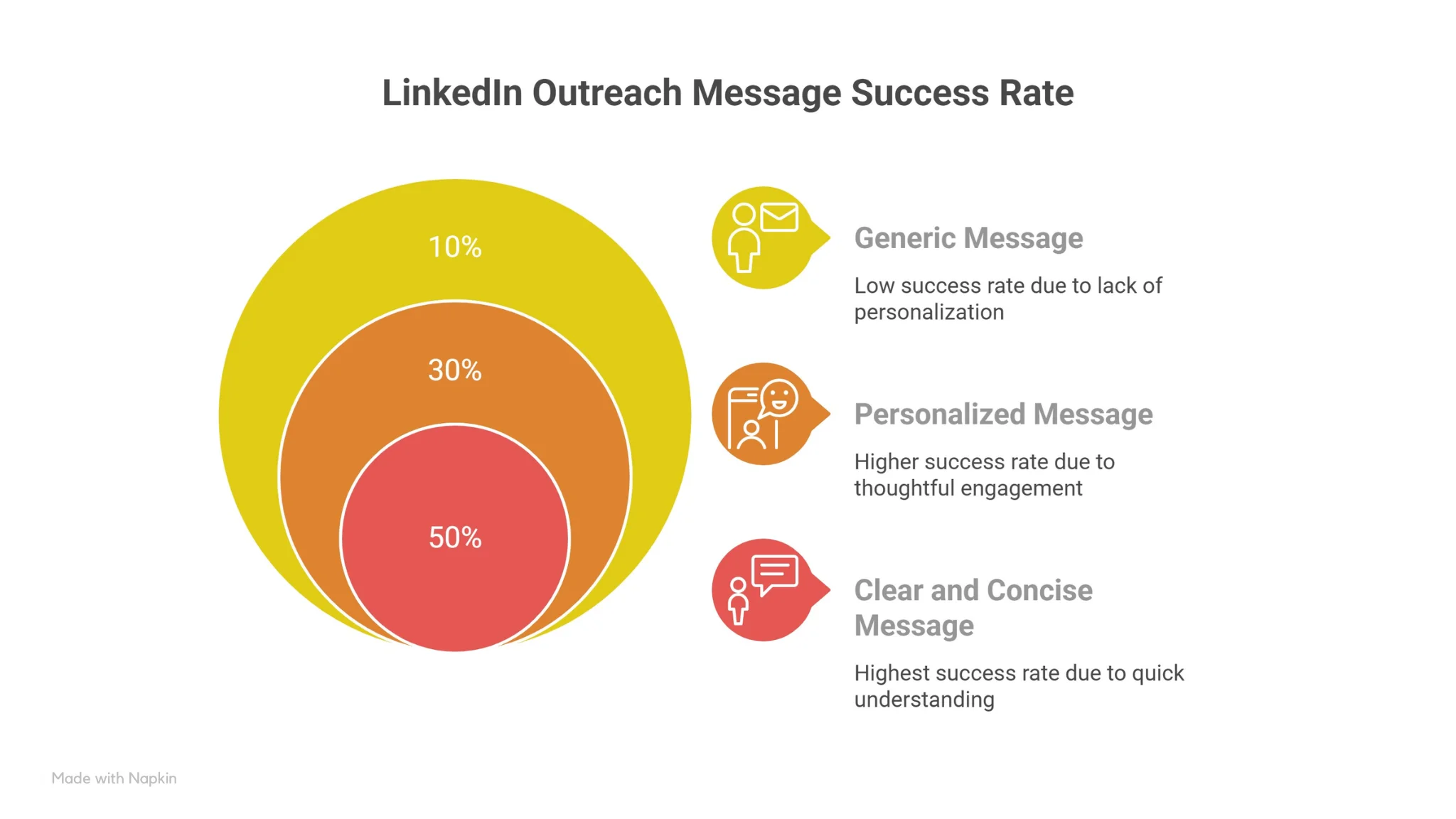
Keep Messages Short and Clear
Most LinkedIn users quickly skim through their messages.
If your message is too long or complicated, it often gets ignored before the reader understands your intent.
That is why clear and concise communication works best.
Start with a short introduction, briefly explain why you are reaching out, and end with a simple conversation starter.
When your message is easy to read and understand within a few seconds, the recipient is far more likely to respond.
Personalization Improves Engagement
Generic messages are one of the biggest reasons outreach fails.
People can easily recognize when a message has been copied and sent to dozens of others.
Instead, try to reference something specific about the person you are contacting.
It could be their company, their role, a recent post, or an industry topic they are involved in.
This small effort shows that you actually took time to understand who they are.
When outreach feels thoughtful and relevant, professionals are much more willing to engage in conversation.
Common Outreach Mistakes to Avoid
Many LinkedIn messages fail because they sound automated or overly promotional.
Sending long paragraphs, pitching a product in the first message, or asking for too much too quickly often discourages replies.
Another common mistake is sending the same message to everyone without adapting it.
Instead of pushing a sales pitch immediately, focus on curiosity and conversation first.
When people feel that the message is genuine and respectful, they are much more likely to respond and continue the discussion.
25 LinkedIn Outreach Message Templates for Sales & Networking
Starting a conversation on LinkedIn becomes much easier when you follow a simple message structure.
Instead of overthinking every outreach message, templates help you begin conversations in a clear and natural way.
The examples below cover different situations including networking, sales prospecting, partnerships, and follow-ups.
You can use them as a starting point and personalize each message so it feels relevant to the person you are reaching out to.
Template 1 – Simple Connection Introduction
Template
Hi [Name],
I came across your profile while exploring professionals working in the [industry] space. Your work caught my attention, and I enjoy connecting with people building interesting things in this field.
Thought it would be great to stay connected here and learn from each other.
Looking forward to connecting, [Your Name]
Why is it powerful
This message clearly explains why you are connecting while keeping the tone friendly and non-promotional.
When to use it
Use this when you want to expand your professional network and start a simple first connection.
Template 2 – Shared Industry Interest
Template
Hi [Name],
I noticed you’re also working in the [industry] space. I always enjoy connecting with professionals who share similar interests and perspectives.
Thought it would be great to connect and exchange ideas sometime.
Would be great to stay connected, [Your Name]
Why it is powerful
Referencing a shared industry immediately creates relevance.
The message feels natural because it focuses on common interests instead of pushing a pitch.
When to use it
Use this when connecting with professionals who work in the same industry or closely related fields. It helps start peer conversations and build professional relationships.
Template 3 – Content Appreciation
Template
Hi [Name],
I recently saw your post about [topic] and found your perspective really interesting. I enjoy learning from professionals who share thoughtful insights like that.
Thought it would be great to connect and follow more of your content.
Keep sharing great insights,
[Your Name]
Why it is powerful
Acknowledging someone’s content shows genuine interest and effort.
It signals that you’re not sending a random request but responding to something they shared.
When to use it
Use this when the person actively posts on LinkedIn and shares ideas related to your industry.
Template 4 – Event Connection
Template
Hi [Name],
I noticed we both attended the [event/webinar] recently. Events like these are always a great way to meet professionals working in similar areas.
Thought it would be nice to connect here and stay in touch.
Great to meet fellow attendees,
[Your Name]
Why it is powerful
Shared experiences create instant familiarity and make outreach feel more natural.
It gives a clear reason for starting the conversation.
When to use it
Use this after webinars, conferences, workshops, or virtual industry events.
Template 5 – Mutual Connection Outreach
Template
Hi [Name],
I noticed we share a few mutual connections in the [industry] space. It’s always interesting to meet professionals within the same network.
Thought it would be great to connect and exchange ideas.
Hope we can connect as well, [Your Name]
Why it is powerful
Mutual connections add a layer of trust and credibility to the outreach.
It makes the message feel warmer than a completely cold introduction.
When to use it
Use this when you and the recipient have shared professional contacts on LinkedIn.
Template 6 – Problem Awareness Message
Template
Hi [Name],
I often speak with companies in the [industry] space that are trying to improve [process or challenge].
Curious if this is something your team has been exploring recently.
Curious to hear your thoughts,
[Your Name]
Why it is powerful
This message focuses on a problem rather than immediately promoting a product.
It invites discussion and encourages the recipient to share their perspective.
When to use it
Use this when starting early-stage sales conversations with potential prospects.
Template 7 – Industry Insight Message
Template
Hi [Name],
I recently came across some interesting insights about how companies are approaching [topic] in the [industry] space.
Since you work closely in this area, I thought it would be interesting to exchange thoughts.
Happy to exchange ideas anytime,
[Your Name]
Why it is powerful
This message invites discussion instead of pushing a pitch.
It positions the conversation around industry insights rather than a product.
When to use it
Use this when you want to start thoughtful conversations with professionals in your industry.
Template 8 – Friendly Sales Introduction
Template
Hi [Name],
I work with teams in the [industry] space to help improve [specific outcome or process].
Curious how your team currently approaches this.
Open to hearing your perspective,
[Your Name]
Why it is powerful
The message introduces what you do without sounding overly promotional.
It opens a conversation instead of immediately selling something.
When to use it
Use this when reaching out to potential prospects and starting early-stage sales conversations.
Template 9 – Growth Observation
Template
Hi [Name],
I noticed your company has been growing recently, which is always exciting to see.
Many teams at this stage start focusing on improving [process or area], so I was curious if this is something you’re exploring as well.
Wishing you continued growth,
[Your Name]
Why it is powerful
It shows that you have done research about the company.
The message feels thoughtful because it connects outreach to the company’s growth stage.
When to use it
Use this when reaching out to startups or companies experiencing recent growth.
Template 10 – Case Study Mention
Template
Hi [Name],
We recently worked with a company in the [industry] space and helped them improve [specific result].
If you’re interested, I’d be happy to share what worked for them.
Happy to share more if helpful,
[Your Name]
Why it is powerful
Mentioning a real result builds credibility and social proof.
It makes the outreach feel informative rather than promotional.
When to use it
Use this when you have relevant results or case studies that relate to the recipient’s industry.
Template 11 – Peer Networking Message
Template
Hi [Name],
I enjoy connecting with professionals working in the [industry] space and learning how others approach their work.
Thought it would be great to connect and exchange ideas here.
Looking forward to learning from each other,
[Your Name]
Why it is powerful
This message focuses purely on relationship building.
Because there is no pitch or request, the connection feels natural and low pressure.
When to use it
Use this when you want to expand your professional network and connect with peers in your industry.
Template 12 – Knowledge Exchange
Template
Hi [Name],
I’m currently learning more about [topic], and I noticed you work closely in this area.
I’d love to hear your perspective if you’re open to sharing a few insights.
Appreciate your insights,
[Your Name]
Why it is powerful
People often enjoy sharing their knowledge and experience.
This message invites conversation while showing respect for the recipient’s expertise.
When to use it
Use this when reaching out to experts, specialists, or professionals with deep industry experience.
Template 13 – Collaboration Exploration
Template
Hi [Name],
Your work in [area] caught my attention, and I’m always interested in exploring collaborations with professionals in this field.
Thought it would be great to connect and see if there are ways to work together.
Open to exploring possibilities,
[Your Name]
Why it is powerful
It opens the door for partnerships without sounding overly formal or transactional.
The message keeps the conversation flexible and opportunity-focused.
When to use it
Use this when exploring partnerships, joint projects, or potential collaborations.
Template 14 – Learning Conversation
Template
Hi [Name],
I’m currently trying to understand how professionals approach [challenge or topic].
Since you work closely in this area, I’d really value hearing your thoughts.
Thanks for considering,
[Your Name]
Why it is powerful
The message encourages open discussion rather than asking for something specific.
It makes the outreach feel curious and respectful.
When to use it
Use this when researching an industry topic or gathering professional insights.
Template 15 – Community Networking
Template
Hi [Name],
I enjoy connecting with people building interesting things in the [industry] space.
Thought it would be great to stay connected and follow each other’s work.
Glad to connect with builders in the space,
[Your Name]
Why it is powerful
This message keeps networking simple and friendly.
It focuses on community building rather than immediate outcomes.
When to use it
Use this when building long-term professional relationships and industry communities.
Template 16 – Gentle Follow-Up
Template
Hi [Name],
Just wanted to follow up on my earlier message in case it got buried in your inbox.
I’d still enjoy hearing your thoughts whenever you have a moment.
Appreciate your time,
[Your Name]
Why it is powerful
This message is polite and respectful.
It reminds the recipient about your previous message without creating pressure.
When to use it
Use this a few days after sending your first outreach message if you have not received a response.
Template 17 – Value Follow-Up
Template
Hi [Name],
I recently came across an article about [topic] that reminded me of our earlier conversation.
Thought you might find it interesting as well.
Hope you find this useful, [Your Name]
Why it is powerful
Instead of simply asking for a reply, this message adds value.
Sharing something useful keeps the conversation helpful and relevant.
When to use it
Use this follow-up when you have a helpful resource, article, or insight to share.
Template 18 – Short Reminder
Template
Hi [Name],
Just checking back in quickly regarding my earlier message.
Let me know if this is something you’d like to discuss.
Happy to continue the conversation,
[Your Name]
Why it is powerful
The message is simple and direct.
It respects the recipient’s time while still reopening the conversation.
When to use it
Use this when sending a quick follow-up after your first reminder.
Template 19 – Resource Share
Template
Hi [Name],
I found a helpful resource about [topic] and thought it might be useful for you.
Sharing it here in case it helps.
Sharing in case it helps,
[Your Name]
Why it is powerful
Sharing useful resources builds trust.
It shows that the conversation is about helping, not just selling.
When to use it
Use this when you want to maintain engagement and add value to an ongoing conversation.
Template 20 – Friendly Check-In
Template
Hi [Name],
Hope you’re having a great week.
Just wanted to check if you had a chance to look at my previous message.
Hope you're having a great week,
[Your Name]
Why it is powerful
A friendly tone keeps the message light and approachable.
It encourages replies without sounding pushy.
When to use it
Use this as a later follow-up when you want to keep the conversation open.
Template 21 – Partnership Exploration
Template
Hi [Name],
I’m currently exploring partnerships with companies working in the [industry] space.
Your work at [company] caught my attention, and I thought it might be interesting to exchange ideas.
Looking forward to your thoughts,
[Your Name]
Why it is powerful
The message opens a conversation around potential collaboration without pushing a specific proposal.
It keeps the discussion flexible and opportunity-focused.
When to use it
Use this when reaching out to businesses, agencies, or professionals where partnerships could make sense.
Template 22 – Founder Conversation
Template
Hi [Name],
I’ve been following what your team is building at [company], and it’s impressive to see the progress.
I’d really enjoy hearing more about your journey and the ideas behind it.
Would love to hear your story,
[Your Name]
Why it is powerful
Recognizing someone’s work creates a positive first impression.
It shows genuine appreciation rather than jumping straight into a request.
When to use it
Use this when connecting with founders, startup leaders, or entrepreneurs.
Template 23 – Industry Insight Conversation
Template
Hi [Name],
I’m curious about your perspective on how the [industry] space is evolving recently.
It would be interesting to hear how professionals like you see the changes happening.
Interested in your perspective,
[Your Name]
Why it is powerful
Open-ended questions encourage thoughtful responses.
It creates room for meaningful discussion instead of a transactional message.
When to use it
Use this when starting conversations around industry trends or thought leadership topics.
Template 24 – Feedback Request
Template
Hi [Name],
I’m currently gathering insights from professionals about [topic].
Your perspective would be very valuable, and I’d appreciate hearing your thoughts.
Your input would mean a lot, [Your Name]
Why it is powerful
People often enjoy sharing their opinions and expertise.
The message makes the recipient feel respected and valued.
When to use it
Use this when conducting research, validating ideas, or collecting industry insights.
Template 25 – Warm Introduction Request
Template
Hi [Name],
I noticed you’re connected with [person/company], and I’ve been hoping to speak with them.
If you think it makes sense, I’d really appreciate an introduction.
Really appreciate your help,
[Your Name]
Why it is powerful
Warm introductions increase trust and response rates.
They make conversations easier compared to completely cold outreach.
When to use it
Use this when you share a mutual connection who could introduce you to someone relevant.
Using Oppora to Find the Right LinkedIn Prospects
Writing a great LinkedIn outreach message is only part of the process.
The real impact comes from sending those messages to the right people. When outreach targets the right roles and companies, conversations become more relevant and productive.
Instead of manually searching through hundreds of LinkedIn profiles, prospect discovery tools can help identify the professionals most likely to respond.
This is where tools like Oppora help streamline the early stages of outreach by organizing how prospects are discovered and contacted.
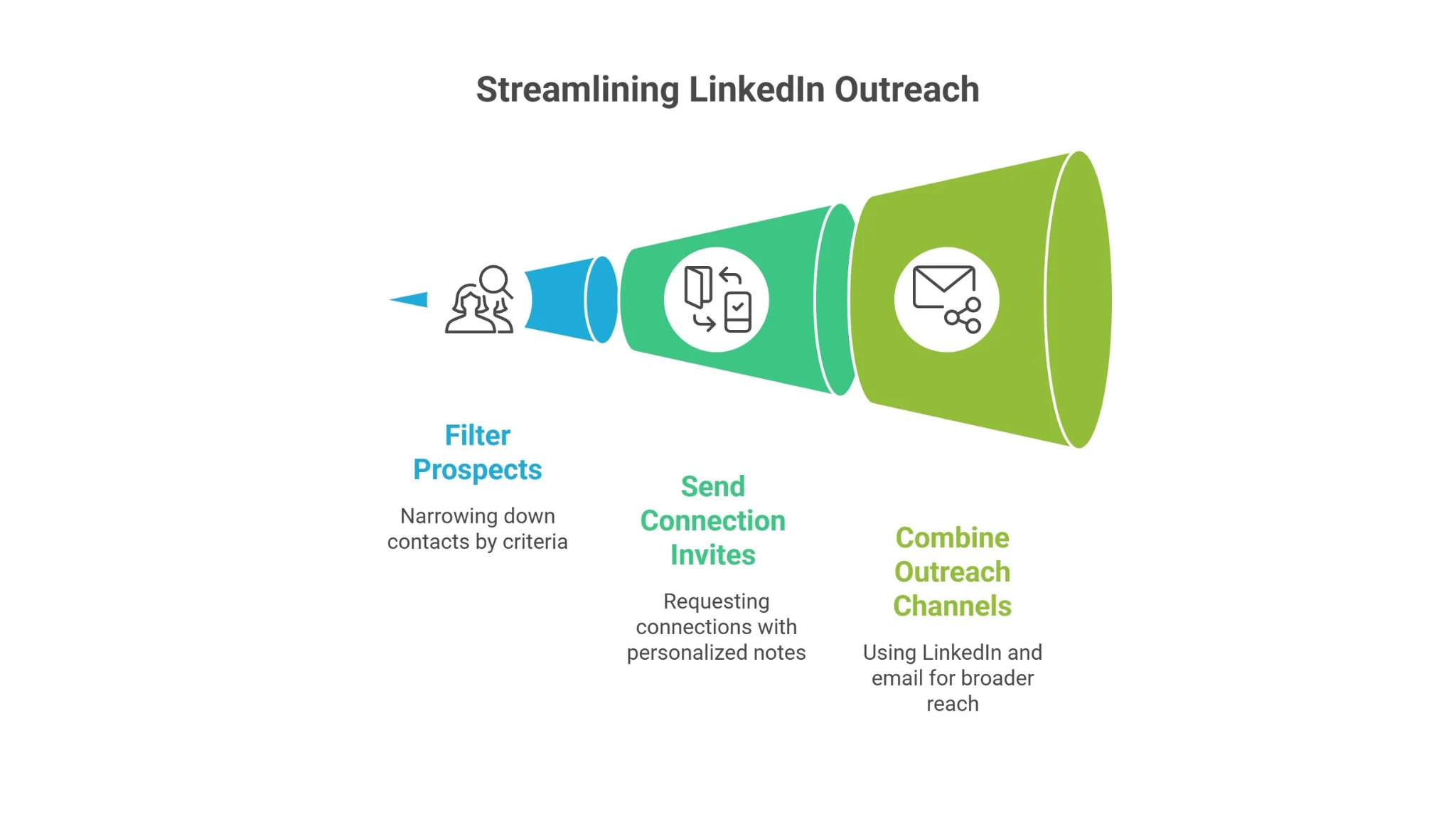
Finding LinkedIn Profiles Using Prospect Filters
Prospecting becomes much easier when you can filter companies and professionals based on specific criteria.
For example, you might want to target founders in SaaS companies, marketing leaders in agencies, or HR managers in staffing firms.
Using prospect filters allows you to narrow down companies, industries, and job roles to find the most relevant contacts.
This approach helps you quickly identify LinkedIn profiles that match your target audience and keeps your outreach focused on the people who are most likely to be interested in your message.
Sending LinkedIn Connection Invites With Notes
Once you identify the right prospects, the next step is sending connection requests.
Each LinkedIn invite can include a short note that introduces you and explains why you want to connect.
A brief, friendly message increases the chances that the recipient accepts the request.
After the connection is accepted, the rest of the conversation continues naturally on LinkedIn.
Running LinkedIn and Email Outreach in the Same Campaign
Many outreach strategies work best when multiple channels are combined.
Instead of relying on LinkedIn alone, some teams run LinkedIn invites and email outreach together within the same campaign.
This helps keep outreach organized while giving prospects more than one way to notice and respond to the conversation.
Using both channels thoughtfully can improve visibility and create more opportunities for meaningful conversations.
Note: Oppora only sends LinkedIn connection invites with notes. It does not automate further LinkedIn conversations.
Conclusion
LinkedIn outreach becomes much more effective when your messages feel simple, relevant, and conversational.
Instead of overthinking the first message, using structured templates can help you start natural conversations with professionals across networking, partnerships, and sales opportunities.
Focus on personalization, keep your messages clear, and follow up thoughtfully when needed.
And if you want to scale this process, tools like Oppora can help you discover the right prospects and send LinkedIn connection invites with notes as part of organized outreach campaigns—making it easier to turn conversations into real opportunities.
Frequently Asked Questions (FAQs)
How long should a LinkedIn outreach message be?
A LinkedIn outreach message should usually stay between 40–80 words. Short messages are easier to read and understand quickly. Focus on a clear introduction, a relevant reason for reaching out, and a simple conversation starter rather than writing long paragraphs.
What is the best time to send LinkedIn outreach messages?
Weekday mornings and early afternoons generally work best because professionals are more active during work hours. Many people check LinkedIn during the start of their workday or between tasks, which increases the chances that your message will be noticed.
How many follow-ups should you send on LinkedIn?
In most cases, one or two follow-ups are enough. If someone does not respond after a couple of reminders, it’s usually best to stop. Keeping follow-ups polite and spaced a few days apart helps maintain a professional and respectful approach.
Should you send a connection request before messaging someone?
Yes, sending a connection request with a short note is often the best first step. Once the person accepts the request, conversations tend to feel more natural and less intrusive compared to sending a direct message immediately.
How can you scale LinkedIn outreach without sending spammy messages?
The key is targeting the right prospects and personalizing your outreach. Instead of sending the same message to everyone, focus on relevance and context. Prospect discovery tools can help identify the right professionals so your outreach remains focused and meaningful.