12 Best Outbound Sales Tools for Faster Deals & Smarter Outreach
outbound sales tools
If your outbound sales still feels slow, manual, or unpredictable, you are not alone.
Most teams today juggle too many tools, copy-paste workflows, and guesswork instead of running a system that actually scales.
The good news is that outbound has evolved.
With the right outbound sales tools, you can find better leads, personalize outreach faster, and close deals without burning time or domains.
In this guide, you’ll discover:
- The different types of outbound sales tools
- Key features that actually drive results
- The 12 best outbound sales tools for 2026
- How to choose the right stack for your workflow
Types of Outbound Sales Tools
Now first, let’s break down what actually powers a modern outbound system.
Not all outbound sales tools do the same job.
Each category solves a specific part of the pipeline, and understanding this is what helps you build a stack that actually works together.
Prospecting tools for finding the right leads
Everything in outbound starts with who you reach.
If your targeting is off, even the best messaging will fail.
Prospecting tools help you identify companies, decision-makers, and contacts that match your ideal customer profile.
These tools typically allow you to:
- Filter leads by industry, role, company size, and geography
- Discover new accounts based on similar companies
- Build lists of decision-makers within those accounts
Instead of guessing who to contact, you start with a qualified list that already fits your offer.
This alone improves your chances of getting replies without increasing volume.
Outreach automation tools for scaling communication
Once you have leads, the next challenge is reaching them consistently.
Doing this manually does not scale.
Outreach automation tools help you send emails, follow-ups, and sequences without repetitive work.
They allow you to:
- Create multi-step email sequences
- Schedule follow-ups automatically
- Manage multiple inboxes for higher sending capacity
This means you can reach hundreds or thousands of prospects without losing consistency.
More importantly, you avoid dropping leads just because you forgot to follow up.
Data enrichment tools for better targeting
Raw lead data is rarely complete.
You might have a name but no email, or a company without context.
That’s where enrichment tools come in.
These tools pull additional data from multiple sources to improve lead quality.
They help you:
- Find verified email addresses and phone numbers
- Add company details like revenue, tech stack, or hiring signals
- Validate contact accuracy to reduce bounce rates
Better data leads to better targeting.
And better targeting leads to fewer wasted sends and higher deliverability.
AI personalization tools for relevant messaging
Even with good data, generic messaging still fails.
People ignore emails that feel mass-produced.
AI personalization tools help you tailor messages at scale without writing each one manually.
They can:
- Generate custom email lines based on prospect data
- Reference recent activity, company updates, or role-specific context
- Adapt tone and messaging based on audience type
This allows you to send messages that feel written for one person, even when you are reaching hundreds.
That shift alone can dramatically increase reply rates.
Key Features Modern Outbound Stack Should Have
Now that you understand the types of tools, the next question is simple.
What actually separates a basic stack from a high-performing one?
Modern outbound is no longer about having more tools.
It is about having the right capabilities that work together intelligently.
Signal-Based Prospecting
Traditional prospecting relies on static filters.
But buyers do not operate on static conditions.
Signal-based prospecting focuses on timing, not just fit.
Instead of just targeting “SaaS founders,” you target:
- Companies that just raised funding
- Teams actively hiring for roles you support
- Businesses showing intent signals or growth patterns
This helps you reach prospects when they are most likely to respond.
And timing often matters more than targeting alone.
Hyper-Personalized Messaging
Basic personalization like adding a first name is no longer enough.
Modern outbound requires depth.
Hyper-personalization means your message reflects real context about the prospect.
This includes:
- Referencing specific company activities
- Aligning messaging with their current priorities
- Adapting value propositions based on role or industry
When done right, your outreach feels less like a pitch and more like a relevant conversation.
That is what drives replies in crowded inboxes.
Multi-Channel Automation
Email alone is no longer sufficient.
Prospects are spread across multiple channels.
A strong outbound stack combines different touchpoints into one workflow.
This can include:
- Email sequences
- LinkedIn connection requests and follow-ups
- Additional channels like SMS or calls (depending on strategy)
The goal is not to spam across channels.
It is to create coordinated touchpoints that reinforce your message.
This increases visibility without increasing noise.
Continuous Optimization
Outbound is not a one-time setup.
What works today may not work next month.
That is why modern stacks focus on continuous improvement.
This includes:
- A/B testing subject lines and messaging
- Tracking open rates, reply rates, and conversions
- Identifying which sequences or segments perform best
Instead of guessing, you rely on data to improve performance over time.
And small improvements compound quickly at scale.
12 Best Outbound Sales Tools for 2026 (Detailed Breakdown)
Now that you know what makes a strong outbound system, let’s look at the tools that actually deliver on it.
Each of these outbound sales tools solves a different part of the puzzle, but a few stand out by connecting everything into one flow.
Oppora.ai — The Smartest AI-Powered Outbound Sales Engine
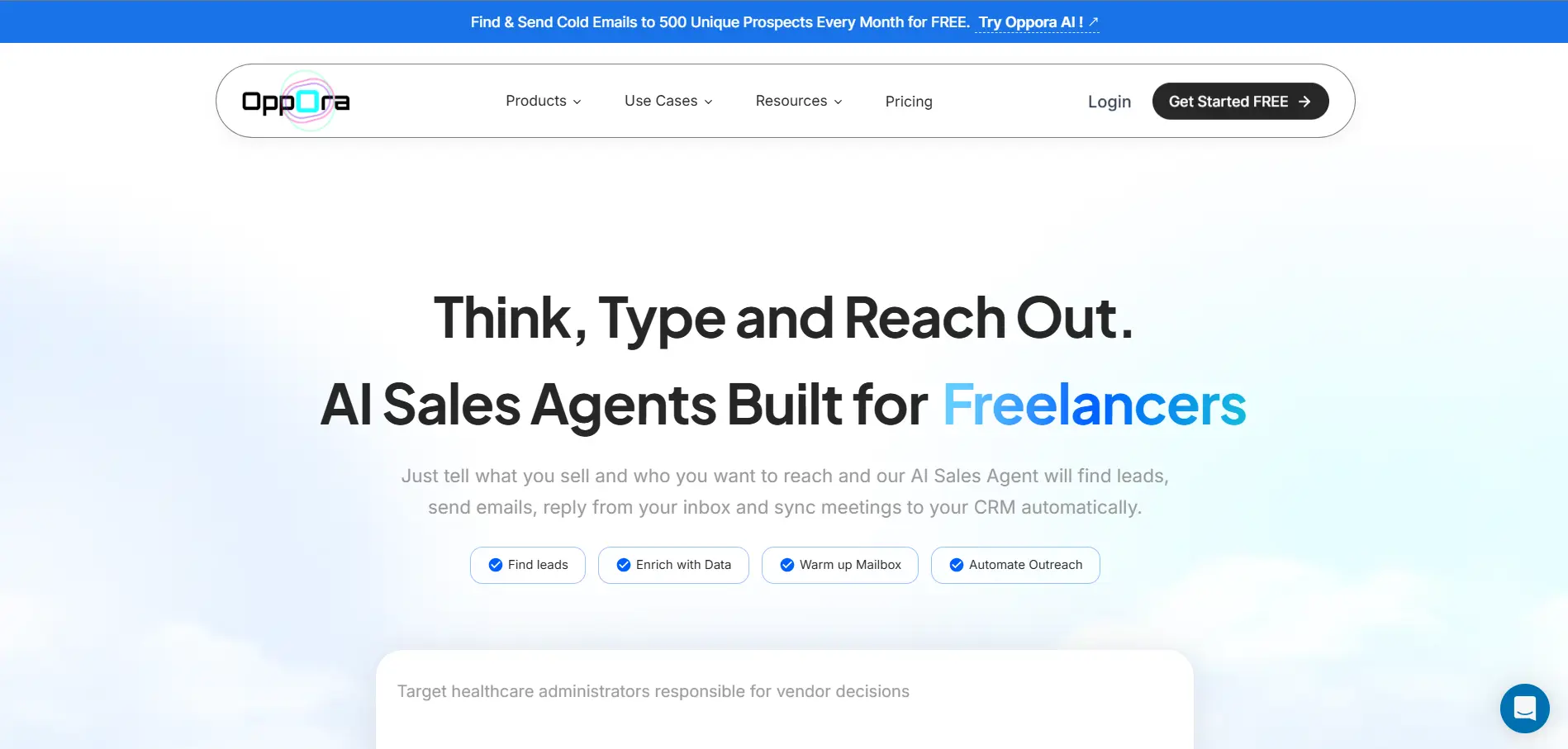
Most tools give you features.
Oppora gives you a system that runs outbound for you.
Instead of manually handling prospecting, enrichment, writing, sending, and replying, Oppora.ai connects everything through AI agents that execute the full workflow automatically.
Here’s what makes it different:
- Massive lead discovery & precision targeting
Access 700M+ verified contacts with waterfall data sourcing, and filter prospects by role, industry, company size, and buying signals to reach the right decision-makers faster. - Advanced data enrichment & list accuracy
Automatically enrich, clean, and deduplicate your data so every campaign starts with high-quality, ready-to-use lead lists. - Built-in email intelligence & verification
Find and verify emails in real time to reduce bounce rates and improve inbox placement across your outbound campaigns. - AI-powered workflows with 8 sales agents
Build automated workflows where 8 AI agents handle prospecting, enrichment, outreach, and follow-ups without daily manual input. - AI reply agent & meeting automation Automatically
respond to leads, handle objections, qualify interest, and book meetings directly from your inbox without lifting a finger. - Scalable outreach with inbox rotation
Connect and rotate up to 50 mailboxes to scale outreach safely while maintaining consistency and avoiding sender fatigue. - Automated domain warmup & deliverability control
Warm up new domains, match sender identity (Gmail-to-Gmail, Outlook-to-Outlook), and protect your sender reputation as you scale. - Seamless CRM sync & integrations
Sync contacts, replies, deals, and meetings with tools like HubSpot, Salesforce, or Pipedrive without manual updates.
With Oppora.ai, you are not managing steps anymore.
You are setting up a system that keeps running in the background.
This shift from “tool usage” to “workflow automation” is what makes Oppora stand out in 2026
- Free plan available ($0/month)
- Pro: $34/month
- Max: $79/month
- Enterprise: Starts at $499/month
Apollo.io
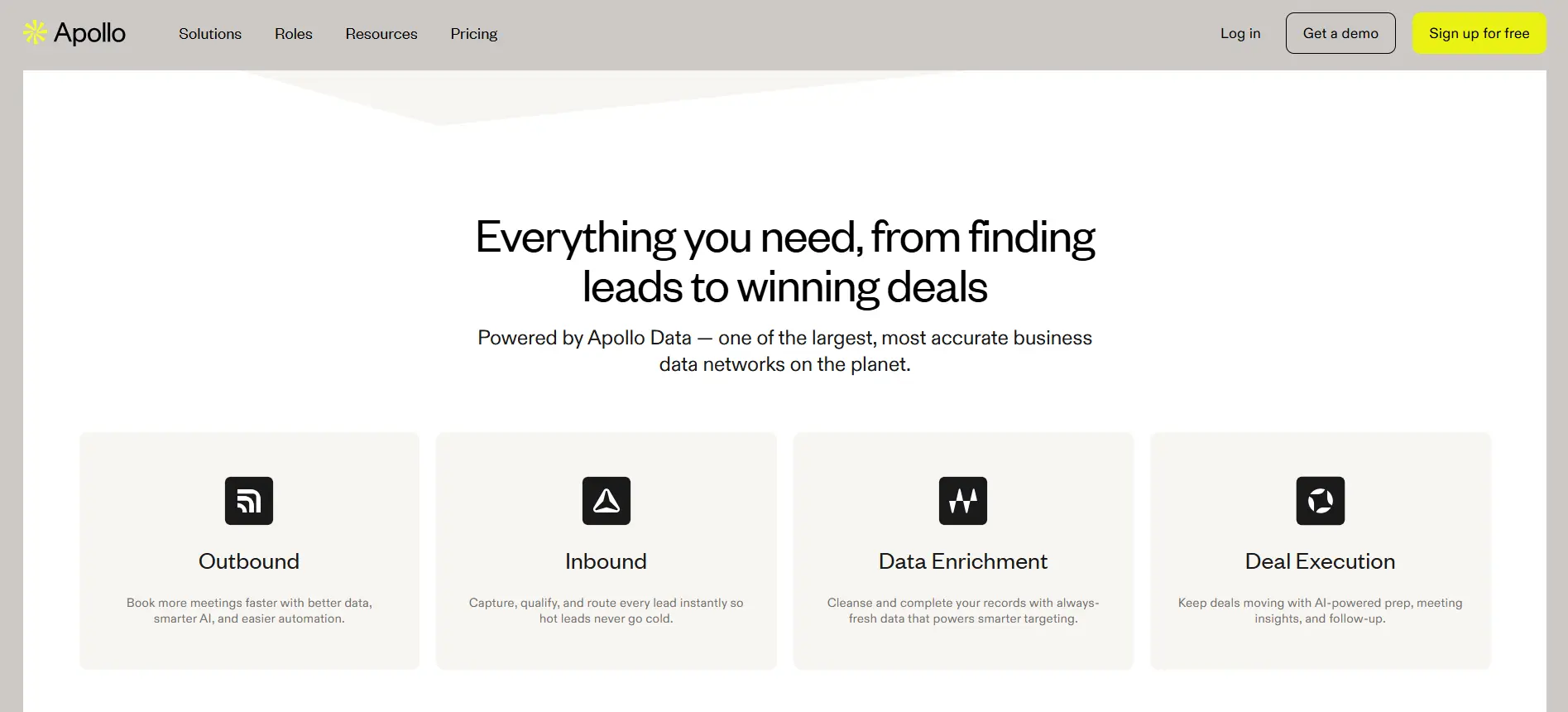
If you want a balance between data and outreach, Apollo is one of the most widely used platforms.
It combines a large B2B database with built-in outreach capabilities, making it a solid starting point for many teams.
With Apollo, you can:
- Search and filter millions of contacts and companies
- Build lead lists based on firmographics and job roles
- Run email sequences directly within the platform
- Track engagement metrics like opens and replies
It works well for teams that want everything in one place without stitching multiple tools together.
However, most workflows still require manual setup and optimization.
So while it simplifies outbound, it does not fully automate it.
- Free plan available
- Basic: $49/user/month
- Professional: $79/user/month
- Organization: $119/user/month
Lemlist — Personalization at Scale
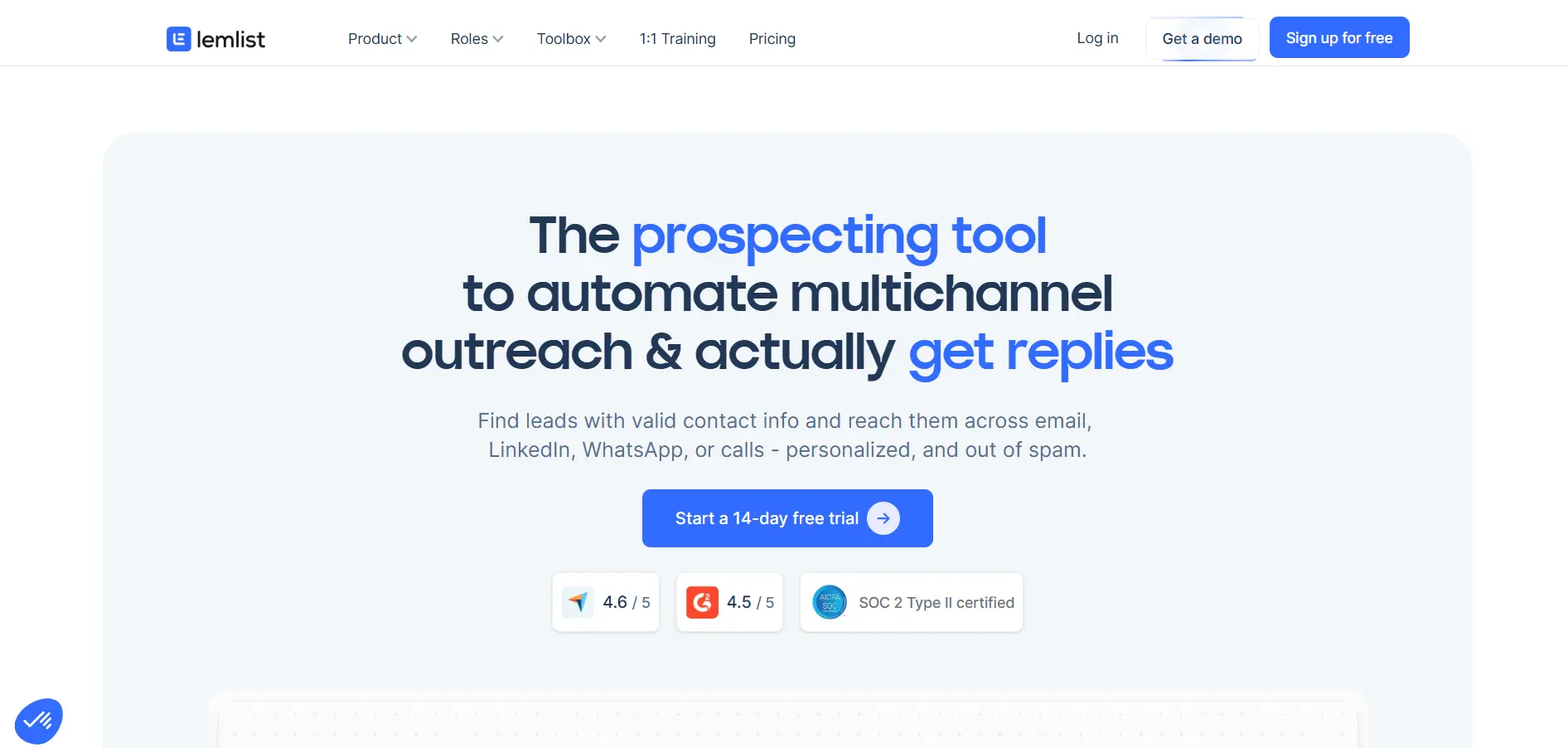
If your focus is improving reply rates through better messaging, Lemlist is a strong choice.
It is built specifically for creating personalized outreach that stands out in crowded inboxes.
Lemlist helps you:
- Add dynamic personalization to emails and images
- Create customized sequences with human-like messaging
- Warm up email accounts to improve deliverability
- Run outreach campaigns with a strong focus on engagement
The platform is especially useful when you want to combine creativity with automation.
Instead of sending plain text emails, you can craft experiences that feel tailored and thoughtful.
That said, it focuses heavily on outreach and personalization rather than full-cycle outbound execution
- Email Pro: ~$63/user/month
- Multichannel Expert: ~$87/user/month
- Enterprise: Custom pricing
Instantly.ai — Cold Email at Volume
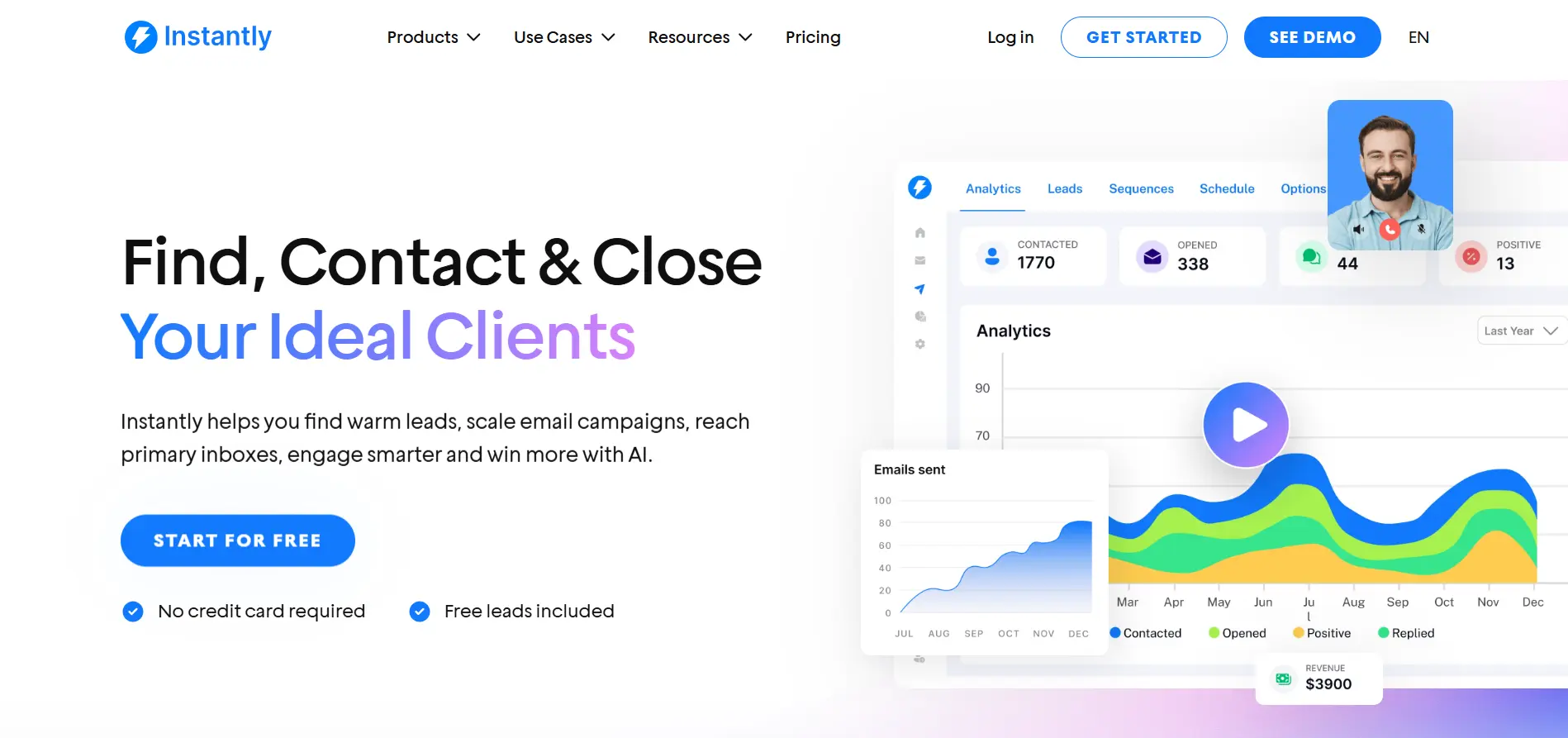
If your outbound strategy relies on sending a high volume of emails, Instantly is built for that exact use case.
It focuses on scale without completely sacrificing deliverability.
With Instantly, you can:
- Connect and manage multiple sending inboxes
- Send large volumes of cold emails daily
- Automate email warm-up to protect sender reputation
- Monitor campaign performance across accounts
The biggest advantage here is infrastructure.
Instead of worrying about limits or burned domains, you get a system designed to handle volume safely.
This makes it a strong fit if your strategy is volume-driven rather than deeply personalized.
However, you still need to handle targeting, messaging, and optimization separately.
So while it excels at sending, it does not cover the full outbound workflow.
- Growth: $47/month
- Hypergrowth: $97/month
- Light Speed: $358/month
- Enterprise: Custom pricing
Clay — Data + AI Enrichment Powerhouse
Clay is not your typical outbound tool.
It is more like a data engine that powers smarter outreach.
If your biggest challenge is finding, enriching, and structuring lead data, Clay becomes extremely powerful.
It allows you to:
- Pull data from multiple sources and APIs
- Enrich leads with detailed company and contact insights
- Use AI to analyze and transform data into usable signals
- Build highly customized workflows for prospecting
What makes Clay stand out is flexibility.
You are not limited to predefined filters or databases.
You can create your own logic for identifying high-quality leads based on signals that matter to your business.
This makes it especially useful for teams that rely on precision targeting rather than mass outreach.
The trade-off is complexity.
Clay is powerful, but it requires more setup and thinking compared to plug-and-play tools.
- Free plan available
- Launch: $167/month
- Growth: $446/month
- Enterprise: Custom pricing
Smartlead.ai — Scalable Email Infrastructure
Smartlead is built for teams that want to scale outreach without worrying about technical limitations.
It focuses heavily on deliverability, inbox rotation, and campaign stability.
With Smartlead, you can:
- Connect and rotate multiple mailboxes automatically
- Run large-scale cold email campaigns
- Warm up domains to maintain sender health
- Manage campaigns with detailed control over sending behavior
The strength of Smartlead lies in reliability.
It helps you scale outreach while keeping your emails out of spam folders.
For agencies or teams running multiple campaigns, this becomes critical.
But like other infrastructure-focused tools, it does not handle the entire outbound process.
You still need additional tools for lead generation, enrichment, and personalization.
- Base: $32/month
- Pro: $78/month
- Unlimited Smart: $144/month
- Unlimited Prime: $315/month
Heyreach — LinkedIn Automation Done Right
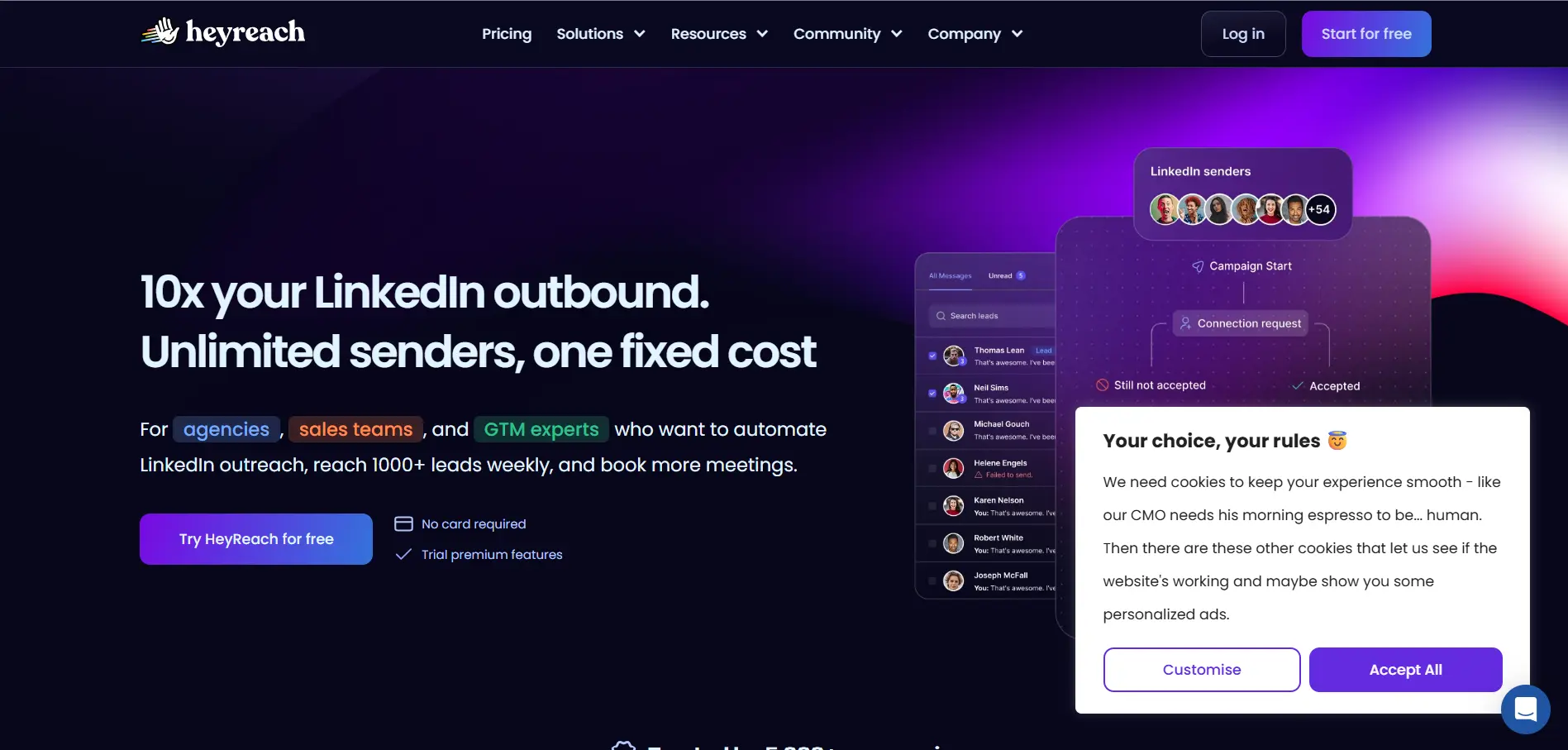
Email is just one part of outbound.
LinkedIn has become equally important for reaching decision-makers.
Heyreach focuses specifically on automating LinkedIn outreach without making it feel robotic.
It helps you:
- Send connection requests and follow-ups automatically
- Run LinkedIn sequences alongside your campaigns
- Manage multiple LinkedIn accounts safely
- Coordinate outreach across team members
The key benefit is channel expansion.
Instead of relying only on email, you can engage prospects where they are already active.
This increases your chances of getting noticed, especially when email inboxes are crowded.
Heyreach works best when combined with email tools, creating a multi-channel outbound strategy.
On its own, it is not a complete outbound solution, but it fills a critical gap.
- Growth: $79/month (per sender)
- Agency: $999/month (50 senders included)
- Unlimited: $1,999/month (unlimited senders)
Salesloft — Enterprise Sales Engagement
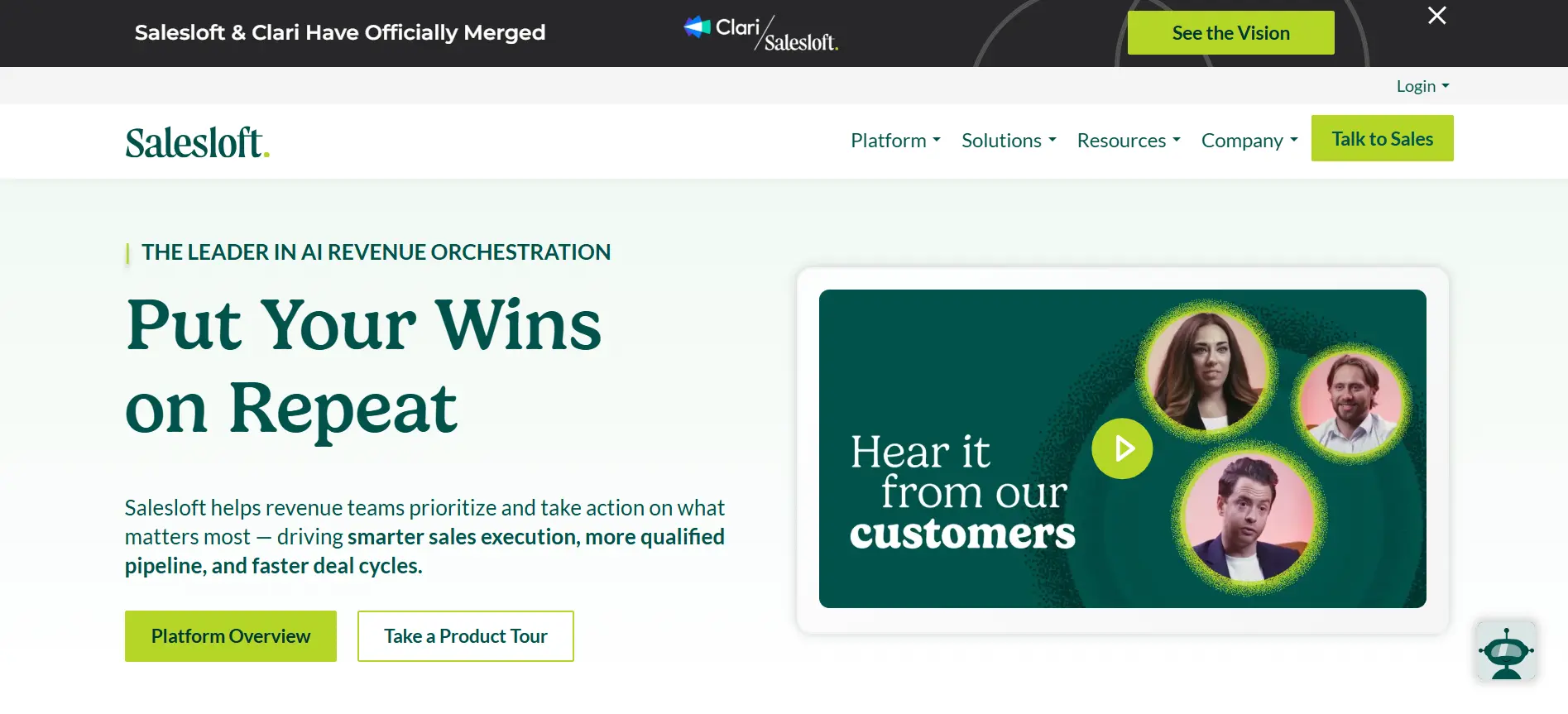
For larger teams and enterprise sales environments, Salesloft is a well-established platform.
It is designed to manage complex sales workflows and team coordination at scale.
With Salesloft, you can:
- Build structured outreach cadences across teams
- Track engagement across multiple touchpoints
- Manage pipelines and sales activities in one place
- Integrate deeply with CRM systems
The platform is built for visibility and control.
Leaders can track performance, standardize processes, and ensure consistency across reps.
This makes it ideal for organizations with larger sales teams and longer deal cycles.
However, it is less focused on automation and AI-driven execution compared to newer tools.
It helps teams operate efficiently, but most actions still require human involvement.
- Advanced: Custom pricing (Request Demo)
- Elite: Custom pricing (Request Demo)
Outreach.io — Enterprise-Level Automation
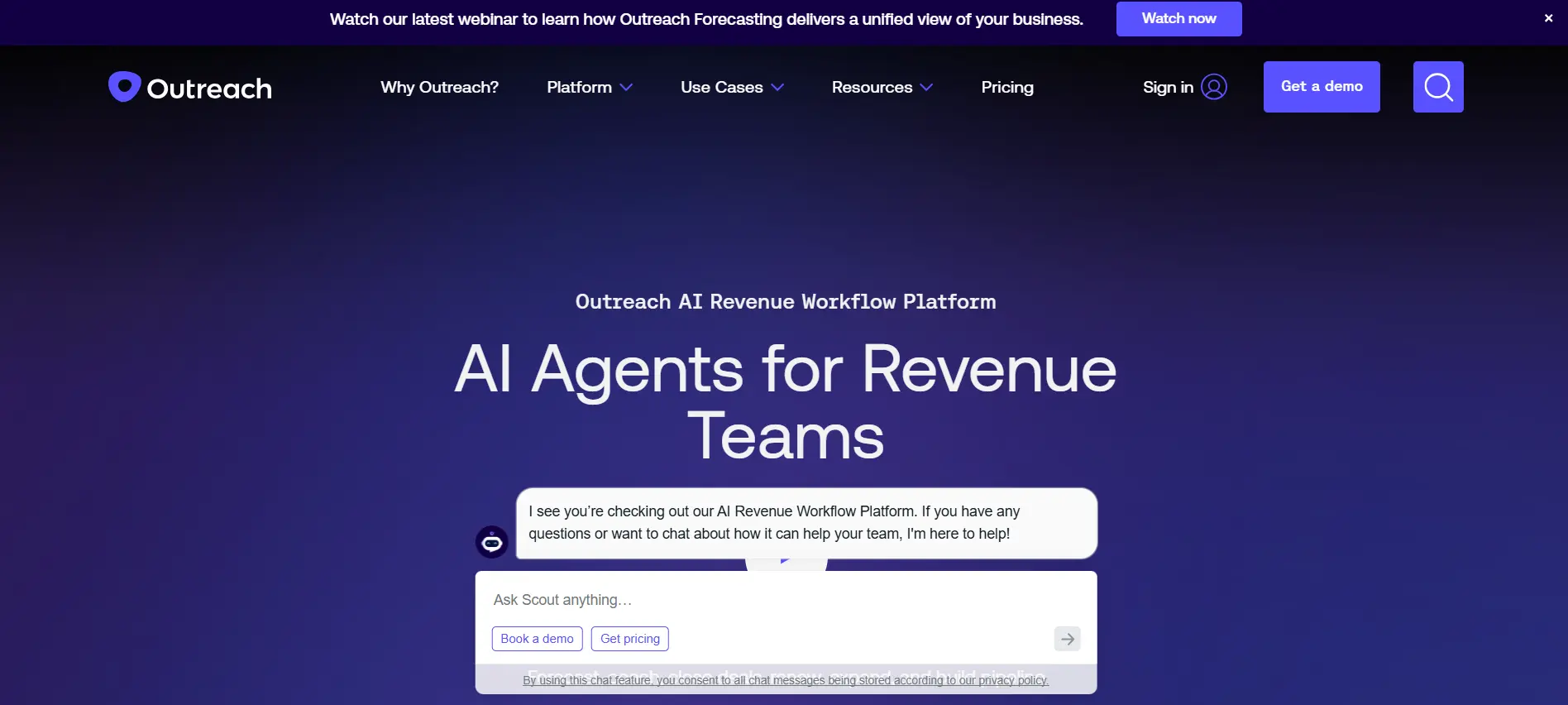
If you are running outbound at scale across large teams, Outreach is built for that level of complexity.
It is designed to bring structure, automation, and visibility into enterprise sales workflows.
With Outreach, you can:
- Build advanced multi-step sales sequences
- Automate follow-ups across email, calls, and tasks
- Track engagement across the entire sales cycle
- Align sales teams with standardized workflows
The platform shines when multiple stakeholders are involved.
It ensures that every rep follows a consistent process while still allowing room for personalization.
This level of control helps teams avoid chaos as they scale outbound efforts.
However, like most enterprise tools, it focuses more on coordination than full automation.
You still need reps to execute key parts of the process, especially when it comes to personalization and qualification.
- Amplify Core: Custom pricing
- Amplify Plus: Custom pricing
- Amplify Pro: Custom pricing
QuickMail — Simple Yet Powerful Cold Email Tool
Not every team needs a complex outbound system.
Sometimes, simplicity is what helps you move faster.
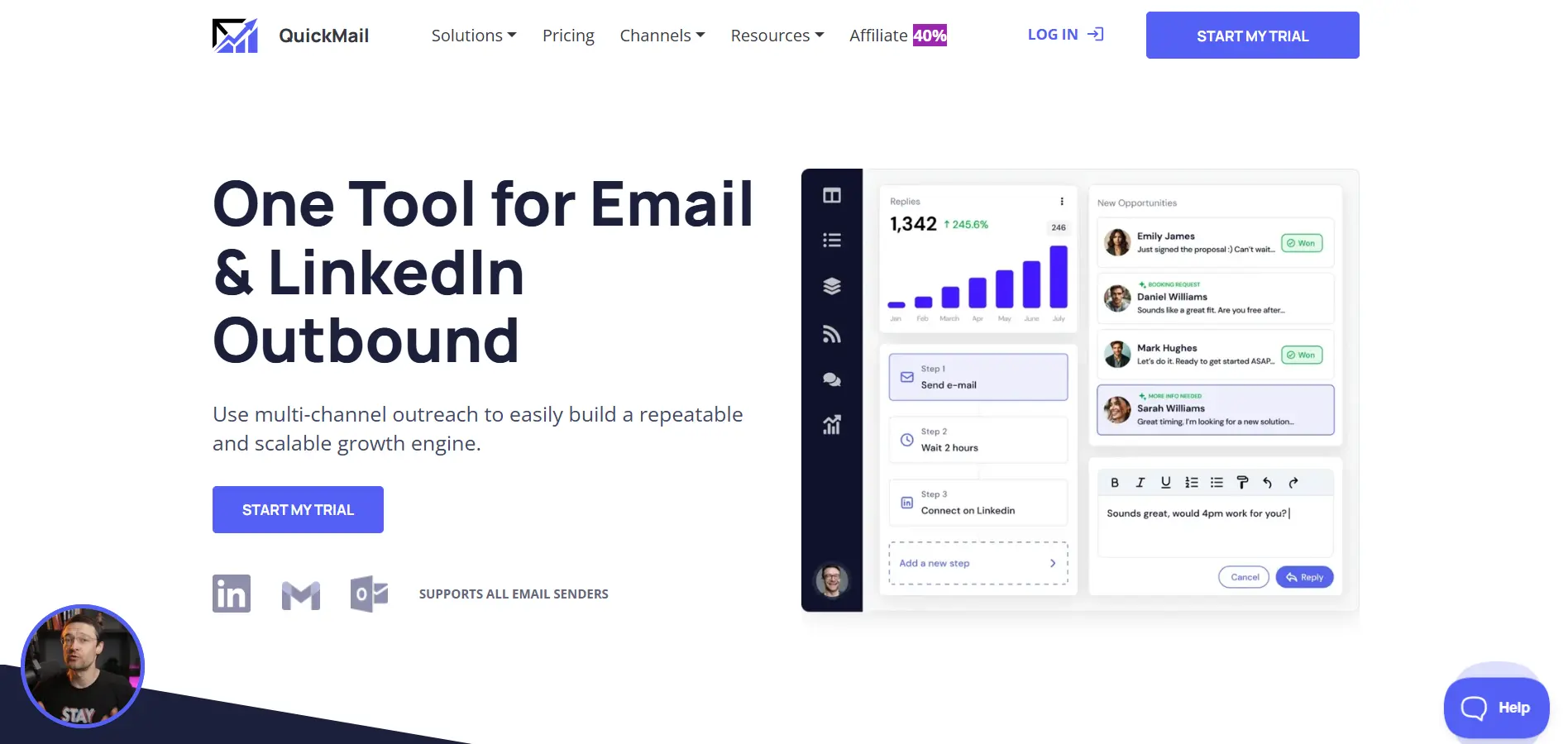
QuickMail is built for teams that want a clean, reliable way to run cold email campaigns without unnecessary complexity.
It allows you to:
- Create and launch cold email sequences quickly
- Automate follow-ups based on prospect behavior
- Manage replies and conversations in one place
- Track campaign performance with clear metrics
The biggest advantage of QuickMail is ease of use.
You can get campaigns up and running without spending hours setting up workflows.
This makes it ideal for small teams, founders, or anyone just getting started with outbound.
At the same time, it still offers enough power to run effective campaigns consistently.
The limitation is that it focuses mainly on email.
So if you are looking for multi-channel outreach or deep automation, you may need to pair it with other tools.
- Starter Plan: $49/month
- Growth Plan: $99/month
- Agency Plan: $299/month
Reply.io — Multi-Channel Outreach Platform
As outbound evolves, relying on just one channel is no longer enough.
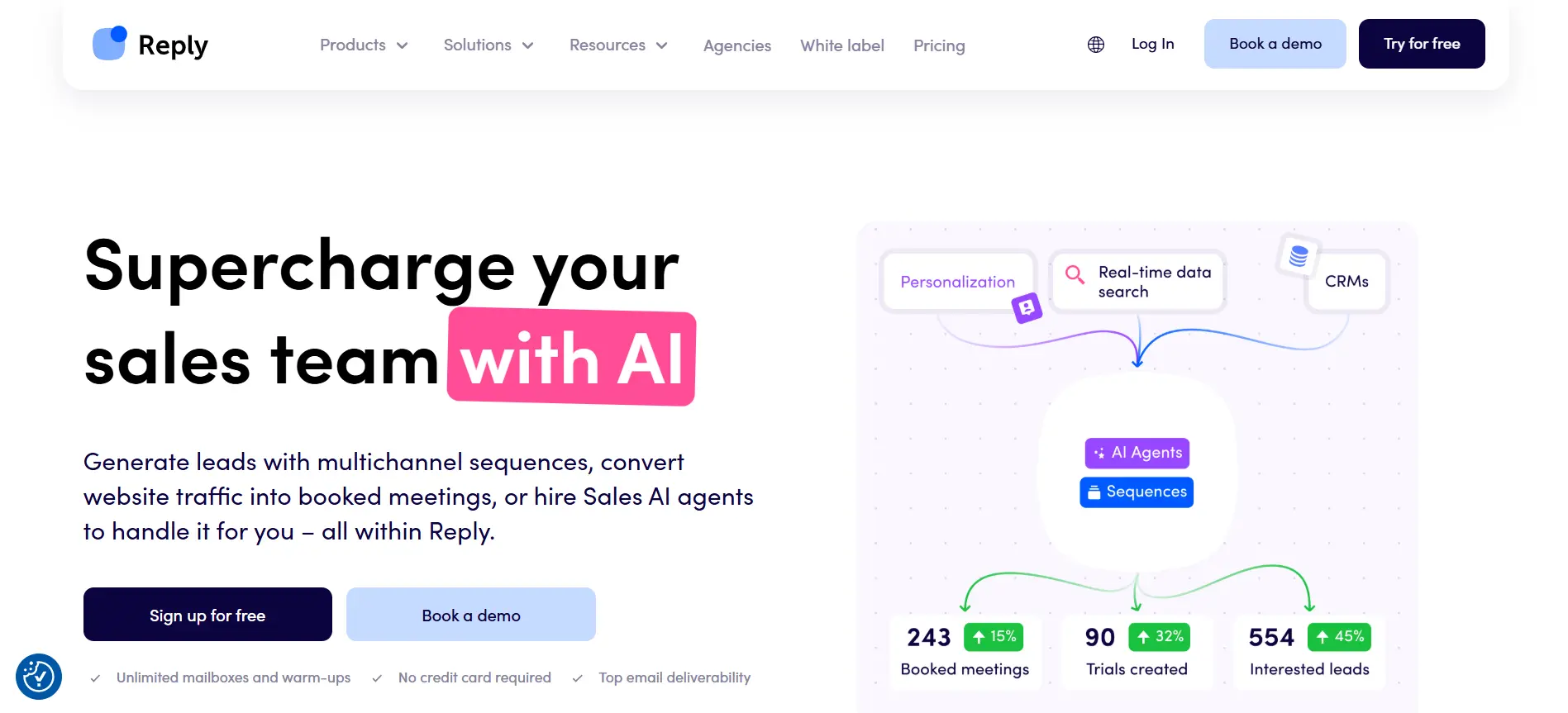
Reply.io is built to help you combine multiple channels into one coordinated outreach strategy.
With Reply.io, you can:
- Run sequences across email, LinkedIn, calls, and SMS
- Automate follow-ups based on prospect actions
- Use AI to assist with message creation and responses
- Track performance across all channels in one dashboard
The key benefit here is orchestration.
Instead of managing separate tools for each channel, you can bring everything into a single workflow.
This helps you create a more consistent and connected experience for your prospects.
It also increases your chances of getting a response, since you are not relying on just one touchpoint.
However, like many multi-channel tools, it still requires thoughtful setup.
The results depend heavily on how well you design your sequences and messaging.
- Multichannel: Starts at $89/user/month
- Email Volume: Starts at $159/month (unlimited users)
- AI SDR (Jason AI): Starts at $500/month
Snov.io — Budget-Friendly All-in-One Tool
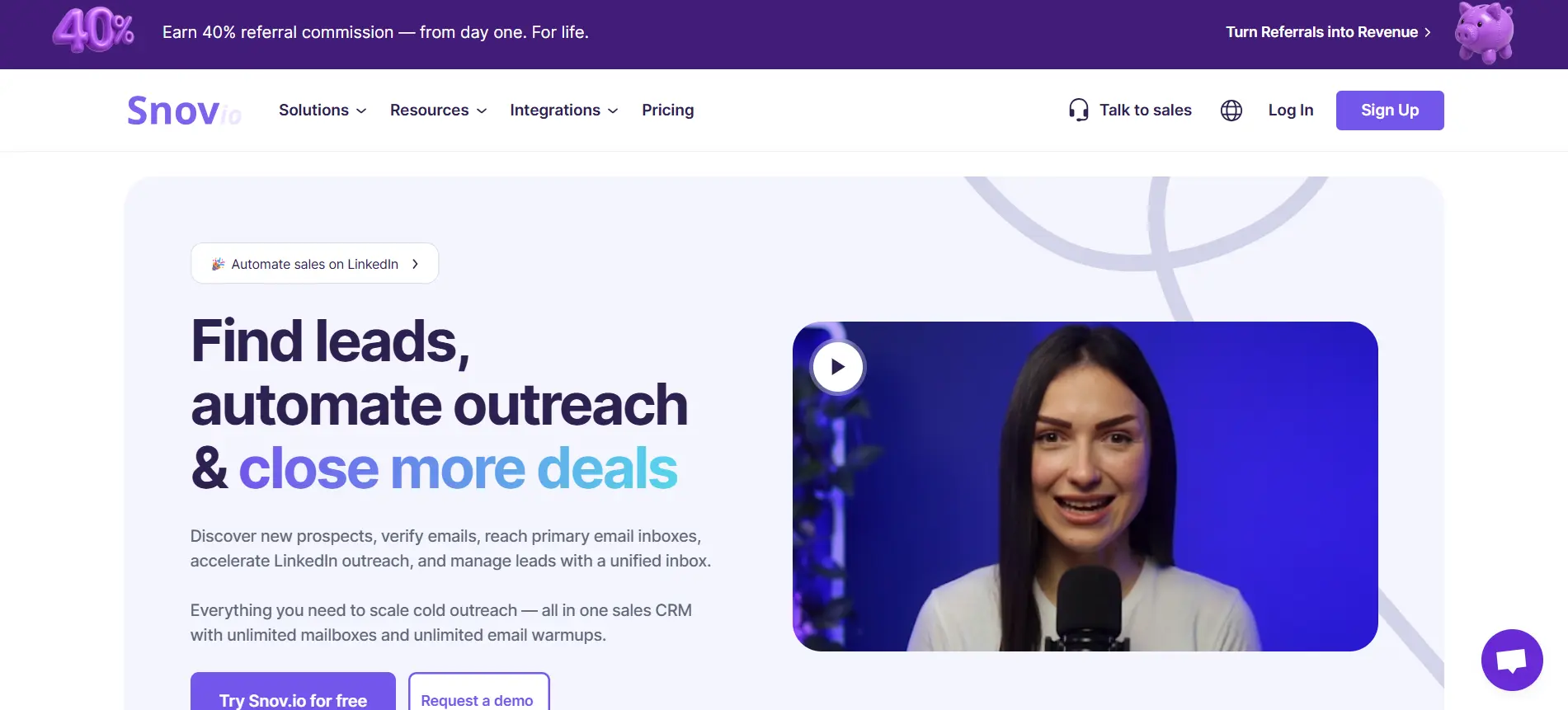
If you are looking for an affordable way to handle multiple parts of outbound, Snov.io is a strong option.
It combines lead generation, email outreach, and verification into a single platform.
With Snov.io, you can:
- Find email addresses using domain and database search
- Verify emails to reduce bounce rates
- Create and automate cold email campaigns
- Manage outreach and track performance
One of its biggest strengths is accessibility.
You do not need a large budget or advanced setup to start running outbound campaigns.
It gives you enough functionality to cover the basics without needing multiple tools.
For example, it supports workflows like finding leads, verifying emails, and launching outreach from one place, which simplifies execution
This makes it especially useful for small teams and early-stage companies.
However, compared to more advanced platforms, it has limitations in automation, scalability, and deep personalization.
- Starter: $29/month
- Pro: Starts at $74/month
- Custom: Custom pricing
How to Choose the Right Outbound Sales Tool
By now, you have seen a wide range of outbound sales tools.
But choosing the right one is not about picking the most popular option.
It is about finding what fits your workflow, your team, and how you actually sell.
Based on team size and workflow complexity
Start with how your team operates today.
A solo founder running outbound has very different needs compared to a 20-person SDR team.
If you are a small team, you need simplicity and speed.
Tools that require heavy setup or constant management will slow you down.
Look for platforms that:
- Combine multiple functions into one system
- Require minimal manual effort
- Help you launch campaigns quickly
On the other hand, larger teams need structure and visibility.
You may need tools that support collaboration, reporting, and process standardization.
The key is alignment.
Your tool should match your current complexity, not the complexity you might have later.
Based on outreach strategy (volume vs personalization)
Your outreach strategy plays a major role in tool selection.
Are you sending high-volume campaigns or focusing on fewer, highly personalized messages?
If your strategy is volume-driven, prioritize tools that:
- Support multiple inboxes and high sending limits
- Automate sequences and follow-ups
- Maintain deliverability at scale
If your strategy is personalization-first, focus on tools that:
- Enable deep data enrichment
- Support AI-driven or manual personalization
- Allow flexible messaging based on context
Most teams fall somewhere in between.
So the best setup often combines scale with personalization instead of choosing one over the other.
Based on budget and scalability
Budget is always a constraint, especially in the early stages.
But choosing the cheapest tool is not always the smartest decision.
Instead, think about cost in terms of value and growth.
Ask yourself:
- Can this tool scale with my outbound efforts?
- Will I need to switch tools in a few months?
- Does it replace multiple tools or add another layer?
Some tools may seem expensive upfront but reduce the need for additional tools.
Others may be affordable but require stacking multiple platforms, increasing overall cost.
The goal is to avoid rebuilding your stack every time you grow.
Based on channels (email, LinkedIn, or multi-channel)
Finally, consider where your prospects actually respond.
Email is still the foundation of outbound, but it is no longer enough on its own.
If your audience is highly active on LinkedIn, you need tools that support that channel.
If your strategy involves multiple touchpoints, you need a system that connects them.
Depending on your approach, you may choose:
- Email-first tools for simple outbound
- LinkedIn automation tools for social selling
- Multi-channel platforms for coordinated outreach
The important part is consistency.
Your messaging and timing should feel connected across channels, not fragmented.
Final Thoughts
It is easy to think of outbound as a collection of tools.
But high-performing teams do not just use tools.
They build systems.
Each tool in your outbound sales stack should play a clear role.
Prospecting, enrichment, outreach, and optimization should work together, not in isolation.
When these pieces connect properly, outbound stops feeling manual.
It becomes predictable, scalable, and easier to improve over time.
That is the real shift happening in outbound today.
You are moving from managing tools to designing workflows that run on their own.
And the teams that understand this early are the ones closing faster, with less effort.
Frequently Asked Questions (FAQs)
1. What are outbound sales tools?
Outbound sales tools are software platforms that help you identify prospects, reach out to them, and manage conversations at scale, covering everything from lead generation and data enrichment to outreach automation and AI-driven personalization.
2. Do I need multiple outbound sales tools or just one?
Most teams use multiple outbound sales tools to handle different parts of the workflow, but platforms like Oppora.ai combine prospecting, outreach, and automation into one system, reducing the need for multiple tools.
3. How do outbound sales tools improve reply rates?
Outbound sales tools improve reply rates by using data, AI personalization, and intent signals to ensure your messages are relevant, timely, and tailored to each prospect instead of being generic.
4. What features should I look for in outbound sales tools?
You should look for features like lead generation, data enrichment, email verification, automation, AI personalization, multi-channel outreach, and analytics to ensure your outbound efforts are effective and scalable.
5. How is AI changing outbound sales?
AI is transforming outbound sales by automating research, generating personalized messages, optimizing campaigns, and even handling replies, allowing teams to focus more on strategy and closing deals.