How to Automate Outreach Using Oppora AI Sales Agents
Automating outreach today is no longer about sending more emails — it is about building systems that can run outbound end-to-end without manual effort.
Traditional outbound workflows require multiple tools, constant monitoring, and heavy manual work across:
- Lead sourcing
- Data enrichment
- Email verification
- Campaign setup
- Sending infrastructure
- Reply handling
- CRM updates
This fragmented approach creates inefficiency and inconsistent pipeline generation.
The modern solution is an agentic system where AI handles the entire workflow automatically — from finding leads to booking meetings.
That is exactly how Oppora is designed.
Steps to Automate Outreach Using Oppora AI Sales Agents
Oppora automates outreach through a multi-agent AI system where each agent is responsible for a specific stage of the outbound process.
Instead of manually building campaigns, users can either define intent and let AI fully execute everything end-to-end or take a more controlled, workflow-driven approach depending on how much manual control they want.
There are two ways to automate outreach inside Oppora, based on user preference and use case.
A. AI Agent Mode (Fully Automated Path)
In AI Agent mode, Oppora runs the entire outbound workflow automatically based on a single user input.
The system converts intent into a complete outbound execution pipeline using multiple AI agents working in sequence.
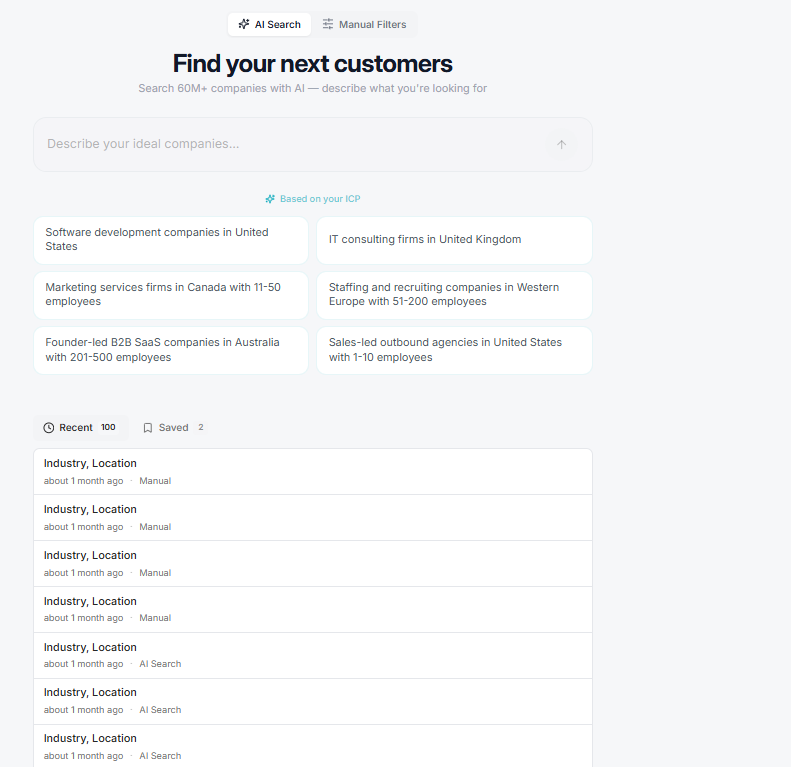
Step 1: User Intent Input
The user defines what they sell and who they want to target (industry, role, or use case). This is the only required input to start automation.
Step 2: AI Planner Creates Strategy
Oppora’s AI Planner analyzes the input and builds the Ideal Customer Profile (ICP), targeting rules, and outbound strategy.
Step 3: Company Discovery
The system automatically finds relevant companies based on ICP signals such as industry fit, hiring patterns, and business relevance.
Step 4: Lead Identification
Oppora identifies decision-makers inside each company using filters like job title, seniority, and department.
Step 5: Data Enrichment
Each company and lead is enriched with additional data to improve targeting accuracy and personalization quality.
Step 6: Email Discovery and Verification
The system finds verified email addresses and validates them to ensure high deliverability and low bounce rates.
Step 7: Campaign Generation
AI automatically creates personalized outreach sequences including cold emails and follow-ups tailored to each lead.
Step 8: Automated Outreach Execution
Campaigns are executed using multi-inbox sending, domain rotation, warmup systems, and deliverability protection.
Step 9: AI Reply Handling
Incoming replies are automatically analyzed, categorized, and responded to by the AI Reply Agent based on intent.
Step 10: Meeting Booking and CRM Sync
Qualified leads are automatically converted into meetings, and all activity is synced into the CRM in real time.
B. Manual Workflow (Controlled Build Path)
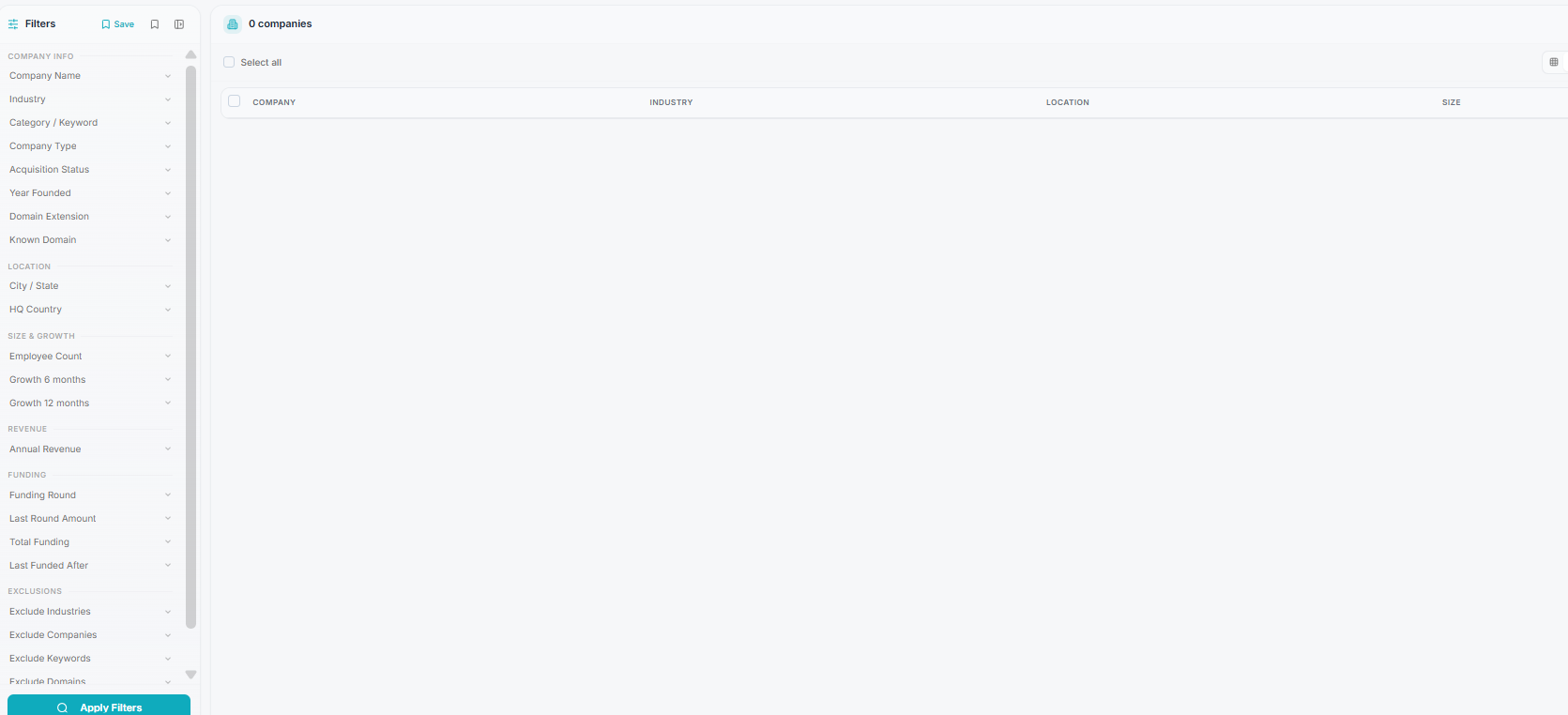
Step 1 — Define Your ICP and Outreach Goals
Automation begins with a simple input.
You tell Oppora:
- What you sell
- Who you want to target
- Optional filters (industry, company size, geography, etc.)
How Oppora processes this:
ICP Builder interprets your input and automatically defines:
- Ideal customer profile (ICP)
- Target industries
- Buyer personas
- Outreach structure
This eliminates manual ICP setup and research.
Step 2 — AI-Powered Company Discovery
Once the ICP is defined, Oppora activates its Company Discovery Agent.
What it does:
- Finds relevant companies from internal + external sources
- Uses intent signals like:
- hiring activity
- industry relevance
- keyword-based matching
- Builds an initial target list
This replaces manual searching on platforms like LinkedIn or Apollo.
Step 3 — Filtering and ICP Qualification
Not every company is a good fit.
The Company Filter Agent refines the list by removing:
- Non-target industries
- Irrelevant company sizes
- Misaligned segments
This ensures that only ICP-aligned companies move forward.
Step 4 — Lead Discovery Within Companies
After company selection, Oppora identifies decision-makers inside each organization.
Lead Finder Agent:
- Finds relevant contacts within each company
- Filters based on:
- job title
- department
- seniority level
- Builds structured lead lists
This removes manual LinkedIn prospecting.
Step 5 — Data Enrichment and Intelligence Layer
Before outreach, Oppora enriches all data for accuracy and personalization.
Company enrichment includes:
- Industry classification
- Employee size
- Business context
Lead enrichment includes:
- Role clarity
- Company association
- Personalization signals
This improves message relevance and reply rates.
Step 6 — Email Discovery and Verification
Oppora ensures every lead has a valid contact channel.
Email Finder Agent:
- Finds professional emails automatically
Verification Agent:
- Validates emails using:
- syntax validation
- SMTP verification
This reduces bounce rates and protects domain reputation.
Step 7 — AI Campaign Generation
Once leads are ready, Oppora builds the outreach campaign automatically.
Campaign Generator Agent creates:
- Cold email sequences
- Follow-up steps
- Sending schedules
- Personalized messaging per lead
Each email is dynamically generated based on:
- company context
- role
- ICP inputs
No templates or manual copywriting are required.
Step 8 — Outreach Execution and Delivery System
Oppora handles sending at scale using built-in infrastructure.
Execution system includes:
- Multi-inbox sending (up to 50 inboxes)
- Automatic domain rotation
- Inbox warmup system
- Smart throttling for deliverability
Deliverability safeguards:
- Sender identity matching (Gmail-to-Gmail, Outlook-to-Outlook)
- Spam prevention logic
- Sending optimization based on engagement
This ensures scalable outreach without risking domains.
Step 9 — AI Reply Handling and Lead Qualification
This is where Oppora becomes fully autonomous.
Reply & Conversion Agent:
- Reads incoming replies
- Classifies intent:
- positive
- negative
- neutral
- Sends contextual responses automatically
- Asks qualification questions
- Moves leads forward in the funnel
Instead of manual SDR handling, replies are processed automatically.
Step 10 — Meeting Booking Automation
When a lead shows interest:
Oppora automatically:
- Engages in conversation
- Sends scheduling links
- Books meetings via calendar integration
- Confirms availability
This turns cold outreach into booked calls without human intervention.
Step 11 — CRM Sync and Pipeline Management
Every interaction is synced in real time.
Oppora automatically updates:
- Leads
- Conversations
- Meetings
- Pipeline stages
This ensures clean CRM hygiene without manual updates.
Suggested Reading:
How to Build Email Automation Workflows [+7 Workflow Examples]Key Benefits of Automating Outreach with Oppora
- End-to-end automation: Oppora runs the full outreach process from lead discovery to meeting booking without manual SDR work.
- Faster setup: ICP creation, lead finding, and campaign generation happen automatically in minutes.
- Scalable outreach: Built-in inbox rotation and deliverability systems allow safe scaling of email volume.
- AI reply handling: Oppora automatically responds to leads, qualifies them, and books meetings.
- Unified system: Everything from data, outreach, replies, and CRM sync runs in one platform without tool switching.
- Higher efficiency: Removes repetitive manual work like list building, verification, and follow-ups.
- Real-time CRM sync: All leads, conversations, and meetings are automatically updated in your CRM.
How Both Paths Work Together
Both automation paths in Oppora are built on the same underlying AI Sales Agent system, which means the execution layer remains identical regardless of how the workflow starts.
The only difference lies in the entry point — either the system is fully automated through intent, or it begins with a manually created list that is later automated.
Once the initial setup is completed, both paths merge into the same autonomous execution engine where Oppora handles the entire outbound process without manual intervention.
Key connection between both paths:
- Both use the same AI Sales Agents for execution (lead finding, enrichment, outreach, replies, CRM sync)
- One path starts with intent-based automation, while the other starts with manual list building
- Manual inputs are automatically enhanced and processed by AI after setup
- Both converge into a fully automated system for sending campaigns and handling replies
- Final output is identical: a self-running outbound pipeline that generates meetings
Why Oppora’s AI Sales Agents Work Differently
Oppora’s AI Sales Agents are built as a fully coordinated execution system rather than isolated automation features.
Instead of requiring users to manually build workflows, manage campaigns, or connect multiple tools, the system autonomously runs the entire outbound process from start to finish once the user provides a simple input like their ICP and target audience.
At its core, Oppora uses multiple specialized AI agents, each responsible for a specific stage of outbound execution.
These agents work together in a structured flow where outputs from one stage automatically feed into the next, ensuring continuous pipeline movement without manual intervention.
Key differences in how Oppora operates:
- Multi-agent execution system: Each AI agent handles a dedicated function such as company discovery, lead finding, enrichment, verification, campaign creation, and reply handling.
- Fully automated workflow: Once ICP is defined, Oppora automatically builds and runs the entire outbound pipeline without daily user involvement.
- No tool switching: Users do not need external tools for data, enrichment, sending, or reply management — everything is handled inside one system.
- Continuous optimization: AI adjusts targeting, messaging, and follow-ups based on engagement signals and lead quality in real time.
- Built-in conversion layer: Replies are not just tracked but actively handled, qualified, and converted into meetings within the same system.
- End-to-end pipeline ownership: From first lead discovery to booked meeting, the entire workflow is executed and managed by AI agents.
Oppora ultimately removes the operational burden of outbound and replaces fragmented workflows with a single autonomous system that continuously generates pipeline.
Suggested Reading:
65+ B2B Lead Magnets Examples That Generate More Qualified Sales LeadsConclusion
Automating outreach is no longer about managing tools or manually running campaigns — it is about building a system that can execute the entire outbound process autonomously.
Traditional setups force teams to rely on multiple platforms for data, enrichment, sending, and reply handling, which creates inefficiency and limits scalability.
Oppora changes this model by replacing fragmented workflows with a unified AI Sales Agent system that handles every stage of outbound in one place.
From identifying the right companies and finding decision-makers to sending personalized outreach and booking meetings, everything is executed automatically through coordinated AI agents.
The result is a shift from manual outbound execution to a self-running pipeline system where users only define intent, and the system continuously generates and converts opportunities.
This is what makes Oppora not just another outreach tool, but a complete AI-driven outbound operating system built for modern B2B growth teams.
Frequently Asked questions
What makes Oppora different from traditional outreach tools?
Oppora is not a single-purpose tool. It is an AI Sales Agent system that runs the entire outbound workflow — from finding companies and leads to sending emails, handling replies, and booking meetings — without requiring multiple platforms or manual setup.
Do I still need other tools like Apollo, Instantly, or Clay?
No. Oppora is designed to replace the full outbound stack by combining lead discovery, enrichment, email verification, outreach execution, and reply handling in one system powered by AI agents.
How much manual work is required after setup?
Very minimal. Once you define your ICP and target audience, Oppora automatically builds and runs the entire outbound workflow. There is no need for daily campaign management or SDR-level execution.
Is deliverability managed inside Oppora?
Yes. Oppora includes built-in deliverability systems such as inbox rotation, domain warmup, and intelligent sending controls to ensure emails are delivered safely at scale.
Can Oppora handle replies and conversations automatically?
Yes. Oppora includes an AI Reply Agent that reads incoming responses, understands intent, sends contextual replies, qualifies leads, and can book meetings automatically.
Does Oppora require technical setup or integrations?
No complex setup is required. Oppora is designed to work as a unified system, reducing dependency on external integrations and eliminating the need for workflow automation tools.