10 Sales Automation Platform Tools That Increase Demo Bookings
Most outbound teams do not struggle because they lack leads.
They struggle because too much time goes into manual prospecting, follow-ups, inbox management, and repetitive sales tasks that slow down pipeline growth.
That is exactly why sales automation platforms have become essential for modern outbound teams.
The right platform can help you automate outreach, improve deliverability, personalize conversations at scale, and ultimately book more demos without increasing headcount.
In this guide, we’ll cover:
- What makes a strong sales automation platform
- The best sales automation tools for increasing demo bookings
- Key features, pros, limitations, and ideal use cases
- How to choose the right platform for your workflow
What Makes a Good Sales Automation Platform
Not every sales automation platform helps you generate more meetings consistently.
Some tools only automate email sending, while others help you manage the entire outbound workflow from prospecting to follow-ups and reply handling.
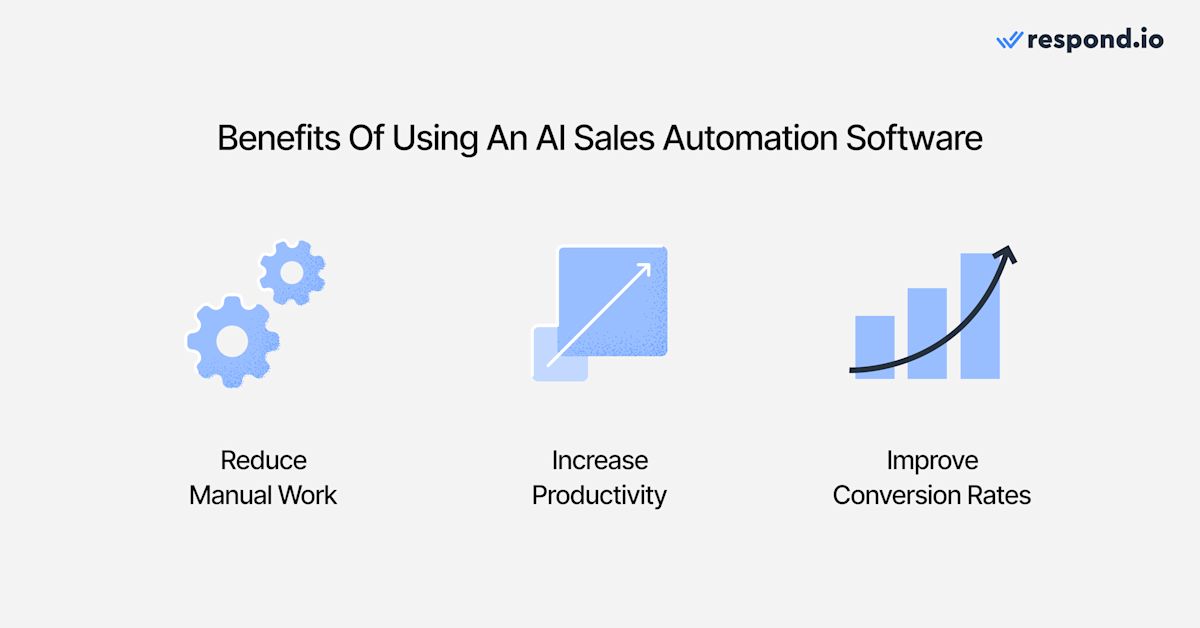
The best platforms reduce manual work without making your outreach feel robotic. They also help your sales team scale outreach while protecting deliverability and keeping pipeline data organized.
Here are the features that matter most when choosing a sales automation platform.
Deliverability and inbox placement
Even the best outreach campaigns fail if your emails land in spam folders.
A good sales automation platform should include deliverability features like inbox warm-up, sender rotation, domain health monitoring, and spam checks.
Some advanced platforms also match sender identities, such as Gmail-to-Gmail or Outlook-to-Outlook, to improve inbox placement and reply rates.
Lead generation and enrichment
Sales automation works best when lead quality is strong from the beginning.
That is why many modern platforms combine prospecting, enrichment, and email verification inside one workflow instead of forcing you to use multiple disconnected tools.
This helps you build cleaner lead lists and spend less time fixing inaccurate contact data.
AI automation and reply handling
Automation is no longer limited to scheduling emails.
Modern AI sales automation platforms can now personalize outreach, handle replies, qualify leads, and even book meetings automatically.
This reduces repetitive work for SDRs and helps teams respond faster to interested prospects.
CRM syncing and reporting
Your outreach platform should not operate separately from your CRM.
Strong sales automation tools automatically sync contacts, replies, meetings, and deal activity into platforms like HubSpot or Salesforce.
Clear reporting dashboards also help you track deliverability, reply rates, and campaign performance in real time.
Workflow automation and scalability
As outbound volume grows, managing campaigns manually becomes difficult.
The right platform should help you automate workflows across prospecting, outreach, follow-ups, LinkedIn actions, and reporting without requiring constant supervision.
Scalability matters even more for agencies, SDR teams, and growing B2B companies running outbound at high volume.
Best Sales Automation Platforms That Increase Demo Bookings
Choosing the right sales automation platform depends on how you run outbound today and how much of the workflow you want to automate tomorrow.
Some tools focus only on lead databases, while others help automate outreach, reply handling, deliverability, and CRM workflows together.
Here are some of the best sales automation platforms teams use to increase demo bookings at scale.
1. Oppora — AI Sales Automation Platform Built for Autonomous Outbound
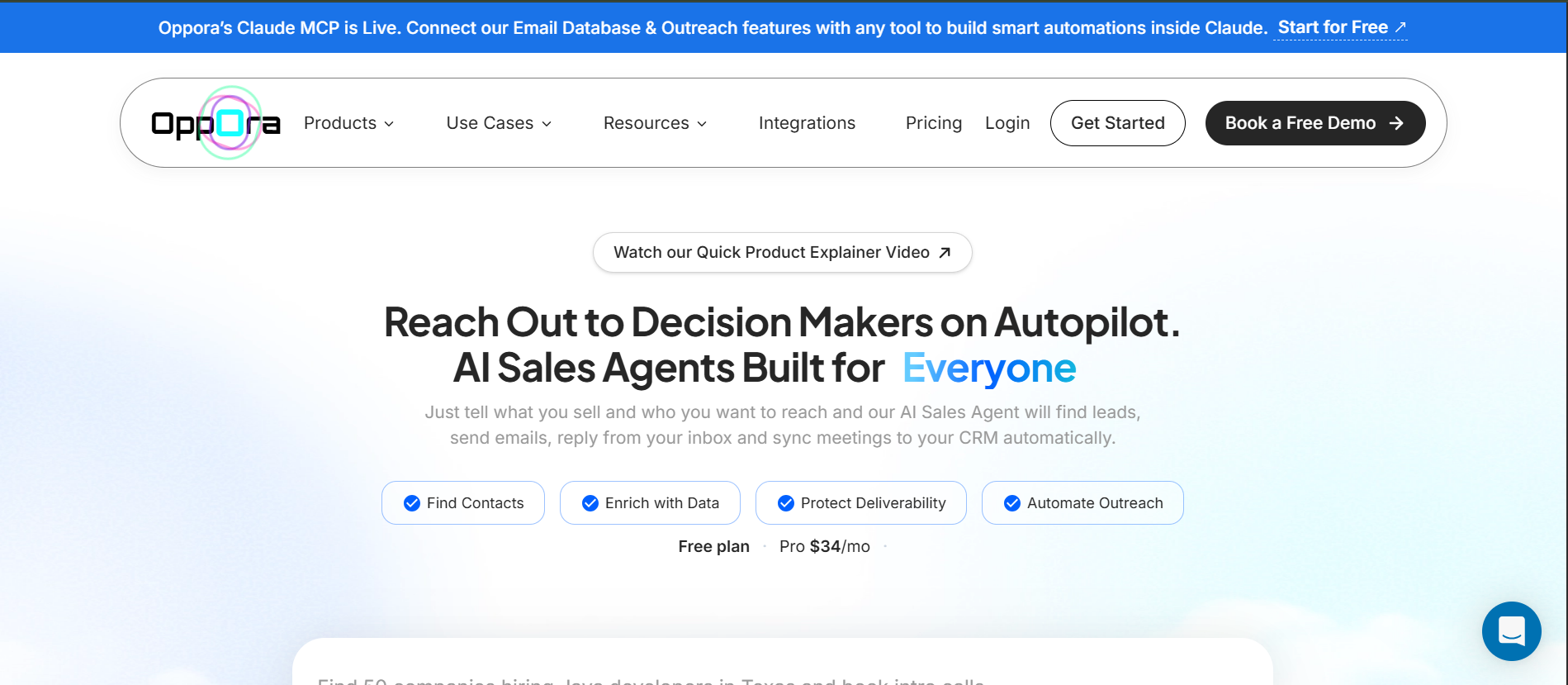
Oppora positions itself differently from traditional cold email tools.
Instead of offering disconnected features, it focuses on autonomous outbound powered by interconnected AI sales agents that handle prospecting, enrichment, outreach, replies, and CRM syncing automatically.
Key features
- 8 AI sales agents working together in one workflow
- Drag-and-drop outbound workflow builder
- 1B+ verified emails with waterfall enrichment
- AI reply automation and meeting booking
- Gmail-to-Gmail and Outlook matching for deliverability
- Up to 50 mailbox connections and warm-up automation
- CRM sync with HubSpot, Salesforce, and Pipedrive
- LinkedIn outreach automation inside workflows
Oppora also claims users can automate the entire outbound cycle after initial setup instead of manually operating campaigns daily.
Best for
Founders, SDR teams, agencies, staffing firms, and B2B companies that want autonomous outbound instead of manual campaign management.
Pros
- Strong workflow automation compared to traditional sequencers
- AI reply handling reduces manual SDR workload
- Built-in lead enrichment and verification
- Deliverability-focused infrastructure
- Unified pricing instead of fragmented add-ons
Limitations
- More workflow-oriented than beginner outreach tools
- Advanced automation may require setup planning initially
Pricing
Oppora offers a free plan, while paid plans start around $34/month with higher tiers for scaling workflows, enrichment, and outreach automation.
2. Creatio — AI-Powered Sales Automation and CRM Platform for Full-Cycle Pipeline Growth
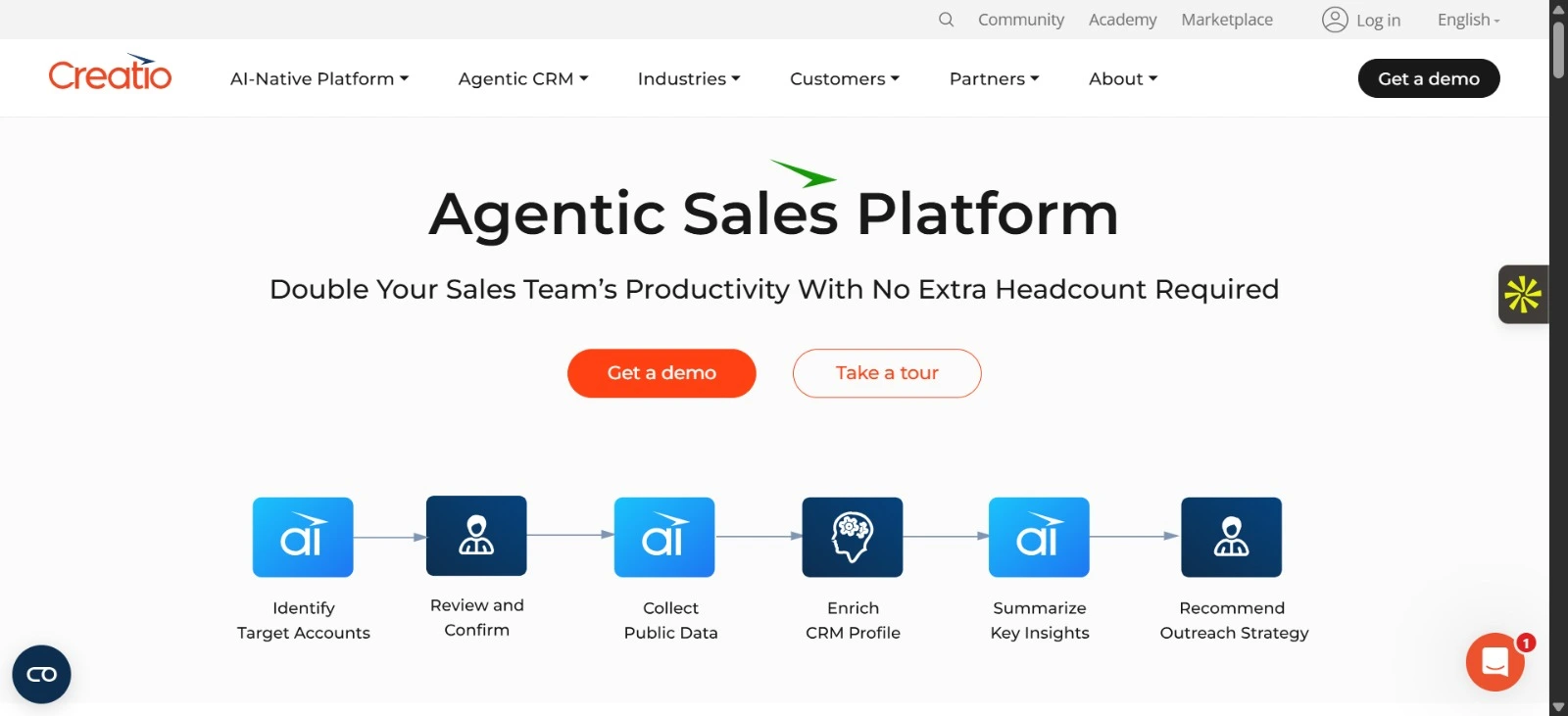
Creatio is an AI CRM platform with sales AI agents built directly into the system, covering the full sales cycle from lead generation to closed deals. For teams focused on booking more demos, its Lead Generation Agent identifies and engages prospects across multiple channels, while the Meeting Preparation Agent handles agendas and talking points so reps show up ready to convert.
Teams control exactly how much autonomy each agent has, keeping oversight where it matters. Agents connect natively with Outlook, Teams, Zoom, and calendars, and new agents can be built without any technical skills.
Key Features
- Lead Generation Agent to fill the pipeline with qualified prospects at scale
- Meeting Preparation Agent with agendas and talking points ahead of every call
- Next Best Step Agent to guide reps on moving deals forward
- Account Research and Territory Management agents for smarter outreach
- MS Teams and Outlook Agents to summarize calls, draft follow-ups, and integrate natively with Zoom and calendars
- No-code Agent Builder to create custom agents without development resources
- Visual workflow designer to automate complex, multi-step sales processes without coding
- AI-native forecasting and custom dashboards for real-time pipeline visibility
Best For
Sales teams managing complex, multi-step processes who want to increase demo volume without growing headcount.
Pros
- AI agents included at no additional cost
- Human-in-the-loop model keeps teams in control
- No-code customization, no technical resources needed
- Covers the full sales cycle, not just outreach
Limitations
- Broader scope than lightweight outreach tools
- Initial setup requires workflow configuration
3. Instantly — High-Volume Cold Email Sales Automation Platform
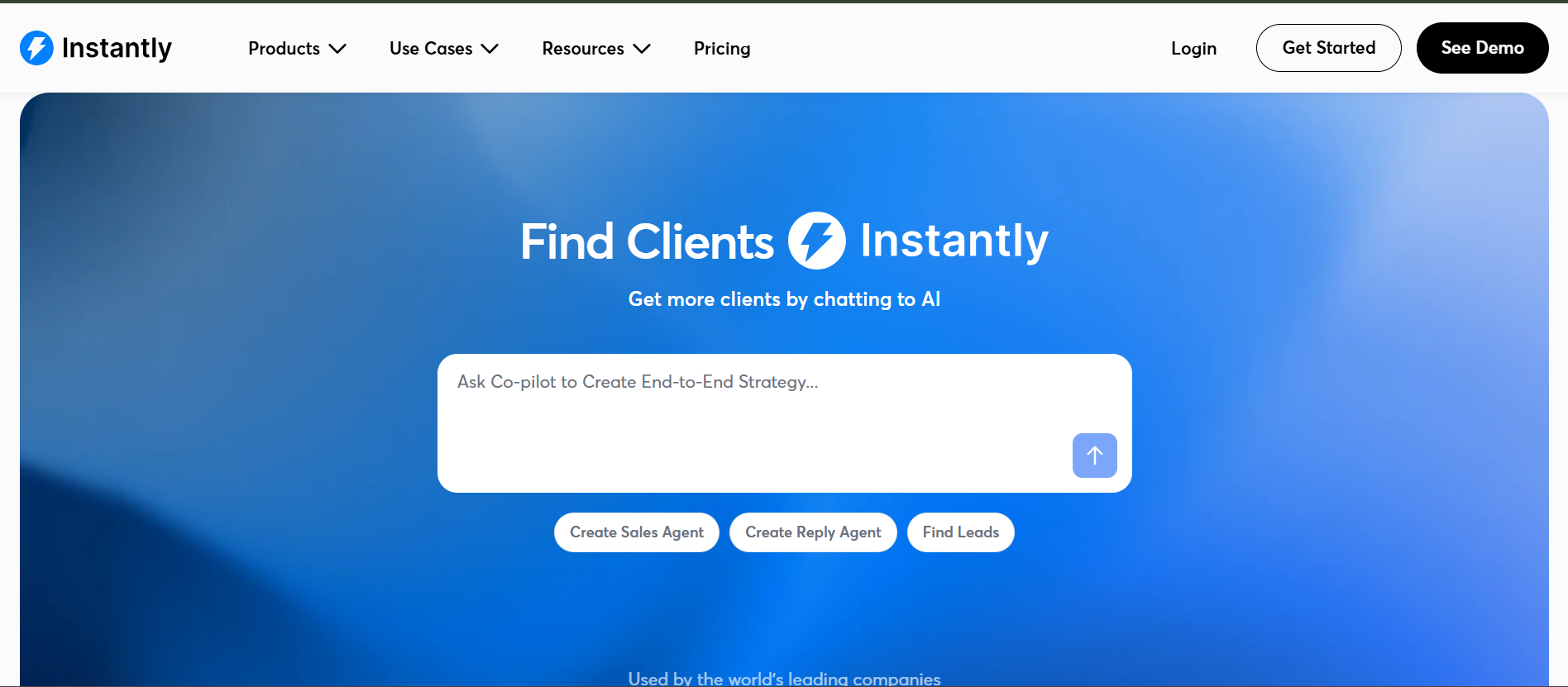
Instantly has become popular among agencies and outbound operators focused on scaling cold email volume safely.
Its biggest strength is deliverability-focused infrastructure combined with unlimited sending accounts.
Key features
- Unlimited email account connections
- Automated inbox warm-up
- AI-powered cold email workflows
- Built-in lead database
- Unified inbox for reply management
Best for
Agencies, lead generation teams, and outbound operators sending cold emails at high volume.
Pros
- Excellent deliverability tooling
- Strong scalability for outbound campaigns
- Unlimited mailbox support on higher plans
- Easy campaign setup for scaling outreach
Limitations
- Primarily focused on email outreach workflows
- Pricing structure can become layered with add-ons
- Less workflow automation compared to agent-based platforms
4. Lemlist — Sales Automation for Personalized Outreach
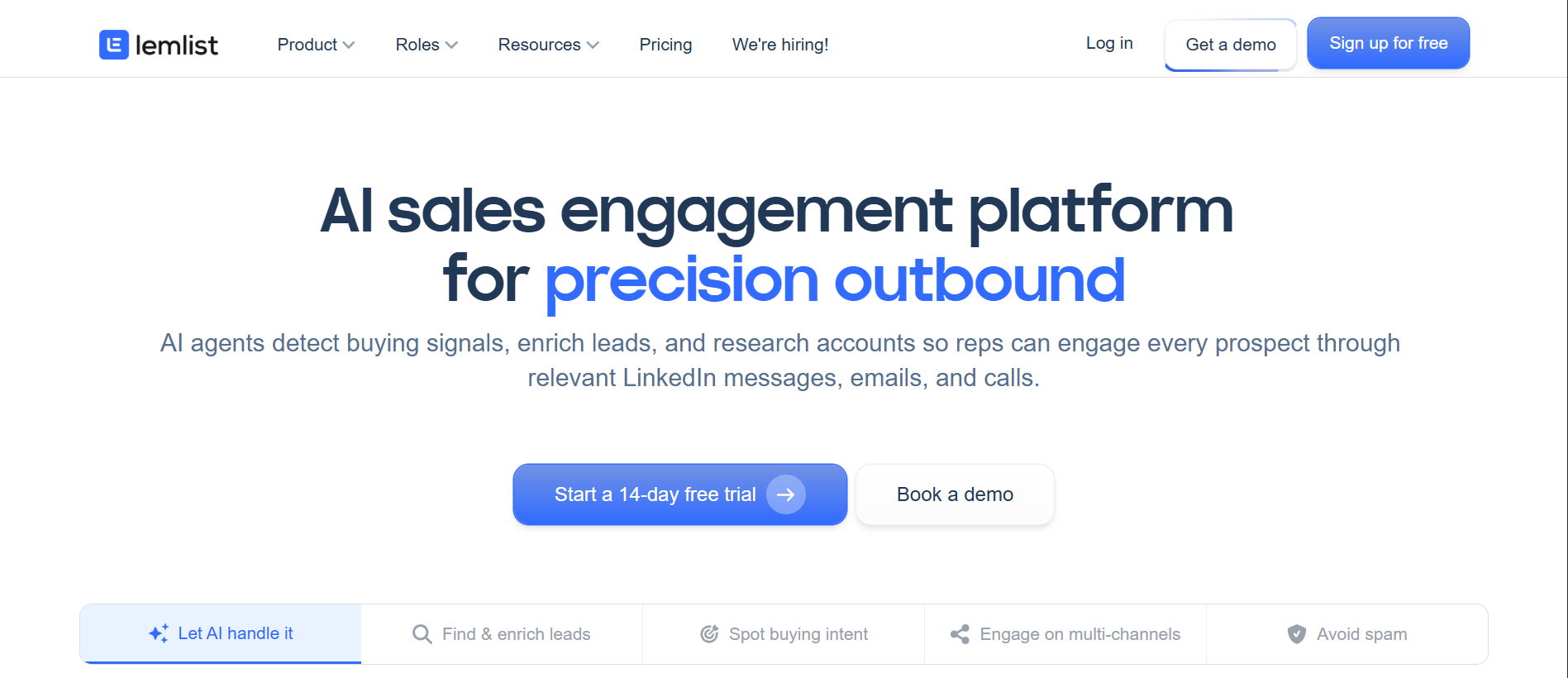
Lemlist focuses heavily on personalized outbound campaigns.
It is designed for teams that want outreach to feel human instead of overly automated.
Key features
- Personalized email sequences
- Dynamic images and landing pages
- Multichannel outreach
- Deliverability optimization
- CRM integrations
Best for
Sales teams prioritizing personalization and relationship-driven outreach.
Pros
- Strong personalization capabilities
- Easy-to-use campaign builder
- Useful multichannel outreach options
Limitations
- Not ideal for extremely high-volume outbound
- Workflow automation depth is more limited compared to AI-native platforms
Suggested Reading:
10 Best Lemlist Alternatives for Cold Outreach5. Smartlead — Scalable Sales Automation Platform for Agencies
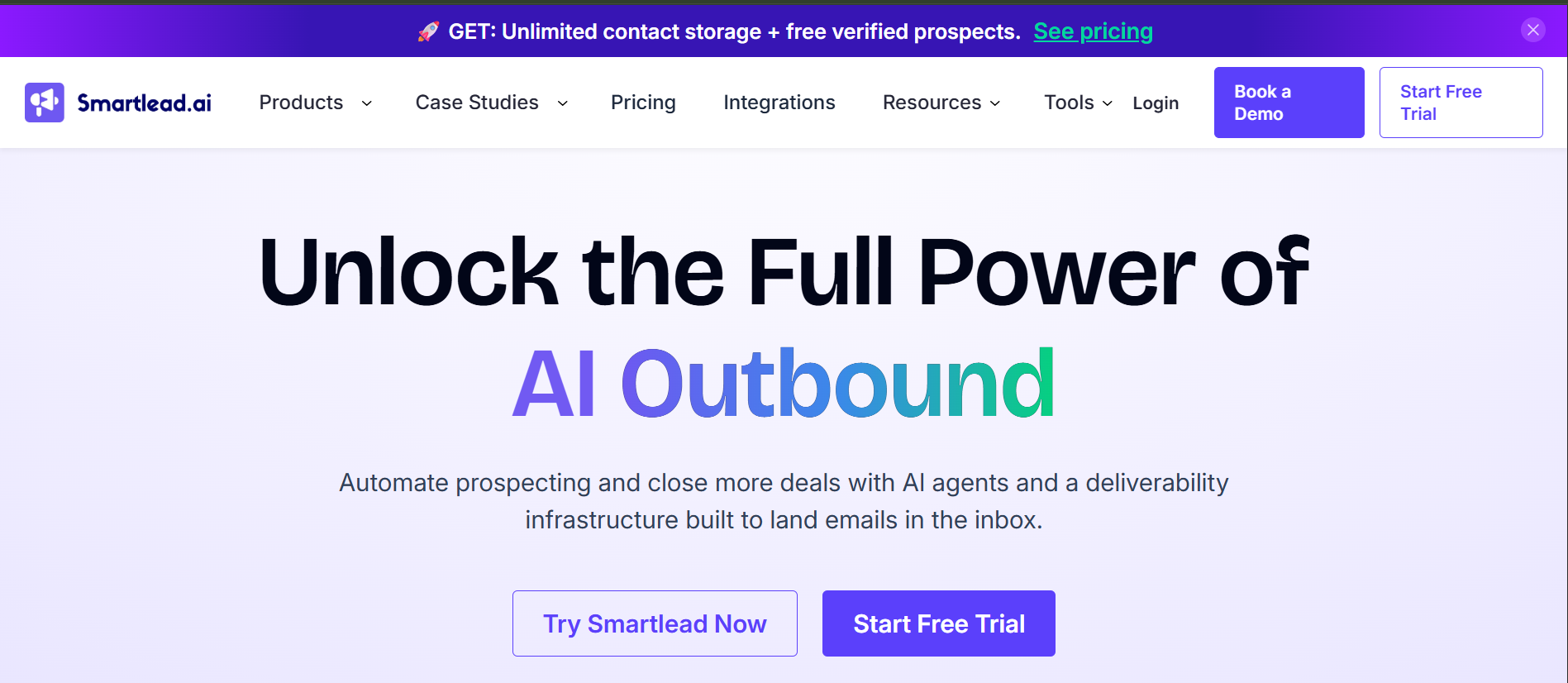
Smartlead is built mainly for agencies and teams managing outbound across multiple clients or inboxes.
It focuses strongly on deliverability, inbox rotation, and scalable cold outreach infrastructure.
Key features
- Unlimited email warm-up
- Master inbox management
- API and webhook support
- Inbox rotation and sender distribution
- White-label capabilities for agencies
Best for
Cold email agencies and teams handling outreach across multiple brands or clients.
Pros
- Strong infrastructure for scaling campaigns
- Agency-friendly workflow management
- Flexible integrations and automation support
Limitations
- UI can feel technical for beginners
- Less focused on built-in lead intelligence compared to database-heavy platforms
6. Outreach — Enterprise Sales Automation Platform
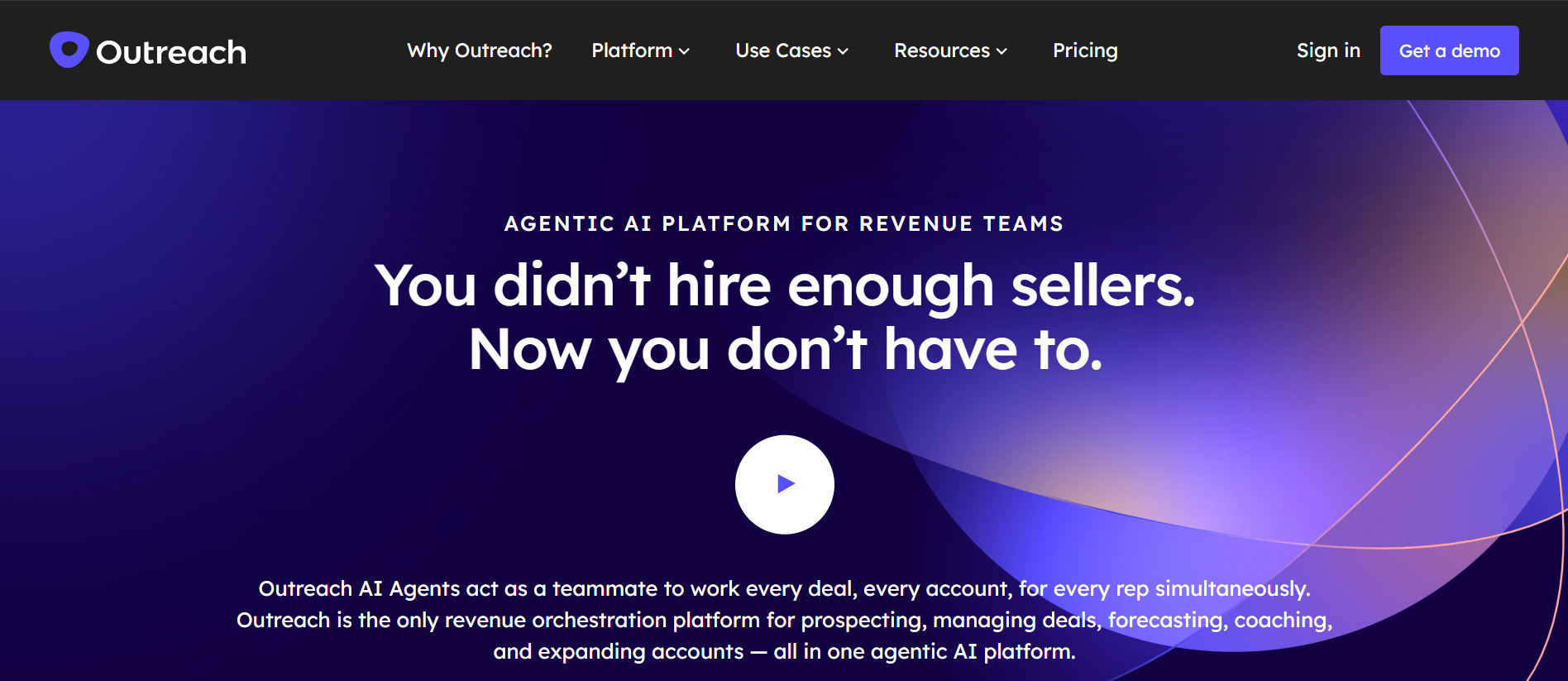
Outreach is one of the most established enterprise sales engagement platforms in the market.
It is built for large sales organizations that need structured workflows, forecasting, pipeline visibility, and multi-team collaboration.
Key features
- Multi-channel sales sequencing
- AI-powered deal insights and forecasting
- Conversation intelligence
- Pipeline and revenue analytics
- CRM integrations with Salesforce and HubSpot
Best for
Enterprise sales teams managing large outbound operations across SDRs, account executives, and RevOps teams.
Pros
- Strong enterprise workflow management
- Advanced reporting and forecasting capabilities
- Deep CRM integrations
- Built for complex revenue operations
Limitations
- Expensive for startups and smaller teams
- Setup and onboarding can take time
- Less flexible for lightweight outbound teams compared to newer AI-first platforms
7. Salesloft — Sales Automation for Revenue Teams
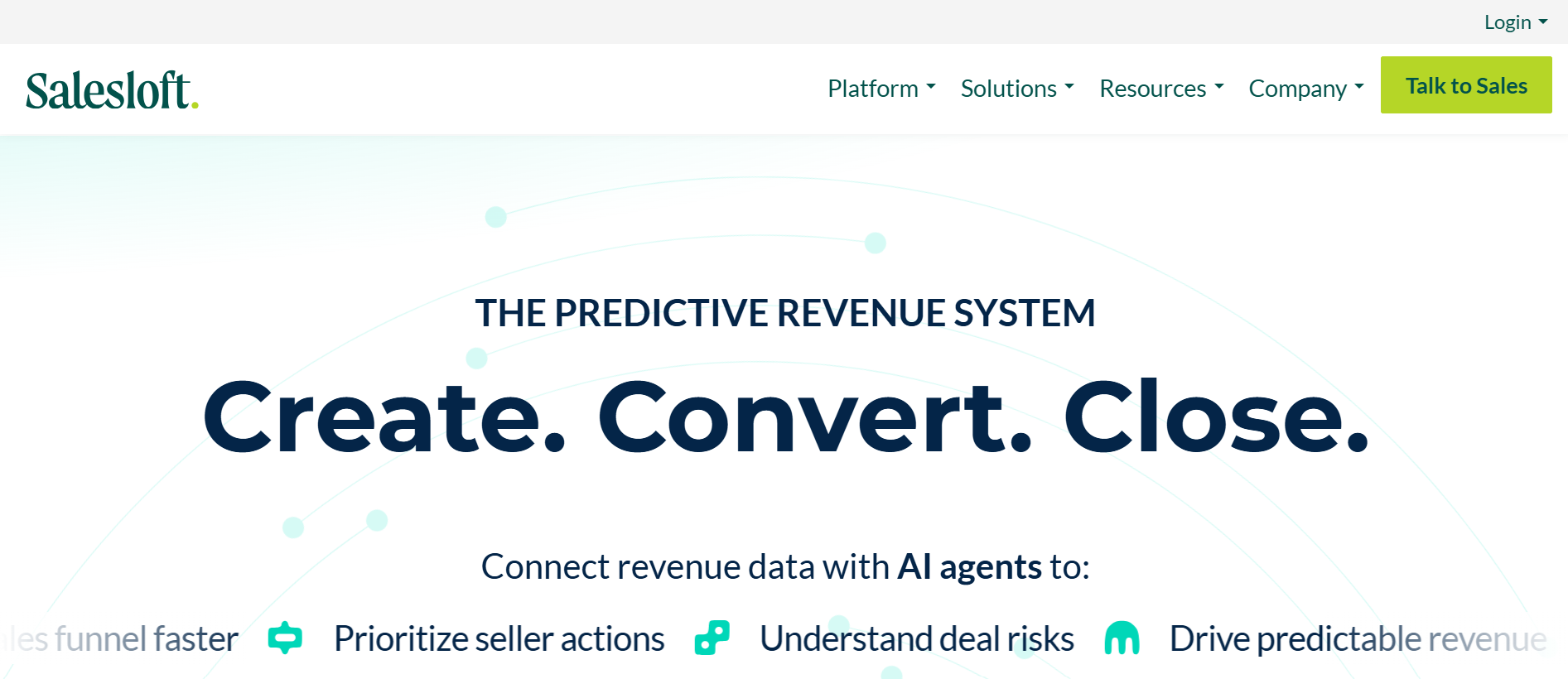
Salesloft focuses on helping revenue teams manage sales engagement, pipeline activity, and customer communication from one platform.
Its platform combines automation with coaching and analytics features for sales organizations.
Key features
- Cadence automation for outbound sequences
- Call tracking and conversation intelligence
- Deal management and forecasting
- Email templates and analytics
- CRM and calendar integrations
Best for
Revenue teams that want sales engagement, coaching, and pipeline management together.
Pros
- Strong user experience for SDR workflows
- Helpful analytics and conversation insights
- Good balance between automation and sales coaching
- Enterprise-ready integrations
Limitations
- Pricing may not fit smaller outbound teams
- Less focused on autonomous AI workflows
- Requires ongoing campaign management for scaling outreach
8. Snov.io — Budget-Friendly Sales Automation Platform
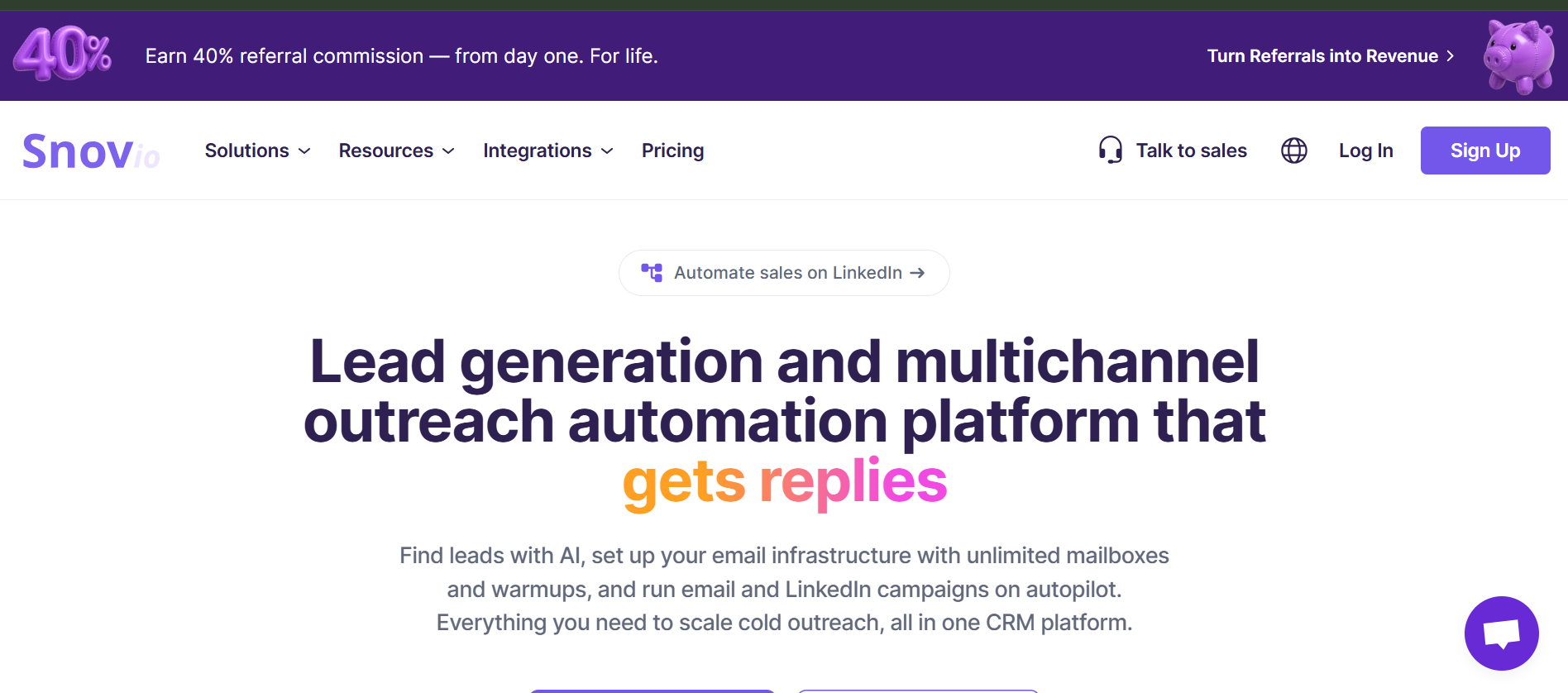
Snov.io combines lead generation, email verification, and cold outreach tools in a more affordable package compared to enterprise platforms.
It is especially popular among startups and smaller outbound teams looking for an all-in-one workflow.
Key features
- Email finder and verifier
- Cold email automation
- LinkedIn prospecting extension
- Drip campaign builder
- CRM integrations and lead tracking
Best for
Freelancers, startups, agencies, and SMB sales teams running outbound on tighter budgets.
Pros
- Affordable pricing structure
- Strong email verification capabilities
- Useful Chrome extension for prospecting
- Good combination of lead generation and outreach tools
Limitations
- Workflow automation is less advanced than AI-native tools
- UI can feel feature-heavy initially
- Limited enterprise-level reporting and orchestration capabilities
9. Reply.io — AI-Powered Sales Automation Platform
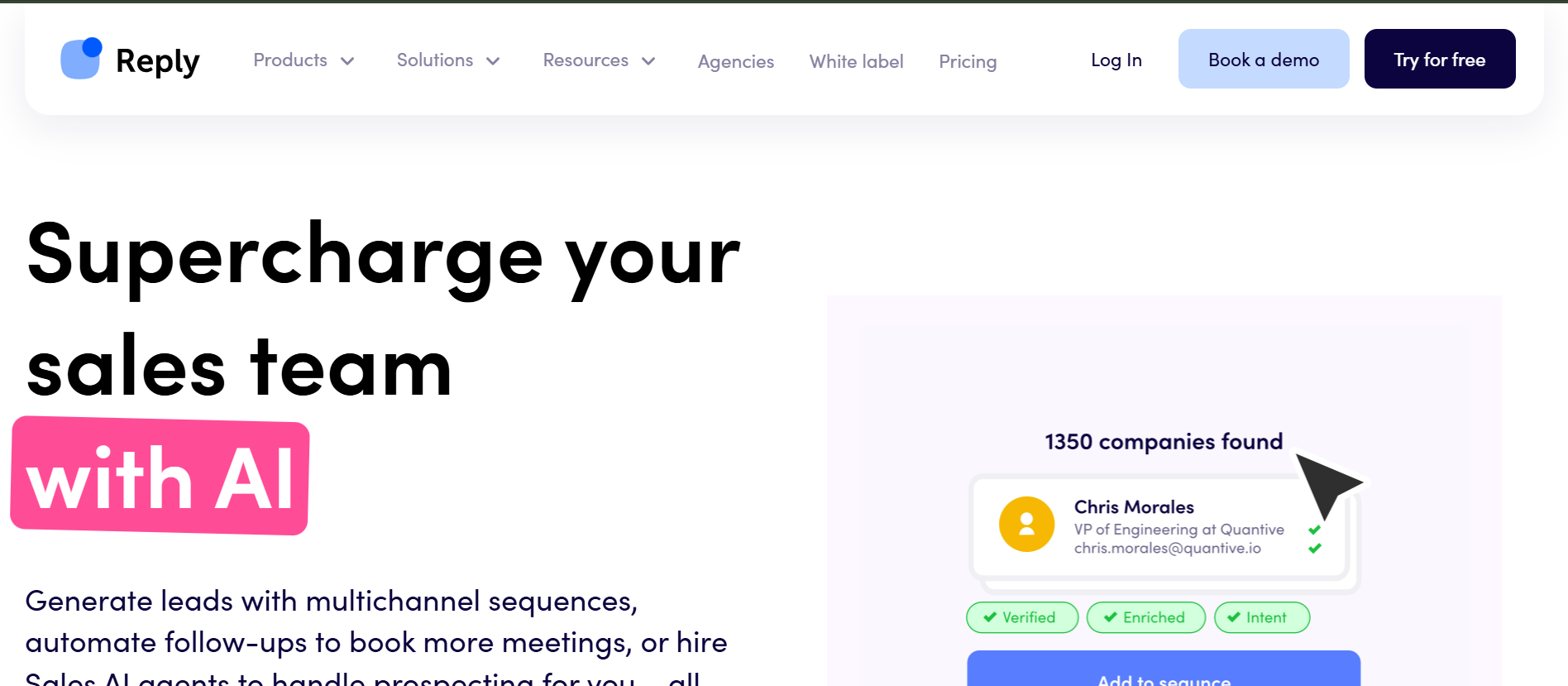
Reply.io focuses heavily on AI-assisted outbound automation and multichannel sales engagement.
It combines email automation, AI SDR workflows, LinkedIn outreach, and meeting booking capabilities inside one platform.
Key features
- AI SDR assistant
- Multichannel outreach sequences
- Email and LinkedIn automation
- Meeting scheduling workflows
- Contact database and analytics
Best for
Sales teams wanting AI-assisted outbound workflows without building highly technical automation systems.
Pros
- Strong multichannel outreach support
- AI assistance for prospecting and replies
- Easy-to-manage outreach sequences
- Good meeting booking automation
Limitations
- Some AI features require higher-tier plans
- Deliverability tooling is less advanced than dedicated cold email infrastructure platforms
- Scaling large outbound workflows may require additional integrations
10. HubSpot Sales Hub — CRM-Centered Sales Automation
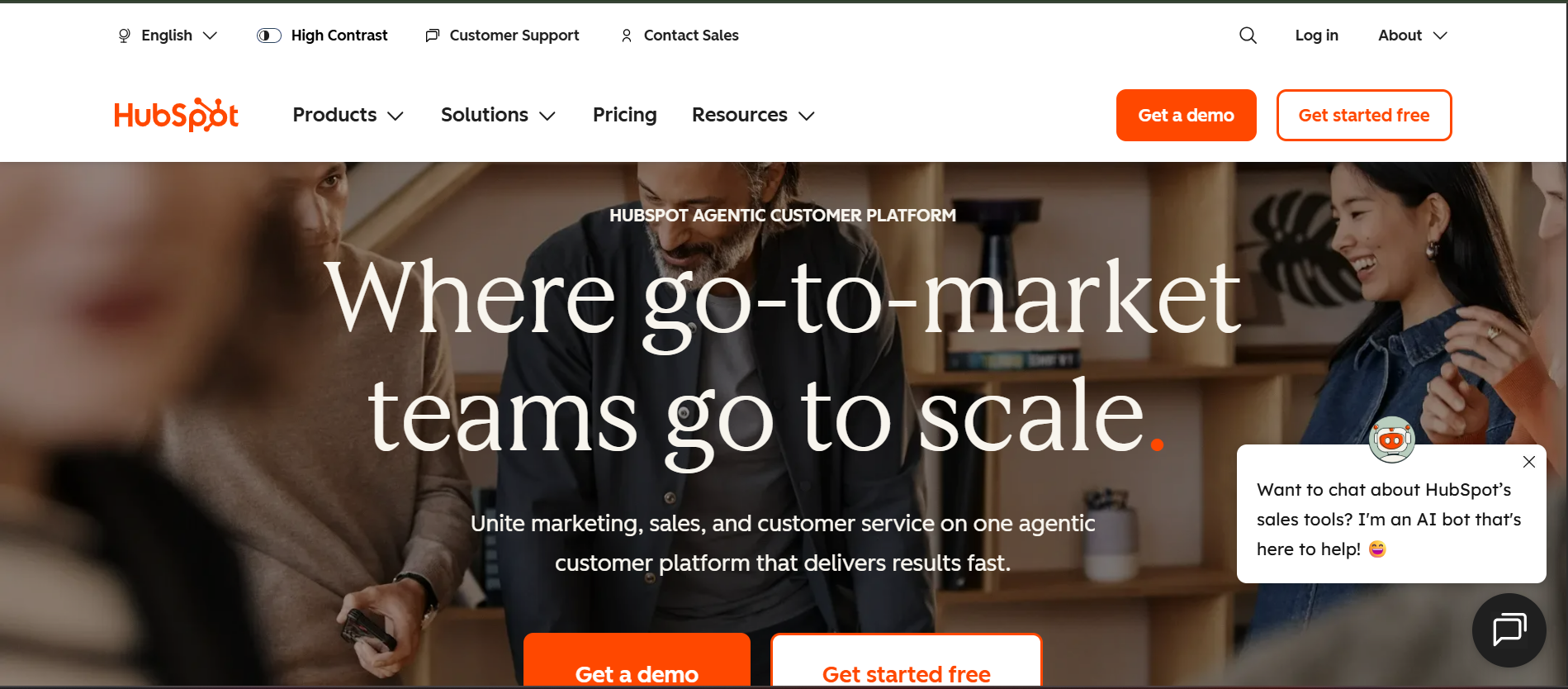
HubSpot Sales Hub approaches sales automation from a CRM-first perspective.
Instead of acting only as an outbound tool, it connects automation directly with customer records, pipeline activity, and broader marketing workflows.
Key features
- Sales pipeline automation
- Email tracking and sequencing
- Meeting scheduling
- CRM workflow automation
- Reporting dashboards and forecasting
Best for
Businesses already using HubSpot CRM that want sales automation tightly connected with marketing and customer data.
Pros
- Excellent CRM integration experience
- Easy-to-use interface for growing teams
- Strong reporting and automation ecosystem
- Good alignment between marketing and sales teams
Limitations
- Advanced automation features can become expensive
- Cold outbound capabilities are less specialized than dedicated sales engagement platforms
- Scaling high-volume outbound often requires additional tools or integrations
How to Choose the Right Sales Automation Platform
Choosing the right sales automation platform depends less on popularity and more on how well the tool fits your outbound process.
A platform that works for a solo founder may not work for a scaling SDR team or agency.
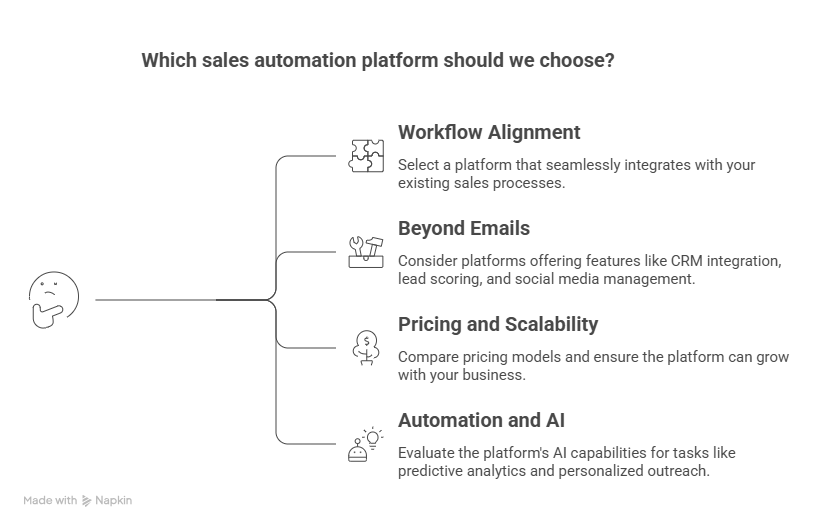
Choose based on your workflow
Start by identifying where your team spends the most manual time today.If prospecting is the bottleneck, prioritize platforms with strong lead sourcing and enrichment.
If follow-ups and inbox management consume most of your time, focus on tools with workflow automation and AI reply handling.
Look beyond just sending emails
Many tools automate email sequences, but modern outbound requires much more than that.
Look for platforms that also support deliverability monitoring, LinkedIn outreach, CRM syncing, lead verification, and reporting. This reduces the need to manage multiple disconnected tools.
Compare pricing and scalability carefully
Some platforms appear affordable initially but become expensive as outreach volume grows.
Pay attention to mailbox limits, credit systems, enrichment costs, and workflow restrictions before committing long term.
Evaluate automation and AI capabilities
The biggest advantage of modern sales automation platforms is reducing repetitive SDR work.
Tools with AI-powered workflows, reply automation, and autonomous outbound capabilities can help your team scale demo bookings without scaling headcount.
Conclusion
Sales automation platforms are no longer just tools for sending cold emails.
The best platforms help you automate prospecting, improve deliverability, manage replies, sync CRM activity, and scale outreach without adding manual workload.
The right choice ultimately depends on your outbound goals, team size, and workflow complexity.
If you need lightweight outreach, a simple sequencer may work.
But if your team wants autonomous outbound with AI-driven workflows, reply automation, and scalable infrastructure, modern sales automation platforms can significantly increase demo bookings while reducing operational effort.
Frequently Asked Questions
What is a sales automation platform?
A sales automation platform helps automate repetitive outbound tasks like prospecting, email outreach, follow-ups, lead enrichment, CRM updates, and reply handling.
The goal is to help sales teams book more meetings while reducing manual work.
Which sales automation platform is best for cold outreach?
The best platform depends on your workflow and outbound volume.
Tools like Oppora, Apollo.io, Instantly, and Smartlead are commonly used for scaling cold outreach and improving deliverability.
Can AI sales automation platforms handle replies automatically?
Yes. Many modern AI sales automation platforms can now qualify leads, respond to common questions, schedule meetings, and route conversations automatically without requiring constant SDR involvement.
Do sales automation tools improve email deliverability?
Most advanced platforms include deliverability features like inbox warm-up, mailbox rotation, spam checks, and sender matching to improve inbox placement and reduce spam risks.
How do I choose the right sales automation platform?
You should evaluate platforms based on your outreach workflow, team size, automation requirements, CRM integrations, deliverability support, and long-term scalability instead of choosing based only on pricing.