12 Sales Development Tools Ranked by ROI & Ease of Use
sales development tools
You are probably already using multiple sales development tools to run your outbound.
But instead of simplifying your workflow, they often create more steps, more tabs, and more manual work than expected.
You switch between tools to find leads, verify emails, write messages, send campaigns, and track replies, and somewhere in that process, speed and consistency start to drop.
The real challenge is not finding tools, it is choosing the right ones based on ROI and ease of use.
In this guide, you will explore:
- What sales development tools actually are
- What makes a tool worth using beyond features
- 12 sales development tools ranked by ROI and usability
- How to choose the right tool for your outbound strategy
What Are Sales Development Tools?
Sales development tools are the systems you use to find, reach, and engage potential customers before a deal even starts.
They sit at the very top of your sales funnel and help you turn cold prospects into qualified conversations.
Instead of relying on manual research and one-off emails, these tools streamline the entire outbound process so you can move faster and stay consistent.
Most sales development tools typically help you:
- Discover companies and decision-makers that match your ideal customer profile
- Find and verify email addresses or contact details
- Run cold email and LinkedIn outreach campaigns
- Automate follow-ups without missing timing
- Track replies, opens, and engagement across campaigns
But here is where things get tricky.
Many teams end up using multiple disconnected tools for each step, which creates a fragmented workflow and slows everything down.
The best sales development tools are not just feature-rich.
They bring your entire outbound process into one smooth, connected system.
What Makes a Sales Development Tool Actually Worth Using?
By now, you know what sales development tools do.
But the real question is which ones actually make your outbound easier and more effective, instead of adding more complexity?
The difference usually comes down to how the tool performs in daily use, not how it looks in a feature list.
Easy Setup vs Complicated Workflows
A tool might look powerful during a demo, but if it takes hours or days to set up, your team will avoid using it consistently.
Complex workflows often require constant manual input, which defeats the purpose of using sales development tools in the first place.
The best tools reduce friction.
You should be able to go from idea to live campaign quickly without needing technical expertise or constant troubleshooting.
Better Data Means Better Meetings
Your outreach is only as strong as the data behind it.
If your contact details are outdated or inaccurate, your emails will either bounce or reach the wrong person.
High-quality sales development tools focus on verified data and continuous enrichment so your pipeline stays clean and relevant.
Better data does not just improve deliverability.
It increases your chances of having meaningful conversations with the right decision-makers.
Automation Without Personalization Does Not Work
Automation helps you scale, but it can also make your outreach feel generic if not done correctly.
When every email sounds the same, prospects quickly lose interest and ignore your messages.
The best sales development tools balance automation with real personalization, so each message still feels relevant and thoughtful.
This is where most tools fall short.
They automate volume, but not quality.
Why ROI Matters More Than Feature Count
It is easy to get impressed by long feature lists.
But more features do not always translate into better results, especially if your team only uses a small portion of them.
What actually matters is how much value you get compared to the time, effort, and cost involved.
The right sales development tools should help you book more meetings, reduce manual work, and improve consistency all without increasing complexity.
In the end, ROI is not about how much a tool can do.
It is about how much it actually helps you grow.
12 Sales Development Tools Ranked by ROI & Ease of Use
Now that you know what to look for, let’s break down the tools that actually deliver results.
Instead of just listing features, this section focuses on how these sales development tools perform in real workflows, how easy they are to use, and how much ROI they generate over time.
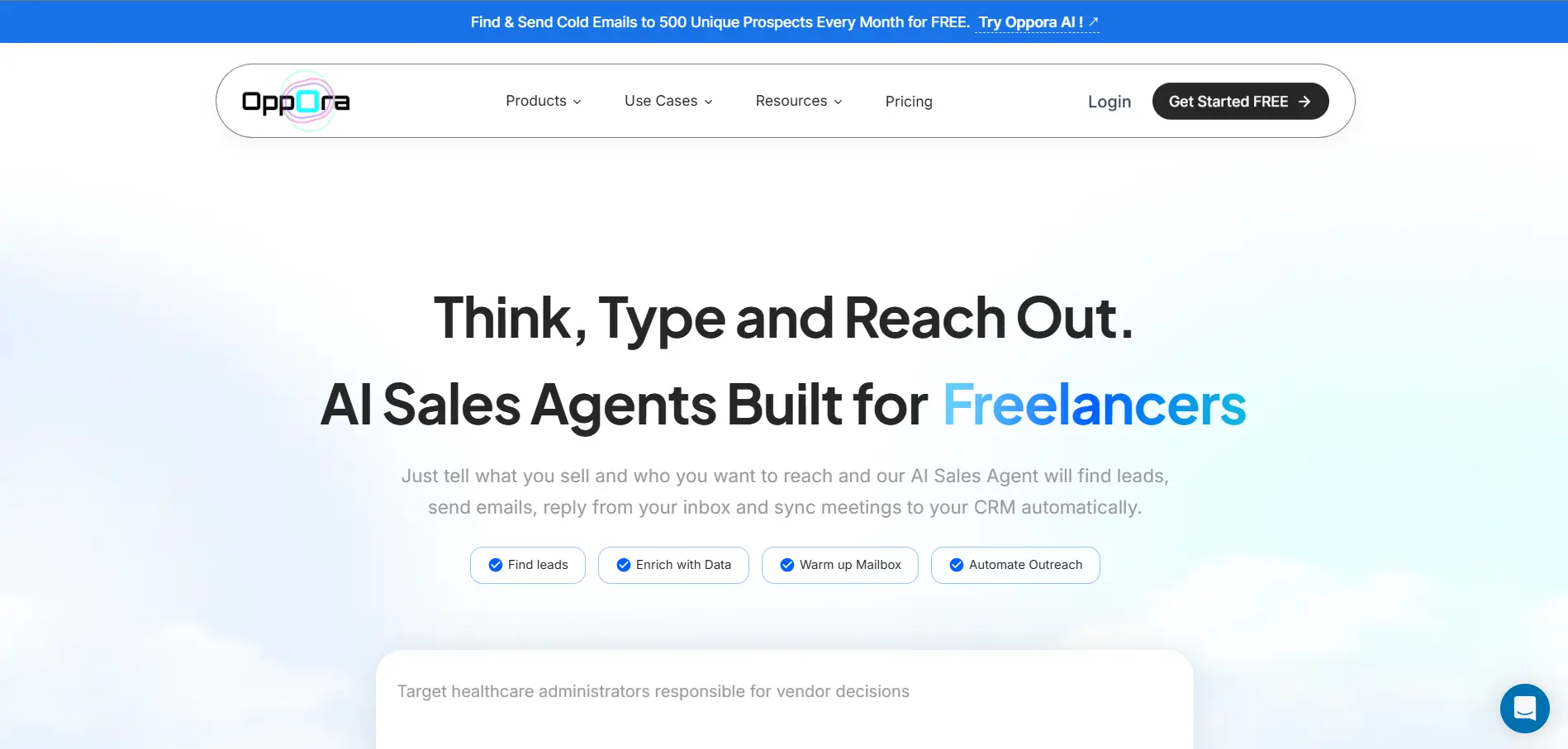
1.Oppora.ai — Best AI Sales Development Tool for End-to-End Outbound
Most sales development tools focus on solving a single part of outbound.
Oppora.ai is designed to handle the entire sales development workflow as one connected system, reducing the need for multiple tools and manual coordination.
You define your target audience and offering once.
From there, the platform builds and continuously executes your outbound process using AI agents.
Key Features:
- 8 AI Sales Agents for full-cycle execution Dedicated agents handle prospecting, enrichment, scoring, email writing, sending, replying, and meeting booking as one coordinated workflow.
- End-to-end outbound automation Covers the full flow: company search → lead identification → data enrichment → outreach → follow-ups → reply handling → CRM sync.
- Access to 1B+ contacts with waterfall enrichment Combines multiple data providers and enrichment layers to deliver highly accurate and verified lead data at scale.
- Real AI-driven email personalization Generates unique, context-aware emails instead of relying on templates or spintext, improving engagement and reducing spam signals.
- Automated reply handling and meeting booking AI reply agent responds to incoming emails, qualifies interest, handles objections, and schedules meetings directly from your inbox.
- Multi-channel outreach (Email + LinkedIn) Integrates email and LinkedIn actions into a single workflow without requiring separate tools.
- Deliverability infrastructure built-in Includes domain warm-up, inbox rotation (up to 50 mailboxes), and sender identity matching to improve inbox placement.
- Unified inbox and CRM integrations Syncs contacts, replies, meetings, and deal data with CRMs like HubSpot, Salesforce, and Pipedrive automatically.
- Self-running workflows with minimal setup Drag-and-drop workflow builder allows you to create outbound systems that run continuously without daily intervention.
What makes Oppora.ai stand out among sales development tools is not just automation, but system-level execution.
Instead of managing separate tools and processes, you are operating a single, continuously running outbound engine that reduces manual effort and improves overall ROI.
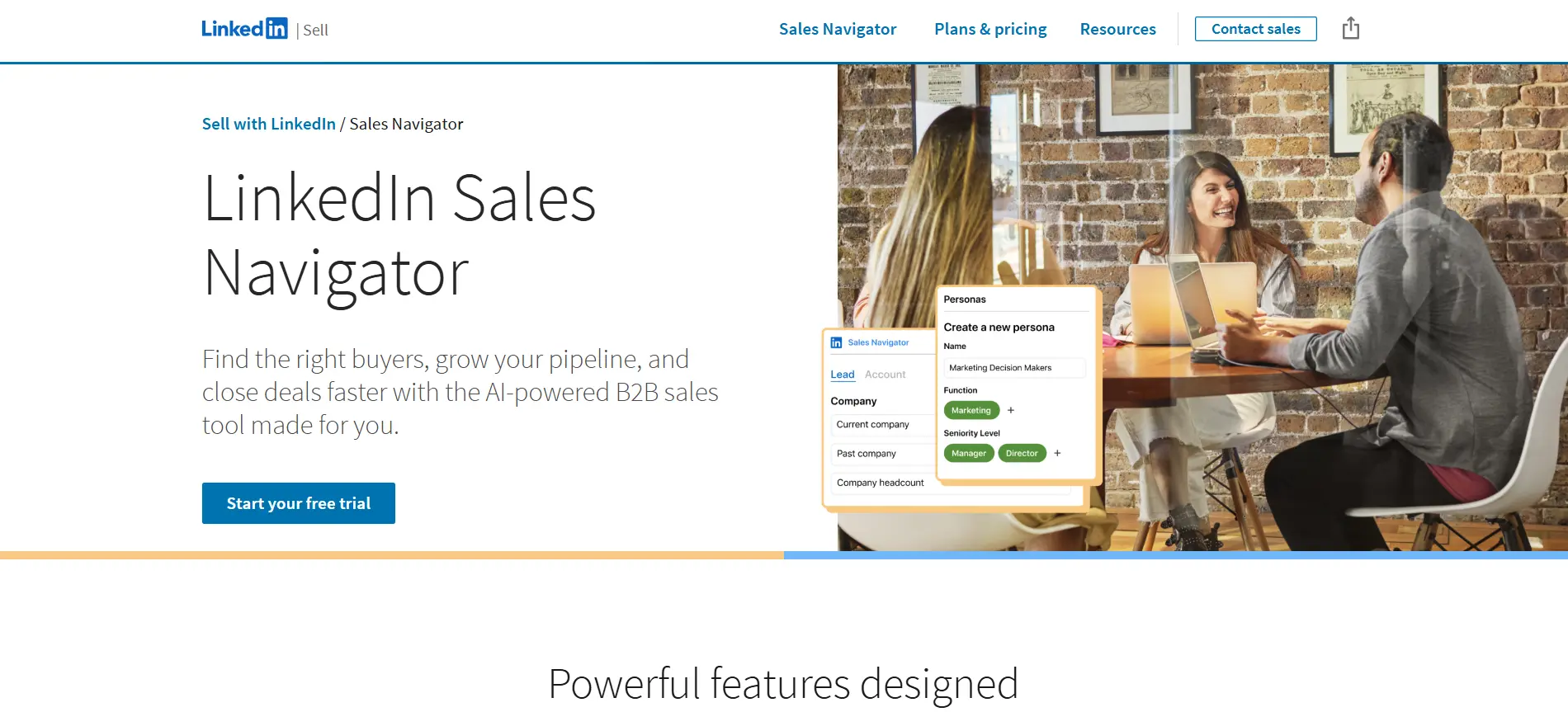
2.LinkedIn Sales Navigator — Best for Prospect Research & Buying Signals
After looking at an all-in-one system like Oppora, it is important to understand tools that specialize in a single stage of outbound.
LinkedIn Sales Navigator focuses heavily on prospect discovery and intent signals rather than execution.
It helps you identify the right people and understand when to reach out, which directly improves the quality of your outreach.
Key Features:
- Advanced lead and account search filters Filter prospects by role, company size, industry, geography, seniority level, and more to build highly targeted lead lists.
- Real-time buying signals and alerts Get notifications for job changes, company growth, funding events, and content engagement to time your outreach better.
- Lead recommendations based on activity The platform suggests new prospects based on your previous searches and saved leads.
- InMail messaging for direct outreach Allows you to contact prospects even if you are not connected, increasing your reach beyond your network.
- Account tracking and engagement insights Follow companies and track key updates to stay relevant in conversations.
- CRM integrations Sync leads and activity with platforms like Salesforce and HubSpot for better pipeline visibility.
- TeamLink for warm introductions Helps you identify mutual connections within your team’s network to increase response rates.
LinkedIn Sales Navigator is one of the most valuable sales development tools when it comes to research and timing.
However, it does not handle outreach automation or email workflows, which means you will still need additional tools to complete your outbound process.
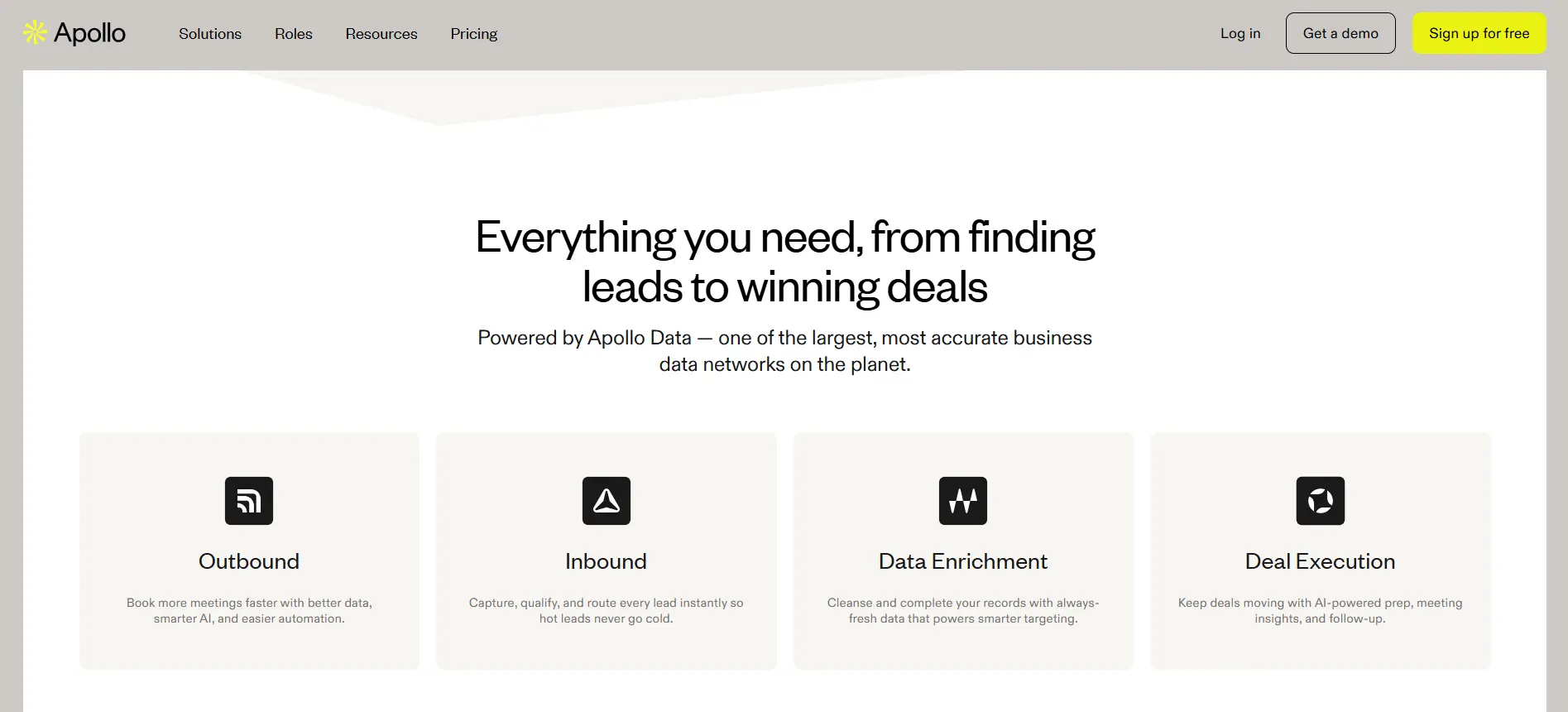
3.Apollo.io — Best Budget-Friendly Prospecting Platform
After tools focused on research like Sales Navigator, the next step is finding a platform that combines data and outreach in one place.
Apollo.io is popular because it gives you both prospecting and basic outreach at a relatively low cost.
It is often the starting point for teams building their outbound engine without a large budget.
Key Features:
- Large B2B contact database Access millions of contacts with filters based on job title, company size, industry, and location.
- Email finding and verification Built-in tools to discover and validate email addresses before outreach.
- Basic email sequencing and automation Create cold email campaigns with follow-ups directly inside the platform.
- Lead enrichment and scoring Add additional data points to leads and prioritize them based on fit.
- Chrome extension for prospecting Capture leads directly from LinkedIn and websites without switching tabs.
- CRM integrations Sync contacts and activity with tools like HubSpot and Salesforce.
- Intent and engagement tracking Track email opens, clicks, and basic engagement metrics.
Apollo.io is one of the most accessible sales development tools if you want to combine lead generation and outreach in one place.
However, as your outbound scales, you may start needing better data accuracy, deeper automation, and stronger deliverability controls.
4.Outreach — Best Enterprise Sales Engagement Platform
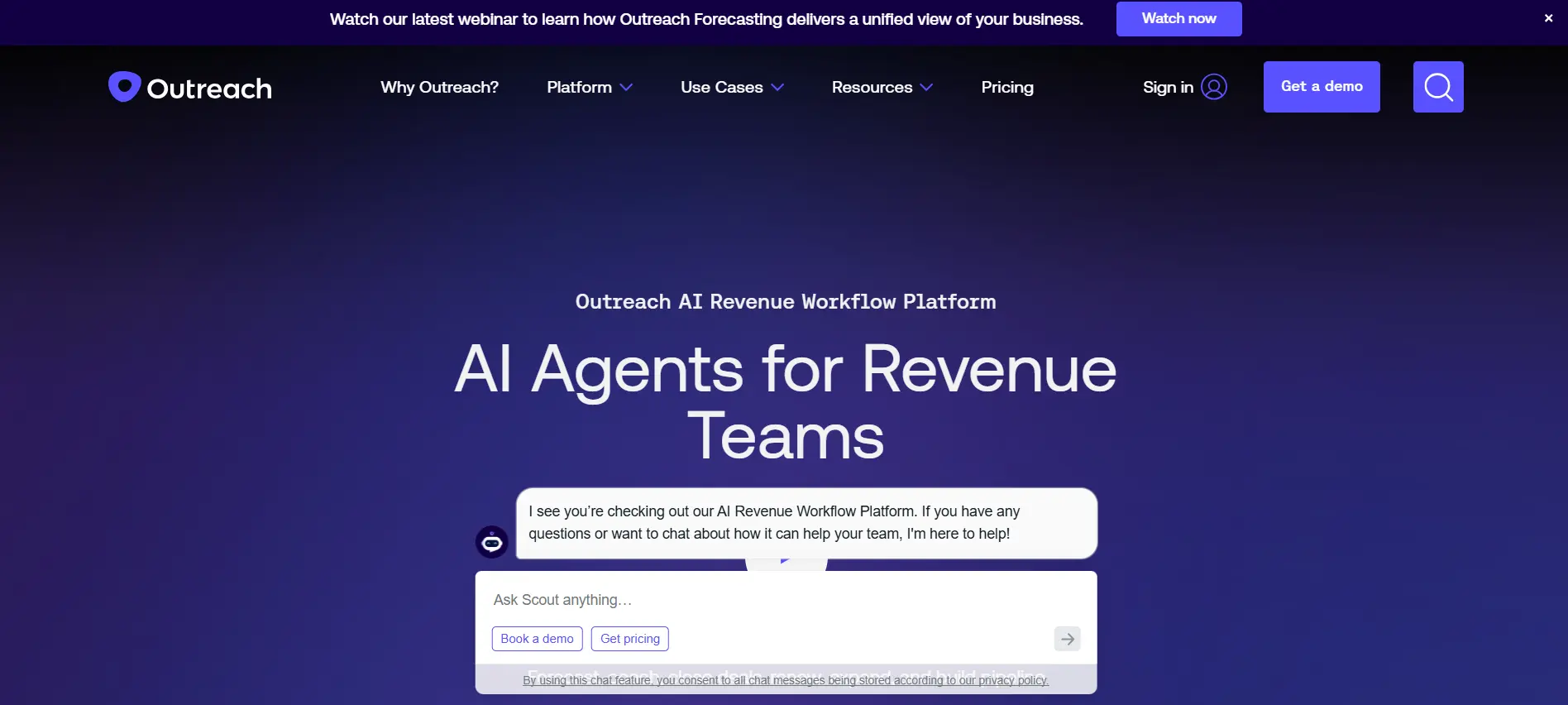
As your outbound grows, you start needing more structure, visibility, and control across your sales process.
That is where Outreach comes in, built specifically for larger teams managing complex sales workflows at scale.
It focuses less on finding leads and more on executing and optimizing outreach across multiple SDRs.
Key Features:
- Advanced multi-step sequencing Build detailed outreach sequences across email, calls, and tasks with precise timing and logic.
- Workflow automation and triggers Automate actions based on prospect behavior like opens, replies, or inactivity.
- Deep analytics and reporting Track performance at every level, from individual SDR activity to overall campaign effectiveness.
- A/B testing for outreach optimization Test subject lines, messaging, and sequences to improve response rates over time.
- CRM integrations (Salesforce, etc.) Sync all activities, contacts, and pipeline data seamlessly with your CRM.
- Team performance tracking Monitor SDR productivity, engagement metrics, and pipeline contribution in one place.
- Call and task management Manage calls, follow-ups, and daily activities alongside email outreach.
Outreach is one of the most powerful sales development tools for enterprise teams that need control and scalability.
However, it requires time, training, and resources to fully implement, which can make it less suitable for smaller teams or fast-moving startups.
5.Salesloft — Best for SDR Cadence Management
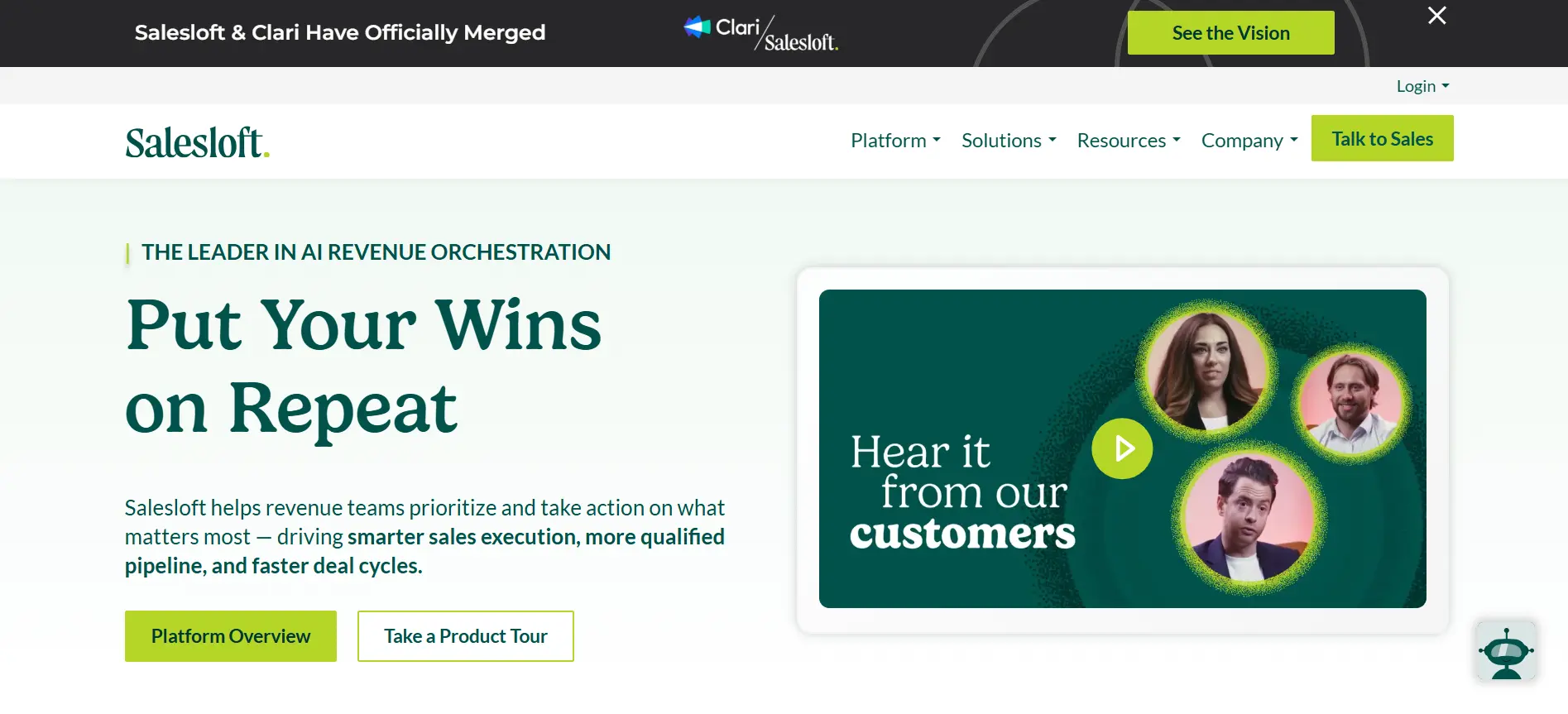
Once your team starts running consistent outbound, managing follow-ups becomes the real challenge.
Salesloft is built to bring structure and consistency to SDR activities, especially across larger teams.
It focuses on helping reps execute well-defined cadences without missing steps or timing.
Key Features:
- Structured cadence builder Create multi-step outreach sequences across email, calls, and tasks with clear timelines.
- Activity tracking and task management Track every touchpoint and ensure SDRs know exactly what to do next.
- Email, call, and meeting integration Manage all communication channels within one platform for better visibility.
- Performance analytics and coaching insights Monitor team performance and identify what messaging or actions are working best.
- CRM integration (Salesforce, HubSpot) Sync all activities, contacts, and pipeline data automatically.
- Conversation intelligence (call tracking & insights) Analyze sales calls to improve messaging and objection handling.
- Team collaboration features Share templates, notes, and insights across SDR teams.
Salesloft is one of the most reliable sales development tools for teams that already have a defined outbound process and want to execute it consistently.
However, it focuses more on execution than prospecting, so you will still need additional tools for lead generation and data.
6.HubSpot Sales Hub — Best CRM-Based Sales Development Platform
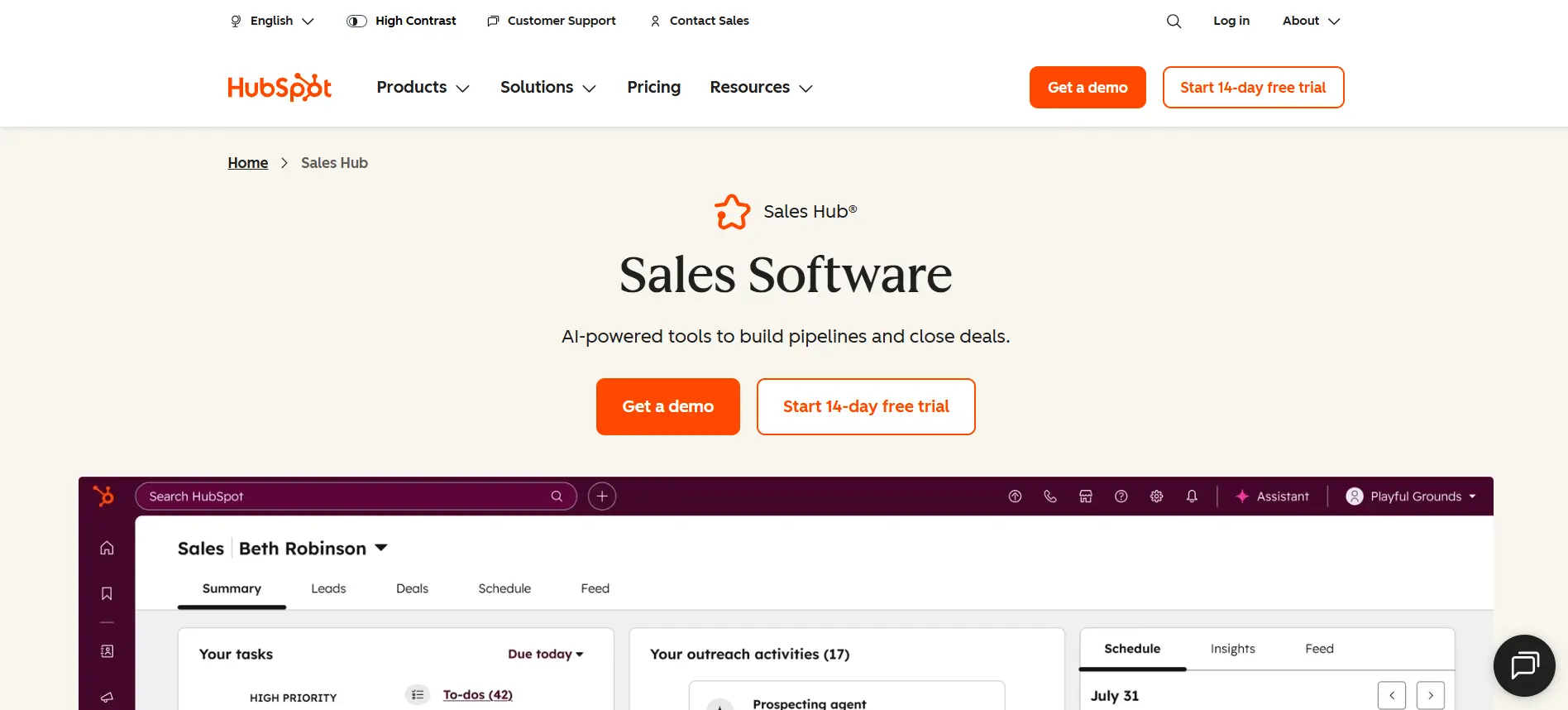
After looking at execution-focused tools like Salesloft, the next category is platforms that combine CRM and outbound in one place.
HubSpot Sales Hub is a strong option if you want your sales development tools tightly connected with your pipeline and customer data.
It is especially popular among teams that prefer simplicity and ease of adoption.
Key Features:
- Built-in CRM with contact and deal management Manage leads, track deals, and store all interactions in one centralized system.
- Email tracking and automation Send emails, track opens and clicks, and automate follow-ups directly from the platform.
- Sales sequences for outreach Create structured email sequences with automated follow-ups and task reminders.
- Pipeline and reporting dashboards Visualize deal stages, track performance, and monitor revenue impact in real time.
- Meeting scheduling tools Share booking links and eliminate back-and-forth while scheduling calls.
- Live chat and chatbot integration Capture inbound leads and engage website visitors instantly.
- Seamless integrations with marketing tools Connect with HubSpot Marketing Hub and other tools for a full funnel view.
HubSpot Sales Hub stands out among sales development tools for its ease of use and all-in-one CRM approach.
However, as your outbound becomes more advanced, you may need additional tools for deeper prospecting, enrichment, or deliverability control.
7.Clay — Best for Advanced Lead Enrichment Workflows
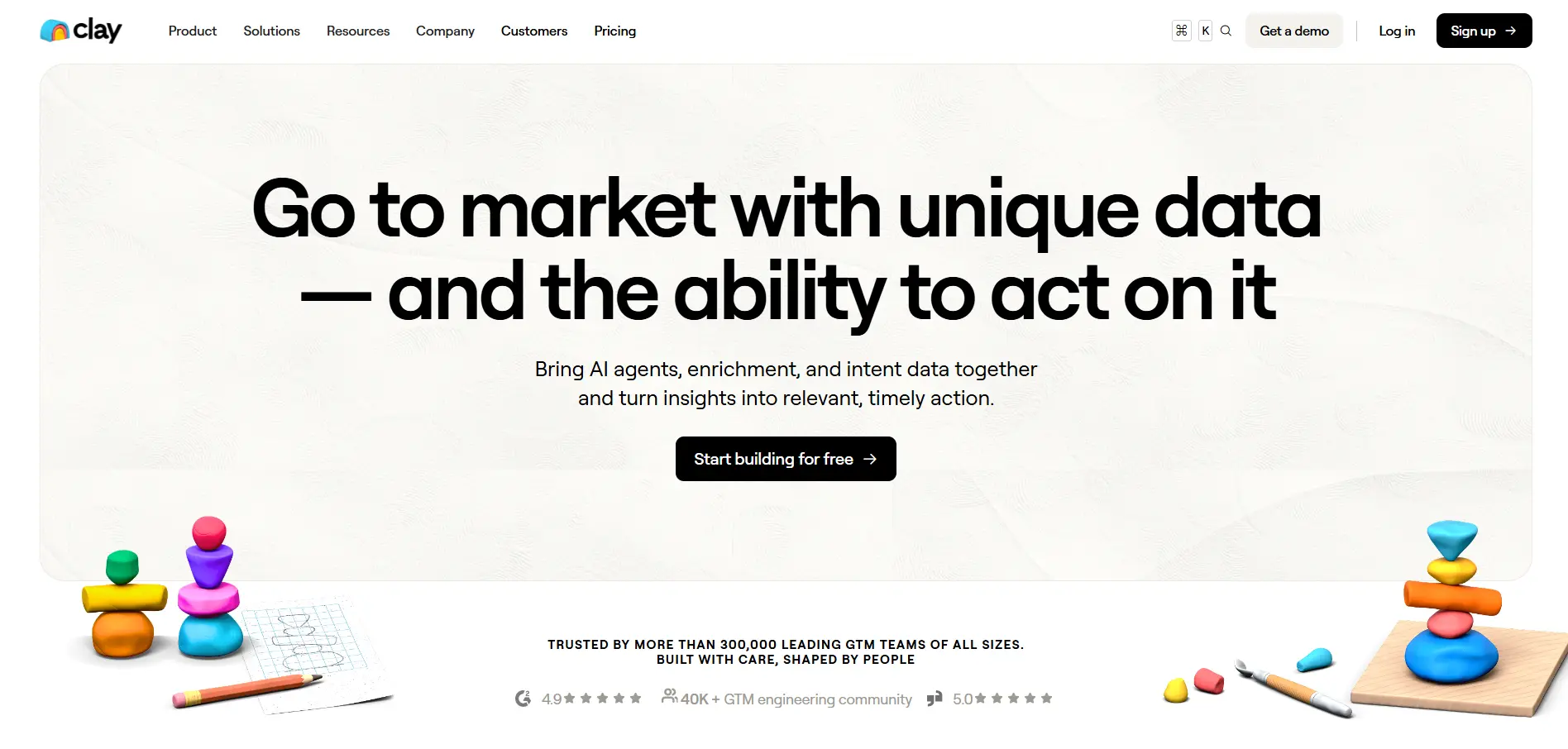
As your outbound matures, basic lead data often stops being enough.
That is where Clay becomes valuable, especially if you want deeper control over how your lead data is collected, enriched, and structured.
Clay is less about sending emails and more about building powerful data workflows behind your outreach.
Key Features:
- Custom lead enrichment workflows Combine multiple data sources to enrich leads with highly specific attributes based on your targeting needs.
- Integration with multiple APIs and data providers Pull data from tools like LinkedIn, Clearbit, Google, and other enrichment sources into one workflow.
- Spreadsheet-style interface with automation Manage and manipulate lead data in a flexible table format while automating repetitive tasks.
- AI-powered data processing Use AI to clean, categorize, and enhance lead data for better targeting and segmentation.
- Trigger-based automation Automatically update or enrich leads based on changes or new inputs.
- Export and sync capabilities Send enriched data to CRMs, outreach tools, or other parts of your sales stack.
- Highly customizable workflows Build unique pipelines tailored to specific industries, ICPs, or campaign strategies.
Clay stands out among sales development tools for teams that rely heavily on data precision and customization.
However, it comes with a learning curve and typically requires pairing with outreach tools to complete the full outbound process.
Suggested Reading:
10 Best Clay Alternative & Competitors for AI Outreach & Lead Enrichment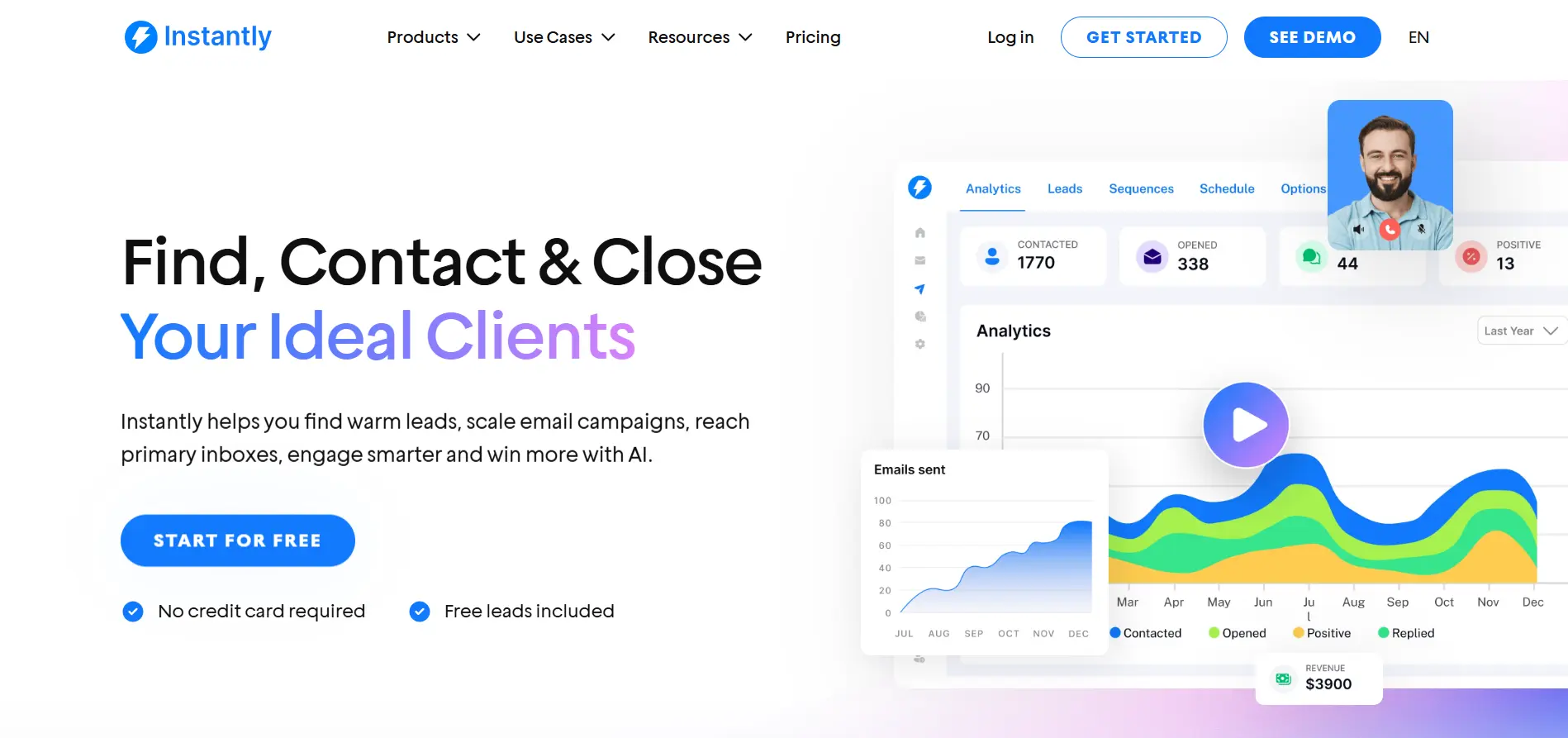
8.Instantly.ai — Best for Cold Email Sending Infrastructure
Once your lead list is ready, the next challenge is sending emails at scale without damaging deliverability.
Instantly.ai focuses specifically on this part of the outbound process, making it a go-to tool for high-volume cold email campaigns.
It is built for teams that already have lead sources and need reliable sending infrastructure.
Key Features:
- Unlimited email sending accounts Connect and manage multiple inboxes to scale outreach without hitting sending limits.
- Automated inbox warm-up Gradually builds sender reputation to improve inbox placement and avoid spam folders.
- Email campaign automation Create sequences with follow-ups and schedule campaigns with minimal setup.
- Inbox rotation for deliverability Distributes emails across multiple accounts to reduce risk and maintain consistency.
- Centralized inbox management Manage replies from multiple accounts in one unified dashboard.
- Basic analytics and tracking Monitor open rates, reply rates, and campaign performance.
- Lead upload and campaign launch simplicity Quickly import lead lists and start campaigns without complex configuration.
Instantly.ai is one of the most efficient sales development tools when your priority is scaling outbound volume safely.
However, it does not handle lead generation or deep personalization, so it works best when combined with other tools in your stack.
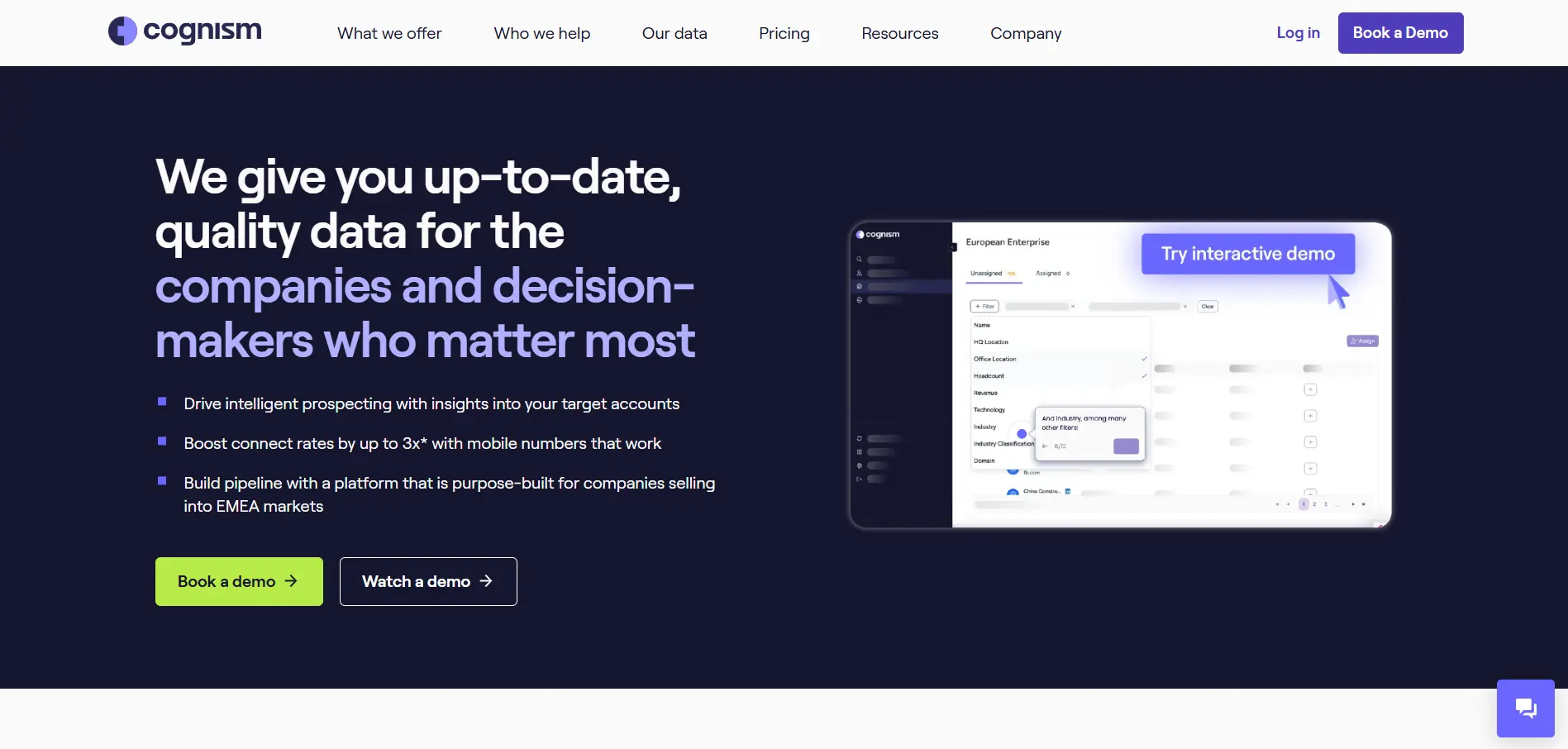
9.Cognism — Best for International B2B Contact Data
As you expand outbound beyond a single region, data quality and compliance become much more important.
Cognism is built for teams that need accurate, compliant, and globally accessible contact data, especially across Europe and international markets.
It focuses heavily on verified data and regulatory compliance rather than outreach execution.
Key Features:
- Global B2B contact database Access international decision-makers across multiple regions, including strong coverage in EMEA markets.
- GDPR-compliant data sourcing Ensures data collection and usage align with strict privacy regulations, reducing legal risk.
- Verified emails and mobile numbers Provides high-quality contact details, including direct dials for better connect rates.
- Intent data and buying signals Identify prospects actively researching solutions similar to yours.
- Advanced filtering and segmentation Narrow down leads based on firmographics, job roles, and intent signals.
- CRM and sales tool integrations Sync data with platforms like Salesforce and HubSpot for seamless workflow integration.
- Data enrichment capabilities Enhance existing lead lists with additional verified information.
Cognism stands out among sales development tools when your priority is international reach and compliance.
However, it is primarily a data provider, which means you will still need separate tools for outreach and automation.
10.ZoomInfo — Best Enterprise Contact Database
As outbound scales further, many teams prioritize access to large volumes of reliable contact data.
ZoomInfo is built for this exact need, offering one of the most extensive B2B databases for enterprise sales teams.
It focuses on helping you identify, segment, and prioritize the right accounts before outreach begins.
Key Features:
- Extensive B2B contact and company database Access millions of company profiles and decision-maker contacts across industries and regions.
- Intent data and buying signals Identify prospects actively researching solutions similar to yours, helping you time outreach better.
- Advanced search and segmentation filters Filter leads by company size, revenue, industry, role, technologies used, and more.
- Data enrichment and list building Enhance your existing lead lists with updated and verified contact information.
- Org charts and company insights Understand company structures and identify key stakeholders within target accounts.
- CRM and sales tool integrations Sync data directly with platforms like Salesforce, HubSpot, and other sales tools.
- Workflow automation for data updates Keep your database fresh with automatic updates and enrichment processes.
ZoomInfo stands out among sales development tools for its scale and depth of data, especially for enterprise teams.
However, like most database-first platforms, it requires additional tools for outreach, automation, and deliverability.
11.Lemlist — Best for Personalized Cold Outreach
After looking at data-heavy and infrastructure-focused tools, the next layer is making your outreach stand out.
Lemlist is built specifically for personalization, helping you create emails that feel more human and less like bulk outreach.
It focuses on improving reply rates by making each message more engaging and relevant.
Key Features:
- Advanced email personalization Add dynamic text variables, images, and even videos tailored to each prospect.
- Custom image and video personalization Create visual elements like personalized thumbnails or screenshots to grab attention in inboxes.
- Cold email sequencing with follow-ups Build multi-step campaigns with automated follow-ups based on engagement.
- Email warm-up and deliverability tools Improve sender reputation and increase chances of landing in the inbox.
- Unified inbox for managing replies Handle all responses from campaigns in one place for better visibility.
- Campaign analytics and A/B testing Track open rates, reply rates, and test variations to optimize performance.
- LinkedIn outreach steps (limited automation) Combine email with manual or semi-automated LinkedIn actions in sequences.
Lemlist stands out among sales development tools for teams that prioritize creativity and personalization in outreach.
However, it is not a full outbound system, so you will still need separate tools for lead generation and deeper data enrichment.
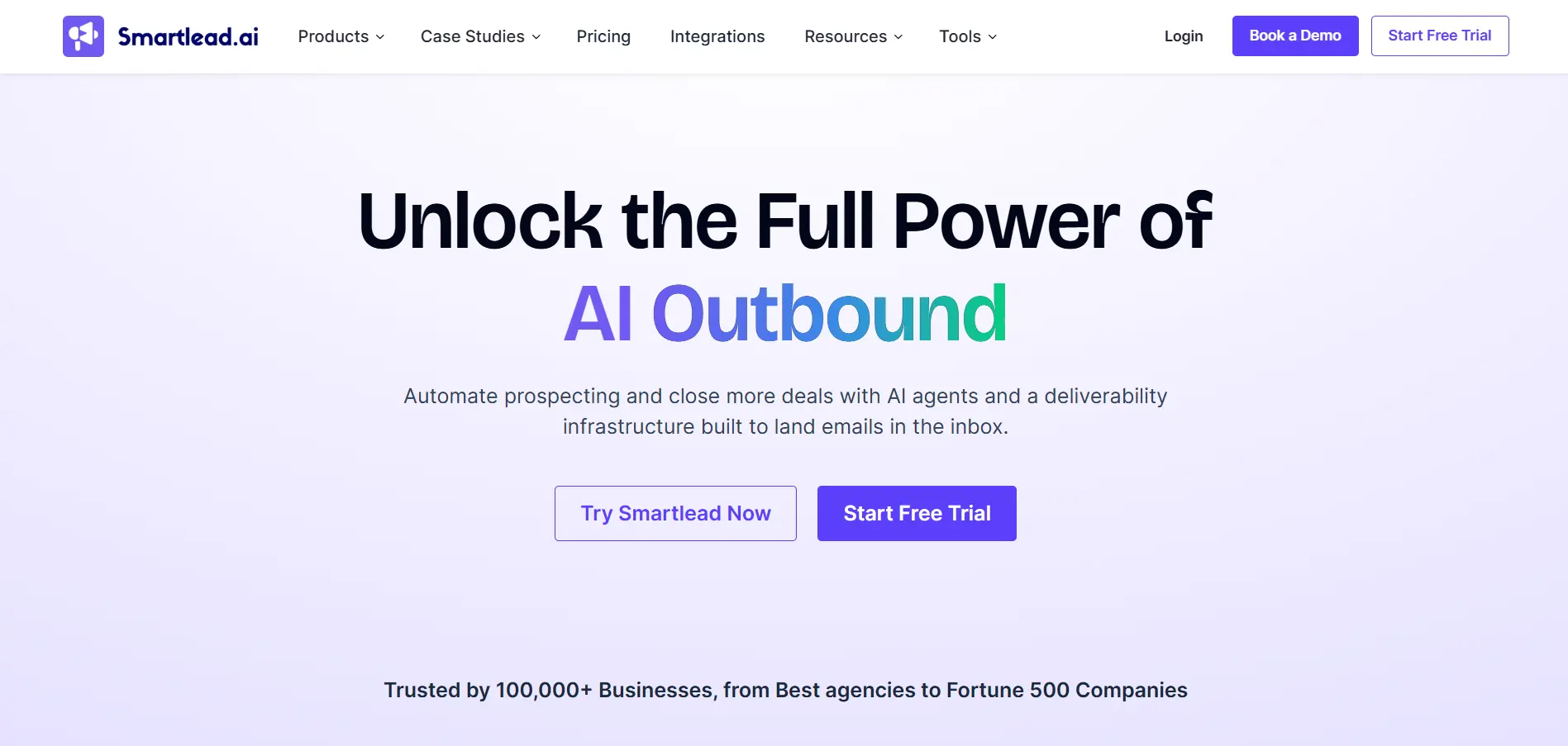
12.Smartlead — Best Deliverability-Focused Outreach Tool
After personalization and sending infrastructure, the final piece of outbound is deliverability at scale.
Smartlead is built specifically to help you send large volumes of emails while maintaining strong inbox placement and sender reputation.
It focuses less on prospecting and more on making sure your emails actually get seen.
Key Features:
- Unlimited email sending accounts Connect and manage multiple inboxes to scale campaigns without strict sending limits.
- Advanced inbox rotation Distribute emails across multiple accounts to protect sender reputation and avoid spam flags.
- Automated email warm-up Gradually builds trust with email providers to improve deliverability over time.
- Multi-step campaign automation Create sequences with follow-ups and conditional logic based on prospect behavior.
- Centralized inbox management Manage replies from multiple inboxes in one unified dashboard.
- Deliverability-focused analytics Track open rates, reply rates, and performance signals related to inbox placement.
- Webhook and API integrations Connect Smartlead with CRMs and other tools for a more connected workflow.
Smartlead stands out among sales development tools for teams that prioritize scaling outreach without hurting deliverability.
However, like other sending-focused platforms, it works best when combined with tools for lead generation and data enrichment.
Suggested Reading:
15 Best AI Tools for Business Development That Drive GrowthWhich Sales Development Tool Fits Your Outbound Strategy?
Now that you have seen the top sales development tools, the next step is choosing what actually fits your workflow.
Because the “best” tool depends entirely on how you run outbound, your team size, volume, and how much manual work you want to handle.
Let’s break this down based on real-world use cases.
Best Tools for Startup SDR Teams
If you are a startup or a small SDR team, your biggest priorities are speed, simplicity, and cost efficiency.
You do not want to spend weeks setting up tools or managing complex systems.
You need something that works quickly and does not require a full ops team.
Best tools for this stage:
- Oppora.ai — Gives you a complete outbound system without needing multiple tools or a heavy setup
- Apollo.io — Affordable way to get leads and run basic outreach in one place
- HubSpot Sales Hub — Easy-to-use CRM with built-in outreach features for beginners
- Lemlist — Great for adding personalization without complex workflows
For most startup teams, reducing tool overload matters more than having advanced features.
That is why all-in-one systems like Oppora.ai can significantly simplify early-stage outbound.
Suggested Reading:
11 Best AI SDR Tools for Smarter Sales AutomationBest Platforms for High-Volume Cold Outreach
If your strategy is based on sending large volumes of cold emails, your focus shifts to deliverability and infrastructure.
At this stage, sending safely at scale matters more than deep personalization.
You need tools that can handle multiple inboxes, warm-up, and rotation without breaking your domain reputation.
Best tools for high-volume outreach:
- Oppora.ai — Combines sending, warm-up, personalization, and reply handling in one system
- Instantly.ai — Strong sending infrastructure with inbox rotation and warm-up
- Smartlead — Built specifically for deliverability and scaling email campaigns
- Apollo.io — Useful as a combined prospecting + outreach layer for smaller-scale volume
The key here is not just sending more emails.
It is sending more emails while still landing in the inbox.
Best Sales Development Tools for Enterprise Teams
Enterprise teams operate very differently.
They need structure, reporting, collaboration, and deep integrations across the entire sales organization.
These teams usually have dedicated SDRs, ops teams, and defined workflows.
Best tools for enterprise teams:
- Oppora.ai — Handles full-cycle outbound with automation across teams
- Outreach — Advanced sequencing, analytics, and workflow control at scale
- Salesloft — Strong cadence management and SDR activity tracking
- ZoomInfo — Large-scale data and account intelligence
- Cognism — High-quality international data with compliance focus
For enterprise teams, visibility and control become just as important as execution.
That is why these sales development tools focus heavily on analytics, integrations, and scalability.
Best All-in-One Alternative to Tool Stacking
Many teams eventually realize they are using too many tools.
One for leads, one for enrichment, one for emails, one for replies — and nothing truly works together.
This creates inefficiencies, higher costs, and more manual work than expected.
If your goal is to simplify your stack, you need tools that cover multiple parts of the workflow.
Best all-in-one approaches:
- Oppora.ai — Complete outbound system covering prospecting, outreach, replies, and CRM sync
- Smartlead — Combines outreach with advanced deliverability infrastructure, making it more effective for scaling cold email than basic prospecting-first tools
- HubSpot Sales Hub — CRM-first approach with integrated outreach features
The advantage here is not just fewer tools.
It is having a system where every part of your outbound works together without constant switching.
The Biggest Mistakes Teams Make When Choosing Sales Development Tools
By now, you have seen how different sales development tools fit different strategies.
But most teams do not struggle because of lack of options.
They struggle because they choose tools based on the wrong priorities.
Here are the biggest mistakes you should avoid.
Choosing Databases Without Outreach Capabilities
It is easy to get impressed by large contact databases.
But data alone does not generate pipeline.
If you only use database tools, you still need separate platforms to actually reach out to prospects.
This creates a disconnected workflow.
What usually goes wrong:
- Leads sit unused because outreach is not integrated
- Teams switch between multiple tools, slowing execution
- No clear connection between data and campaigns
What to do instead:
- Use tools that combine data + outreach (like Oppora.ai or Apollo)
- Or pair database tools with strong outreach systems
Ignoring Deliverability & Inbox Health
Many teams focus on sending more emails.
Very few focus on whether those emails are actually landing in inboxes.
If your deliverability is poor, your campaigns fail silently.
Common issues teams ignore:
- No domain warm-up before campaigns
- Sending too many emails from a single inbox
- Reusing generic templates that trigger spam filters
Tools that solve this well:
- Smartlead
- Instantly
- Oppora.ai
Deliverability is not a feature.
It is the foundation of outbound success.
Buying Complex Platforms SDRs Never Fully Use
Some tools look powerful but are difficult to use daily.
If your SDRs cannot adopt them quickly, the tool becomes a burden instead of an advantage.
What typically happens:
- Only a small percentage of features are actually used
- SDRs avoid the tool due to complexity
- Workflows break because setup is too heavy
What to look for instead:
- Fast setup and simple workflows
- Tools that reduce manual steps, not add more
- Systems that run consistently without constant input
The best sales development tools are not the most advanced.
They are the ones your team actually uses every day.
Prioritizing Cheap Pricing Over Long-Term ROI
Choosing tools based only on price often backfires.
Lower-cost tools may lack accuracy, automation, or deliverability controls.
This leads to more manual work and weaker results.
Hidden costs of cheap tools:
- More time spent on manual prospecting
- Lower reply rates due to poor data or messaging
- Additional tools needed to fill gaps
Better approach:
- Focus on output (meetings, replies, pipeline)
- Evaluate how much time and effort the tool saves
- Choose tools that improve consistency and scale
That is why higher ROI tools like Oppora or Outreach often outperform cheaper alternatives.
Because they reduce effort while improving results.
Conclusion
Choosing the right sales development tools is less about features and more about how well everything works together.
You can have the best database, the best outreach tool, and the best CRM, but if they do not connect seamlessly, your outbound will always feel slow and fragmented.
The tools that actually drive results are the ones that reduce manual effort, improve consistency, and help you move from prospect to meeting faster.
If you are just starting, simple tools like Apollo or HubSpot can help you get moving.
If you are scaling, platforms like Outreach or Salesloft bring structure and control.
But if your goal is to simplify your entire outbound system and avoid tool stacking, it is worth exploring a more unified approach.
That is where platforms like Oppora.ai come in.
Instead of managing multiple tools, you can build one system that handles prospecting, outreach, and follow-ups together, so your outbound keeps running without constant effort.
Frequently Asked Questions (FAQs)
What are sales development tools used for?
Sales development tools help you find potential customers, reach out through channels like email or LinkedIn, and convert them into meetings by managing prospecting, outreach, follow-ups, and engagement tracking in a structured and scalable way.
Do I need multiple sales development tools to run outbound?
You do not always need multiple tools, but many teams use separate platforms for leads, outreach, and tracking, which can create inefficiencies, so using an all-in-one system like Oppora can simplify your workflow by handling everything in one place.
Which sales development tools are best for beginners?
Beginners should choose tools that are easy to set up and use, such as Apollo.io for combined prospecting and outreach, HubSpot Sales Hub for CRM-based workflows, or Oppora if you want a more automated and simplified outbound system from the start.
How important is email deliverability in outbound?
Email deliverability is critical because even strong messaging will fail if your emails do not reach the inbox, which is why tools like Smartlead, Instantly, and Oppora focus on inbox rotation, warm-up, and sender reputation to improve campaign performance.
How can I improve ROI from my sales development tools?
You can improve ROI by reducing tool fragmentation, using accurate data, prioritizing deliverability, automating repetitive tasks, and choosing platforms like Oppora that combine multiple outbound functions into one streamlined system.