How to Create a High-Quality Sales Prospecting List That Converts
A high-quality sales prospecting list is what separates random outreach from predictable results.
If your data is inaccurate or poorly targeted, even well-written messages won’t get replies. You end up wasting time chasing leads that were never a fit in the first place.
When your list is built with the right audience, clean data, and clear intent signals, everything improves—from open rates to booked meetings.
In this guide, you’ll learn how to build targeted, accurate, and conversion-ready prospect lists that actually help you close more deals.
Suggested Reading:
12 Cold Email Prospecting Templates for Sales OutreachKey characteristics of a High converting Sales prospect list
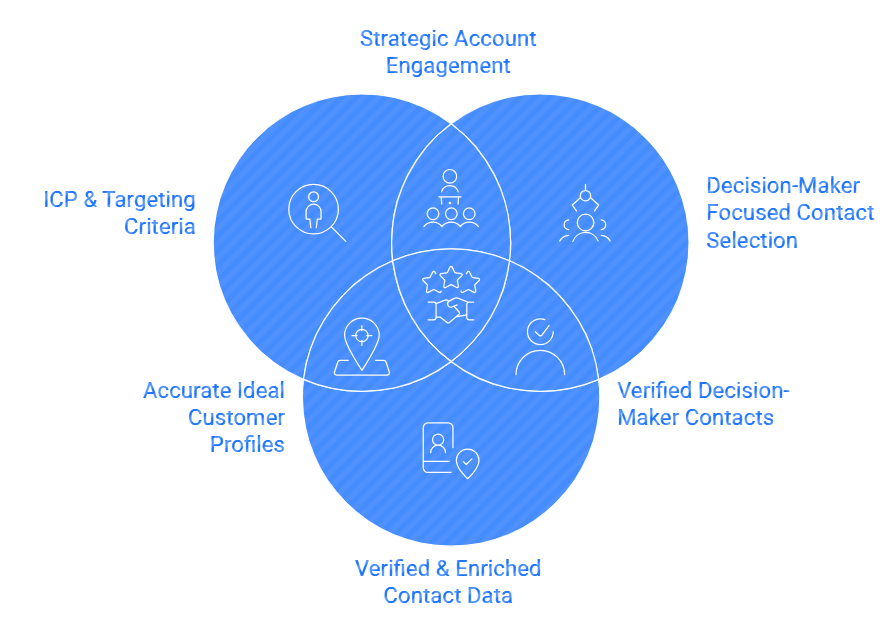
High-converting prospect lists prioritize relevance over volume and accuracy over guesswork.
They focus on well-defined ICPs, verified data, and real buying intent—so your outreach reaches the right people at the right time with messaging that actually resonates.
1. Clearly Defined ICP and Targeting Criteria
Every high-converting prospecting list starts with a clearly defined Ideal Customer Profile (ICP).
You need to know exactly who you’re targeting—industry, company size, job roles, and key pain points. Without this clarity, your outreach becomes scattered and ineffective.
A focused ICP ensures every lead you add has a higher chance of converting into a meaningful conversation.
2. Decision-Maker Focused Contact Selection
It’s not about how many people you reach, but who you reach.
A strong prospect list prioritizes decision-makers and key influencers who have the authority to act. This reduces unnecessary back-and-forth and speeds up your sales cycle.
When you connect with the right person from the start, your chances of getting a response increase significantly.
3. Verified and Enriched Contact Data
Your outreach is only as good as the data behind it.
Verified email addresses help you avoid bounces and protect your sender reputation, ensuring your emails actually land in inboxes.
Enriched data adds valuable context like company size, role, and industry, allowing you to craft messages that feel relevant and improve overall engagement.
4. Context-Driven Segmentation for Personalization
Segmentation helps you move from generic outreach to meaningful conversations.
By grouping prospects based on shared traits, behaviors, or needs, you can tailor your messaging to feel more relevant.
Context-driven lists consistently outperform broad lists because your outreach aligns with what the prospect actually cares about in their current situation.
How to Create a Sales Prospecting List
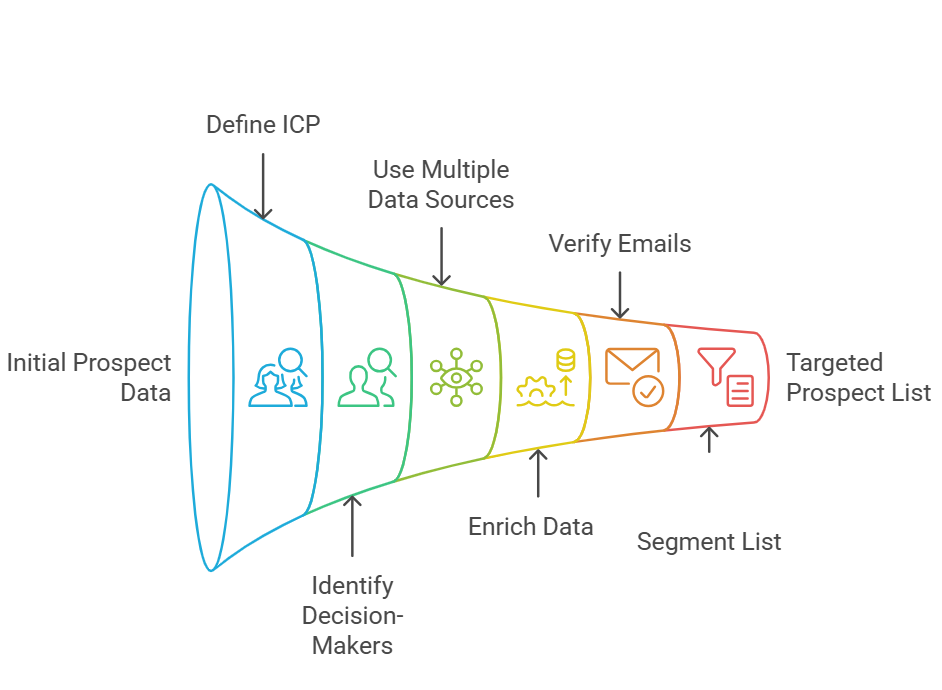
Now that you understand what makes a list high-converting, the next step is building one systematically.
From defining your ICP to verifying emails and segmenting data, each step plays a critical role.
A structured approach ensures your list is accurate, well-targeted, and ready to support outreach that actually converts into meetings and deals.
1. Define Your Ideal Customer Profile (ICP)
Everything starts with knowing exactly who you want to target.
Identify the type of companies and roles that benefit most from your product. Focus on firmographics, responsibilities, and key pain points.
A clear ICP helps you avoid wasted effort and ensures your outreach is directed toward prospects who are more likely to convert.
2. Identify the Right Decision-Makers
Once your ICP is defined, the next step is finding the right people within those companies.
Look for decision-makers such as founders, department heads, or managers responsible for buying decisions.
Targeting these individuals ensures your message reaches someone who can act on it, making your outreach far more effective.
3. Use Multiple Data Sources (Not Just One)
Relying on a single data source often leads to incomplete or outdated information.
By combining multiple platforms and tools, you improve both the accuracy and coverage of your prospect list.
Using the right B2B sales prospecting tools can significantly improve data quality and efficiency.
4. Enrich Your Data for Better Targeting
Basic contact information is rarely enough for effective outreach.
Data enrichment adds deeper insights like company size, tools used, and growth signals. This allows you to refine your targeting and create messages that feel more relevant.
The more context you have, the easier it becomes to connect with your prospects.
5. Verify Emails Before Outreach
Sending emails without verification can quickly damage your outreach efforts.
Invalid or outdated emails lead to high bounce rates, which hurt your sender reputation and deliverability.
Verifying your contacts before launching campaigns ensures your emails reach real inboxes and improves your chances of getting responses.
6. Segment Your Prospecting List
A single list with mixed prospects limits how effective your outreach can be.
Segment your list based on factors like role, industry, or behavior. This allows you to tailor your messaging for each group.
Targeted campaigns consistently outperform generic ones because they align with a strong sales outreach strategy.
7. Build Lists That Evolve, Not Stay Static
Your prospecting list should never be treated as a one-time asset.
Over time, data becomes outdated and prospects change roles or priorities. Regularly updating your list by removing unresponsive contacts and adding new leads keeps your outreach fresh and effective, ensuring consistent results over time.
Suggested Reading:
Sales Prospecting Tools for Lead GenerationHow Oppora.ai Helps You Build High-Quality Prospecting Lists at Scale
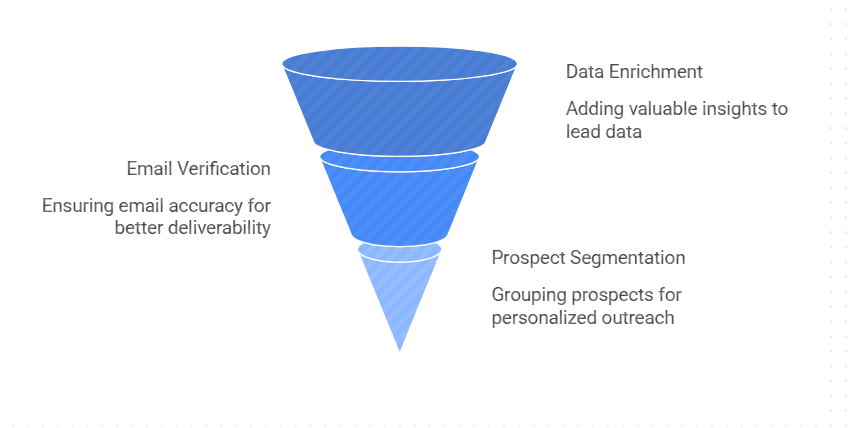
Building a high-quality prospecting list manually often leads to delays, errors, and inconsistent results, especially when you rely on multiple disconnected tools.
This is where Oppora.ai streamlines the entire workflow by combining lead generation, enrichment, verification, and segmentation into one unified system.
With Oppora.ai, you can:
- Automatically discover leads that match your Ideal Customer Profile
- Enrich data with meaningful insights for better targeting
- Verify emails to improve deliverability and reduce bounce rates
- Segment prospects based on context for personalized outreach
On top of that, the system continuously updates and maintains your data, so your lists never go stale. This helps you scale outreach efficiently while keeping your pipeline clean, targeted, and conversion-ready.
Suggested Reading:
B2B Sales Prospecting Methods That Consistently Book More MeetingsCommon Mistakes That Kill Prospecting List Quality
Many prospecting lists fail due to common mistakes like poor targeting, unverified data, and lack of segmentation. Fixing these issues helps you maintain list quality and improve campaign performance.
1. Targeting Too Broad or Undefined Audiences
When you try to target everyone, your messaging loses clarity and impact.
Broad targeting reduces relevance, making it harder to connect with prospects. A focused audience helps you deliver sharper messaging and improves conversion chances significantly.
2. Prioritizing Quantity Over Relevance
A bigger list doesn’t always mean better results.
When your list includes irrelevant contacts, engagement drops. Smaller, highly targeted lists consistently outperform large, unfiltered databases because they focus on prospects who actually fit your offering.
3. Skipping Email Verification and Data Cleaning
Ignoring data quality can quickly damage your outreach performance.
Unverified emails lead to high bounce rates and poor deliverability. Regular cleaning and verification ensure your list stays accurate and your campaigns remain effective.
4. Ignoring Intent and Contextual Signals
Not every prospect is ready to engage at the same time.
When you ignore intent signals like hiring activity or tool usage, your outreach feels mistimed. Using context helps you prioritize prospects who are more likely to respond.
5. Not Updating or Refining Lists Over Time
Prospect data becomes outdated faster than you think.
People change roles, companies evolve, and information loses accuracy. Regularly updating and refining your list ensures your outreach stays relevant and continues to deliver consistent results.
Key Takeaways
- Focus on a clearly defined target audience to improve relevance and engagement
- Verify and enrich your data regularly to maintain accuracy and deliverability
- Segment your prospect lists to enable personalized, high-converting outreach
- Continuously update and refine your lists to keep them fresh and effective
- Follow a structured process to reduce wasted effort and scale outreach efficiently
Conclusion
Building a high-converting prospect list is not about collecting more contacts. It is about targeting the right people with accurate, relevant data. When your list is strong, your outreach becomes more effective and predictable.
Instead of spending hours manually sourcing, enriching, and verifying data, you can streamline the entire process with tools built for scale.
Platforms like Oppora.ai help you create, refine, and manage high-quality prospecting lists faster, so you can focus on conversations that convert.
Frequently Asked Questions
1. How many prospects should be in a high-quality prospecting list?
There is no fixed number. A smaller, highly targeted list often performs better than a large, generic one. Focus on relevance and accuracy rather than volume to improve response and conversion rates.
2. How often should you refresh your prospecting list?
Ideally, you should review and update your list every 2–4 weeks. This helps remove outdated contacts, add new leads, and keep your outreach aligned with current market conditions and buyer intent.
3. What tools are best for building prospecting lists?
The best tools combine lead sourcing, enrichment, and verification in one place. Using multiple disconnected tools can slow you down and create data inconsistencies, so integrated platforms usually deliver better results.
4. How do you measure the quality of a prospecting list?
Key metrics include bounce rate, reply rate, meeting booking rate, and conversion rate. High-quality lists typically have low bounce rates and higher engagement, indicating strong targeting and accurate data.
5. Can AI improve sales prospecting list creation?
Yes. AI can automate lead discovery, enrich data, and identify high-intent prospects faster than manual methods. This improves efficiency and helps teams focus on the most promising opportunities.