What Is Lead Enrichment? Guide to Better Data & Pipeline
Most outbound doesn’t fail because of poor messaging—it fails because of poor data.
You spend hours finding leads, building lists, and setting up campaigns, yet replies stay low and conversions even lower.
The real issue sits between lead generation and outreach: missing, outdated, or incomplete data.
That’s where lead enrichment comes in.
It fills the gaps, adds context, and turns raw leads into actionable opportunities.
But even with enriched data, most teams still struggle because their workflow is scattered across multiple tools.
In this guide, you’ll understand what lead enrichment is, how to enrich lead data effectively, and how modern systems like Oppora.ai go beyond enrichment by acting as AI outbound agents—helping you find, enrich, and execute outreach in one continuous workflow.
What Is Lead Enrichment?
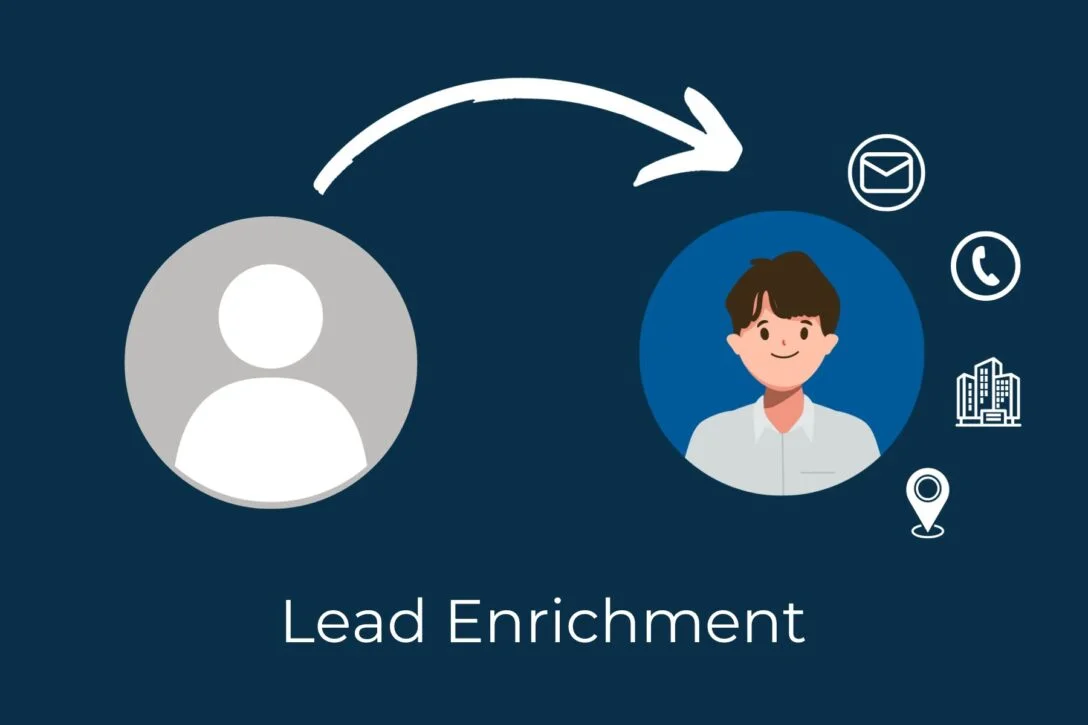
Lead enrichment means adding useful data to a basic lead so you can actually use it for targeted outreach.
A raw lead might only have a name and email, which gives you very little context.
Enrichment adds details like job role, company, or industry so you understand who they are and what they might need.
With better data, your outreach becomes more relevant, helping you get more replies and move leads through your pipeline faster.
Example of Lead Data Enrichment
To make this clearer, let’s look at how a lead changes before and after enrichment.
A raw lead might look like this: just a name and an email address with no real context.
Once enriched, that same lead includes their role, company name, industry, team size, and even signals like hiring activity or tools they use.
Now you know whether they’re a decision-maker, what problems they likely face, and how your offer fits into their workflow.
This context makes personalization much easier because your message can speak directly to their situation instead of being generic.
Instead of manual research across multiple tabs, platforms like Oppora automate this entire enrichment step and give you ready-to-use, high-context leads.
Suggested Reading:
Company Data Enrich by Oppora.aiWhy Lead Data Enrichment Matters
Now that you understand what lead enrichment is, the next question is simple—why does it actually matter for your outbound results?
Because without context, even the best outreach strategy falls flat.
Lead data enrichment gives you clarity on who you’re targeting, how to approach them, and whether they’re worth your effort in the first place.
Instead of working with guesswork, you’re making decisions based on real data.
This directly impacts how you segment leads, write messages, and build a pipeline that actually converts.
Let’s break down where this makes the biggest difference.
Better Targeting and Segmentation
When your data is enriched, you can clearly identify who fits your ideal customer profile and who doesn’t.
You’re no longer grouping leads randomly or relying on broad assumptions.
Instead, you can segment based on role, company size, industry, or even specific signals like hiring trends or tech stack.
This makes your outreach more focused because each segment gets messaging that actually matches their context and needs.
Higher Conversion Rates
Better data leads to better conversations.
When you know who you’re reaching out to, you can tailor your messaging to their role, challenges, and priorities.
This makes your emails feel relevant instead of generic, which increases the chances of getting replies.
Instead of sending the same pitch to everyone, you’re speaking directly to what matters to them, and that’s what drives higher conversions.
Stronger Pipeline Quality
Not every lead deserves to be in your pipeline.
Enriched data helps you filter out low-quality leads early, so your team focuses only on the right opportunities.
This reduces wasted outreach and keeps your pipeline clean and actionable.
As a result, your pipeline isn’t just bigger—it’s filled with leads that are more likely to convert into real revenue.
Types of Data You Can Enrich Leads With
Not all data points are equally useful, and adding random information won’t improve your outreach.
The goal is to enrich leads with data that helps you qualify, segment, and personalize your messaging more effectively.
When done right, each data type gives you a different layer of context about the lead.
Some help you identify who they are, while others help you understand what they need and when to reach out.
Let’s break down the most important types of lead enrichment data.
Contact Data Enrichment
This is the most basic and essential layer of enrichment.
It ensures you can actually reach your leads and speak to the right person.
This typically includes:
- Email addresses
- Phone numbers
- Job titles
Accurate contact data doesn’t just improve deliverability, it also helps you adjust your messaging based on the person’s role and level of decision-making.
Company Data Enrichment
Once you know who the person is, the next step is understanding the company they belong to.
This helps you qualify whether the lead fits your ideal customer profile.
Common company-level data includes:
- Industry
- Company size
- Revenue
With this context, you can quickly filter high-fit accounts and tailor your outreach based on how the business operates and scales.
Technographic Data
Technographic data gives you insight into the tools and technologies a company is already using.
This is especially useful for positioning your product in a relevant way.
Typical examples include:
- CRM tools
- Marketing platforms
- Sales or automation software
Knowing this helps you align your messaging, highlight integrations, or position your solution as a better alternative.
Intent & Behavioral Data
This is where enrichment becomes more strategic and timely.
Instead of just knowing who the lead is, you understand what they are actively doing.
Key signals include:
- Hiring activity
- Team expansion
- Product launches or growth signals
These insights help you reach out at the right moment, making your message feel timely and increasing the chances of a response.
How to Enrich Lead Data (Step-by-Step)
Manual lead enrichment often feels like jumping between tools, tabs, and spreadsheets.
You collect data from one place, verify it somewhere else, and still end up with gaps.
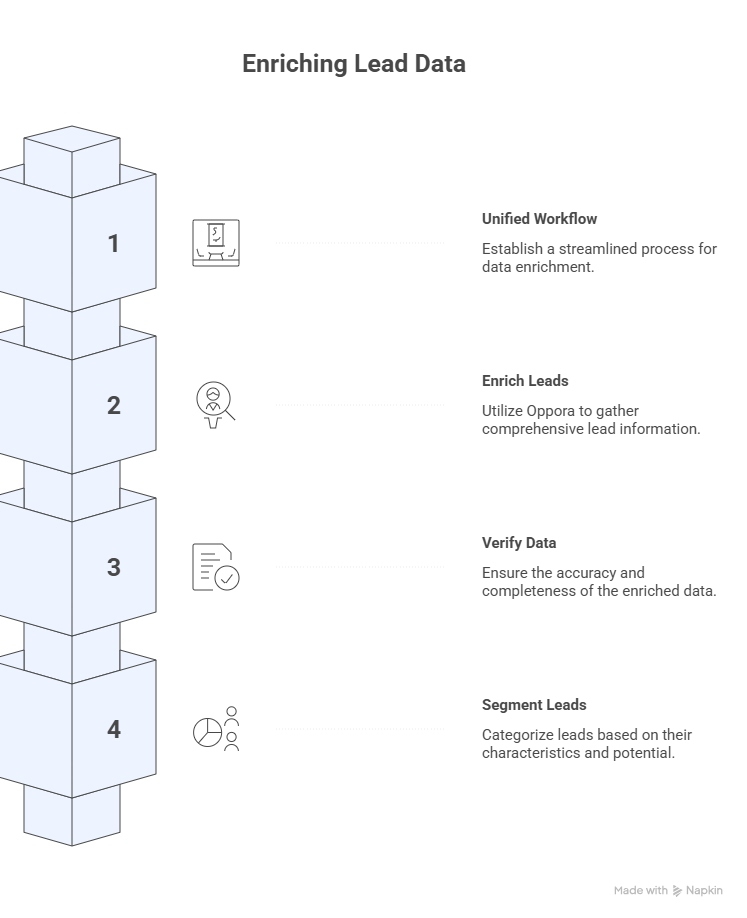
Instead of stitching together multiple tools, you can follow a unified workflow.
This section walks you through how to enrich, verify, and prepare leads using Oppora, so you can move directly from data to outreach without breaking your flow.
Step 1 – Getting Started with a Unified Workflow
Before you start enriching leads, you need a system that keeps everything in one place.
Start by signing up for Oppora and setting up your workspace based on what you sell and who you want to target.
You can either import an existing lead list or start fresh by defining your target audience.
This step sets the foundation for a streamlined process where lead enrichment, verification, and outreach all happen within a single workflow, without switching tools.
Step 2 – Enrich Leads Using Oppora
Once your workspace is ready, the next step is enriching your leads with the right data.
You can import an existing list of leads or companies, and Oppora automatically enriches them with key details like:
- Email and phone numbers
- Industry and company size
- Funding and growth signals
- Hiring activity
On top of that, Oppora verifies contact data and uses AI to score leads, helping you prioritize the ones most likely to convert before you start outreach.
Step 3 – Verify and Clean Data
Before you start outreach, it’s important to make sure your data is accurate and usable.
Even enriched data can have gaps, duplicates, or outdated information that affects performance.
Start by validating email addresses so your messages don’t bounce or land in spam.
Then remove duplicate entries to avoid reaching out to the same lead multiple times.
You should also fix incomplete or outdated records to ensure every lead has enough context for personalization.
This step ensures your data is clean, reliable, and ready for outreach, so your efforts don’t go to waste.
Step 4 – Segment and Score Leads
Once your data is clean, the next step is organizing it in a way that drives better outreach.
Start by segmenting your leads based on your ideal customer profile, using filters like industry, role, and company size.
You can also refine segments further using:
- Geography or target market
- Company growth stage
- Use case or pain point
This helps you group similar leads together so your messaging stays relevant and specific.
Next, score your leads based on fit and intent signals, such as how closely they match your ICP or whether they show buying activity.
For example, scoring can consider:
- Role seniority (decision-maker vs individual contributor)
- Hiring or expansion signals
- Product or tool usage relevance
This allows you to prioritize high-quality leads first, so your team focuses on opportunities that are more likely to convert.
Moving from Enrichment to Execution
By now, your leads are enriched, verified, and ready to go—but enrichment alone doesn’t create pipeline.
You still need to 1) set up campaigns, 2) write emails, and 3) manage replies to actually turn data into conversations.
In most setups, this process looks like:Lead source → enrichment → verification → outreach tool → CRM
Each step happens in a different tool, which creates constant switching, delays, and broken workflows.
This friction slows down execution and often leads to missed opportunities.
The real problem isn’t just data—it’s that execution is disconnected from it.
That’s why modern outbound is shifting from tools to systems, where enrichment and execution are no longer separate steps but part of 1 continuous flow.
The Traditional Workflow
Even after enrichment, most teams still rely on a fragmented stack to run outbound.
You move leads across 4–5 different tools—one for sourcing, another for enrichment, one for verification, then a separate outreach tool, and finally a CRM.
This creates constant back-and-forth with manual handoffs like exports, imports, and status updates.
Common issues in this flow include:
- Data getting outdated between tools
- Missed follow-ups due to lack of sync
- Time wasted switching between platforms
What should be a smooth pipeline ends up slow, disconnected, and hard to scale.
The Modern Approach (Using Oppora)
To solve this, modern outbound is moving toward AI-driven systems instead of disconnected tools.
Instead of managing separate platforms, everything happens in 1 continuous workflow:
- Find → enrich → verify → send → reply → book meetings
Oppora is built as an AI outbound sales agent that runs this entire workflow for you.
Instead of manually setting up each step, you simply define 2 inputs:
- Who you want to reach
- What you want to achieve
From there, Oppora builds and executes the workflow automatically—similar to tools like n8n, but without the complexity.
Behind the scenes, multiple AI agents (8+ specialized agents) handle each stage of outbound, including:
- Finding leads from 100M–700M+ verified contacts with advanced filters
- Enriching and verifying data using multiple sources
- Writing and personalizing emails uniquely for each lead
- Managing replies directly from your inbox
- Booking meetings without manual follow-ups
Once set up, the system keeps running without requiring daily input or tool switching.
The outcome is simple—faster execution, fewer operational gaps, and a pipeline that moves forward automatically from enriched data to real results.
Best Practices to Enrich Leads Effectively
Now that you know how to enrich leads, the next step is doing it the right way.
Because more data doesn’t always mean better results.
If your enrichment isn’t focused and aligned, it can actually slow down your process instead of improving it.
The key is to enrich with intention, so every data point helps you target, prioritize, and convert better.
Here are a few best practices to keep your enrichment effective and scalable.
Suggested Reading:
Want to Skip Manual Prospecting Altogether?Focus on Relevant Data Only
Not all data points are useful for your outreach.
Adding unnecessary information only creates noise and makes it harder to act on your leads.
Focus only on data that directly impacts targeting and messaging, such as:
- Job role and seniority
- Industry and company size
- Buying or intent signals
When your data is relevant, your outreach becomes sharper and easier to execute.
Keep Data Clean and Updated
Enriched data is only valuable if it stays accurate.
Outdated or incorrect information can lead to bounced emails, wrong messaging, and missed opportunities.
To maintain data quality, make sure you:
- Regularly verify email addresses
- Remove duplicates from your lists
- Update outdated company or role information
Clean data ensures your outreach performs consistently and avoids unnecessary errors.
Align Enrichment With Your ICP
Your enrichment strategy should always connect back to your ideal customer profile.
If your data doesn’t help you identify and prioritize the right leads, it’s not useful.
Make sure your enrichment focuses on:
- Industries you serve best
- Company sizes you target
- Roles involved in decision-making
When enrichment aligns with your ICP, your entire pipeline becomes more focused, and your efforts go toward leads that are more likely to convert.
Common Lead Enrichment Mistakes to Avoid
Even with the right tools, lead enrichment can go wrong if not handled carefully, as many teams collect data but still struggle to see results because they don’t use it effectively, and the goal isn’t just to enrich leads but to ensure that data actually improves targeting and execution, since avoiding a few common mistakes can significantly improve your results.
Over-Enriching Without Purpose
It’s easy to assume that more data is always better, but that’s not the case.
Adding too many data points that don’t impact your outreach only creates confusion and slows down decision-making.
Instead, focus on collecting only what helps you qualify and personalize, such as role, company size, and intent signals.
If the data doesn’t influence your messaging or targeting, it’s unnecessary.
Ignoring Data Accuracy
Even the best enrichment strategy fails if your data isn’t accurate.
Outdated emails, incorrect job roles, or wrong company details can ruin your campaigns before they even start.
This leads to bounced emails, poor deliverability, and irrelevant messaging.
Regular verification and cleaning are essential to ensure your data stays reliable and usable.
Not Using Enriched Data Properly
Enrichment alone doesn’t improve results unless you actually use the data.
Many teams enrich leads but still send generic campaigns without applying the insights.
This creates a gap between data and execution.
To fix this, your outreach should directly reflect enriched insights, so every message feels relevant and increases the chances of conversion.
Conclusion
Lead enrichment is the foundation of successful outbound, because better data leads to better targeting, sharper messaging, and higher conversions.
Instead of relying on guesswork, you’re working with real context that drives results.
With modern platforms like Oppora, you can enrich leads and turn them into real pipeline without the manual effort or fragmented workflows.
Frequently Asked Questions
How is lead enrichment different from lead generation?
Lead generation is about finding new prospects, while lead enrichment is about improving the quality of those prospects by adding useful data. Without enrichment, even a large lead list can fail because you lack the context needed for effective outreach.
When should you enrich leads in the outbound process?
Lead enrichment should happen right after sourcing and before outreach. This ensures your data is accurate, complete, and ready for segmentation and personalization, so you don’t waste effort reaching out to low-quality or incomplete leads.
How much lead data is too much?
Too much data becomes a problem when it doesn’t impact your targeting or messaging. The goal is not to collect everything, but to focus only on data points that help you qualify leads and personalize outreach effectively.
What are the risks of not enriching your leads?
Without enrichment, your outreach becomes generic, leading to low reply rates, higher bounce rates, and wasted effort. It also results in poor pipeline quality because you’re targeting leads without knowing if they’re a good fit.
How does lead enrichment impact outbound scalability?
Lead enrichment makes outbound scalable by standardizing data quality and enabling better segmentation. When combined with systems like Oppora, it removes manual steps and allows you to run consistent, high-quality outreach at scale without increasing effort.